

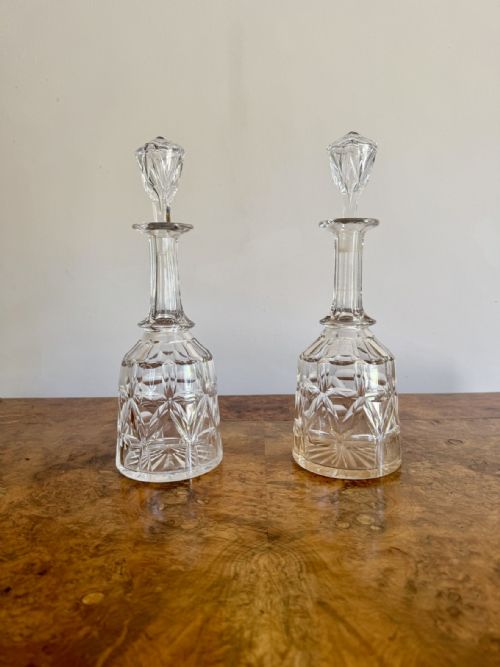

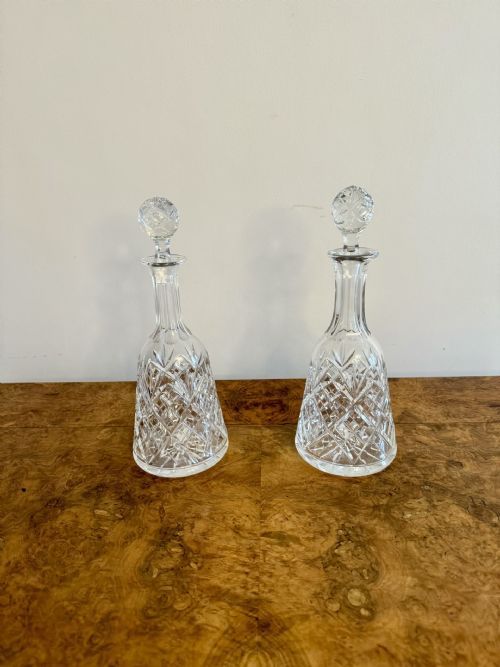


Antique Liquor Decanter Pair
An antique liquor decanter pair brings symmetry and sparkle to a sideboard, holding spirits with unmatched period elegance.
Antique Liquor Decanter Pair
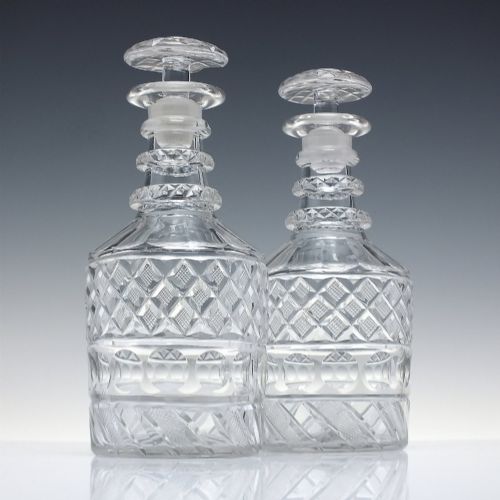
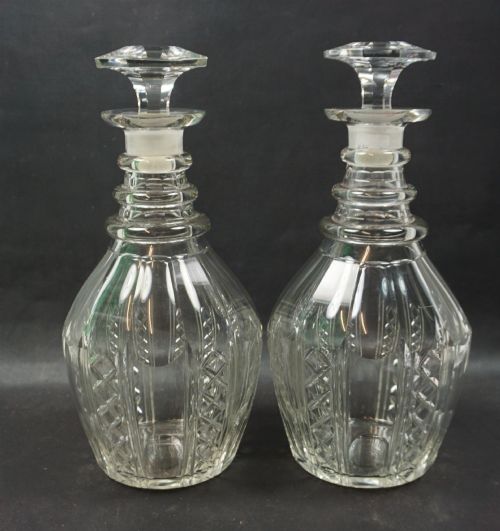
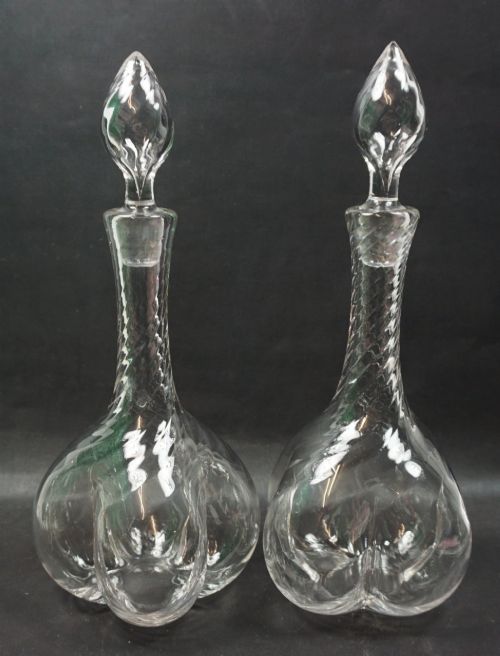
An antique liquor decanter pair consists of matching vessels designed to hold and serve spirits side by side on a dining table or sideboard. These sets frequently emerge from the Victorian, Edwardian, and Georgian eras, taking forms such as ovoid shapes, bell shapes, and whiskey noggins.
Buyers encounter clear glass, lead crystal, and coloured wares like ruby and cranberry glass. Some examples feature engraved decorations or sterling silver mounts, reflecting the specific social rituals of their respective decades.
Manufacturing methods and materials
Glassmakers utilised techniques such as optical blowing and heavy cutting to shape lead crystal and clear glass into durable vessels. The resulting surfaces catch candlelight and daylight alike, displaying deep facets or smooth, blown contours.
Coloured glass variations, including ruby and cranberry overlays, required precise thermal manipulation during the blowing process. Master artisans then added hand-engraved motifs such as birds, vines, or spirit labels directly onto the finished surfaces.
Antique Liquor Decanter Pair Retail Price Guide 2026
Typical asking prices for liquor decanter pair among the pieces listed under this phrase on Sellingantiques today, from the lower quarter to the upper quarter. They describe what is for sale here now, not the wider market.
Listings feature pieces spanning the Georgian, Victorian, and Edwardian periods, utilising cut glass, lead crystal, and cranberry glass.
Evaluating craftsmanship and distinction
Quality separates pairs through the crispness of the glass cutting and the weight of the material used. Deeper facets and heavier lead crystal indicate superior workshop output compared to lighter, pressed alternatives.
Harmony within the pair dictates overall merit, ensuring matching heights, uniform colour saturation across ruby or cranberry glass, and original stoppers that fit each neck correctly. Associated or mismatched stoppers diminish the integrity of the set.
James Powell·Hukin & Heath·Walsh & Walsh
The Antique Liquor Decanter Pair Glossary
- Whiskey noggin
- A small spirit decanter with a single handle, typically fitted with a silver top and designed for individual serving.
- Cranberry glass
- A rich pinkish-red glass produced by adding gold chloride to the molten batch during the nineteenth century.
- Lead crystal
- Glass containing metallic lead oxide, which increases brilliance, weight, and clarity for deep cutting.
- Optical blowing
- A technique where glass is blown into a ribbed mould to create subtle vertical patterns within the body.
- Overlay
- A method of casing a layer of coloured glass over a clear glass base before cutting through the outer layer.
Antique Liquor Decanter Pair: Frequently Asked Questions
Can these decanters still hold alcohol?
Most antique decanters remain fully functional for storing and serving spirits during meals or gatherings. Ensure the interior glass is clean and free from old residue before pouring fresh contents.
Check that the glass stoppers seat firmly in the necks to minimise evaporation if you plan to keep spirits inside the vessels for extended periods.
How do I identify a Georgian pair?
Georgian pairs typically display heavier lead crystal, simpler hand-cut facets, and distinct kick-up bases shaped by pontil marks. Their silhouettes tend towards sturdy ovoid or mallet forms reflecting early nineteenth-century dining.
Stopper designs from this era are usually solid and hand-ground to fit each individual neck, creating a unique pairing that differs from later mass-produced uniformity.
Why do some pairs have engraved labels?
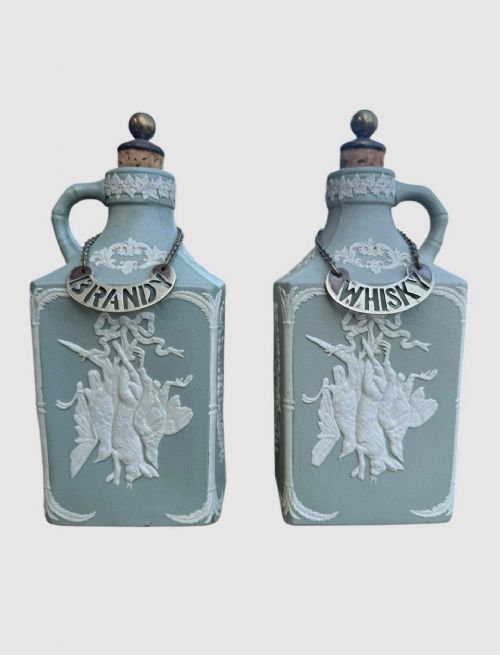
Engraved labels such as 'BRANDY' or 'WHISKY' helped hosts identify specific contents when multiple decanters sat together on a tray. These inscriptions were often wheel-engraved directly into the crystal during production.
Such lettering indicates a formal dining arrangement where guests or servants needed clear visual guidance without lifting the stoppers.