
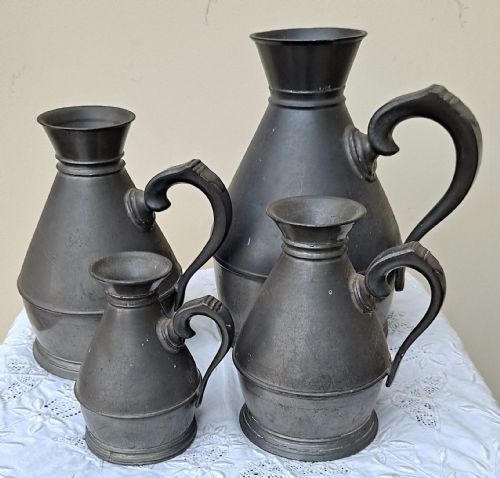


Antique Liquid Measure
These antique liquid measure examples are working vessels in copper, pewter, and glass, built for trade and tavern use.
Antique Liquid Measure
An antique liquid measure covers working vessels designed for trade, tavern service, and official standardisation. These pieces range from Georgian and Victorian tavern jugs to Customs and Excise glassware.
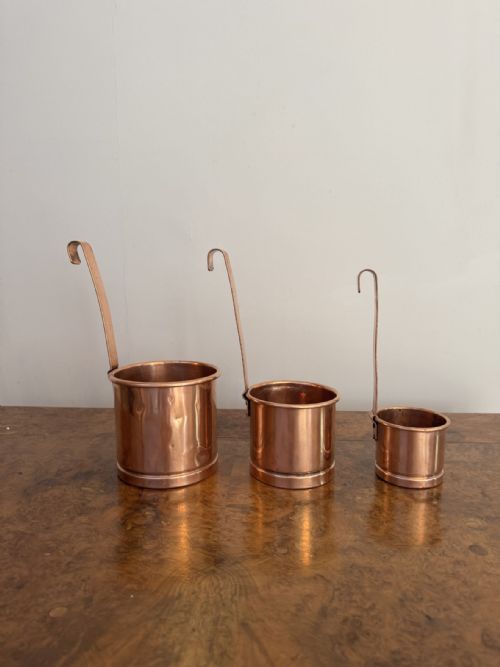
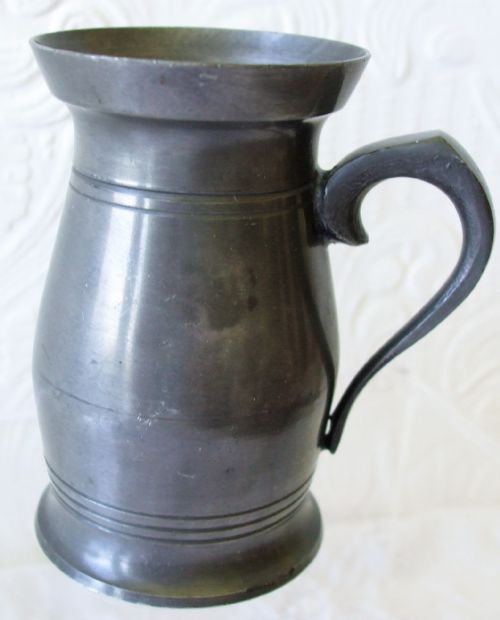
Buyers encounter graduated sets in copper and pewter most frequently on this page. Forms span bell-shaped tankards, haystack measures, and cylindrical spirit vessels.
Origins include English, Irish, and Channel Islands workshops. Functional kitchenalia and barware form the core of the available types.
How they were made
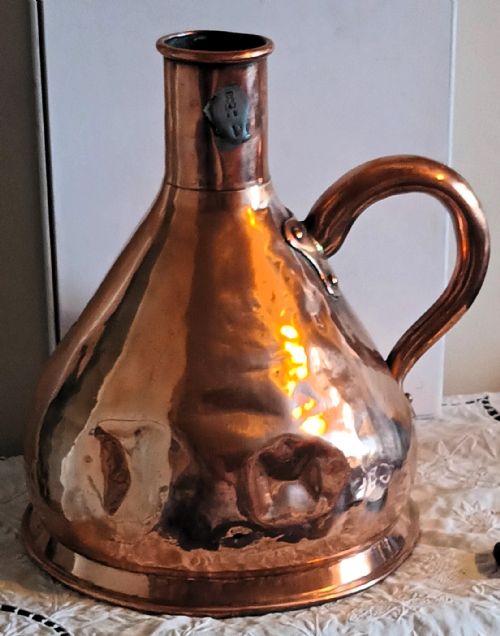
Makers shaped copper and brass through hammering and seaming to create rigid vessels for heavy daily use. Pewter components were cast and soldered, maintaining dense walls to withstand repeated handling.
Glass measures utilised mould-blown techniques followed by wheel-cutting and acid etching for official capacity markings. These methods combined durability with precise volumetric requirements.
A Guernsey tavern keeper poured cider with absolute authority using a heavy pewter pot stamped by John De St Croix.
What varies in quality
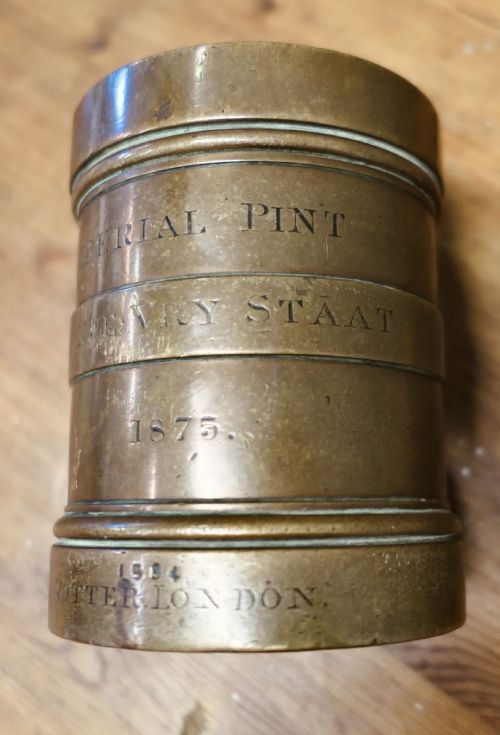
Quality rests in the crispness of maker stamps, verification marks, and official ciphers such as the VR crown. Complete graduated sets retain higher utility than isolated single pieces.
The integrity of seams, rivets, and handles distinguishes working vessels that survived heavy service from those compromised by poor repairs.
Potter of London·John De St Croix
The Antique Liquid Measure Glossary
- Haystack measure
- A distinctively shaped Irish pewter or brass vessel with a tapering body resembling a hayrick. These items often appear in graduated sets.
- Pewterware
- Objects fashioned from an alloy primarily of tin, combined with copper and lead. This material served for tavern jugs and capacity standards.
- Imperial pint
- A unit of volumetric measurement established in British law. Measures bearing this standard date from the nineteenth century onwards.
- Tavern measure
- A vessel utilised in public houses for pouring and serving ale or spirits. These utensils required robust construction for daily trade.
- Customs and Excise measure
- An official glass beaker or vessel used by government officers for verifying volumes. Etched markings denote the authorised capacity.
Antique Liquid Measure: Frequently Asked Questions
What were antique liquid measures used for?
These vessels served in taverns, markets, and shops to dispense ales, spirits, and dry or liquid goods accurately.
Official inspectors also utilised specific standards to check commercial quantities and collect duties.
How do I identify a pewter haystack measure?
Haystack measures display a characteristic bulbous lower body tapering towards a narrower neck, originating largely from Irish workshops.
They are frequently found in graduated sets spanning multiple capacities from pints to gallons.
What do VR stamps mean on measures?
The VR cipher stands for Victoria Regina, indicating official government verification during the reign of Queen Victoria.
Such marks confirm the vessel met legal trading standards of the period.
How should I clean copper measures?
Copper vessels benefit from gentle washing with warm soapy water and thorough drying to preserve the surface metal.
Avoid aggressive chemical polishes that strip away historical patination and surface character.