


Antique Lidded Glass Bowl
These antique lidded glass bowl pieces combine utilitarian function with decorative brilliance, offering a tactile piece of past domestic and vanity life for the modern interior.
Antique Lidded Glass Bowl
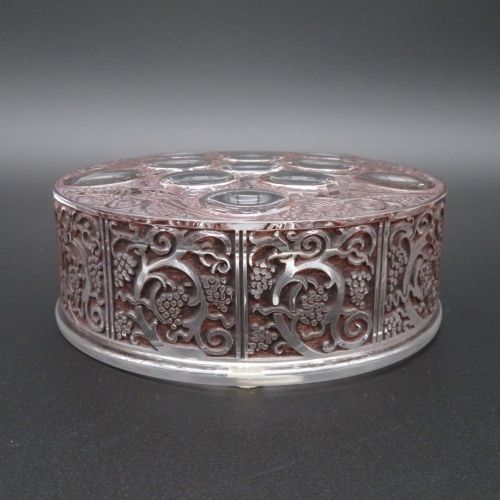
An antique lidded glass bowl encompasses a diverse range of forms designed for storage on dressing tables, sideboards, and dining rooms. The pieces recorded here span several periods, most notably the Victorian, Edwardian, and Art Deco eras.
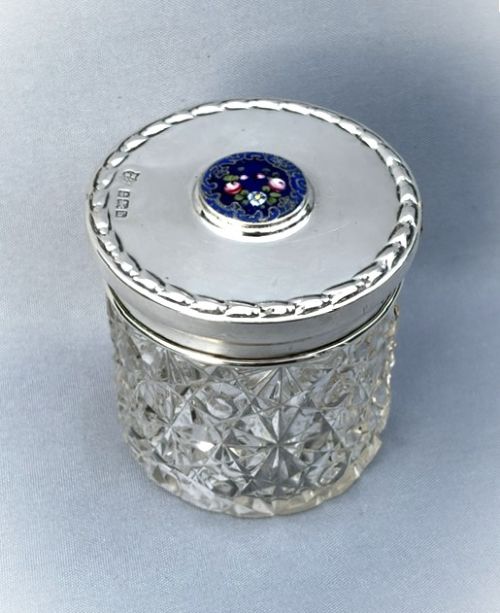
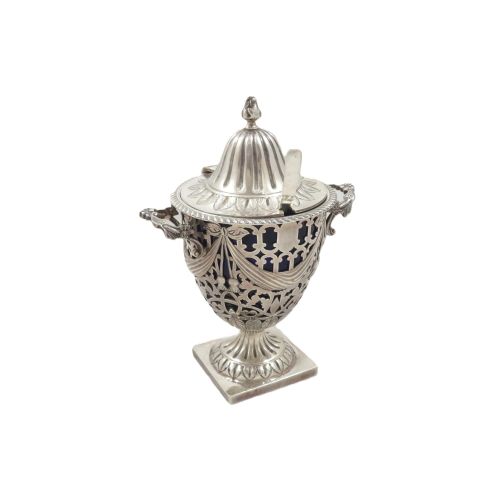
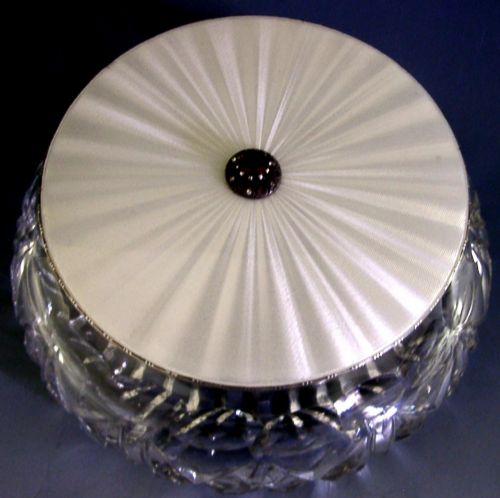
Buyers will encounter various practical vessels, including trinket boxes, vanity jars, sugar bowls, butter dishes, powder boxes, and larger serving or punch bowls. These items frequently incorporate fitted covers fashioned from sterling silver, silver plate, or enamel.
Origins represented in the inventory stretch from British workshops to French houses and Scottish makers, providing a wide geographical scope for collectors. Functional domestic items share space with delicate vanity containers intended for personal use.
Materials and construction
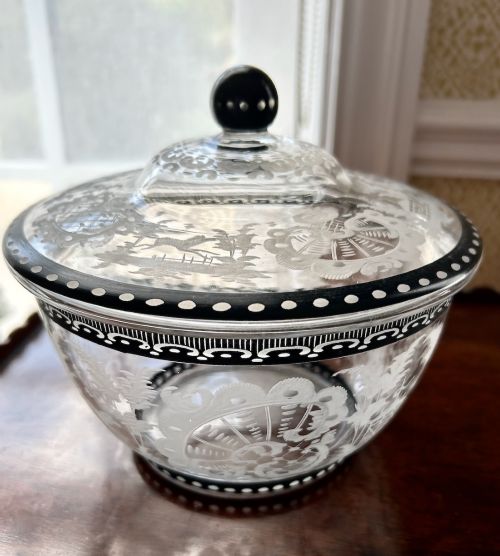
Makers utilised lead crystal, cut glass, and cranberry glass alongside white latticinio techniques and plain glass bodies. These glass elements were often heavily cut or engraved to catch the light.
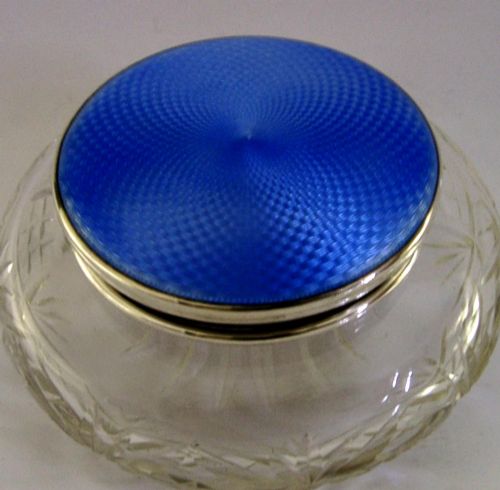
Lids and mounts introduce contrasting materials, primarily English sterling silver, silver plate, enamel, tortoiseshell, and blue enamel accents. Metals were typically hallmarked, providing traceable dates of manufacture.
Specialised decorative treatments include hand-painted or applied enamel, blue cane rims in latticinio work, and fitted sterling silver rims or collars securing the glass vessels.
Materials recorded across these listings include cranberry glass, tortoiseshell, enamel, lead crystal, and sterling silver.
Determining quality
Quality rests upon the depth, crispness, and precision of the glass cutting or engraving, alongside the weight and clarity of the lead crystal. Superior pieces display sharp facets and a resonant ring when struck gently.
The integration between the glass body and its metal or enamel lid dictates the overall standard of craftsmanship. Securely fitted sterling silver mounts and undamaged enamel sections elevate the piece considerably.
Baccarat·Lalique
The Antique Lidded Glass Bowl Glossary
- Cranberry glass
- A rich red-pink transparent glass produced by adding gold chloride to the molten batch during the nineteenth century. This distinctive colour is frequently seen in Victorian vanity and butter dishes.
- Latticinio
- A decorative glass technique featuring opaque white and coloured glass threads embedded in clear glass in parallel or reticulated patterns. It appears in mid-nineteenth-century sugar bowls and covers.
- Hallmark
- An official stamp applied to precious metals in Britain indicating the assay office, metal purity, and date letter. These marks help verify the exact age of silver-mounted glass items.
- Lead crystal
- Glass containing a high proportion of lead oxide, which increases weight, brilliance, and workability for deep cutting. It forms the heavy body of many Edwardian and Victorian jars.
- Trinket box
- A small lidded container historically used on dressing tables for jewellery, pins, or cosmetics. They often feature silver and tortoiseshell or enamel lids.
Antique Lidded Glass Bowl: Frequently Asked Questions
What were antique lidded glass bowls originally used for?
These vessels served numerous domestic and personal functions depending on their specific form. Smaller examples acted as vanity jars and trinket boxes for dressing tables, while larger pieces functioned as sugar bowls, butter dishes, or punch bowls.
The inclusion of a fitted lid helped keep contents clean and protected, whether storing food items on the dining table or cosmetics in the bedchamber.
How do I distinguish between Victorian and Art Deco pieces?
Victorian examples often display rich cranberry glass, elaborate floral engraving, and ornate sterling silver mounts with detailed repoussé work. They tend to have heavy, romantic ornamentation.
Art Deco pieces from the 1920s and 1930s favour geometric lines, streamlined crystal forms, and bold enamel highlights in colours like blue. Makers from this later period embraced symmetry and minimalism.
Are the metal lids usually solid silver or plated?
The listings show a mixture of English sterling silver and silver plate, alongside components made from enamel and tortoiseshell. Sterling silver pieces generally bear clear hallmarks indicating their metal standard and assay office.
Silver plate offers a similar bright metallic finish but is applied over a base metal foundation rather than being solid silver throughout.
How should I clean and care for glass with silver lids?
Cleaning requires separating the care of the glass from the metal or enamel elements. Use lukewarm water and mild soap for the glass body, avoiding harsh abrasives that might scratch the surface.
Plopping silver or enamel lids into water should be avoided to prevent moisture damage to internal adhesives or linings; instead, wipe them gently with a dry or slightly damp cloth.