
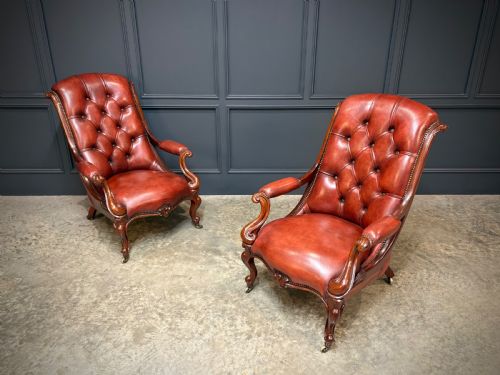
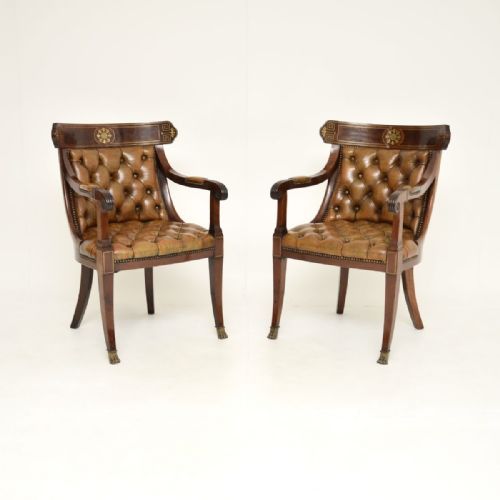


Antique Library Seating Pair
An antique library seating pair brings matching scholarly comfort to a study, uniting paired proportions with period craftsmanship.
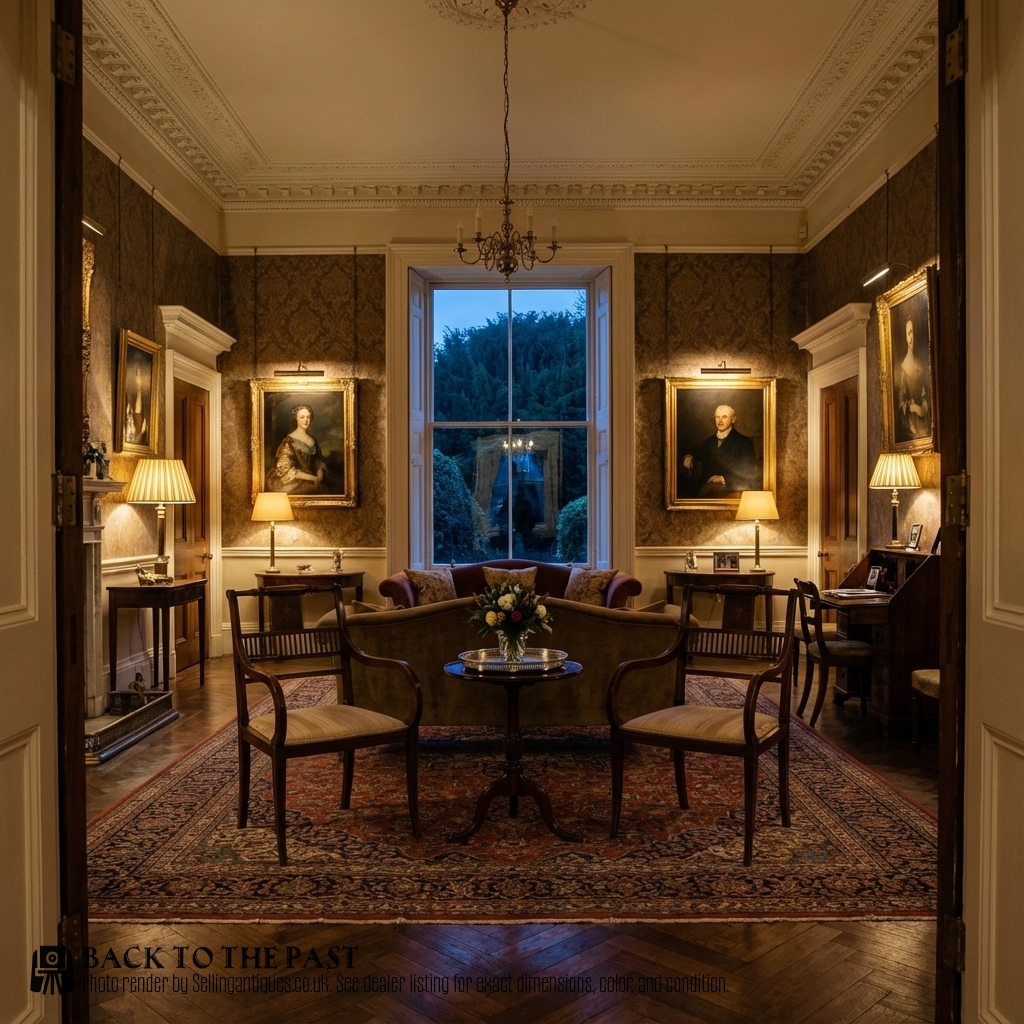
Antique Library Seating Pair
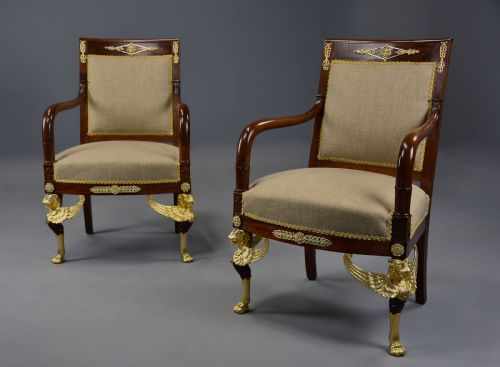
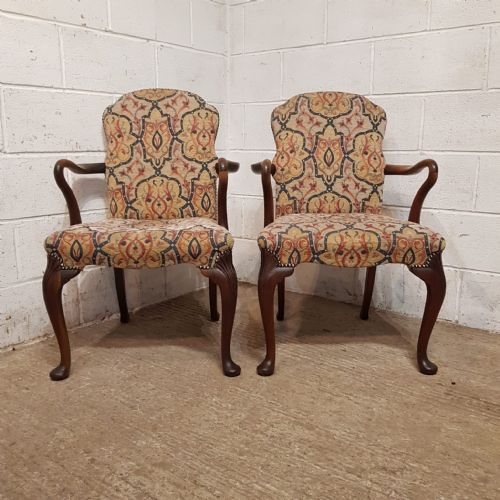
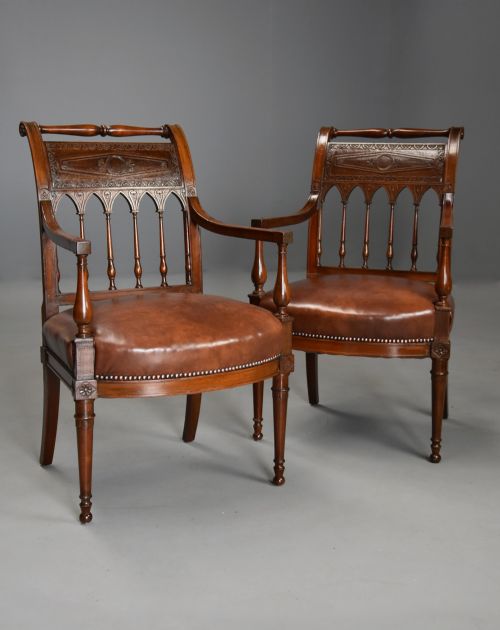
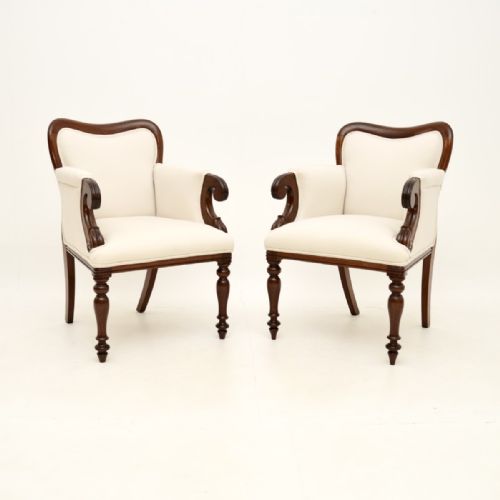
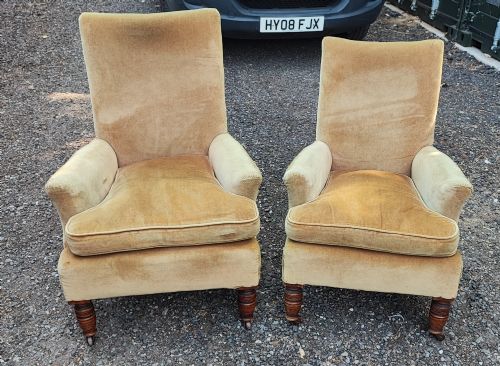
When buyers search for an antique library seating pair, they encounter matched sets of armchairs, desk chairs, and occasional seats designed for reading rooms and studies. These matching pairs originate from periods spanning the Regency era through the Victorian epoch and into the early twentieth century.
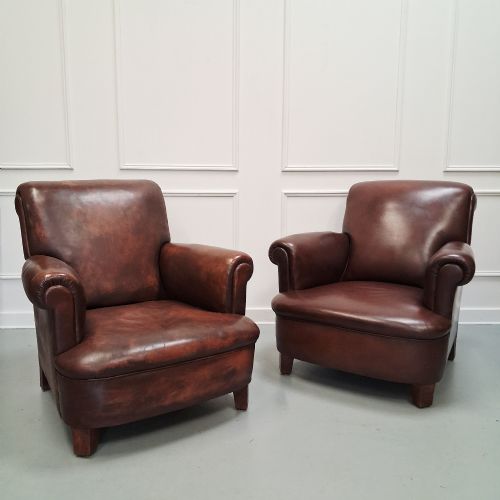
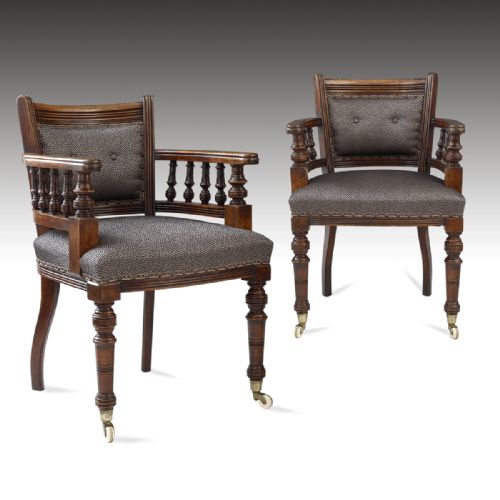
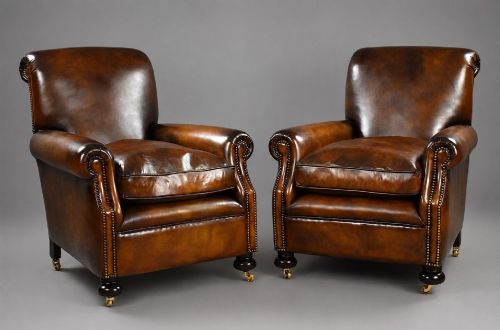
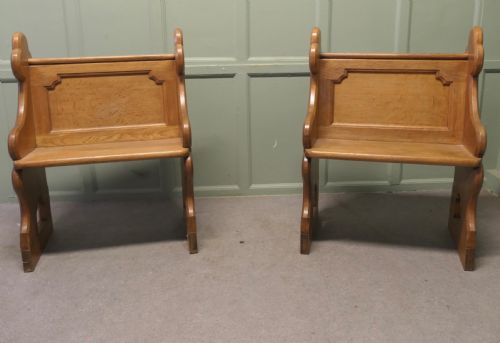
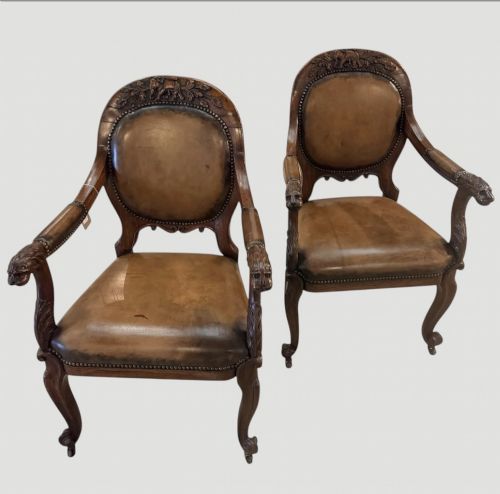
The most common examples on this page are mahogany, walnut, and oak armchairs featuring leather or fabric upholstery. Makers adapted styles ranging from Regency elegance to heavy Gothic Revival and understated Edwardian forms.
Matching pairs served domestic libraries, private studies, and grand country houses where symmetry mattered. Finding two chairs that survived together in original condition offers a distinct advantage for interior balance.
Materials and construction
Cabinetmakers constructed these frames using dense hardwoods such as mahogany, walnut, and oak, often incorporating carved details or brass inlay. Wood selection dictated both the structural integrity and the stylistic weight of each chair.
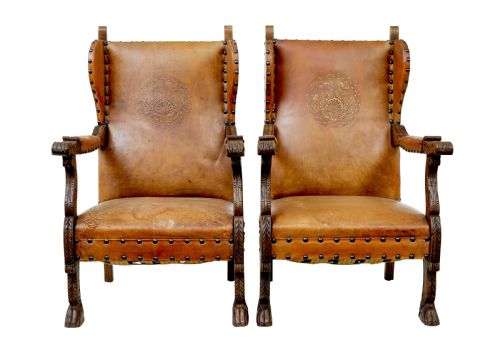
Upholstery techniques combined sturdy internal webbing with horsehair stuffing, finished with leather, cane, or woven panels. Leather seats frequently featured embossed or buttoned details fastened with brass tacks.
Listings feature oak, walnut, and mahogany frames alongside leather, cane, and fabric upholstery across multiple nineteenth-century and early twentieth-century periods.
Judging quality in pairs
Quality rests upon the crispness of the original woodwork carving and the integrity of the paired match. Subtle discrepancies in proportion or mismatched timber grain reveal whether two chairs truly belonged together from the start.
The survival of untouched leather upholstery, original brass inlay, and intact cane work elevates an example significantly. Structural robustness in the joints separates sturdy daily furniture from compromised decorator pieces.
White Allom and Co·J and T Scott Edinburgh
The Antique Library Seating Pair Glossary
- Bergère
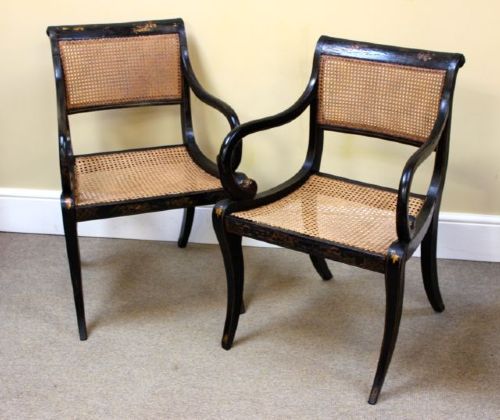
- An enclosed armchair with stuffed upholstery and cane panels to the sides and back. This French form gained popularity in English libraries during the Regency period.
- Fauteuil
- An open-armed wooden armchair originating in France, usually featuring carved show-wood frames and upholstered arm pads. They appear in several revival styles across nineteenth-century listings.
- Savonarola
- A folding armchair constructed from intersecting curved wooden slats, named after the fifteenth-century friar. Nineteenth-century revival examples utilise heavy carved timber details.
- Gothic Revival
- A nineteenth-century design movement drawing inspiration from medieval architecture. Pieces in this style often display pointed arches, tracery, and heavy carved oak.
- Regency
- A style period spanning the early nineteenth century defined by classical restraint and archaeological influence. Furniture from this era frequently incorporates brass inlay and sabre legs.
Antique Library Seating Pair: Frequently Asked Questions
How do I match antique library chairs?
Matching antique library chairs requires comparing timber grain, carving depth, and exact dimensions to ensure they formed an original pair. Minor variations often indicate marriage rather than a matched set.
Examine the construction methods underneath the seat frame to verify that both chairs share identical workshop practices and joinery.
Are these chairs suitable for daily desk use?
Many nineteenth-century library and desk chairs were engineered for sustained seating, making them robust enough for contemporary study spaces. Their ergonomic height and supportive arms suit working environments well.
Ensure the internal webbing and stuffing remain stable if the chairs will see heavy daily occupation.
How should I care for antique leather upholstery?
Antique leather requires gentle maintenance using specialised conservation balms to prevent the hide from drying and cracking. Avoid harsh chemical cleaners and keep the leather away from direct heat sources.
Preserving the original patina involves occasional light dusting and minimal intervention.
What defines Regency library seating?
Regency library seating is characterised by clean neoclassical lines, dark mahogany timbers, and occasional brass inlay details. These chairs lean toward architectural simplicity while maintaining refined proportions.
They function well in both traditional interiors and modern minimalist settings due to their restrained ornamentation.