



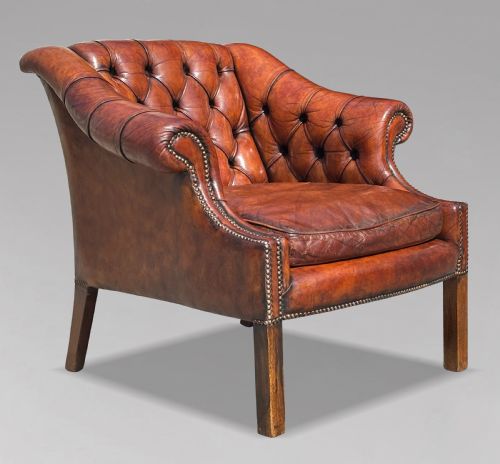
Buttoned Leather Library Chair
A buttoned leather library chair brings deep upholstery and rich hide together for comfort in study rooms and domestic interiors.
Buttoned Leather Library Chair
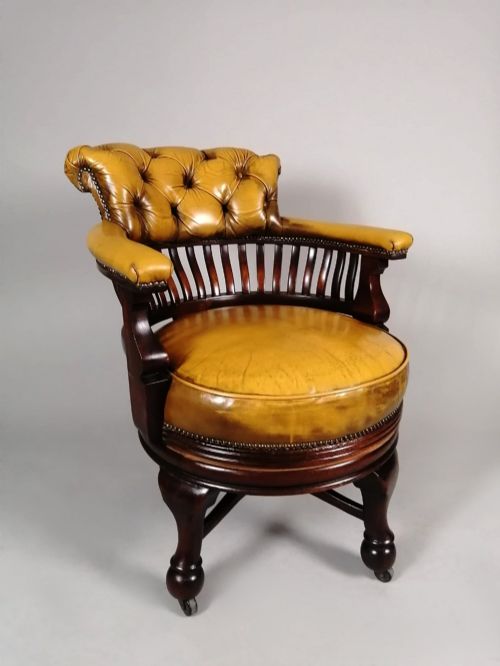
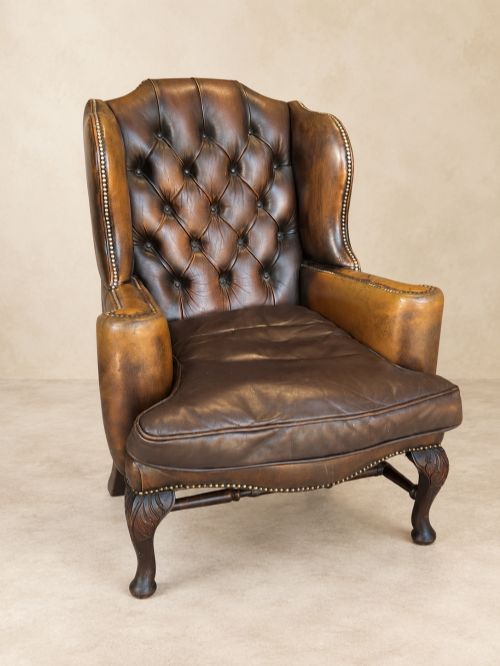
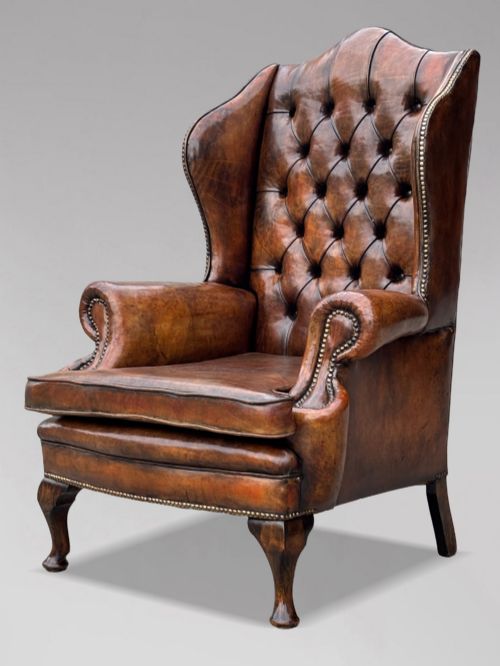
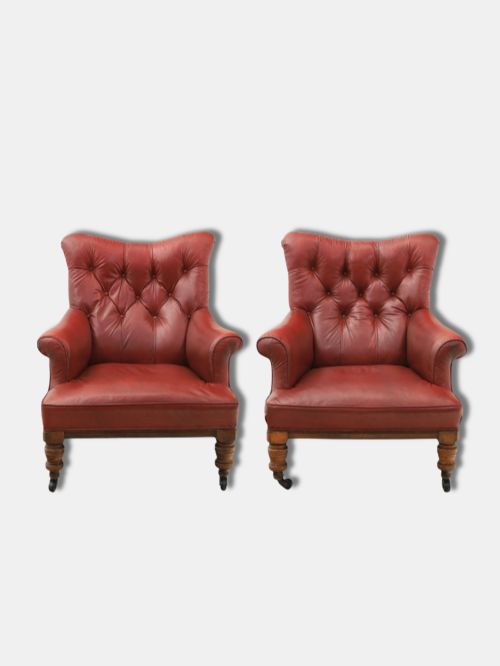
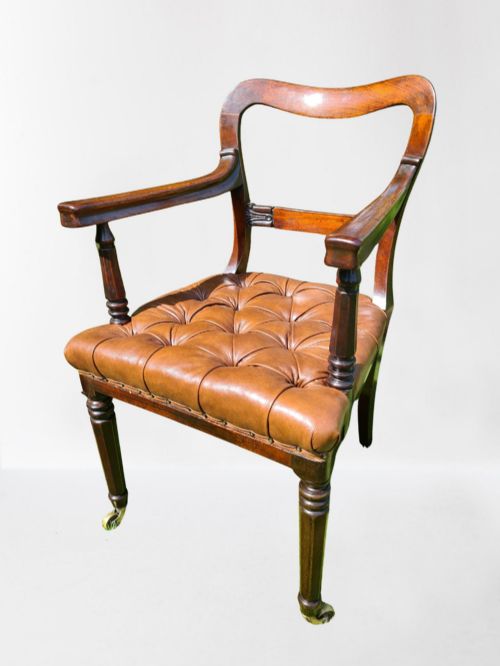
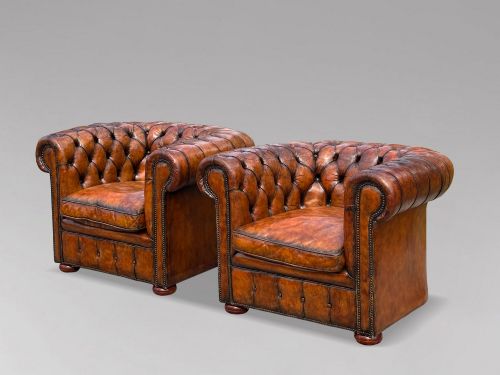
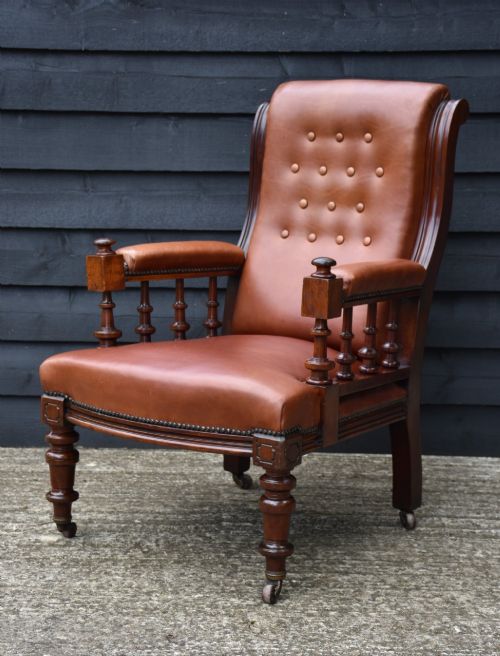
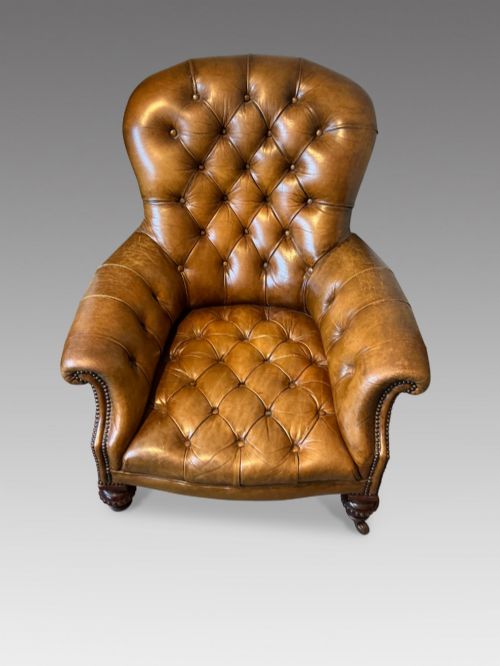
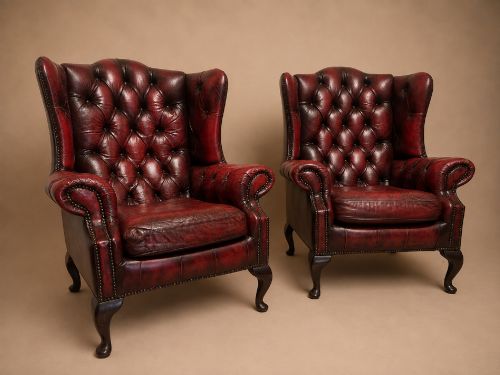
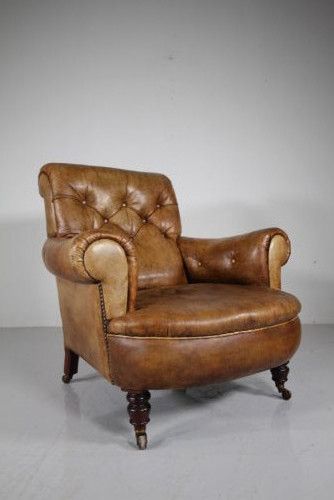
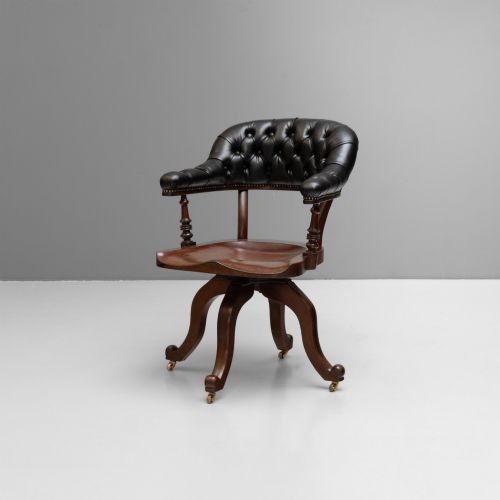
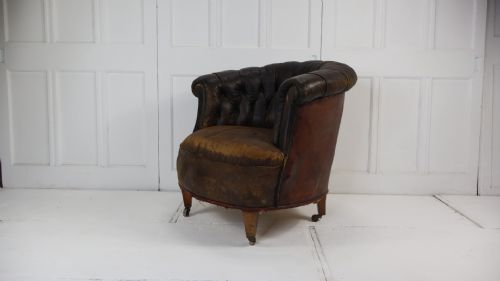
A buttoned leather library chair takes the form of a substantial armchair, desk chair, or wing armchair designed for reading and writing rooms. The selection on this page centres primarily on nineteenth-century Victorian and Regency pieces alongside twentieth-century examples, constructed to offer deep, supportive seating.
Makers frequently employed mahogany, oak, and walnut to build the robust frames that support the upholstered hide bodies. Buyers encounter both swivel desk variants and deep club armchairs, many carrying the characteristic tufted buttoning across the backrest.
How they were made
Craftsmen built structural frames using dense hardwoods like mahogany, oak, and walnut, often incorporating brass details and cast iron mechanisms in revolving desk chairs. The timber frameworks received traditional joinery before being padded and covered in leather hide or occasionally cane and rexine.
Upholsters secured the padding using deep buttoning techniques to distribute tension evenly across the seat backs and arms. Brass nail taming secured the edges of the leather directly to the wooden rails.
Listings incorporate nineteenth-century Victorian and Regency periods alongside 1920 examples, constructed from mahogany, oak, walnut, brass, and cane.
What varies in quality
The sophistication of the timber carving and the calibre of the mahogany or oak frame distinguish standard output from finer productions. Detail work such as brass inlay, hand-carved arm terminals, and patent reclining mechanisms indicate superior workshops.
The grade of the leather hide and the regularity of the tufted buttoning determine the tactile and visual presence of the seating. Heavier timber frames and intact original swivel or reclining hardware elevate the construction standard.
The Buttoned Leather Library Chair Glossary
- Bergère
- An enclosed armchair with stuffed upholstery and cane panels set into the wooden frame. This French-inspired form appeared frequently in nineteenth-century British libraries.
- Chesterfield
- A heavily upholstered seating form characterised by rolled arms and uniform deep buttoning. These club-style armchairs utilise durable leather hides.
- Rexine
- A leathercloth fabric made from cotton cloth coated with nitrocellulose. It served as a practical upholstery alternative during the early twentieth century.
- Wing armchair
- A high-backed seat featuring protective side panels designed to deflect draughts from the fireplace. These chairs combine deep leather upholstery with substantial wooden legs.
Buttoned Leather Library Chair: Frequently Asked Questions
Where were these chairs used?
These chairs originally occupied private studies, libraries, and grand drawing rooms where gentlemen spent hours reading or managing correspondence. Their heavy timber frames and supportive leather upholstery provided comfort for long periods at a desk or beside a hearth.
Today they function effectively as statement seating in modern home offices, living rooms, and reading corners. Their robust construction allows them to endure daily domestic use while maintaining their traditional character.
How do I identify a Victorian library chair?
Victorian examples typically display dense mahogany, oak, or walnut frames paired with dark brown, tan, or green leather upholstery. They often feature characteristic deep buttoning and sturdy turned or fluted legs.
Later Victorian and Edwardian iterations frequently incorporate revolving bases or ergonomic desk chair configurations. Examining the joinery and timber patination helps distinguish these mid-to-late nineteenth-century pieces from earlier Regency designs.
What is the difference between a desk chair and a library armchair?
Desk chairs generally feature revolving mechanisms, shorter armrests to fit beneath writing surfaces, and compact proportions for manoeuvrability. They were engineered for active working environments.
Library armchairs prioritise deep, fixed seating with extensive padding, wide armrests, and sometimes high winged backs for relaxation. They are built for stationary comfort rather than mobility around a workspace.
How do I care for antique leather upholstery?
Antique leather requires consistent maintenance to prevent the hide from drying and cracking over time. Applying specialised leather balms or conservation waxes nourishes the material and preserves its suppleness.
Keep these chairs away from direct sunlight and heat sources such as radiators, which accelerate moisture loss in old hides. Gentle dusting with a soft cloth prevents abrasive particles from settling into the buttoned folds.