

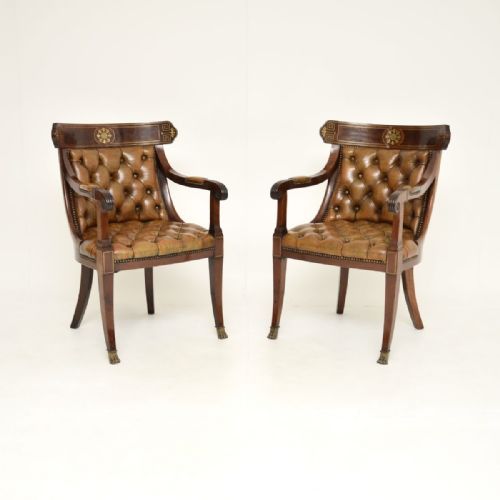


Regency Mahogany Tub Armchairs
Regency mahogany tub armchairs offer curved comfort and classical proportion, bringing refined seating and enduring library style to any room.
Regency Mahogany Tub Armchairs
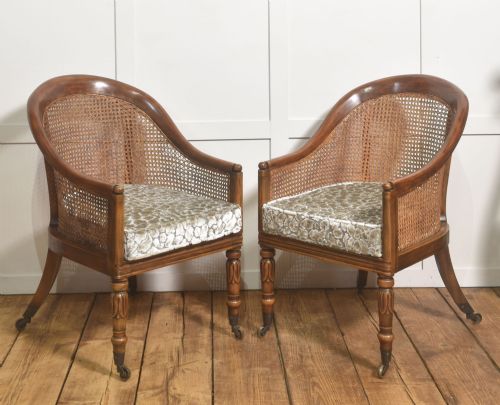
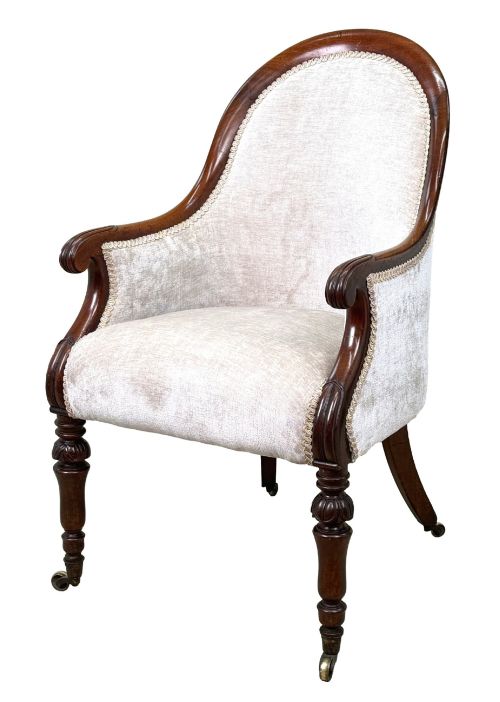
When you search for regency mahogany tub armchairs, you look for deep, curved seating designed for libraries and studies. These pieces unite solid timber framing with enclosed upholstered or caned sides to keep out draughts.
The version you meet most often on this page spans the Regency period alongside later nineteenth-century interpretations. Makers fashioned these armchairs in mahogany, often integrating cane work or leather upholstery.
Beyond standard library seats, the selection includes bergère forms and occasional child-sized armchairs. These variations show how cabinetmakers adapted the enclosed tub shape for different rooms and sitters.
Materials and construction
Cabinetmakers built these frames primarily from dense, rich mahogany, sometimes selecting timbers with distinct grain patterns. Brass inlay frequently accentuates the wooden framework, adding sharp metallic contrast to the dark timber.
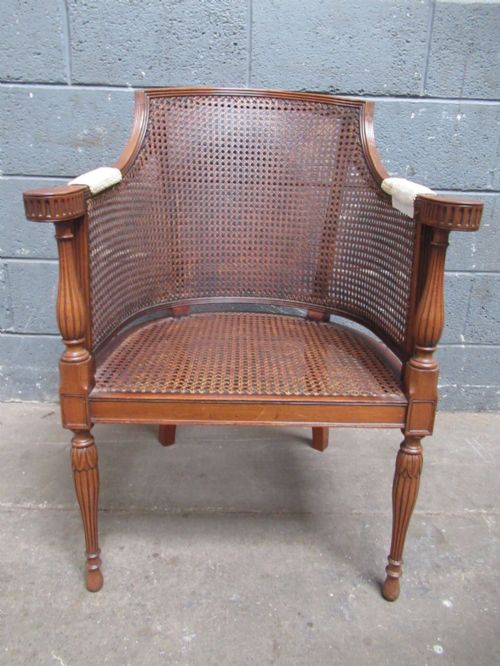
Caning and rattan cane provide flexible support along the curved back and sides of bergère variants. Workshops completed these seats with leather, velvet, or fabric upholstery over internal padding.
Some diminutive armchairs were built specifically for children, proving that even the youngest readers required proper library support.
Markers of quality
Quality rests upon the crispness of the timber turnings and the precision of the brass inlay set into the mahogany frame. Superior examples display fluent curvature in the enclosed tub back and well-proportioned arm supports.
The finesse of the hand-woven cane work or the neatness of the leather upholstery dictates the standard of execution. Better pieces maintain structural integrity through tight joinery while preserving delicate decorative details.
Gillows
The Regency Mahogany Tub Armchairs Glossary
- Bergere
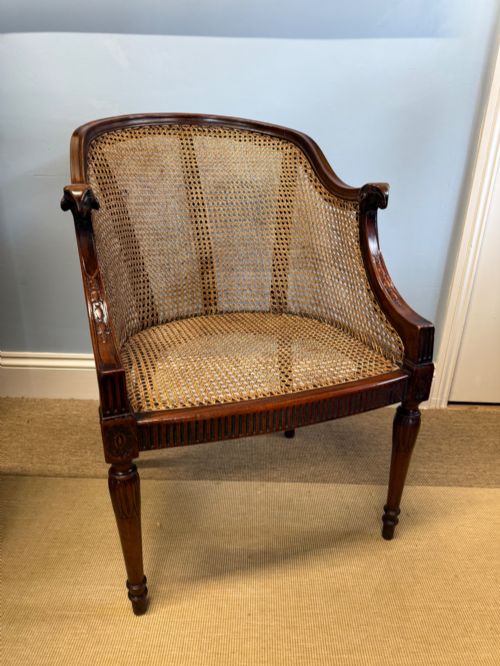
- An enclosed armchair with a wooden frame where the sides and back are typically filled with cane work. This French-inspired form became popular in English seating during the Regency period.
- Tub chair
- An armchair featuring a continuous curved back and arms forming a single semi-circular enclosure. The design derives from eighteenth-century forms intended to shield sitters from cold air.
- Caning
- A woven lattice made from rattan or cane strips stretched across chair frames. It provides a lightweight, resilient surface for backs and seats.
- Curule
- A style of X-shaped cross-frame furniture derived from ancient Roman seats of magistrate. Nineteenth-century cabinetmakers adapted this curule geometry for library armchairs.
- Neoclassical
- A style drawing inspiration from classical antiquity, featuring restrained ornamentation and symmetrical proportions. This aesthetic heavily influenced furniture design during the Regency period.
Regency Mahogany Tub Armchairs: Frequently Asked Questions
How do I identify a Regency chair?
Regency chairs typically exhibit dark mahogany timber, classical proportions, and restrained decorative elements such as brass inlay. Makers often employed curved lines inspired by ancient Roman and Greek furniture.
Many pieces also feature caned panels or leather upholstery suited to domestic study spaces.
Where were these chairs used?
These armchairs served primarily in private libraries, reading rooms, and studies where people sat to read or write. Their enclosed tub shape protected occupants from cold draughts in large rooms.
Later examples also appeared in bedrooms, dressing rooms, and formal sitting spaces as occasional seating.
What is a bergère chair?
A bergère is an enclosed armchair characterised by woven cane panels along the back and sides. This French-derived design offers a lighter visual weight than fully upholstered seats.
English makers adopted the bergère form extensively during the Regency period for library and drawing-room use.