


Antique Library Seat
An antique library seat is a solid timber armchair designed for reading rooms, bringing deep comfort and heavy mahogany or oak frames into a study.
Antique Library Seat
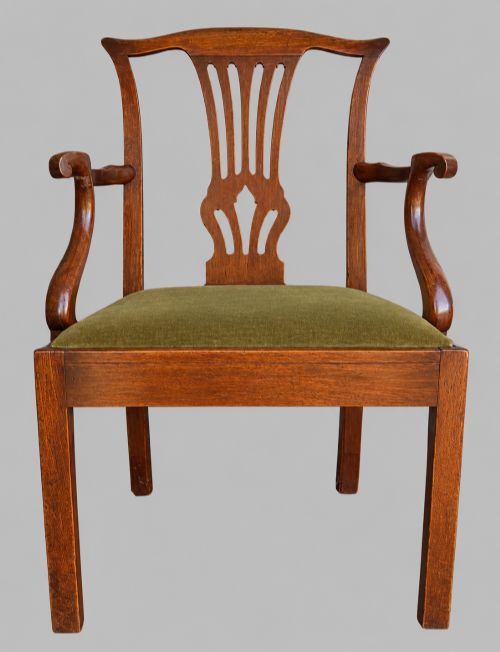
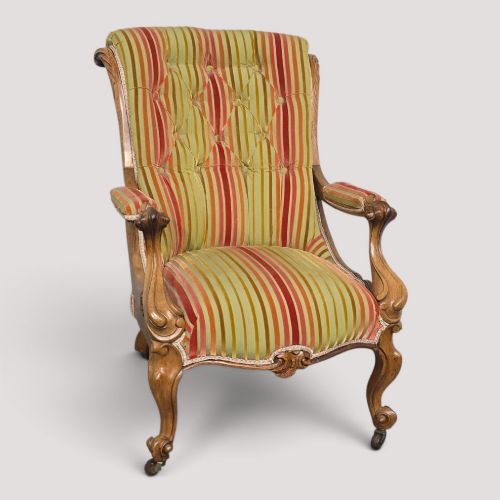
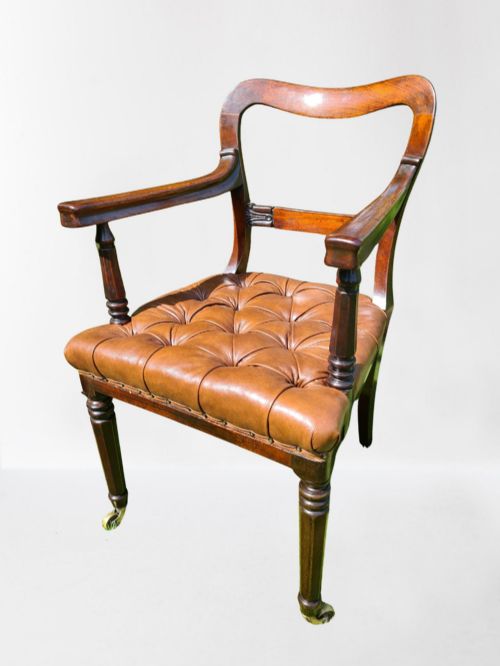
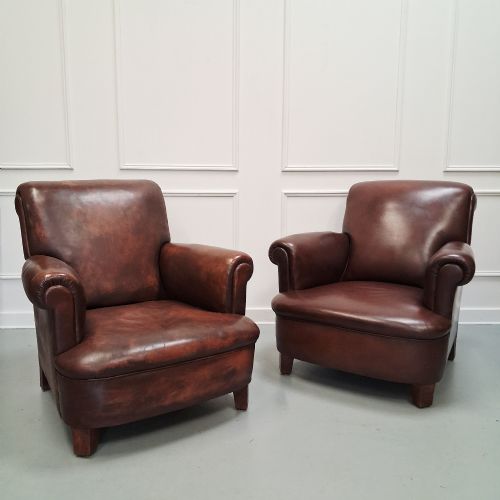
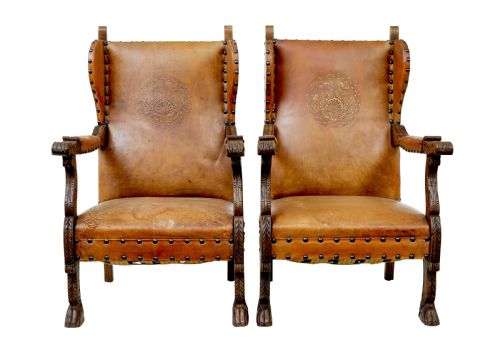
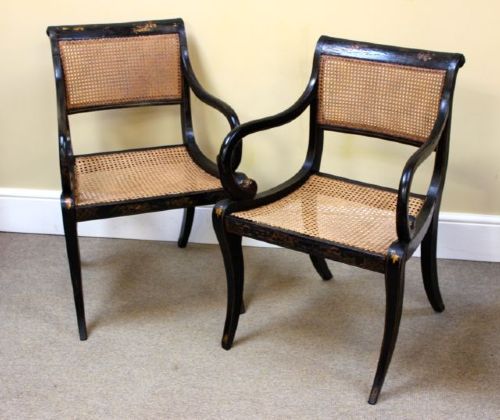
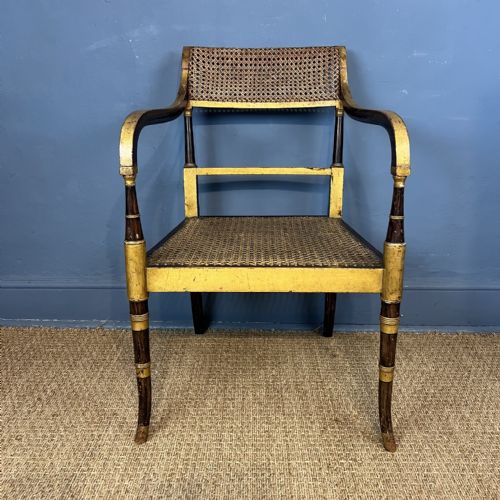
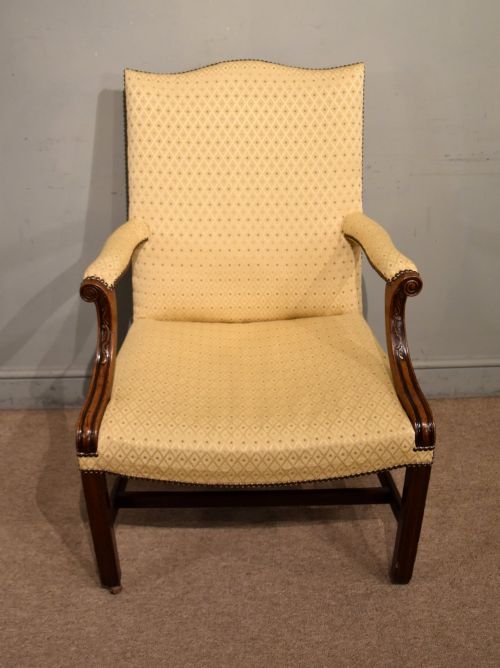
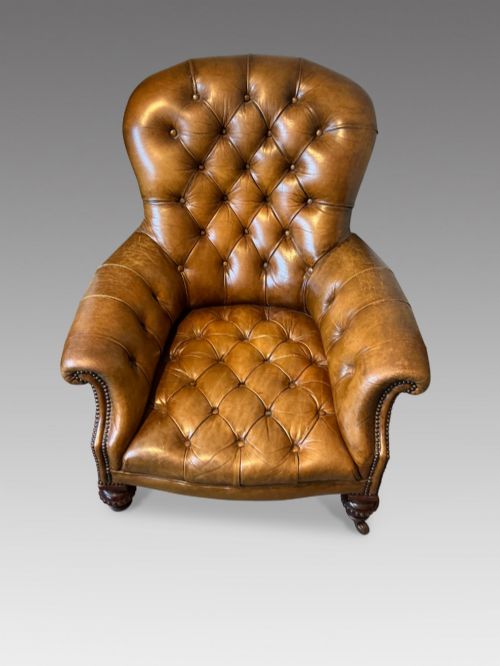
An antique library seat sits low to the floor with generous proportions, built primarily as a heavy mahogany, oak or walnut armchair for study and reading rooms. The form encompasses George III Gainsborough chairs, deep leather club chairs, and Regency caned models designed for long hours of seated work.
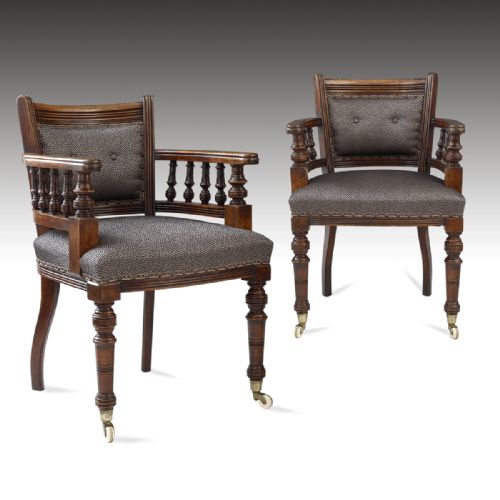
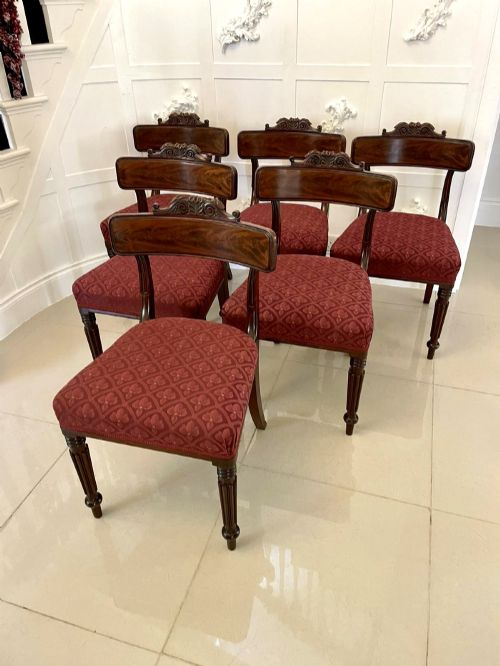
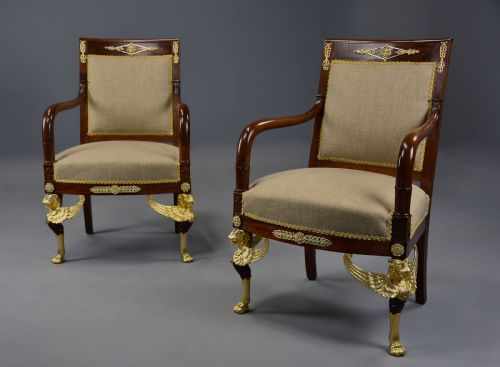
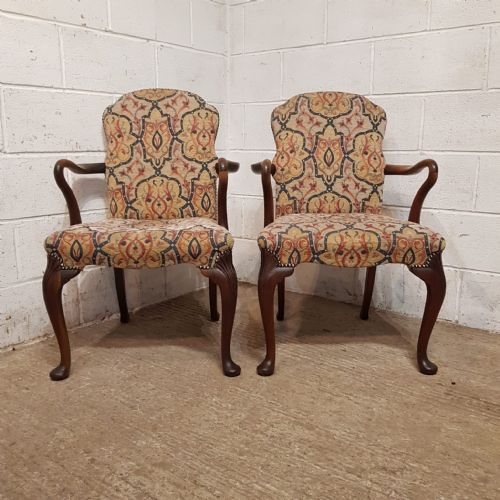
Georgian and Victorian examples dominate the selection, often taking the shape of open armchairs upholstered in buttoned leather or patterned fabric. Makers also produced variations including barrel-backed reading chairs, revolving desk models, and low fireside seats intended for domestic libraries.
The materials reflect heavy domestic use, pairing dense native hardwoods with supple hand-dyed hides, woven cane seats, and brass castors. These heavy pieces were built to anchor a room, combining architectural presence with functional ergonomics for the scholar or reader.
How they were made
Cabinetmakers constructed the frames of an antique library seat using dense hardwoods such as mahogany, oak, and walnut, joined with traditional mortise and tenon techniques. Turnery, reeded legs, and hand-carved details like blind fretwork adorned the structural supports.
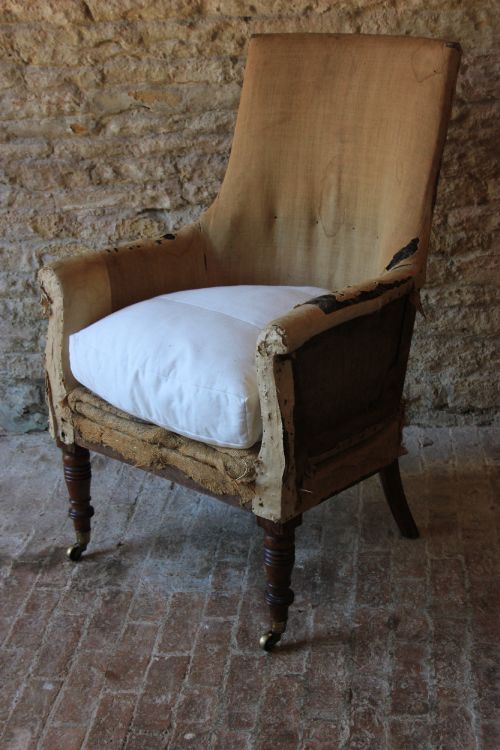
Upholstery involved stuffing horsehair and wool webbed over sturdy frames, then securing the outer layer of leather, velvet, or calico with rows of brass tacks. Caned panels utilised split rattan woven tightly through drilled holes along the seat rails.
Some nineteenth-century models include hidden brass castors originally chosen to protect expensive Turkey carpets from heavy mahogany frames.
What varies in quality
The distinction between standard seating and a superior antique library seat lies in the depth of timber carving and the integrity of the original frame construction. Master workshops expended greater labour on hand-carved arm terminals, crisp reeding, and substantial secondary woods.
Originality of surface finish and leather determines the standing of a piece, with period hand-dyed hides and patinated timber holding greater integrity than later replacements. The weight of the timber and the tightness of the joinery reveal the original workshop standard.
Gillows·Howard and Sons
The Antique Library Seat Glossary
- Bergère
- An enclosed upholstered armchair with wooden framing exposed around the sides and back. These seats frequently incorporate woven cane panels.
- Fretwork
- Openwork ornamentation carved in geometric or Chinese-inspired patterns. Cabinetmakers applied this technique to the legs and stretchers of mid-eighteenth-century seating.
- Reeded
- A decorative moulding formed of parallel convex strips carved directly into the timber. This detail appears frequently on Regency and nineteenth-century furniture legs.
- Castor
- A small wheel attached to the foot of a heavy chair to ease movement across carpets. Early versions utilised brass collars holding timber or leather wheels.
Antique Library Seat: Frequently Asked Questions
What defines a library chair?
A library chair is an armchair built with sturdy timber frames and comfortable upholstery, designed specifically for reading spaces and home studies. They provide deeper seats and lower profiles than standard dining furniture.
Most examples utilise mahogany or oak, often featuring leather upholstery and brass castors to allow easy repositioning near bookcases or fireplaces.
How do I identify a Gainsborough chair?
Gainsborough chairs date from the Georgian period and feature wide upholstered seats, padded open arms, and straight wooden legs. They were built for writing desks and reading rooms.
Look for hand-carved mahogany framing, serpentine seat rails, and traditional horsehair stuffing beneath the leather or fabric cover.
Are these seats comfortable for daily use?
These armchairs were engineered for long hours of reading and study, offering robust lower back support and generous arm rests. The firm horsehair stuffing provides an upright, supportive sit.
Many buyers add a matching lumbar cushion if they prefer a softer lounge experience while reading in a modern study.
How do I date a wooden armchair?
Dating relies on timber selection, structural joinery methods, and stylistic cues such as carved reeding or cabriole legs. Georgian pieces generally show dense mahogany and hand-cut joinery.
Victorian iterations often feature heavier proportions, machine-sawn components, and darker finishes that reflect nineteenth-century industrial workshop practices.