
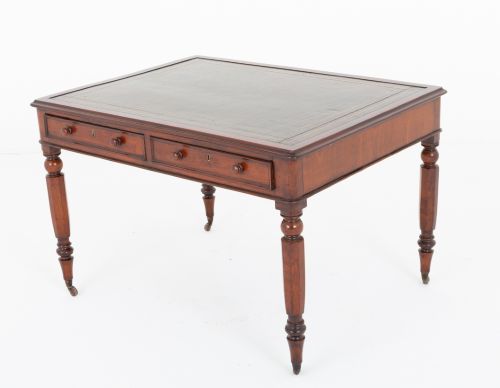


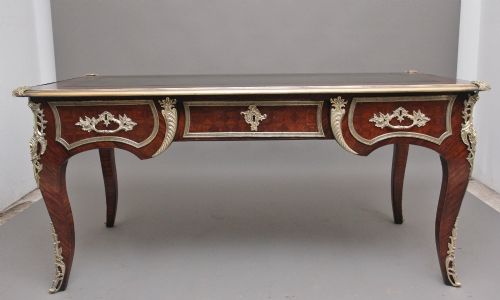
Antique Leather Table
An antique leather table brings tactile warmth and a distinguished writing surface into a room, spanning grand partners desks to compact occasional pieces.
Antique Leather Table
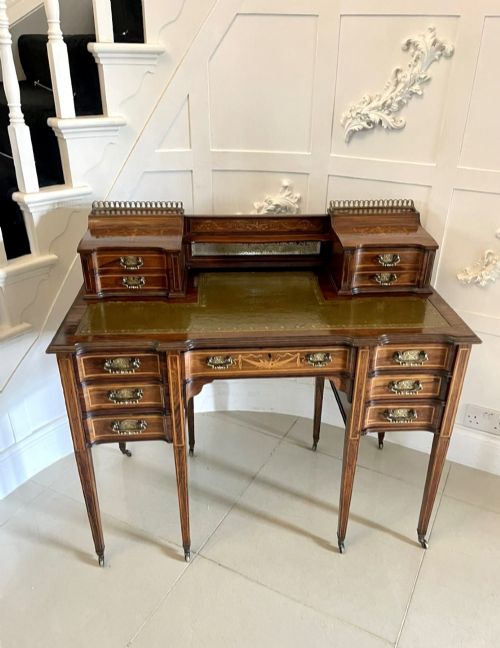
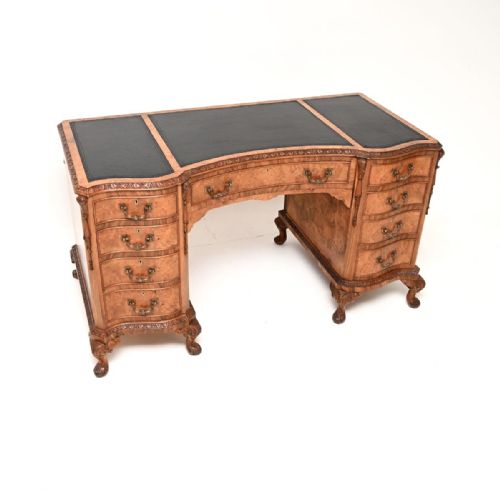
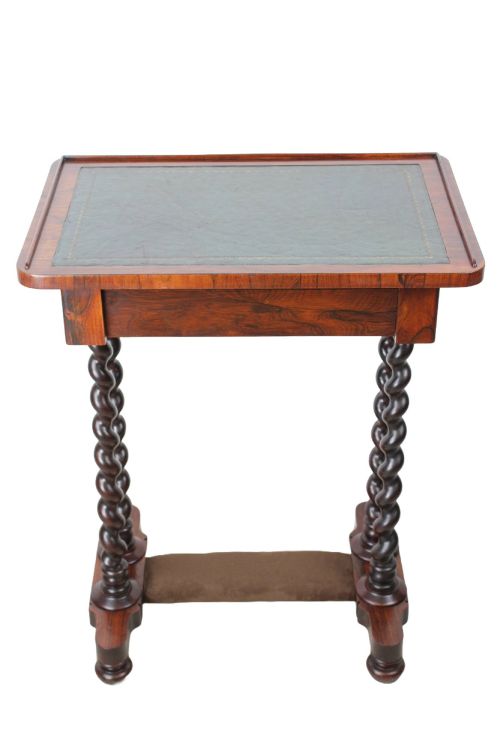
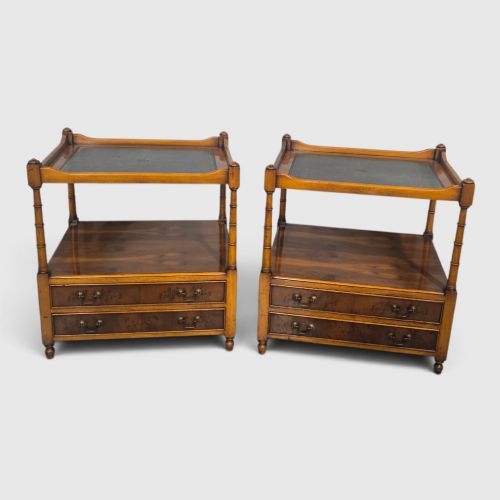
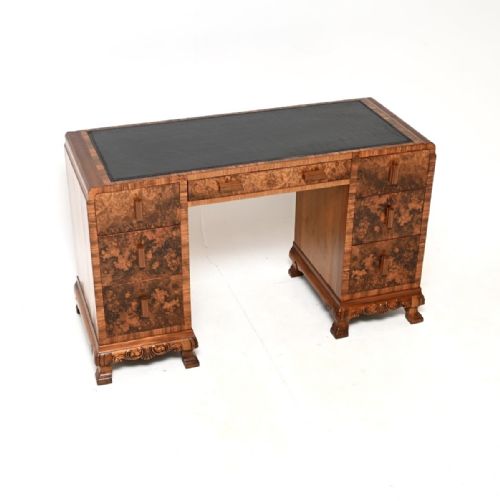
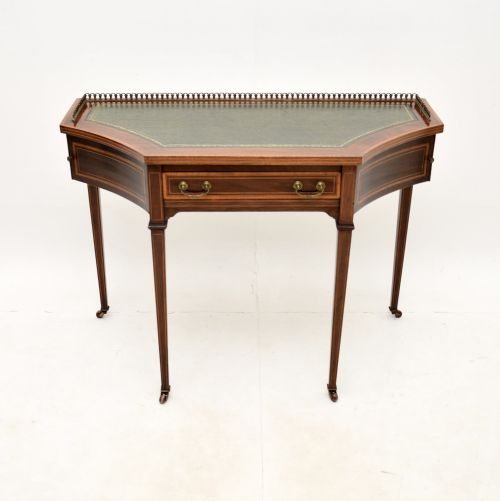
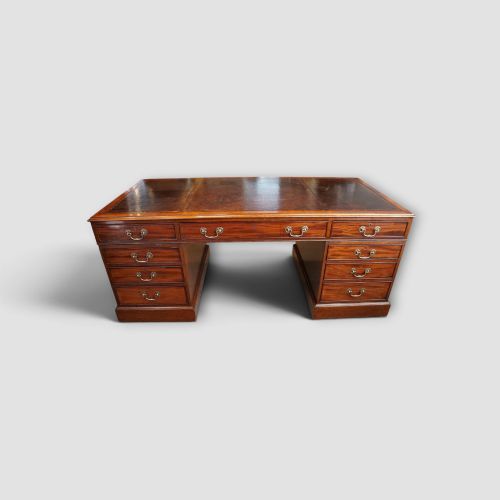
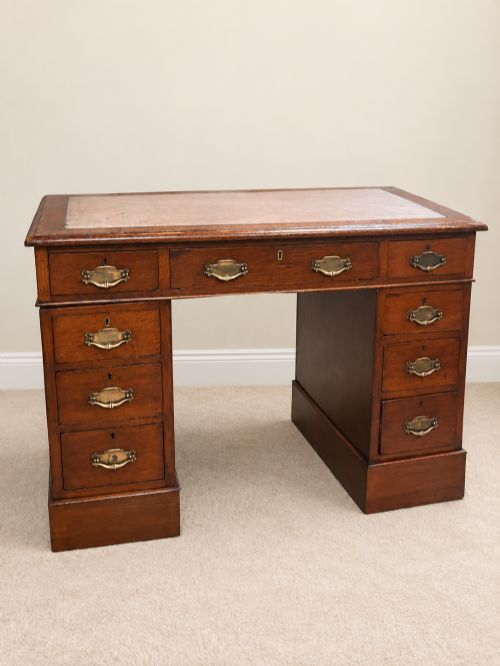
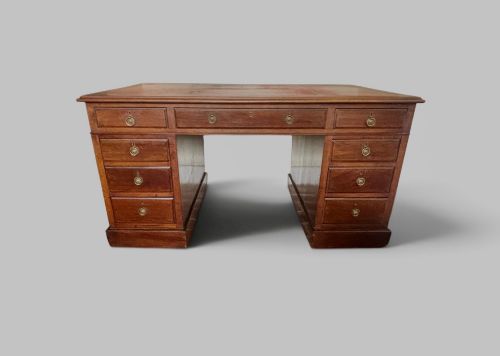
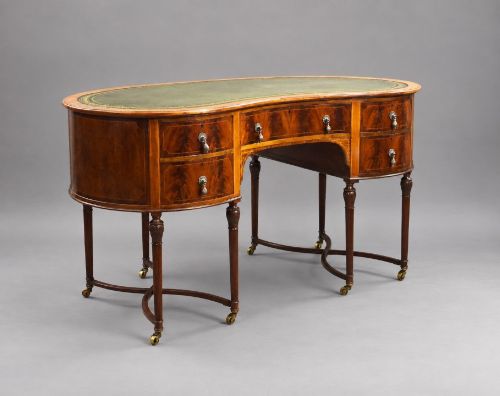
When searching for an antique leather table, buyers encounter a diverse array of forms designed for writing, storage, and display. Pedestal desks, partners desks, writing tables, and drum tables dominate the selection across this page.
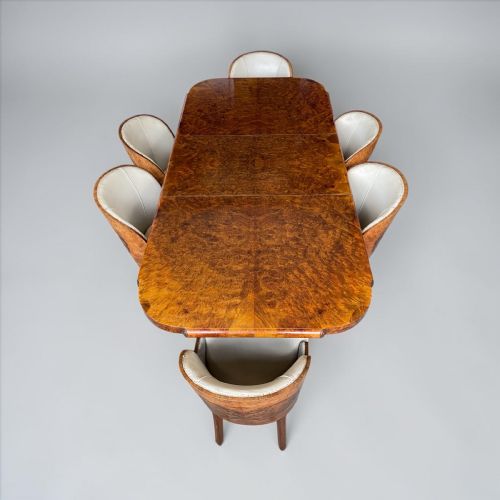
The material surfaces span centuries of cabinet-making, originating from periods such as the Regency, Victorian, and Edwardian eras, alongside later Art Deco interpretations. These pieces function equally well as active workspaces and as focal points in period interiors.
Makers utilised rich timbers like mahogany, burr walnut, and rosewood to frame the signature leather inserts. Whether configured as a compact lady's writing desk or a large freestanding library table, each form serves a distinct domestic or professional function.
Materials and Construction
Craftsmen built these tables using solid and veneered hardwoods, selecting mahogany, walnut, and oak for their structural stability and rich grain patterns. Secondary timbers were often employed for drawer linings and internal framing.
The defining feature - the leather writing surface - was typically pared down, stretched, and secured to the timber top before receiving blind or gilt tooling around the perimeter. Brass handles, locks, and ormolu mounts completed the hardware, fastened securely to drawers and pedestals.
Materials recur across the inventory in solid and veneered forms, featuring mahogany, oak, burr walnut, and rosewood.
Standards of Execution
Quality rests on the depth of the timber figuring, the crispness of any applied inlays or carved details, and the integrity of the structural joinery. Finer examples display meticulous dovetailing in the drawer construction and well-matched grain across large surfaces.
The treatment of the leather insert also defines the tier of the piece, with finely tooled borders and rich patination elevating the overall execution above plain replacements. Superior hardware, such as heavy cast brass handles and functioning original locks, marks out the better workshops.
Maurice Adams·Trollope & sons·Maple and Co·François Linke·Edwards & Roberts
The Antique Leather Table Glossary
- Partners desk
- A large double-sided desk designed for two people to work opposite one another, featuring drawers and cupboards on both faces.
- Drum table
- A circular library or occasional table with a deep frieze containing drawers, usually rotating on a central pillar and tripod base.
- Tooled leather
- Leather decorated with patterns pressed into the surface using heated brass tools, frequently accented with gold leaf.
- Pedestal desk
- A heavy freestanding desk comprising two supporting banks of drawers beneath a rectangular top.
- Ormolu
- Gilded bronze cast and chased for decorative mounts on fine furniture, popular in French-influenced pieces.
Antique Leather Table: Frequently Asked Questions
How do I care for the leather top?
Keep the leather away from direct sunlight and excessive heat to prevent drying and cracking over time. Treat the surface periodically with specialised leather balms to maintain suppleness and protect the gilt tooling.
Avoid using harsh household cleaners or excessive water when dusting the writing surface. A soft, dry cloth is sufficient for routine maintenance.
Were partners desks meant for two?
Partners desks were originally built for business associates, bankers, or spouses to share a single workspace. The symmetrical arrangement provides identical drawer and cupboard access from both sides.
These substantial pieces were traditionally positioned in the centre of a room rather than pushed against a wall.
How can I tell a Victorian desk from an Edwardian one?
Victorian desks generally feature heavier proportions, dense timbers like dark mahogany or walnut, and deep mouldings. The construction emphasises robust utility and formal presence.
Edwardian pieces often display lighter framing, satinwood stringing, or inlaid marquetry, reflecting a shift towards more refined domestic elegance.
Can I use these tables for daily computer work?
Many period writing tables and pedestal desks provide sturdy surfaces well suited for modern laptops and writing tasks. The generous proportions of nineteenth-century writing surfaces accommodate contemporary office equipment comfortably.
Care should be taken to protect the leather from sharp edges or heat generated by electronic devices.