

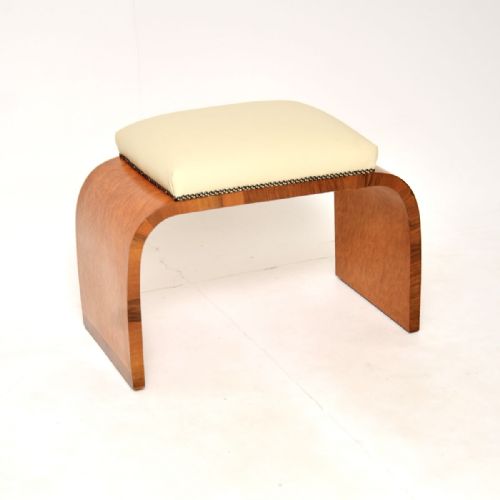
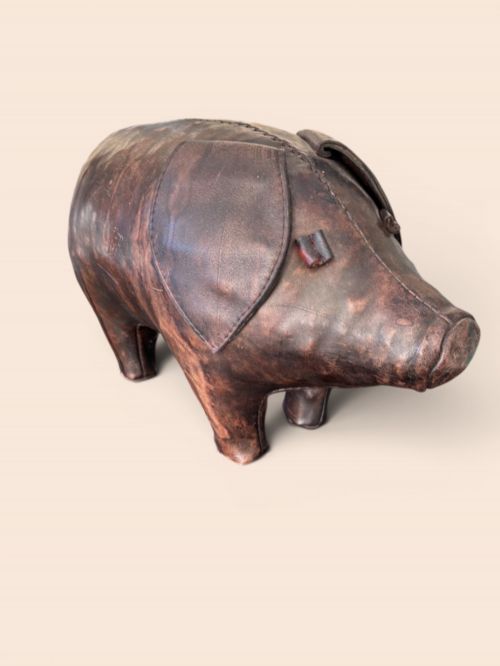
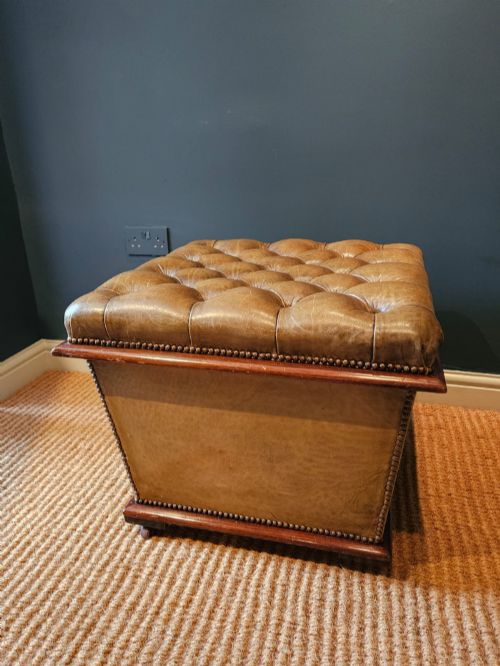

Antique Leather Ottoman Stool
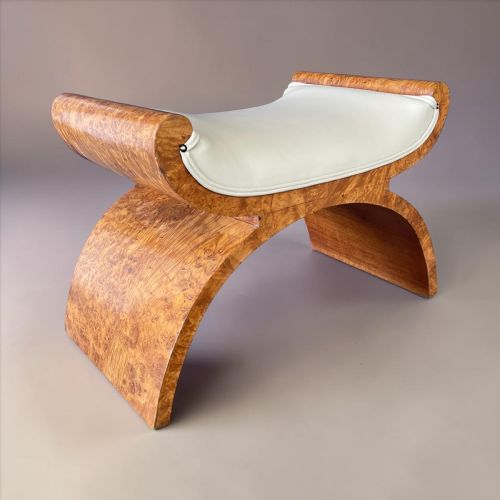
These heavy, low seats bring warmth and utility to a room, ranging from buttoned Victorian library pieces to streamlined Art Deco designs.
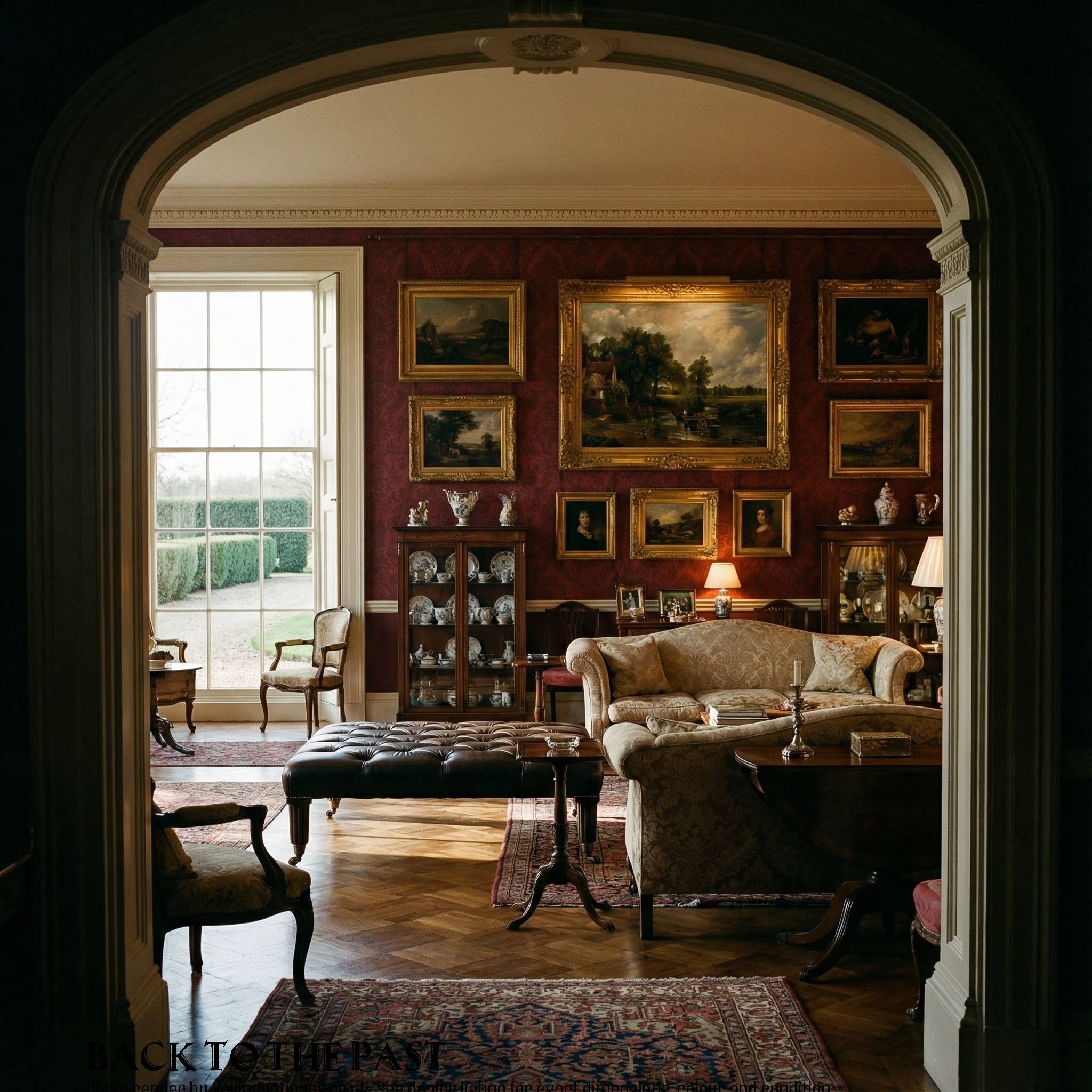
Antique Leather Ottoman Stool
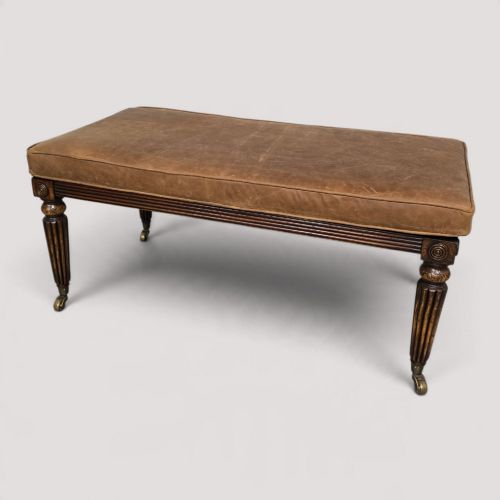
When you search for an antique leather ottoman stool, you look for low upholstered seating that functions as a footrest, window seat or low coffee table. These pieces appear across various periods, from formal Regency rosewood benches to heavy Victorian walnut frames and Edwardian oak designs.
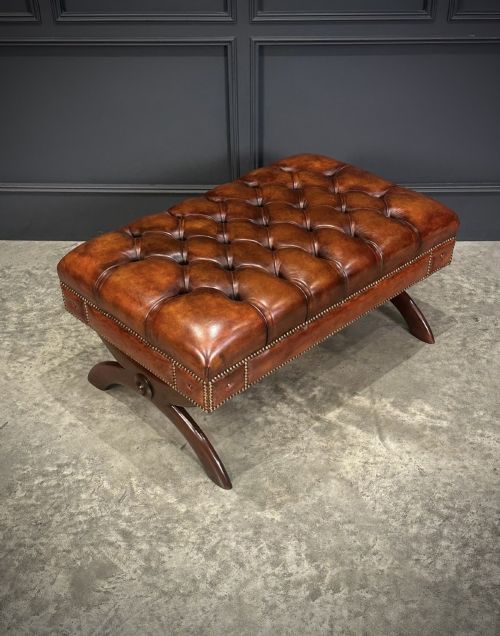
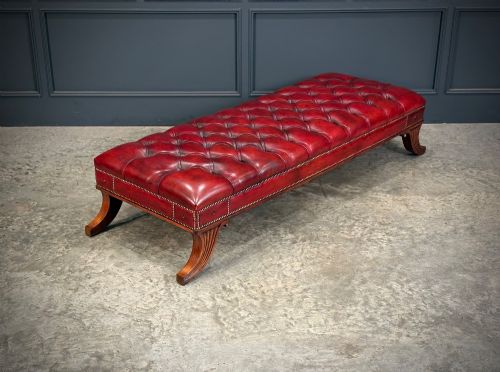
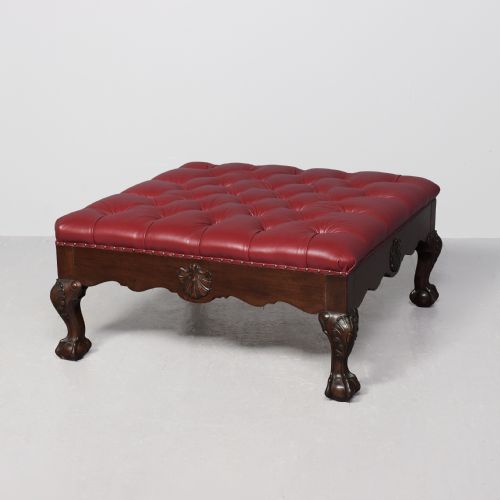
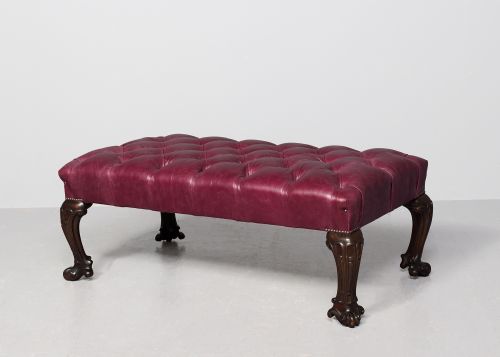
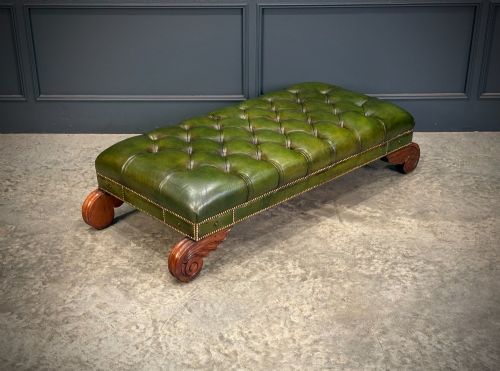
You are most likely to meet Victorian and nineteenth-century examples on this page, often featuring buttoned leather upholstery atop mahogany, walnut or oak bases. Long window stools, square box ottomans and low cabriole-legged footstools form the majority of the available shapes.
Materials and construction methods
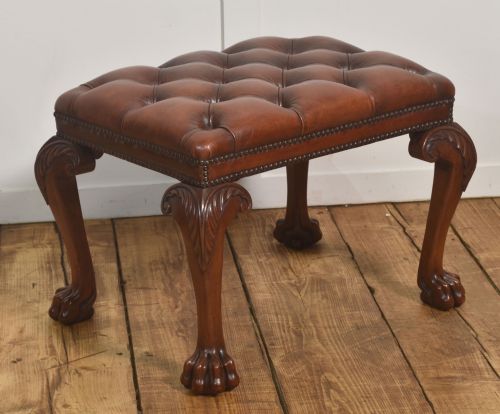
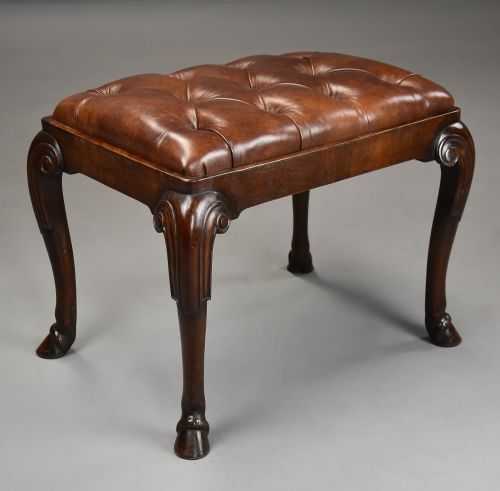
Carpenters built the foundational frames using dense timbers such as mahogany, walnut, rosewood and oak, frequently shaping the wood into cabriole legs, fluted supports or X-frames. Artisans then applied traditional joinery to ensure stability under heavy daily use as seats or footrests.
Upholsterers stretched leather over stuffed interiors, securing the hides with individual brass studs or deep buttoning techniques that created distinct geometric patterns. Hand-dyed burgundy, tan and green hides dominate the surfaces, showing patination acquired over generations.
Antique Leather Ottoman Stool Retail Price Guide 2026
Typical asking prices for leather ottoman stool among the pieces listed under this phrase on Sellingantiques today, from the lower quarter to the upper quarter. They describe what is for sale here now, not the wider market.
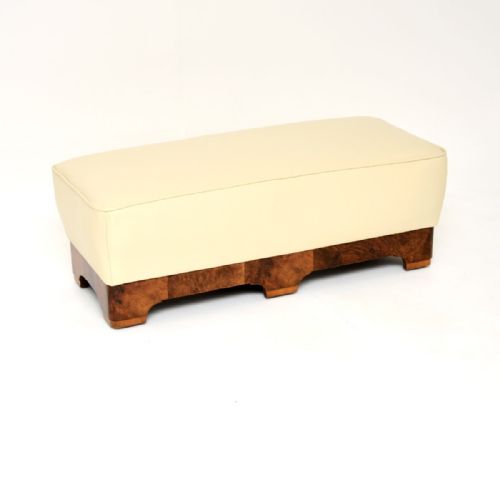
Periods represented span from George III and Regency eras through Victorian, Edwardian and Art Deco decades.
Distinctions in craftsmanship and materials
The depth of the buttoning and the choice of hide dictate visual presence, where supple hand-dyed leathers and balanced proportions distinguish bespoke library seating from simpler domestic footstools.
Harry and Lou Epstein·Omersa For Liberty·Simpson Kendall·James Shoolbred
The Antique Leather Ottoman Stool Glossary
- Buttoned
- An upholstery technique where twine pulls the leather taut into recessed tufts, often secured with pleats. This method keeps internal stuffing firmly distributed.
- Cabriole leg
- A furniture leg that curves outward in a convex arc before tapering inward to a foot. It draws inspiration from animal limbs and frequently appears on walnut frames.
- Box ottoman
- A hollow seated stool featuring a hinged lid for interior storage. These pieces combine seating with concealed compartment space.
- Metamorphic
- Descriptive of furniture engineered to transform into different forms or functions. An example includes a gout stool with adjustable tilting mechanisms.
- Brass-studded
- A decorative edge finish using individual metal tacks driven along the leather border. This detail secures the hide while adding a metallic trim.
Antique Leather Ottoman Stool: Frequently Asked Questions
What is an antique leather ottoman stool used for?
These versatile low seats serve primarily as footrests, window benches or impromptu coffee tables in reception rooms and libraries. Their sturdy frames and padded surfaces accommodate both resting feet and sitting.
Larger box versions provide concealed storage for blankets or books within living spaces. Their compact height makes them suitable for placing beneath windows or beside firesides without obstructing views.
How do I date an antique ottoman stool?
Dating relies heavily on the framing timber, leg style and upholstery execution characteristic of specific decades. Regency pieces often feature rosewood with brass inlay, whereas Victorian examples favour heavily carved walnut and deep buttoning.
Looking underneath reveals the construction of the wooden frame and hand-cut screws or handmade fixings. Secondary woods like oak or deal can also point toward a nineteenth-century origin.
Are these stools suitable for daily use?
Solid hardwood frames and thick leather hides make these pieces robust enough for everyday seating and foot support. The dense internal padding resists sagging under regular weight.
Routine conditioning keeps the leather supple and prevents cracking over time. Positioning them away from direct heat sources preserves both the timber and the hide.
What is the difference between an ottoman and a footstool?
Ottomans traditionally feature larger upholstered tops and sometimes include hollow compartments with hinged lids for storage. They function equally well as low tables or bench seating.
Footstools tend to be smaller in scale, designed specifically to support seated legs rather than act as independent seats. Many nineteenth-century examples blur these lines through generous proportions and decorative frames.