



Large Leather Footstool
A large leather footstool brings solid timber frames and hand-dyed hides together to anchor a room.
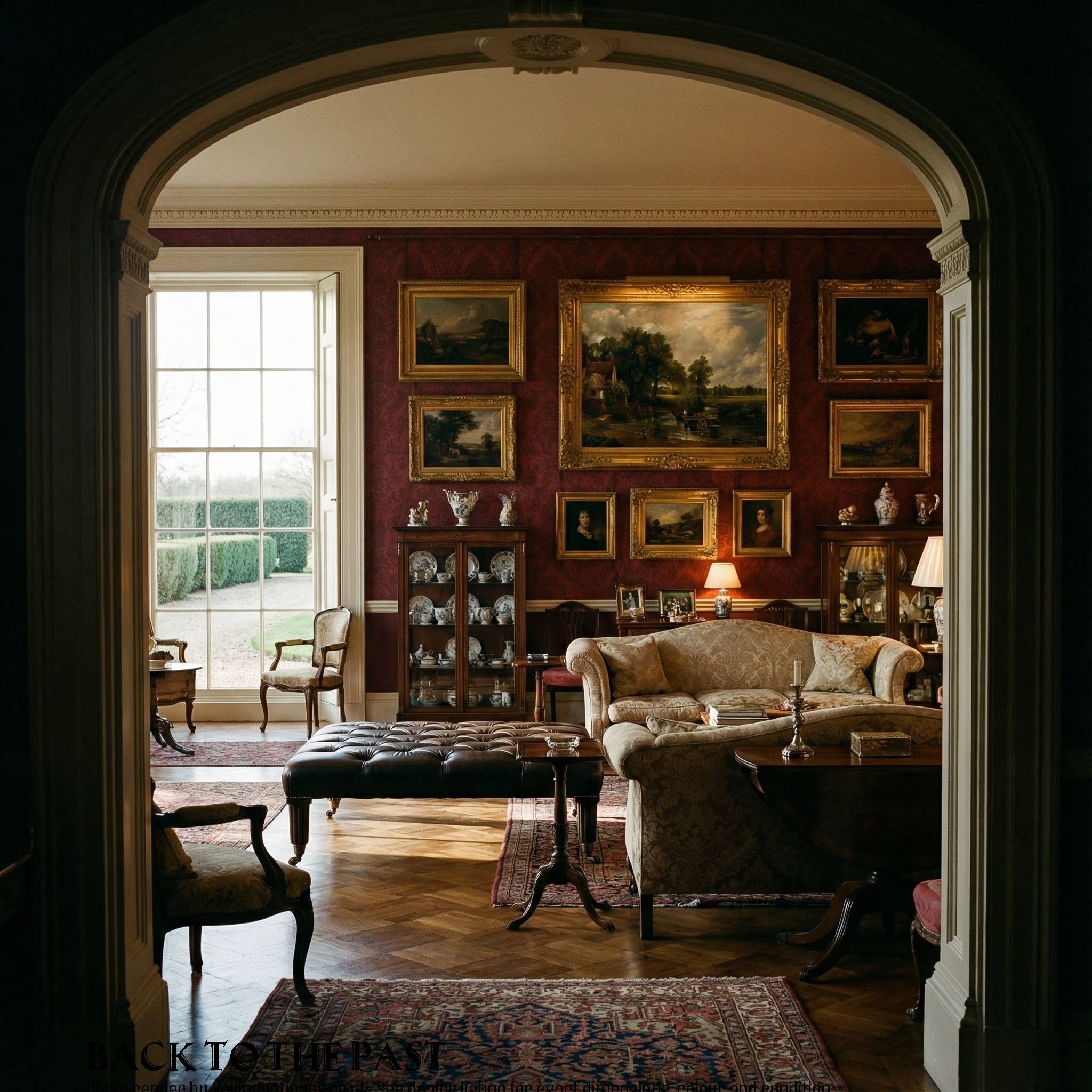
Large Leather Footstool
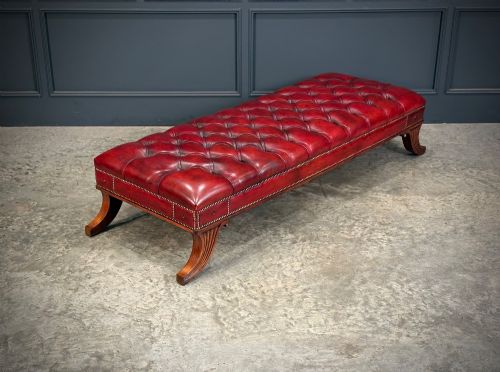
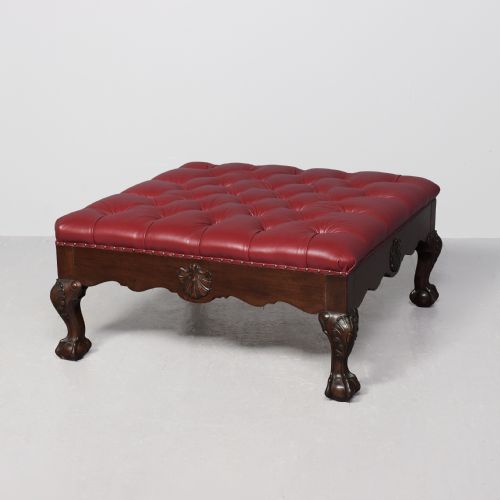
A large leather footstool combines robust timber framing with buttoned hide upholstery, serving as a substantial seat or low coffee table. These pieces emerge from periods spanning the Regency era through the Victorian and Edwardian decades.
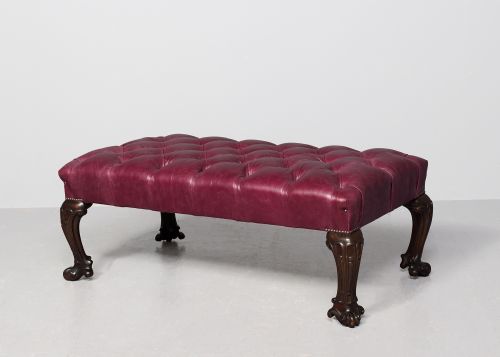
The most common examples on this page are Victorian mahogany or walnut pieces featuring buttoned red or burgundy hides. Alongside these sit Georgian style designs and heavy oak country house ottomans.
Makers ranged from major London retailers like Liberty's to regional workshops producing solid oak and carved low stools. Their versatility allows them to function equally well as window seats or centre stools.
How they were made
Frames rely on dense hardwoods such as mahogany, walnut, and oak, often shaped in revival styles like Chippendale or Carolean. Joinery was built to bear heavy daily weight over generations of domestic use.
Upholstery centres on durable leather hide, frequently hand-dyed in rich red or burgundy tones and secured with deep buttoning. Brass detailing occasionally punctuates the wood or leatherwork to finish the structure.
Large Leather Footstool Retail Price Guide 2026
Typical asking prices for large leather footstool among the pieces listed under this phrase on Sellingantiques today, from the lower quarter to the upper quarter. They describe what is for sale here now, not the wider market.
Listings feature mahogany, walnut, and oak frames upholstered in leather, spanning the Regency period through to Edwardian times.
What varies in quality
The distinction between standard pieces and exceptional ones lies in the depth of timber carving and the richness of the leather hide. Substantial mahogany or walnut frames with crisp carving command greater attention than plain utility pieces.
Proportion and presence dictate the visual success of a large leather footstool within a room. Well-executed buttoning and patinated hand-dyed leather elevate the overall character of the piece.
Liberty's of London
The Large Leather Footstool Glossary
- Buttoned
- Upholstery technique where indentations are created by pulling twine or thread tightly through the padding and securing it with buttons. This method keeps the internal stuffing firmly distributed.
- Hide
- The natural skin of an animal, dressed and prepared for heavy upholstery. In these pieces, it is often hand-dyed to achieve a rich depth of colour.
- Ottoman
- A padded upholstered seat or bench without a back or arms. These large examples often double as coffee tables.
- Carolean Revival
- A style looking back to the late seventeenth-century reign of Charles II. It typically displays exuberant carved woodwork and low seating proportions.
Large Leather Footstool: Frequently Asked Questions
How do I use a large leather footstool as a coffee table?
Place a sturdy wooden tray on top of the buttoned leather surface to create a stable area for cups and books. The dense frame supports everyday items while keeping the soft leather protected underneath.
Ensure the height matches your surrounding seating so the surface remains comfortable to reach. A large leather footstool offers a softer alternative to wooden tables in busy rooms.
How do I tell a Victorian footstool from an Edwardian one?
Victorian examples frequently utilise dark mahogany or walnut with deep buttoning and rich red or burgundy hide. They often lean towards heavy proportions and formal revival styles.
Edwardian pieces tend to introduce lighter oak timbers and occasionally incorporate carved details such as lions' heads. Examining the wood species and the style of the frame clarifies the period.
Can these footstools double as window seats?
Solid oak and mahogany frames provide the structural strength needed for permanent seating beneath windows. Their low profiles ensure they fit neatly beneath standard sill heights without blocking light.
Longer proportions make them suitable for stretching out or accommodating multiple sitters. The durable leather upholstery handles natural light and regular use near glass.
What maintenance does antique leather require?
Regular dusting with a dry cloth keeps surface grit from settling into the grain of the hide. Occasional application of appropriate leather balms preserves suppleness and prevents cracking over time.
Positioning the piece away from direct heat sources protects the natural material from drying out. Hand-dyed leather develops a deeper patina with mindful care.