

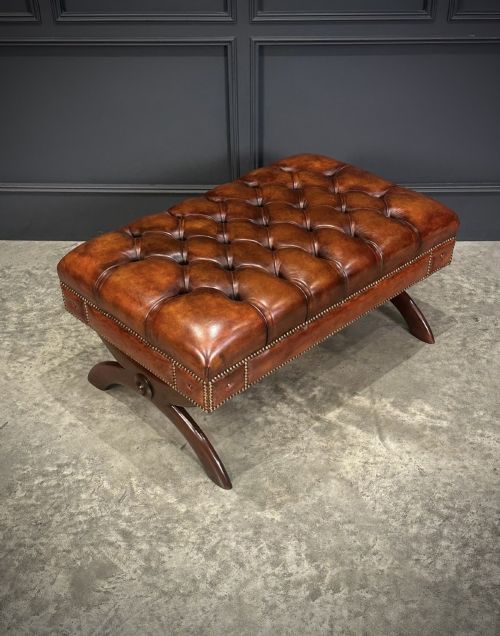
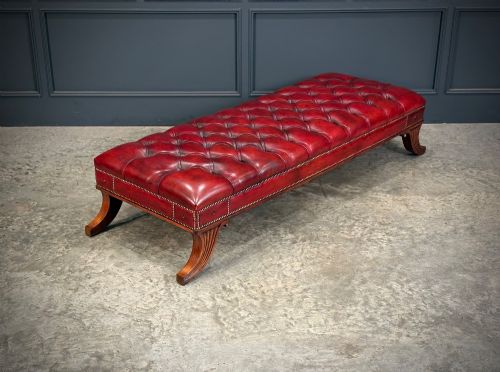
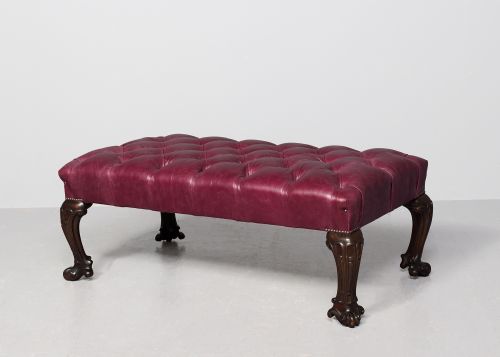


Traditional Leather Ottoman
These traditional leather ottoman pieces bring substantial English country house character and practical seating into a room.
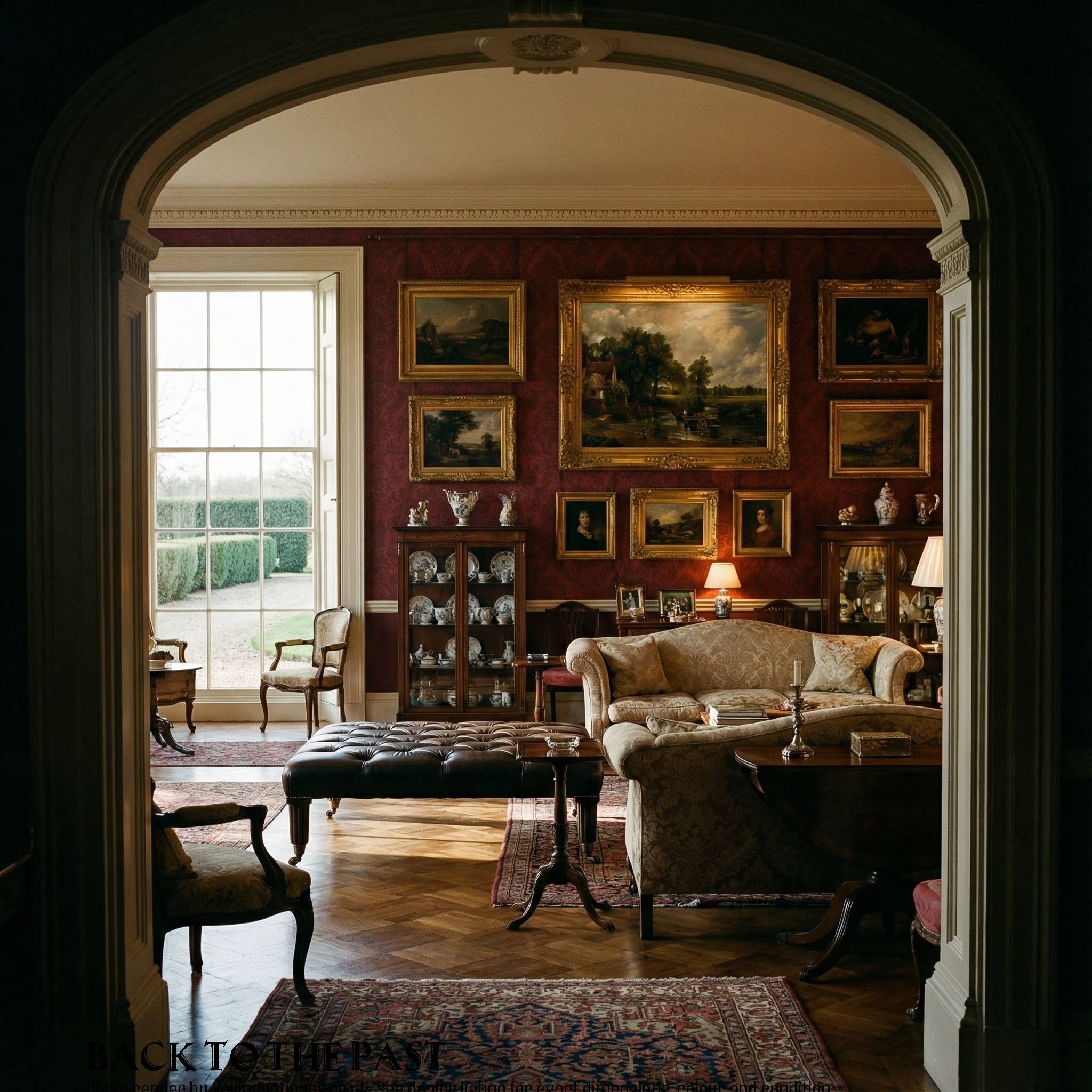
Traditional Leather Ottoman
A traditional leather ottoman functions as a footstool, centre stool, or low bench, providing versatile seating and surface utility within a room. These pieces appear in forms ranging from compact footstools to large centre stools and long benches.
The pieces on this page span the nineteenth century through the early twentieth century, taking shape as footstools and ottomans. You will frequently encounter mahogany framing paired with leather upholstery across these listings.
Design influences draw directly on traditional English aesthetics, including Georgian style, Regency proportions, Chippendale revival work, and Victorian craftsmanship. This variety reflects the enduring popularity of sturdy timber frames combined with hide upholstery.
How they were made
Upholsterers applied leather hides - often red or hand-dyed - over the frame, securing the material with traditional buttoning techniques. Brass elements frequently completed the detailing on these pieces.
Traditional Leather Ottoman Retail Price Guide 2026
Typical asking prices for traditional leather ottoman among the pieces listed under this phrase on Sellingantiques today, from the lower quarter to the upper quarter. They describe what is for sale here now, not the wider market.
Listings span the nineteenth century through 1920, incorporating Victorian examples alongside Georgian and Chippendale style revivals.
What varies in quality
The refinement of the timber framework sets the baseline for quality, distinguishing straightforward utility pieces from finely carved Georgian and Chippendale style revivals. Timber selection and the crispness of details like fluted legs show the maker's hand.
The treatment and handling of the leather upholstery dictate the tactile appeal and visual depth of the piece. Hand-dyed hides and precise buttoning demonstrate a higher standard of finishing than plain or uniform upholstery.
The Traditional Leather Ottoman Glossary
- Centre stool
- A large freestanding stool designed to sit in the middle of a room or serve as an ottoman. These items offer substantial proportions and leather upholstery.
- Buttoned
- An upholstery technique where depressions are created in the padding using buttons pulled tight. This method secures the filling and adds traditional visual texture to the leather.
- Hide
- The natural leather skin used for upholstery. Antique examples often feature hand-dyed finishes that develop a distinct patina over time.
- Fluted
- A decorative technique featuring parallel vertical grooves carved into wooden furniture legs. This classical detail appears on Regency style frames.
- Chippendale style
- A design aesthetic drawing upon eighteenth-century furniture patterns characterised by robust timber construction and classical proportions. Pieces in this style often use mahogany.
Traditional Leather Ottoman: Frequently Asked Questions
How do I use a leather ottoman?
These pieces serve primarily as footstools, low seating, or central room benches depending on their scale. Their sturdy mahogany frames and leather surfaces handle everyday domestic use with ease.
Larger centre stools function well as casual coffee tables when topped with a stable tray. Their versatile design allows them to sit comfortably in a library, drawing room, or hallway.
What is a centre stool?
A centre stool is a large, freestanding piece designed to occupy the middle of a room rather than sit against a wall. They provide substantial surface area and comfortable padded seating.
Victorian and Georgian style examples frequently take this form, combining mahogany framing with buttoned leather tops.
How do I date an antique ottoman?
Dating relies upon examining the timber species, joinery techniques, and stylistic markers such as Regency fluting or Chippendale revival motifs. Nineteenth-century pieces often display hand-worked mahogany frames and traditional upholstery foundations.
Comparing the wear on the leather and the construction methods of the internal frame helps establish the period of origin.
Are these pieces made of solid mahogany?
Many traditional examples utilise solid mahogany for the visible framework, particularly those reflecting Georgian or Regency styles. This dense hardwood provided the structural strength required for frequent seating.
Secondary woods may appear in the internal framing, while the exterior showcases the primary timber and leather upholstery.