
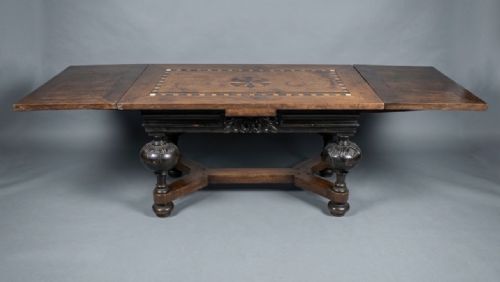
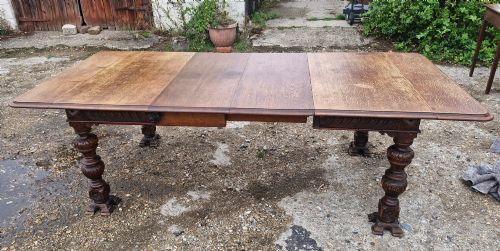
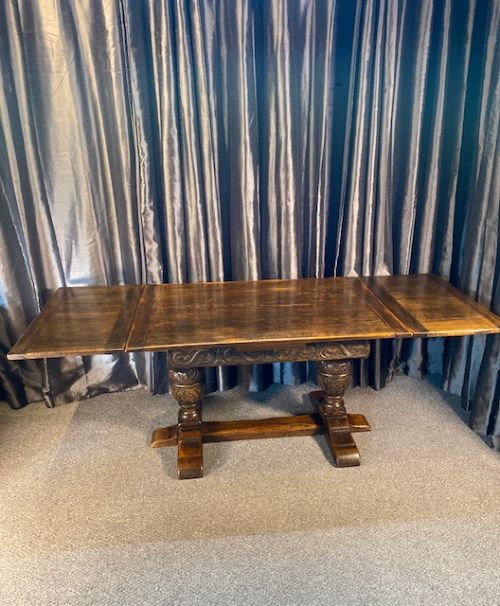
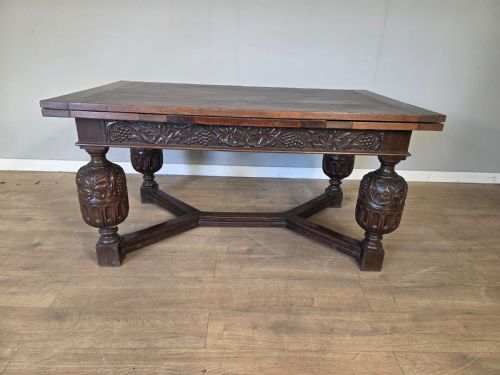
Antique Leaf Extension Table
An antique leaf extension table brings adaptable scale to the dining room, shifting effortlessly from quiet family suppers to large gatherings.

Antique Leaf Extension Table
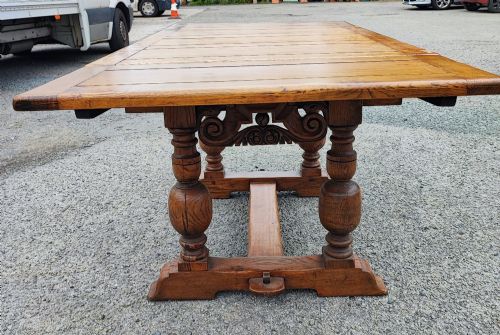
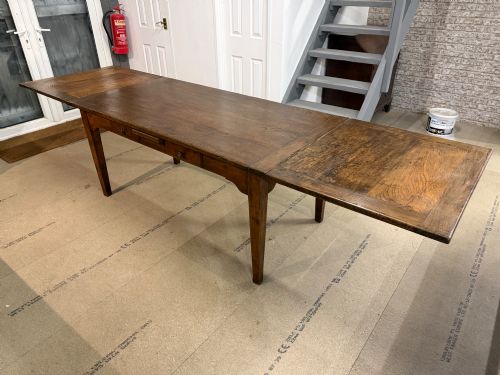
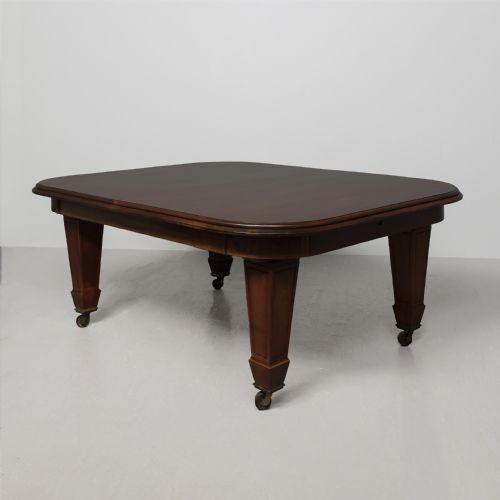
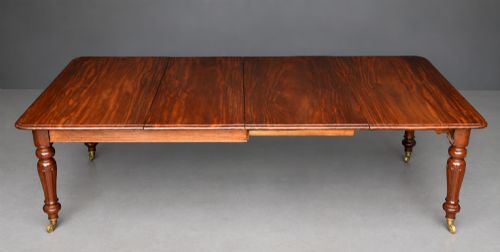
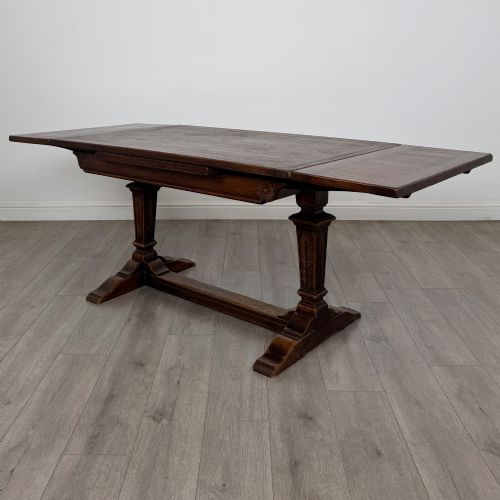
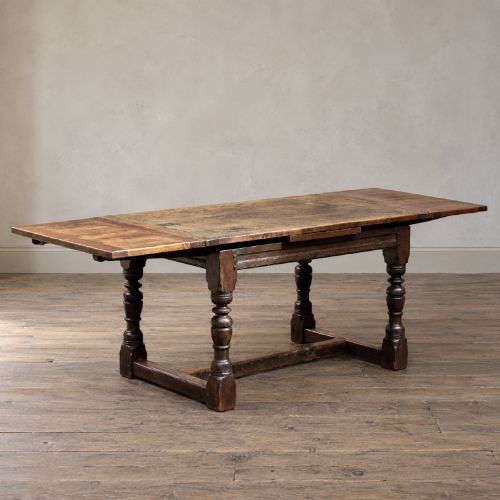
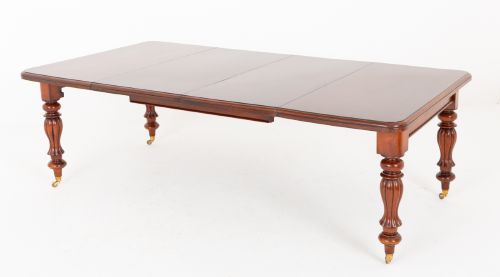
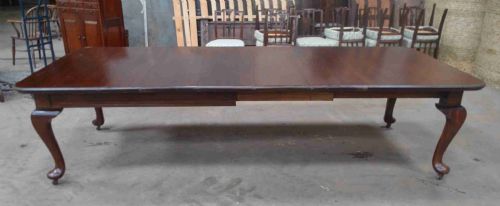
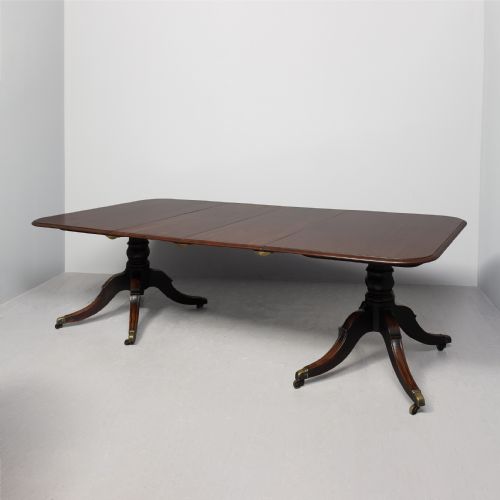
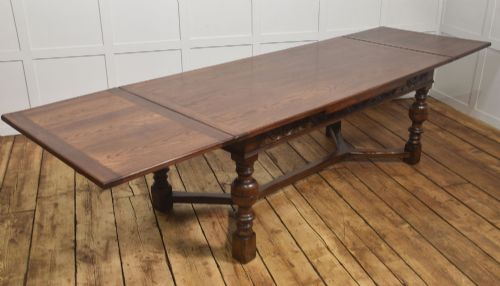
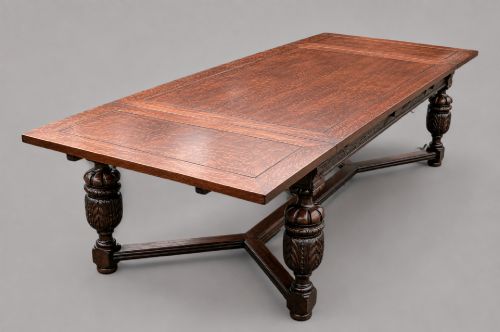
An antique leaf extension table provides a practical surface that expands through draw leaves, drop leaves, or inserted centre leaves. The selection ranges from robust oak refectory models to refined mahogany dining tables rooted in nineteenth-century and earlier traditions.
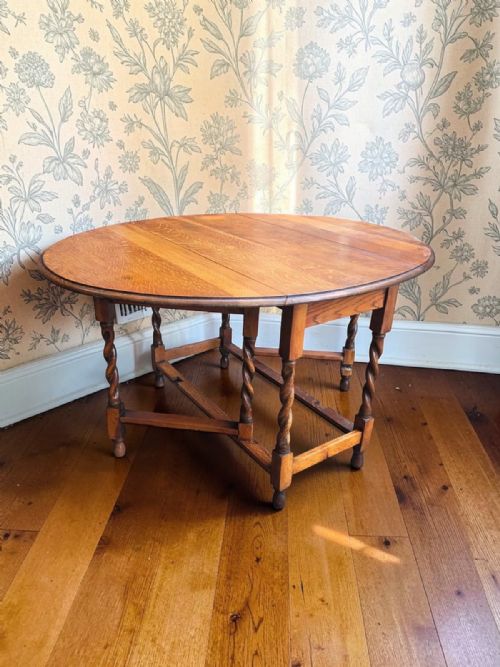
Buyers frequently encounter Victorian and Edwardian examples alongside sturdy twentieth-century oak interpretations. These pieces vary from simple gateleg configurations to grand twin-pillar designs built to seat numerous guests.
Woods such as mahogany, oak, and walnut dominate the selection, spanning styles from Jacobean Revival and Regency to Georgian and French Provincial. Each form reflects the domestic requirements of its era, prioritising hospitality and functional versatility.
Materials and construction
Cabinet makers utilised dense hardwoods like mahogany and oak to construct frameworks capable of supporting repeated movement and heavy daily use. Solid timber and matched veneers provide both structural integrity and decorative richness across tabletop surfaces.
Extension mechanisms rely on clever sliding draw leaves, drop flaps supported by gatelegs, or removable centre leaves paired with sturdy pillars and winding hardware. Joints are typically pegged, pinned, or dovetailed to ensure the table remains stable when fully extended.
Antique Leaf Extension Table Retail Price Guide 2026
Typical asking prices for leaf extension table among the pieces listed under this phrase on Sellingantiques today, from the lower quarter to the upper quarter. They describe what is for sale here now, not the wider market.
Some tables hide bread slides beneath the top, proving that antique dining furniture took snack preparation just as seriously as a formal feast.
Assessing craftsmanship
Superior examples demonstrate seamless integration between the main top and the extension leaves, ensuring the grain aligns and the surface remains level when adjusted. The precision of the sliding mechanism or the smoothness of the winding gear separates standard pieces from exceptional ones.
The choice of timber figure, such as well-matched mahogany flames or intricate walnut parquetry, dictates visual distinction. Furthermore, the crispness of carved details like barley twists, aprons, and cabriole legs indicates the maker's level of skill.
The Antique Leaf Extension Table Glossary
- Draw leaf table
- A table featuring two hidden leaves stored beneath the main top that pull out to lengthen the surface. This mechanism allows quick expansion without removing separate boards.
- Gateleg table
- A drop-leaf table where hinged legs swing outward to support the folding flaps. It offers a compact footprint when closed and substantial dining space when opened.
- Refectory table
- A long, narrow dining table traditionally used in monastic refectories and later adapted for domestic dining. They are often built from solid oak with sturdy stretcher bases.
- Parquetry
- Geometric patterns formed by small pieces of wood inlaid into a veneered surface. Walnut and other fine timbers are frequently arranged in this manner to ornament tabletops.
- Bread slide
- A pull-out wooden board integrated beneath the tabletop, historically used for slicing bread or serving food. It appears on select nineteenth-century tables.
Antique Leaf Extension Table: Frequently Asked Questions
How do draw leaves operate?
Draw leaf tables utilise auxiliary leaves positioned underneath the main tabletop. When pulled, the main top lifts slightly as the end leaves slide out from each end into place.
This design allows a single person to extend the table quickly without storing loose boards elsewhere in the house.
Can I seat guests comfortably?
Extension tables accommodate flexible seating arrangements depending on whether leaves are added or retracted. Models range from intimate four-seater breakfast tables to grand dining surfaces built for large dinner parties.
Check the clearance beneath the aprons and the placement of legs or pedestals to ensure chairs fit neatly underneath.
How do I care for timber surfaces?
Protect antique wood from direct sunlight and sudden temperature shifts to prevent warping or splitting. Use coasters and placemats to guard against moisture and heat.
Apply a quality beeswax periodically to nourish the grain and maintain the natural lustre of the mahogany, oak, or walnut.