



Antique Leaf Brooch
An antique leaf brooch brings delicate foliage and botanical grace to a lapel, fashioned in gold, silver and precious stones.
Antique Leaf Brooch
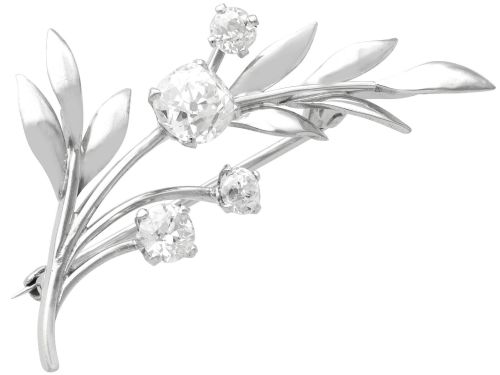
An antique leaf brooch captures botanical forms in precious metals and gemstones, drawing on Victorian, Edwardian, and Art Nouveau designs. Collectors encounter floral motifs, foliate details, and clover shapes across pieces spanning the late nineteenth century to the mid-twentieth century.
The selection ranges from simple gold bars set with pearls and opals to elaborate diamond and sapphire clusters in platinum and silver. Pieces from the Edwardian era and the Art Nouveau period frequently appear alongside Victorian examples set in yellow and rose gold.
Materials and construction methods
Goldsmiths and silversmiths utilised nine carat, fifteen carat, eighteen carat, and twenty-two carat gold, alongside platinum and silver. Gemstones including diamonds, sapphires, aquamarines, pearls, peridots, and opals were meticulously set into the metal foliage.
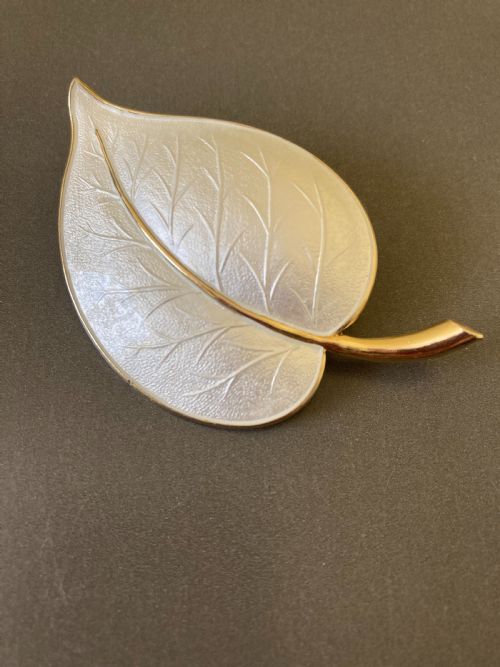
Techniques range from traditional chasing and repoussé work in gold to intricate plique-à-jour enamel used by makers such as Meyle and Mayer. Georg Jensen silversmiths employed modernist silverwork to define botanical and organic shapes during the twentieth century.
An enamelled flower fairy occasionally alights on a silver gilt leaf.
Distinguishing quality and craftsmanship
Quality rests on the fineness of the metalwork and the precision with which gemstones are integrated into the leaf design. Finer examples display subtle texturing on the gold or silver to mimic natural veins, alongside carefully matched stones.
The presence of hallmarks, such as Chester assay marks, and the work of recognised makers like Georg Jensen or Meyle and Mayer elevate a piece. Superior proportion and balanced composition separate standard production items from exceptional jewellery.
Georg Jensen·Meyle & Mayer
The Antique Leaf Brooch Glossary
- Foliate
- Relating to or adorned with leaves. This motif appears frequently across Victorian and Edwardian brooches.
- Plique-à-jour
- An enamelling technique where translucent enamel is fired in open cells, resembling stained glass. It creates a luminous effect in Art Nouveau pieces.
- Assay mark
- A stamp indicating the purity of precious metal tested at an official office. Chester assay marks provide specific regional origin.
- Bar brooch
- A slender horizontal pin of metal, often mounted with a central cluster or gemstone. Many Edwardian and Victorian designs utilise this format.
Antique Leaf Brooch: Frequently Asked Questions
What periods do these brooches come from?
The pieces span from the late Victorian era through the Edwardian period and Art Nouveau style up to the mid-twentieth century.
Craftsmen across these decades interpreted botanical themes using the prevailing metals and stones of their respective times.
How were these brooches worn originally?
Victorian and Edwardian ladies pinned them to collars, bodices, and lapels as decorative accents for day and evening wear.
Some versatile designs also incorporated hidden loops to function as pendants on chains alongside their pin fittings.
Which metals are most common?
Yellow gold and rose gold appear frequently in nineteenth-century examples, while platinum and silver dominate Edwardian pieces.
Combinations of gold and silver are also found, reflecting the changing lapidary fashions of the periods.
How do I care for an antique brooch?
Store the jewellery in a lined box away from other pieces to protect delicate gemstones and enamel work.
Clean gently with a soft cloth and avoid liquid immersion, particularly for pearl or opal settings.