

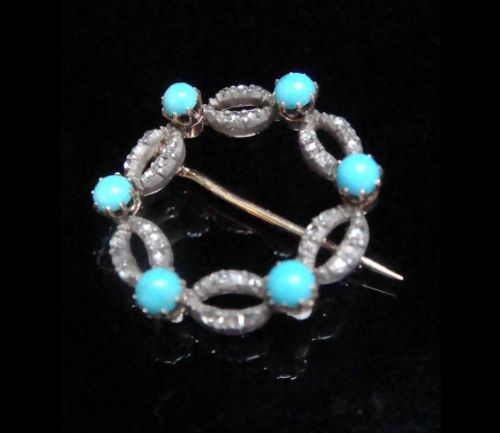


Antique Cluster Pin
When you search for an antique cluster pin, you encounter finely wrought Victorian and Edwardian jewels centred around dense groupings of gemstones.
Antique Cluster Pin
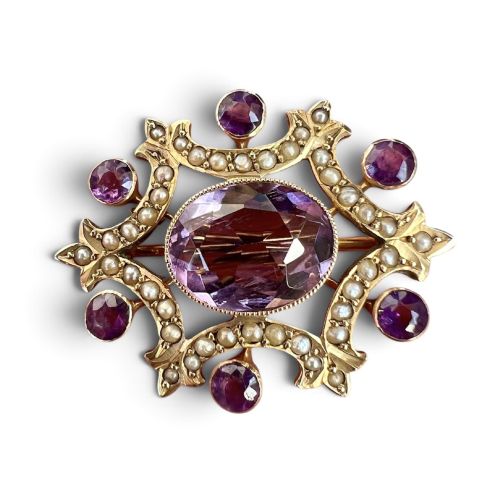
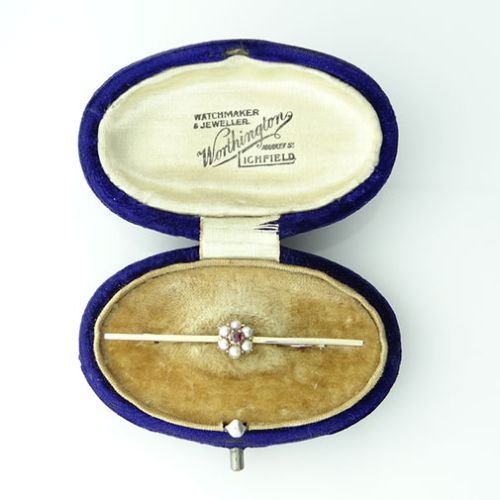
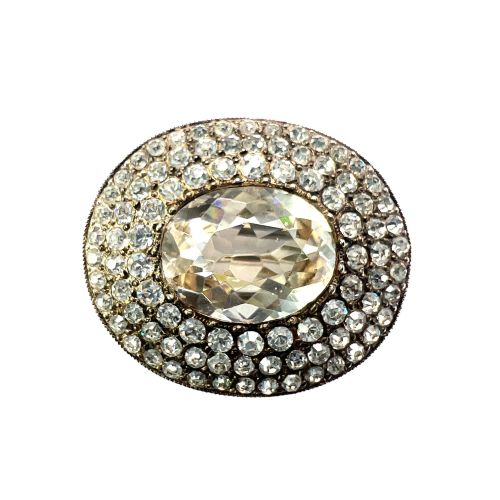
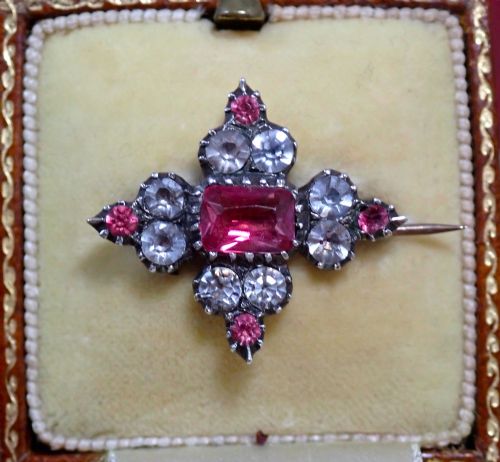
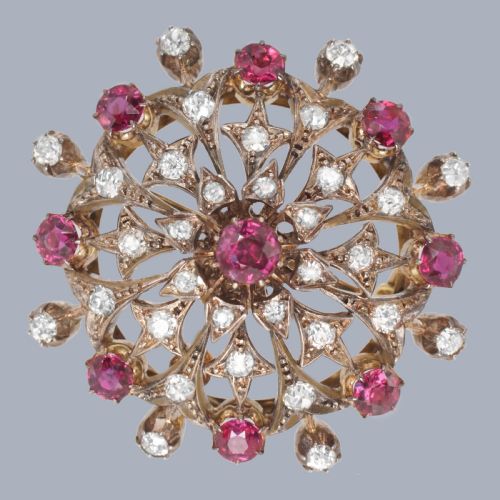
An antique cluster pin or brooch brings together central stones encircled by smaller gems, frequently taking the form of floral motifs, target designs, or geometric Art Deco arrangements. The selection spans Georgian garnet lace pins to platinum and diamond creations from the 1920s.
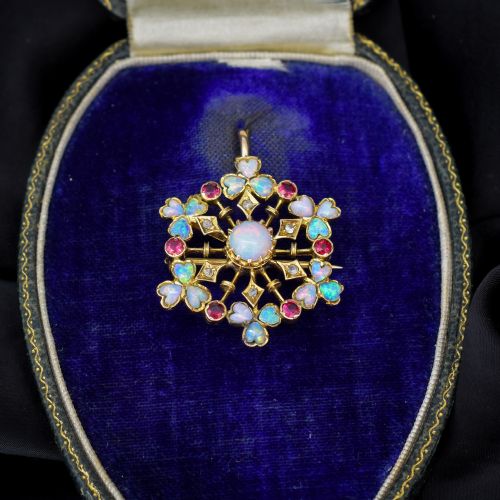
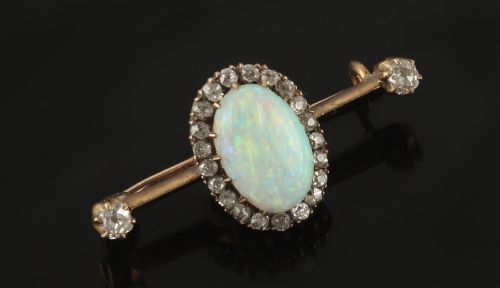
Victorian and Edwardian examples dominate the available pieces, utilising coloured stones like amethysts, sapphires, and opals alongside diamonds and pearls. Buyers will regularly find these items functioning as both brooches and pendants depending on the fittings provided on the reverse.
The form developed across several decades, shifting from heavy gold settings enclosing carbuncle garnets and seed pearls to lighter platinum and white gold structures highlighting diamonds and calibre-cut gems.
Materials and construction methods
Goldsmiths employed varying karats of yellow and rose gold, alongside silver-topped gold settings designed to enhance the brilliance of diamonds against a dark metal background. Platinum emerges in later twentieth-century pieces, allowing for delicate millegrain edges and openwork galleries.
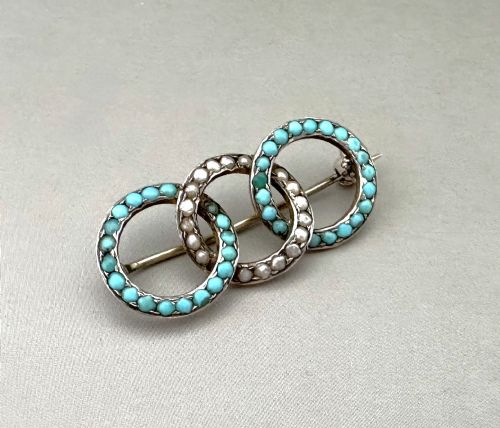
Gemstones such as rubies, sapphires, peridots, and turquoise are secured with claw or collet settings, accompanied by hand-cut diamonds including rose-cut and old European stones. Seed pearls and natural pearls are frequently threaded or pegged into position within floral and star formations.
Several Victorian cluster pins double as pendants, offering an ingenious convertible solution for indecisive dressers.
Assessing quality in cluster pins
The distinction between standard examples and superior work rests on the matching and saturation of the central gemstones, alongside the precision of the surrounding stone arrangement. Original closures, pin stems, and fitted cases provide further indication of an item's preservation.
Hand-finished details, such as delicate foliate engraving on the gold shank or fine millegrain work along platinum bezels, separate workshop-produced pieces from mass-manufactured items of later periods.
G. Colani
The Antique Cluster Pin Glossary
- Cluster pin
- A brooch or pin featuring a central stone or motif closely surrounded by a ring of smaller secondary gems. This configuration maximises the visual impact of the materials.
- Millegrain
- A decorative technique involving a row of tiny raised metal beads along the edge of a setting. It creates a soft, textured border typical of Edwardian and Art Deco jewellery.
- Paste
- Faceted glass cut and polished to imitate gemstones, frequently backed with coloured foil. It was utilised extensively in Georgian and Victorian costume pieces.
- Carbuncle
- A cabochon-cut garnet with a smooth, rounded top and no facets. This stone was particularly favoured during the mid-Victorian era for substantial cluster brooches.
- Rose-cut
- An antique diamond cut featuring a flat base and a domed crown with triangular facets arranged in a symmetrical pattern. It produces a soft, candlelit reflection rather than modern brilliance.
Antique Cluster Pin: Frequently Asked Questions
How were antique cluster pins worn?
These pieces were pinned securely to the bodice, lapel, or collar of garments using hinged pins and C-clasps or safety catches depending on the decade of manufacture.
Many examples feature hidden loops or fold-down bails on the reverse, allowing the owner to suspend the cluster from a chain as a pendant.
Are these pins made of solid gold?
The metal content varies across periods, ranging from lower-karat yellow gold to fifteen-carat and eighteen-carat gold, as well as platinum and silver-topped gold.
Silver-topped gold combines a silver face that holds diamonds securely with a warm gold reverse that rests against clothing.
How do I date an antique cluster pin?
Stylistic clues such as closed-back settings and foiled pastes point towards Georgian origins, while heavy gold scrollwork and carbuncle garnets suggest Victorian manufacture.
Lighter platinum frames, geometric lines, and white gold point firmly towards the Edwardian era and the Art Deco period of the 1920s.
Can I wear a cluster pin every day?
Daily wear requires consideration of the softer materials present in many antique pieces, particularly pearls, opals, and turquoise which are sensitive to moisture and cosmetics.
Sturdier gemstone configurations involving diamonds, sapphires and durable gold settings withstand regular use when handled with reasonable care.