


Blue Gemstone Pin
A blue gemstone pin brings colour and structure to a lapel, offering centuries of lapidary work set in precious metal.
Blue Gemstone Pin
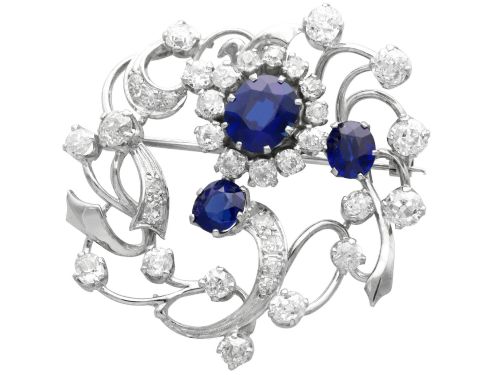
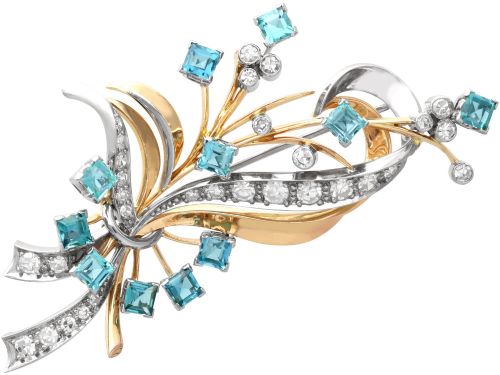
The most common examples on this page are Victorian and Art Deco pieces featuring sapphires or aquamarines mounted in yellow gold, white gold, or platinum. Designs range from foliate motifs and crescent shapes to geometric settings and simple circle brooches.
The origins span the nineteenth and twentieth centuries, incorporating styles such as Renaissance Revival alongside strict Victorian and modernist geometric layouts. Each blue gemstone pin reflects the prevailing jewellery tastes of its decade.
Materials and Techniques
Makers set vibrant blue sapphires, aquamarines, and zircons into metals including platinum, silver gilt, and various grades of gold such as 9ct, 15ct, and 18ct yellow gold. Diamonds, pearls, and enamel frequently accompany the primary blue stones to accentuate the central design.
Craftsmen utilised traditional techniques to form intricate foliate motifs, crescent clusters, and convertible brooch-pendant mountings. Metalwork combined open-back settings to maximise stone brilliance with secure pin stems and safety catches suited for daily wear.
Listings feature periods spanning from the Victorian era through the 1960s, utilising metals like platinum, silver gilt, and gold alongside sapphire and aquamarine.
Factors of Distinction
Quality rests upon the clarity, carat weight, and natural hue of the blue gemstone, whether an unheated sapphire or a substantial aquamarine. The precision of the surrounding diamond work and the crispness of the metal casting also dictate the standing of the piece.
The integrity of the original setting and the preservation of delicate enamel or delicate pearl elements determine the overall desirability. Pieces retaining their original clasps and undamaged mountings demonstrate superior survival through the decades.
The Blue Gemstone Pin Glossary
- Brooch
- An ornamental jewellery piece fitted with a pin stem and catch on the back for attaching to clothing. They appear in circular, bar, and pendant-convertible formats.
- Silver Gilt
- Silver that has been coated with a thin layer of gold on its exterior surface. This technique provides the appearance of solid gold while utilising a silver base.
- Foliate Motif
- A decorative design element shaped like leaves or foliage. This naturalistic style appears frequently in nineteenth-century jewellery settings.
- Platinum
- A dense, ductile precious metal prized for its strength and bright white lustre. It became the favoured setting material for diamond and gemstone work during the Art Deco era.
Blue Gemstone Pin: Frequently Asked Questions
How do I wear a blue gemstone pin?
Pin the piece securely to the lapel of a heavy coat, the centre of a neckline, or the fastening of a scarf. Ensure the fabric is thick enough to support the weight of gold and platinum mountings.
For convertible pieces that also function as pendants, thread a suitable chain through the integrated loop to wear the jewel around the neck.
How should I clean my brooch?
Wipe metal and gemstone surfaces gently with a soft, damp cloth to remove everyday dust and oils. Avoid harsh chemical dips, particularly if the piece contains pearls, enamel, or soft chalcedony.
Store the jewel in a fabric-lined box away from other items to prevent scratching the gold, platinum, or softer blue stones.
How do I tell Victorian pieces apart from Art Deco ones?
Victorian brooches often display organic motifs such as leaves, crescents, or floral clusters set in yellow gold with visible hand-finished details. They prioritise naturalistic charm and varied gem pairings like chalcedony and amethyst.
Art Deco examples favour platinum or white gold, clean geometric lines, and symmetrical arrangements that frame large aquamarines or high zircons alongside precise diamond accents.
Are these pins suitable for daily use?
Most sturdy gold and platinum brooches tolerate regular wear provided the pin mechanism and safety catch remain secure. Inspect the hinge and clasp periodically to ensure the pin stays fastened during movement.
Delicate silver gilt, enamel, or pearl-set items require extra care and are better reserved for occasional outings to prevent accidental impact damage.