



Antique Lead Glass Flute
These antique lead glass flute pieces are drinking vessels and stemware from past centuries, offering collectors tactile history and brilliant clarity.
Antique Lead Glass Flute
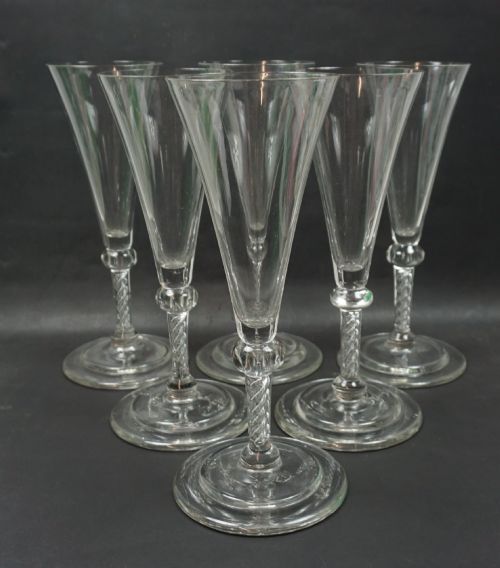
When you search for antique lead glass flute, you encounter tall, slender drinking vessels and stemware primarily originating from the eighteenth and nineteenth centuries. These drinking glasses and ale glasses feature distinct forms designed for specific historic beverages, reflecting the social habits of Georgian and Victorian households.
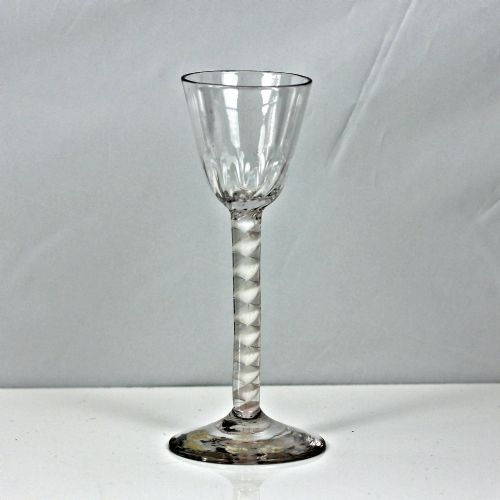
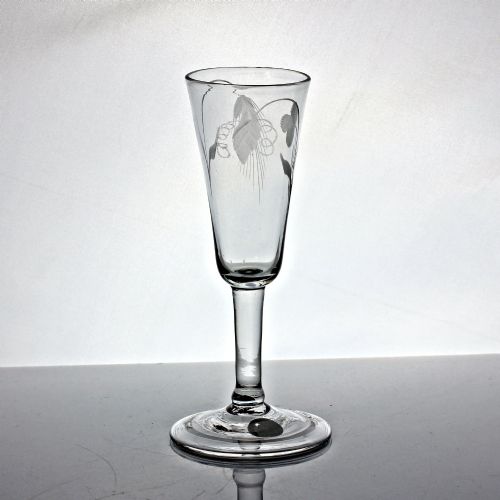
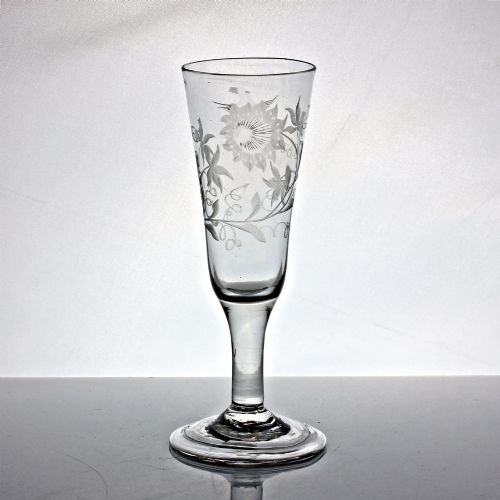
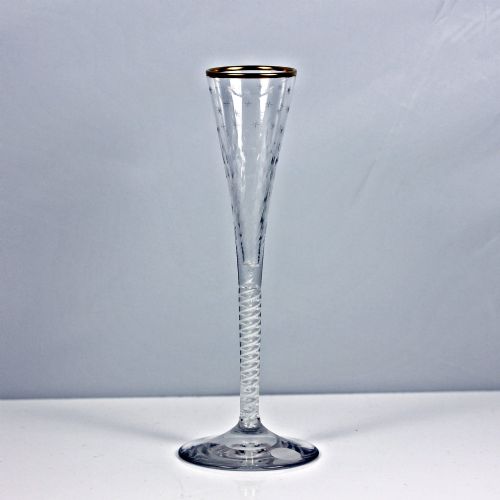
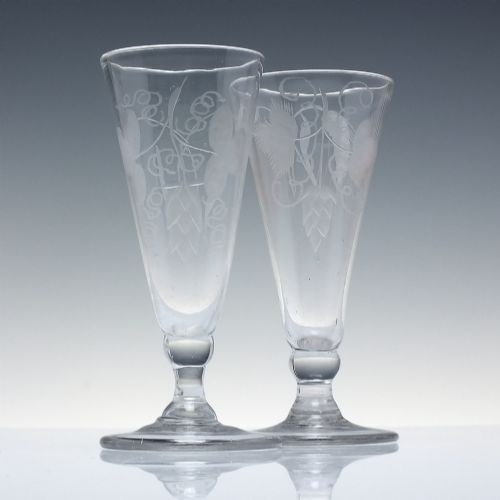
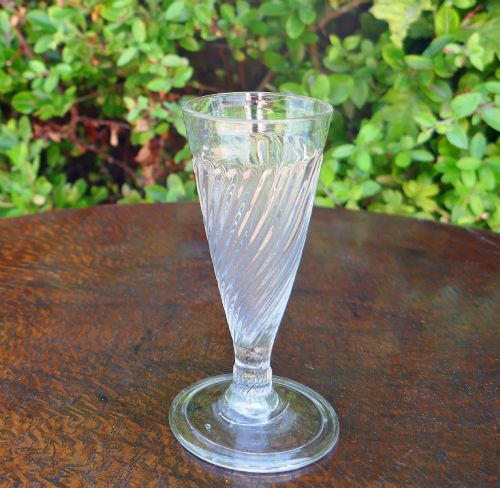
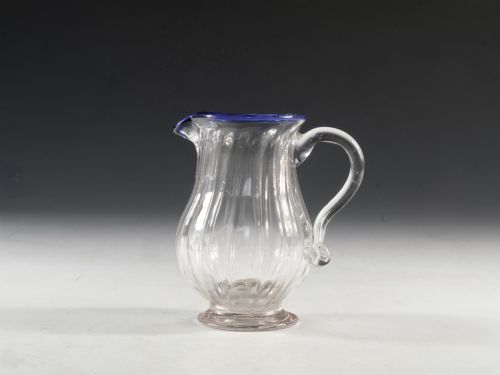
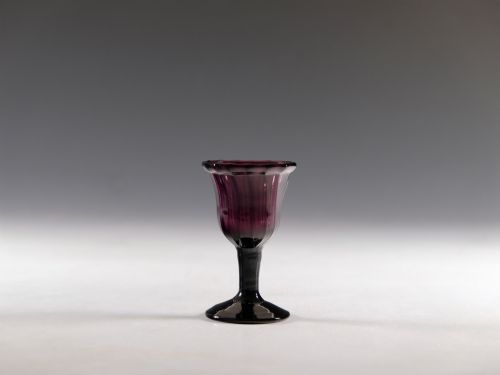
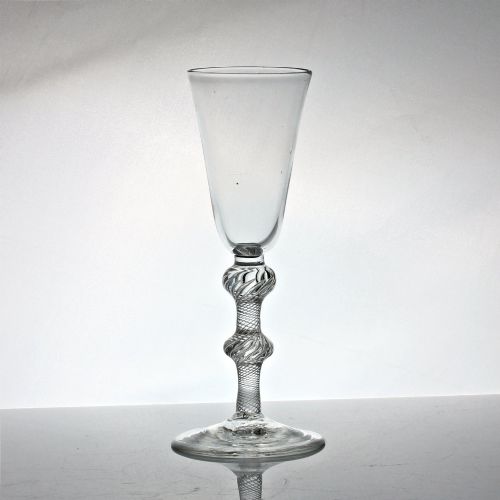
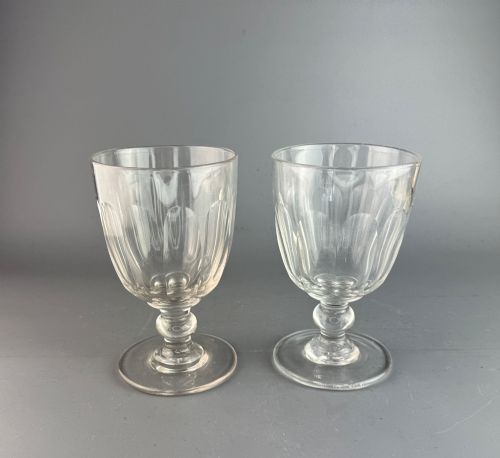
The pieces available here lean heavily into eighteenth-century ale glasses and champagne flutes, often displaying air twists, opaque twists, or engraved bowls. You also encounter rummers, decanters, and jelly glasses alongside the main flute and stemware categories.
Originating predominantly from English workshops, these items span periods from the Georgian era through the Regency and Victorian periods up to Edwardian times. The prevailing aesthetic relies on the heavy refraction and bright ring characteristic of early lead glass formulations.
Distinguishing quality in the range
Quality rests upon the crispness of the cutting, the complexity of the stem twist, and the depth and clarity of the engraved motifs. Master glassblowers achieved precise internal formations within the twists and sharply rendered details on passion flower or hop and barley engravings.
Proportions and metal weight also separate standard utilitarian vessels from finer pieces. A well-balanced bowl, a smooth rim finish without excessive distortion, and a heavy, resonant lead glass body indicate superior execution by the glasshouse.
Listings feature lead glass objects spanning the Georgian, Regency, Victorian, and Edwardian periods, including ale glasses, decanters, and rummers.
The Antique Lead Glass Flute Glossary
- Lead glass
- A type of glass containing lead oxide, which increases refractive index, weight, and working time for cutting. It produces a clear, resonant material ideal for fine stemware.
- Air twist
- A stem formation created by drawing out elongated air bubbles trapped in the hot metal into spiral threads. It creates a silvery optical effect inside the glass stem.
- Opaque twist
- A stem style featuring white or coloured enamel glass threads drawn into spiral patterns inside a clear glass rod. These were popular in eighteenth-century drinking glasses.
- Rummer
- A large, sturdy drinking glass popular in the eighteenth and nineteenth centuries, often featuring a bucket bowl and a short stem above a thick foot. They were used for ale, wine, or punch.
- Ratafia glass
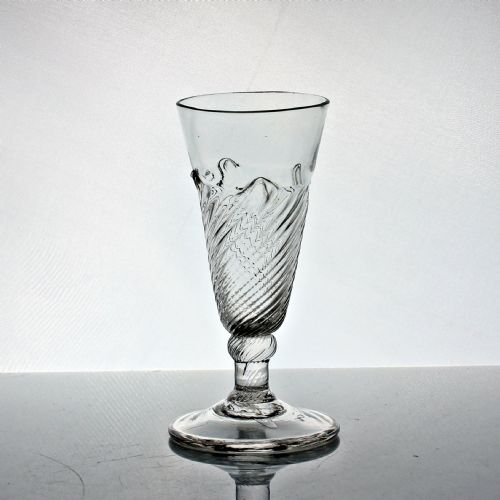
- A narrow, flute-shaped glass designed for serving sweet ratafia cordials or liqueurs. They typically feature long, slender bowls and small feet.
- Folded foot
- A base edge turned under and fused back against the underside to form a thickened rim. This technique provided extra strength to the foot of eighteenth-century stemware.
Antique Lead Glass Flute: Frequently Asked Questions
What is an air twist glass?
An air twist glass is a piece of stemware featuring elongated air bubbles drawn into spiral threads within the stem. This technique creates a delicate, silvery internal pattern.
Craftsmen produced these during the eighteenth century by manipulating trapped air inside the molten metal before drawing and twisting the stem to shape.
How do I identify Georgian stemware?
Georgian stemware typically exhibits characteristics like folded feet, pontil marks on the base, and dense lead glass composition. Styles often include balustroid, air twist, or opaque twist stems.
Examining the bowl shape and engraving style, such as barley motifs or facet cutting, further helps place the piece within the eighteenth or early nineteenth century.
What were rummers used for?
Rummers were large, capacious drinking vessels used primarily for ale, wine, or punch during the Georgian and Victorian eras. Their sturdy build suited communal or tavern drinking environments.
Over time, they evolved from heavy stemware into various cut glass and plain forms suited to domestic dining tables.
Can I use antique lead glass daily?
Using antique lead glass requires gentle handling, hand washing in lukewarm water, and avoiding extreme temperature shifts. The softness of lead glass makes it vulnerable to scratching and thermal shock.
Many collectors prefer to display these fragile drinking vessels or reserve them for occasional, careful use to preserve their historic surfaces.