


Antique Lakai Embroidery
Antique lakai embroidery comprises vibrant textiles originating from Central Asian tribal traditions, prized for their expressive motifs and intricate needlework.
Antique Lakai Embroidery
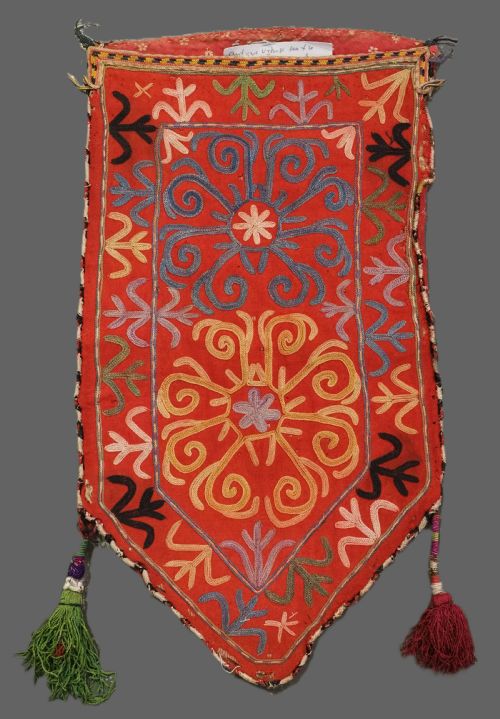
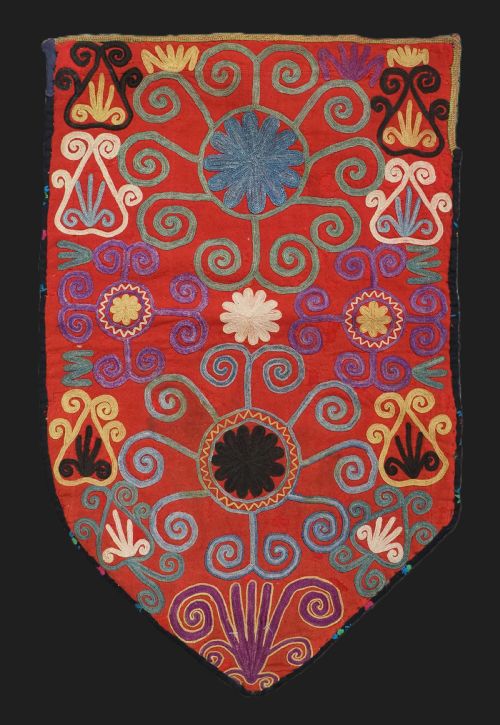
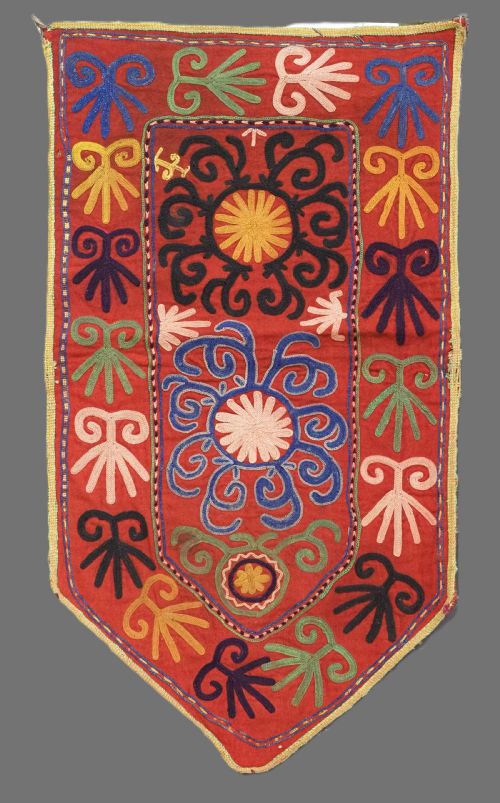
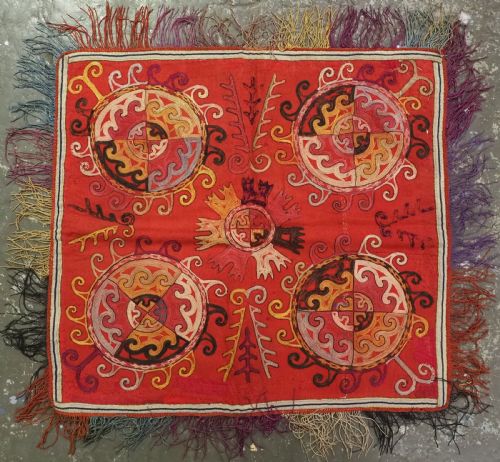
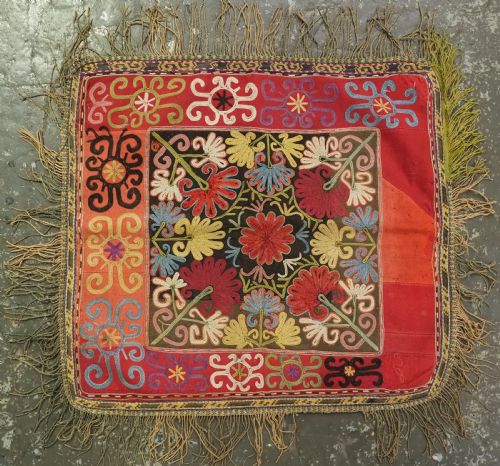
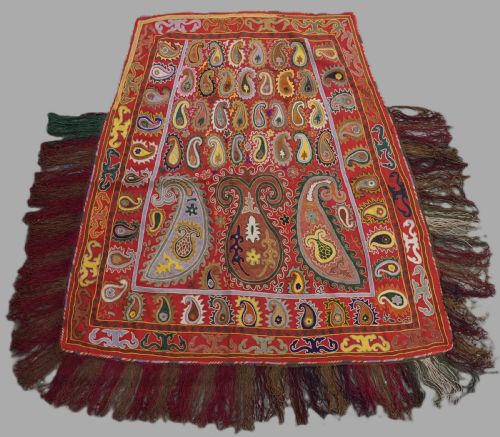
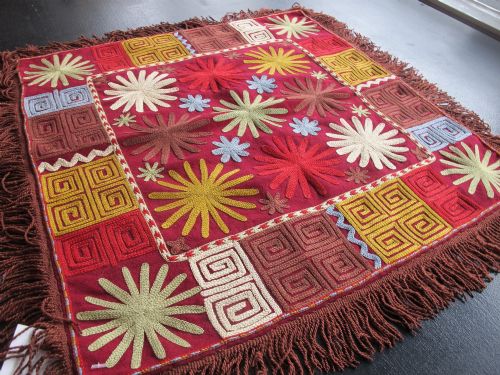
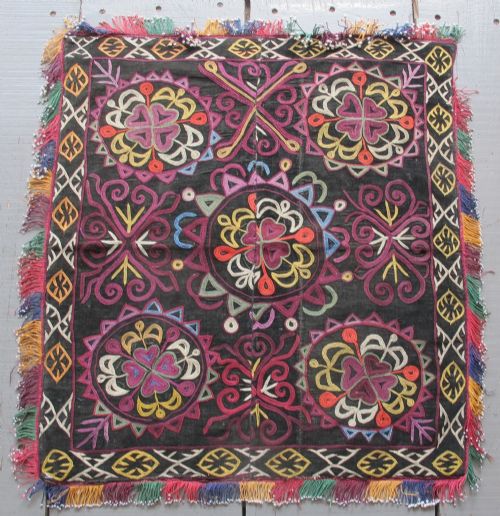
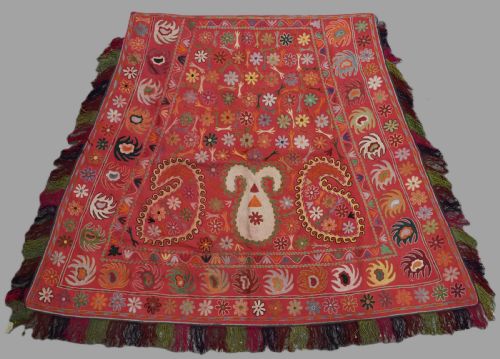
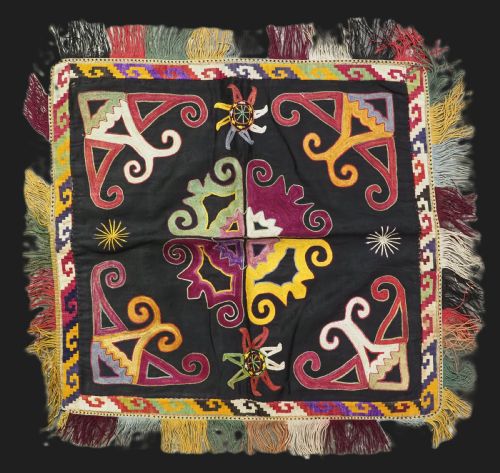
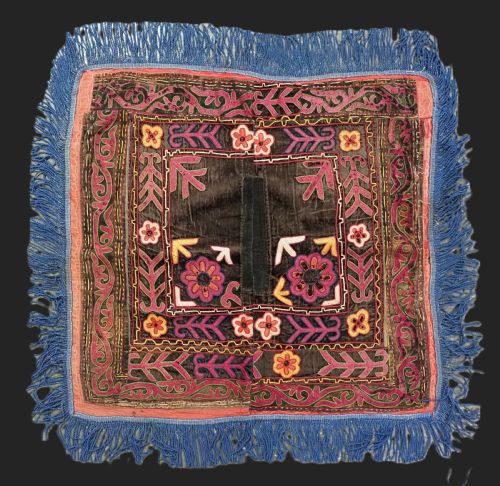
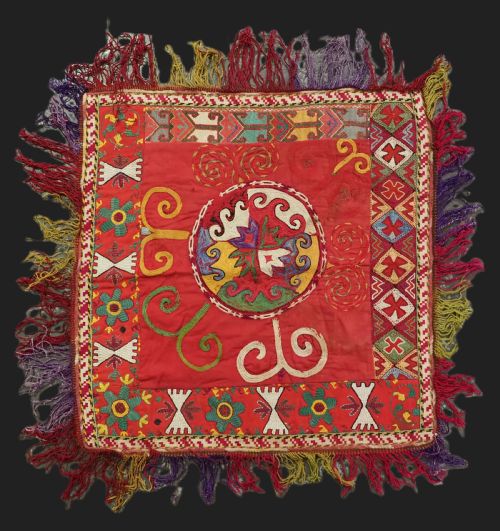
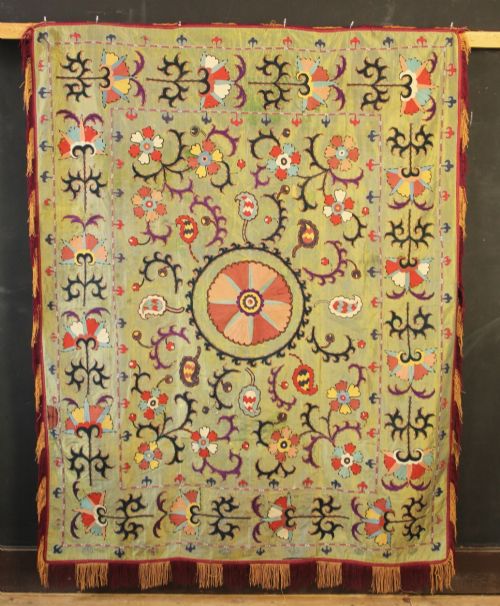
When searching for antique lakai embroidery, buyers encounter a specialised group of Central Asian tribal textiles from the late nineteenth and early twentieth centuries. The selection frequently includes utilitarian items transformed into decorative works, such as dowry hangings and horse covers.
The most common forms on this page areilgich wall hangings and uut kap storage bag faces originating from Uzbek tribal groups. Pieces span from the 1880s to the 1920s, reflecting the traditional nomadic craft practices of Uzbekistan.
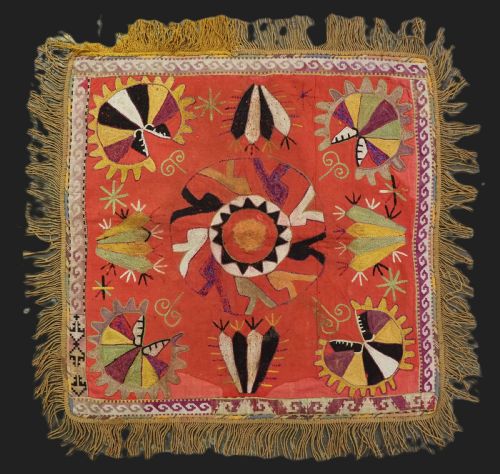
Regional variations span from standard wall panels to specialised items like mirror covers and saddle rugs. These objects represent the folk art traditions of Central Asian makers, primarily functioning within domestic and ceremonial contexts.
How They Were Made
Makers utilised silk threads, cotton, and wool grounds to build dense, textured surfaces. Silk embroidery forms the primary decorative layer on woven wool or cotton foundations.
Additional elements such as glass beads and wool fringe appear alongside the main needlework to enrich the composition. Artisans stitched complex geometric and figurative patterns by hand onto local fabrics.
Antique Lakai Embroidery Retail Price Guide 2026
Typical asking prices for lakai embroidery among the pieces listed under this phrase on Sellingantiques today, from the lower quarter to the upper quarter. They describe what is for sale here now, not the wider market.
Nomadic artisans embroidered tiny glass beads directly into the horse covers so the tribal mounts would sparkle during ceremonial processions.
What Varies In Quality
The density and precision of the silk stitching differentiate standard examples from exceptional items. Tightly packed threads and complex layouts demonstrate superior technical execution by the maker.
The preservation of the ground material and subsidiary elements like wool fringe or glass beads influences the overall impact. Cohesion in the traditional colour palette and vitality of the design determine the visual standing of the textile.
The Antique Lakai Embroidery Glossary
- Ilgich
- A Central Asian wall hanging used traditionally as dowry embroidery. These panels display characteristic tribal motifs worked in silk.
- Uut kap
- A type of storage bag face produced by nomadic groups in Central Asia. They were employed inside traditional yurt dwellings.
- Suzani
- An embroidered textile panel originating from Central Asia. Smaller versions are often described as nim suzani.
- At torba
- A horse saddle cover or bag utilised in ceremonial contexts by Uzbek tribes. They display distinctive tribal embroidery.
- Saye gosha
- A decorative textile intended for interior domestic use as bed decoration. These pieces incorporate silk needlework on traditional grounds.
Antique Lakai Embroidery: Frequently Asked Questions
What is lakai embroidery?
Lakai embroidery refers to traditional textile art made by the Lakai tribe of Uzbekistan during the nineteenth and twentieth centuries. These pieces were created as dowry items, wall hangings, and ceremonial horse covers.
Maker communities used silk thread on wool or cotton grounds to produce distinctive geometric and curvilinear motifs. The resulting works formed an important part of nomadic domestic life.
How were these textiles used?
Nomadic families utilised these embroideries primarily for interior decoration within traditional dwellings and yurt tents. Items functioned as wall hangings, storage bag faces, and bed decorations.
Ceremonial pieces played a specific role during weddings and tribal rituals, particularly the horse covers and saddle rugs. Domestic items served both practical storage purposes and aesthetic roles within the household.
How do I hang a textile?
Wall hangings require careful mounting methods that distribute the weight evenly across the entire upper edge of the fabric. Conservation-grade Velcro or a padded sleeve stitched to the reverse prevents undue strain on the historic fibres.
Direct sunlight damages the natural silk and wool threads over time, so placement away from windows is essential. Environmental stability protects the delicate embroidery from excessive humidity and temperature fluctuations.
How do I date these pieces?
Dating relies on stylistic analysis, material composition, and structural characteristics typical of late nineteenth and early twentieth-century Central Asian production. Natural dyes and hand-spun wool or cotton foundations generally point toward the earliest periods.
Comparison with documented examples from the 1880s through the 1920s helps establish chronological benchmarks. Subtle shifts in palette and design execution distinguish earlier works from later examples.