




Antique Ladies Escritoire
An antique ladies escritoire is a compact writing cabinet designed for personal correspondence, offering refined elegance and clever compartments for the discerning collector.
Antique Ladies Escritoire
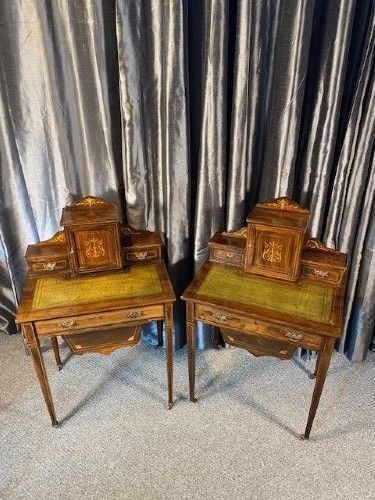
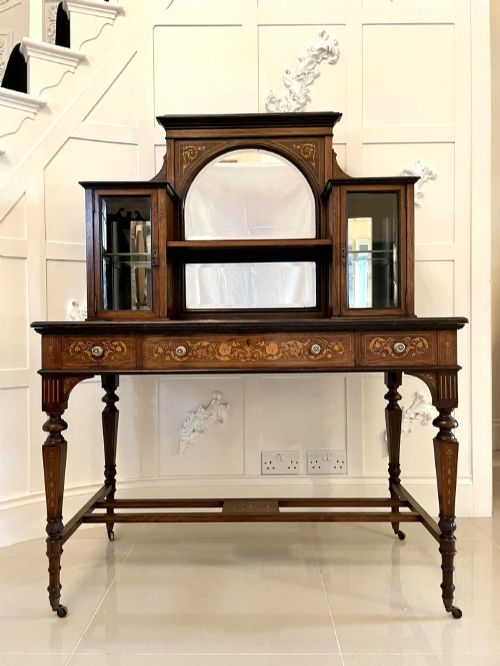
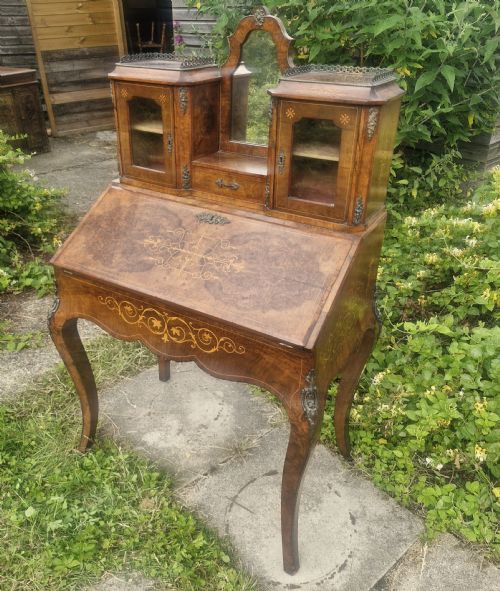
An antique ladies escritoire encompasses delicate writing furniture created primarily during the nineteenth and early twentieth centuries, spanning Victorian, Edwardian, and Regency periods. Buyers examining this selection encounter various forms including the bonheur du jour, bureau de dame, and traditional writing desks featuring compact proportions.
The regional origins of these pieces extend across English workshops and French cabinets, frequently displaying revivalist influences such as Louis XV and Sheraton styles. These desks served intimate domestic spaces, providing dedicated surfaces for correspondence alongside integrated superstructures, drawers, and pigeonholes.
Materials and Construction Methods
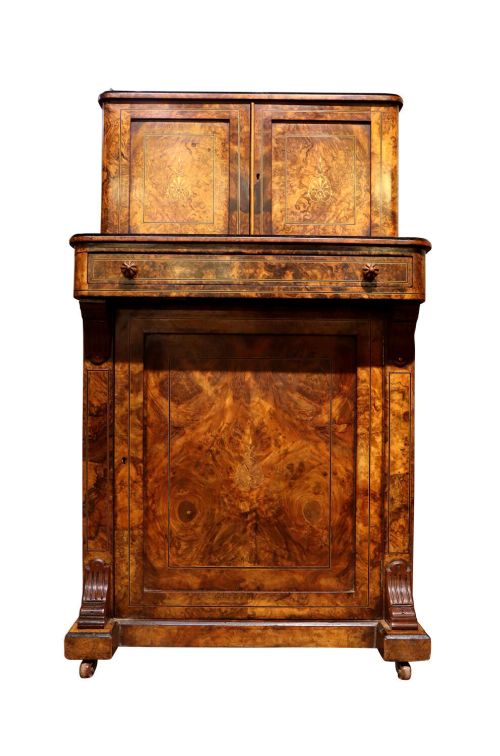
Cabinetmakers utilised rich timber veneers including burr walnut, rosewood, kingwood, and satinwood, often enhanced by intricate marquetry and contrasting stringing. Structural integrity relied on precise joinery combined with decorative enhancements suited to refined domestic interiors.
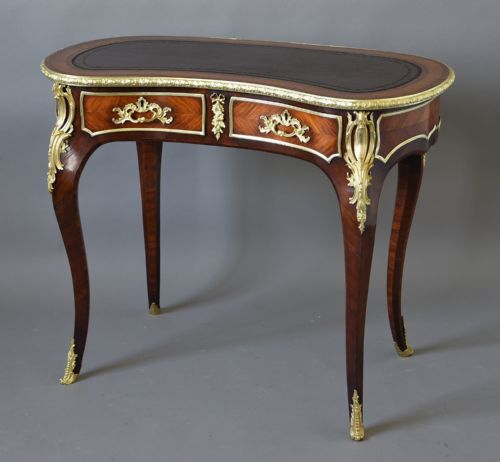
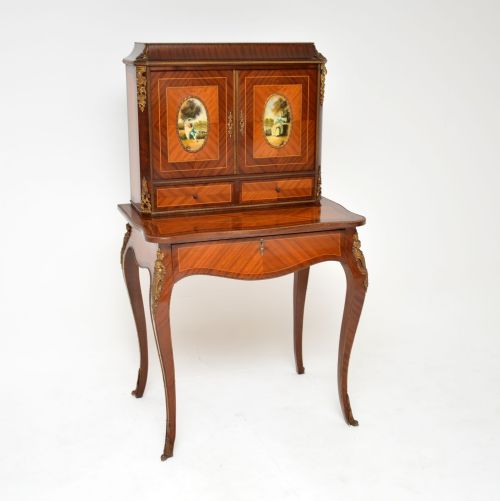
Metalwork played a defining role in ornamentation, with gilt bronze or brass ormolu mounts framing panels, drawers, and legs. Selected pieces incorporate specialised details such as hand-painted panels, Vernis Martin work, inset leather writing surfaces, and marble tops.
Secret drawers tucked within superstructures provided a discreet hiding place for love letters and private notes.
Distinctions in Quality and Execution
The standard of execution rests upon the depth of the timber grain, the precision of the marquetry inlay, and the crispness of the cast ormolu mounts. Superior examples demonstrate meticulous hand-painting, well-figured veneers, and harmonious proportions across both the primary desk and any associated superstructure.
Interior fittings reveal the standard of manufacture through secret drawers, polished secondary woods, and carefully fitted stationery compartments. Integration of original hardware and signed bronze mounts further elevates the standing of an individual piece within this tradition.
John MaClean·Befort Jeune
The Antique Ladies Escritoire Glossary
- Escritoire
- A small writing cabinet featuring a fall-front or slant lid concealing internal compartments. This form evolved to provide private storage for correspondence.
- Bonheur du jour
- A light day-time writing desk featuring a small cabinet or set of shelves upon the writing surface. This French form gained popularity during the eighteenth century and continued through Victorian revival periods.
- Ormolu
- Gilded bronze ornamentation applied to furniture mounts and feet. The technique demands precise metal-chasing to achieve crisp decorative detail.
- Marquetry
- The art of applying thin veneers of wood and other materials to form decorative patterns and pictures on furniture surfaces. Master craftsmen balanced contrasting tones to create optical depth.
- Vernis Martin
- A type of simulated Japanese lacquer developed in France during the eighteenth century. Artisans applied successive translucent varnish layers to produce a luminous decorative finish.
Antique Ladies Escritoire: Frequently Asked Questions
What is a bonheur du jour?
A bonheur du jour is a light writing desk equipped with a raised superstructure containing shelves, drawers, or a small cupboard. It represents a specific form within ladies writing furniture.
These pieces were designed for daytime correspondence and light reading in private sitting rooms rather than formal libraries.
How do I identify a French escritoire?
French escritoires frequently exhibit serpentine or kidney-shaped outlines, extensive marquetry, and prominent ormolu mounts. Walnut and kingwood veneers often dominate these continental examples.
Many incorporate decorative panels such as Vernis Martin work or marble tops, setting them apart from simpler English equivalents.
Where were these desks used?
Ladies escritoires were placed in private boudoirs, drawing rooms, and personal bedchambers. They provided a private space for writing letters and managing personal accounts.
The compact scale allowed the furniture to fit into intimate residential rooms without dominating the interior layout.
What distinguishes Edwardian models?
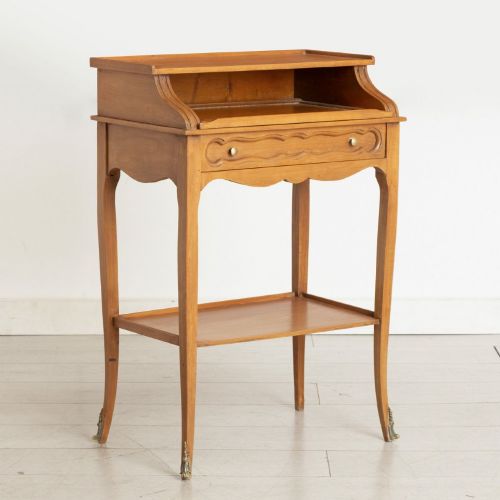
Edwardian writing desks often feature satinwood veneers, painted floral decoration, and lighter structural proportions. Sheraton revival influences frequently appear in these twentieth-century pieces.
They combine traditional cabinetmaking techniques with brighter, airier aesthetic preferences characteristic of the Edwardian period.