

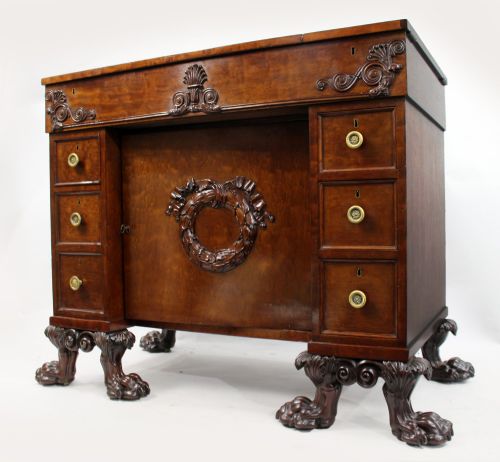
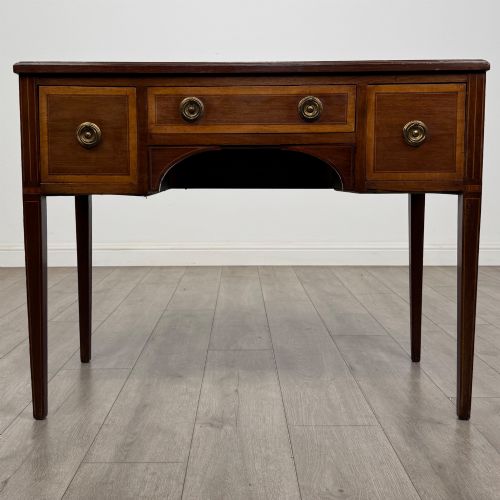
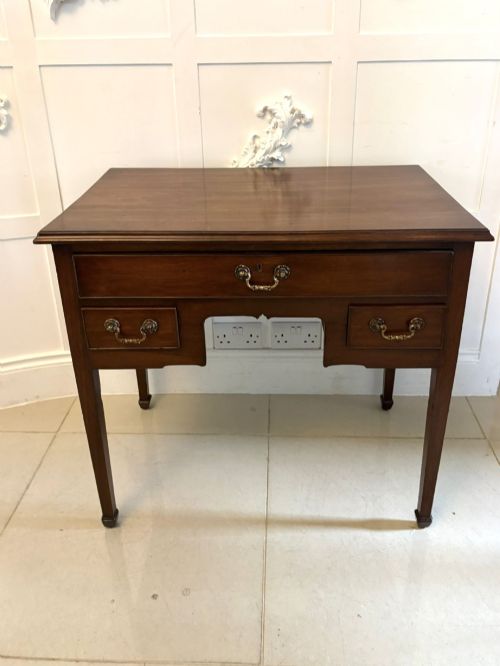
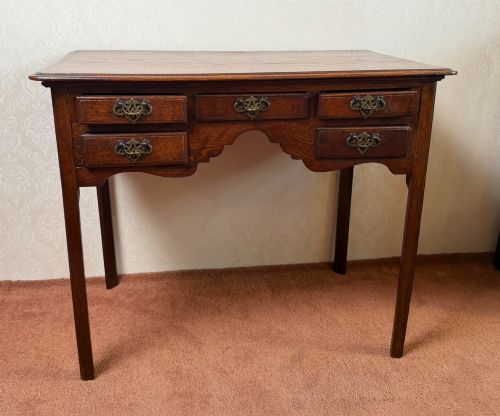
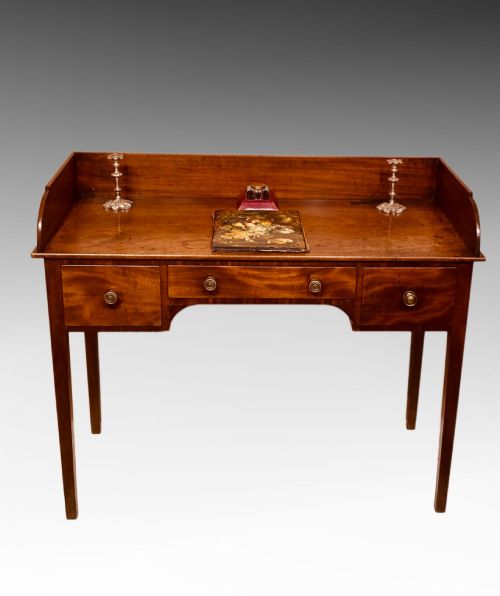
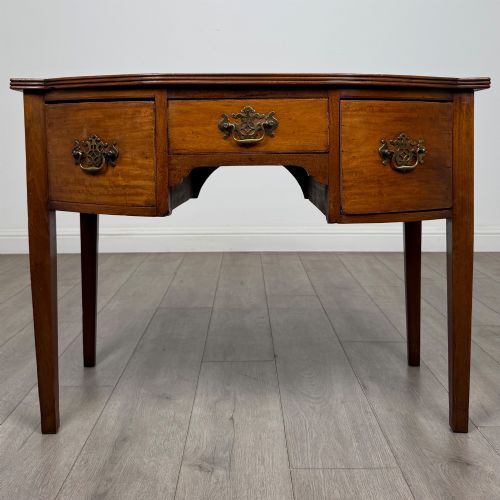
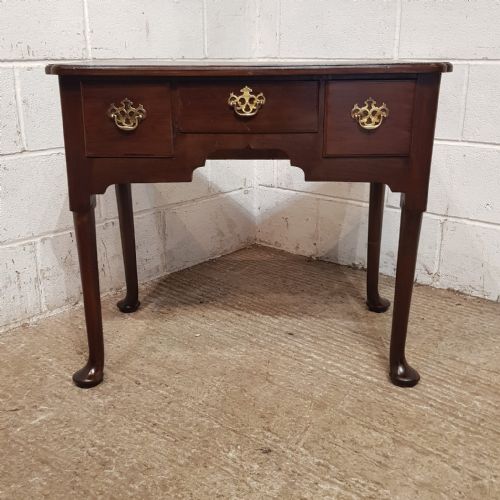
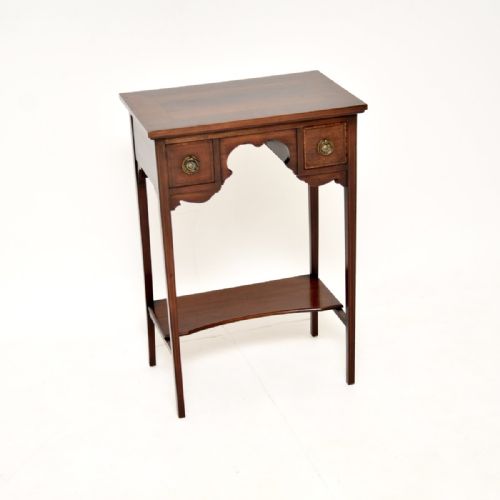




Antique Kneehole Side Table
An antique kneehole side table brings compact elegance to a room, offering clever concealed storage beneath a working surface.
Antique Kneehole Side Table
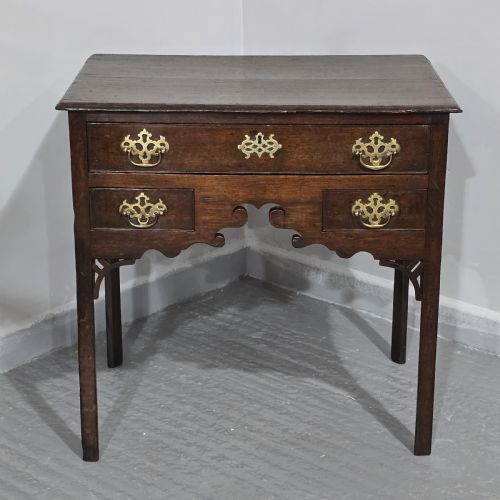
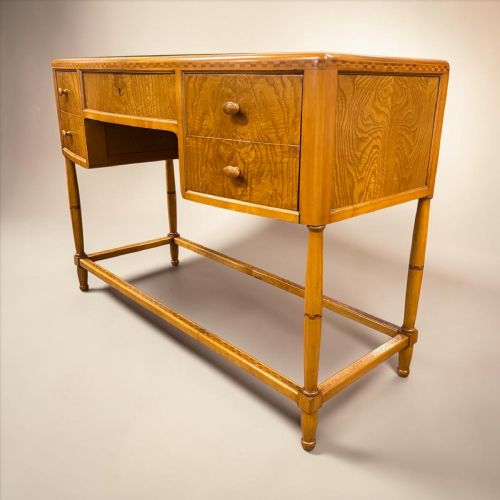
The search for an antique kneehole side table brings together lowboys, writing desks, dressing tables, and console forms from across the centuries. These versatile pieces serve multiple rooms, functioning equally well as compact desks, dressing surfaces, or hallway side tables.
The inventory on this page spans from the Georgian period through the Regency and Victorian eras into the Edwardian years and the twentieth century. Mahogany and oak dominate the offerings, alongside burr walnut, elm, pine, and yew wood.
Buyers will encounter formal George III designs alongside country-made lowboys, Edwardian inlaid mahogany pieces, and later revival styles. Each piece provides a recessed central opening flanked by banks of drawers, uniting practical utility with refined period character.
Materials and construction methods
Cabinetmakers constructed these tables primarily in solid mahogany and oak, frequently incorporating decorative veneers such as burr walnut and satinwood. Secondary timbers like boxwood provided contrasting stringing and inlay details on formal Edwardian and Georgian examples.
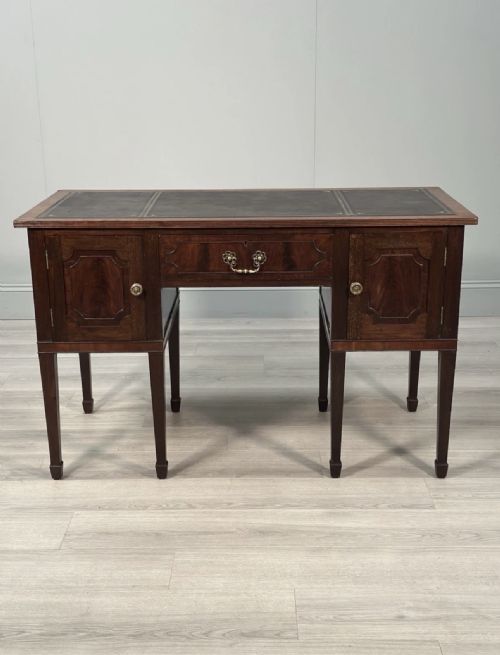
Working surfaces occasionally integrated leather inserts for writing, while hardware relied heavily on cast brass handles and escutcheons. Joinery techniques varied from robust country-made pegged joints in eighteenth-century oak to precise dovetailing in nineteenth-century mahogany drawer construction.
Antique Kneehole Side Table Retail Price Guide 2026
Typical asking prices for kneehole side table among the pieces listed under this phrase on Sellingantiques today, from the lower quarter to the upper quarter. They describe what is for sale here now, not the wider market.
Listings span the seventeenth through the twentieth centuries, featuring Georgian, Regency, Victorian, and Edwardian periods executed in mahogany, oak, walnut, and elm.
Understanding quality in construction and finish
Quality reveals itself in the selection of timber and the precision of the drawer construction. Finer examples display carefully matched wood grain across the drawer fronts and crisp, detailed inlay work rather than painted imitation.
The integrity of the original hardware, the subtlety of any carved or shaped aprons, and the retention of a desirable faded surface patina distinguish finer workshops from more utilitarian country production.
The Antique Kneehole Side Table Glossary
- Kneehole
- A recessed central space beneath a desk or table top, designed to accommodate the sitter's legs. This arrangement allows for banks of drawers on either side.
- Lowboy
- A small table with drawers, typically raised on four tall legs, originating in the late seventeenth century. These pieces frequently double as dressing tables or side tables.
- Stringing
- Thin inlaid lines of contrasting wood, such as boxwood, used to outline drawer fronts and tabletops. This decorative technique became prominent during the Georgian and Edwardian periods.
- Dovetail
- A traditional interlocking woodworking joint used to construct drawer corners securely without metal fasteners. The presence of hand-cut dovetails often indicates earlier period manufacture.
- Escutcheon
- A protective plate surrounding a keyhole, usually fashioned from cast brass. These elements range from simple geometric shapes to elaborate chased designs.
Antique Kneehole Side Table: Frequently Asked Questions
How do I date an old table?
Dating relies on observing a combination of timber selection, construction methods, and stylistic details. Eighteenth-century pieces often display hand-cut dovetails and native woods like oak or early mahogany, while Edwardian versions frequently incorporate delicate stringing and inlaid motifs.
Hardware styles and secondary woods hidden inside the drawers also offer reliable clues to the period of manufacture.
Can I use a lowboy as a desk?
Many lowboys serve effectively as compact writing surfaces or dressing tables due to their kneehole clearance and practical surface area. Their modest dimensions suit modern rooms where standard-sized desks overwhelm the floor space.
Ensure the knee clearance height matches your chair before using one for daily writing tasks.
Where should I place a side table?
These tables find natural homes in entrance halls, living rooms, and bedrooms where surface space is required without bulk. Their finished backs occasionally allow them to float away from walls, though they traditionally sit flat against a partition.
Pairing them with a simple mirror transforms a hallway piece into a functional dressing station.