


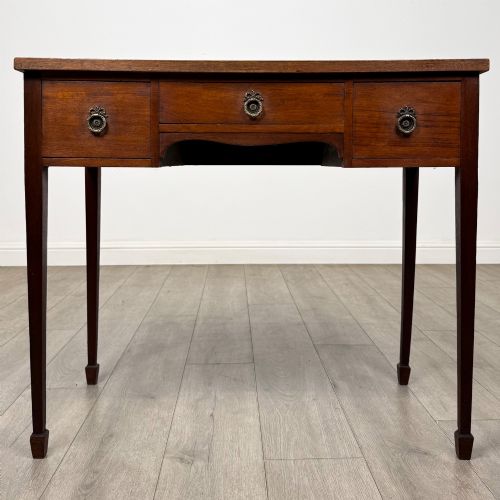
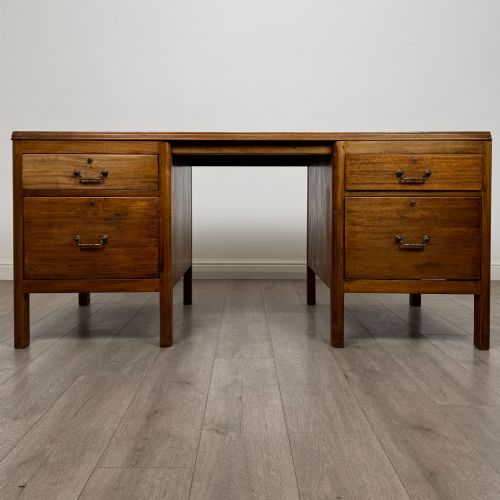
Traditional Mahogany Writing Table
A traditional mahogany writing table provides a sturdy timber surface for correspondence and daily business, shaped by centuries of cabinet making.
Traditional Mahogany Writing Table
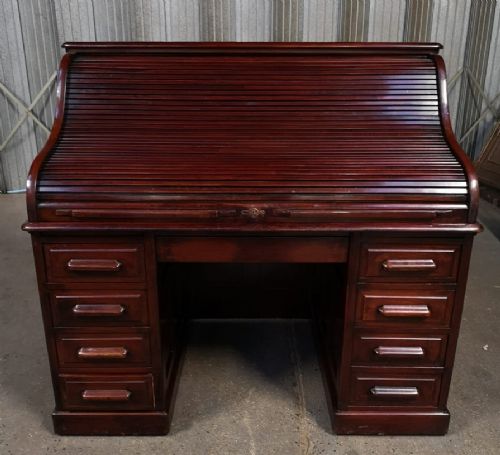
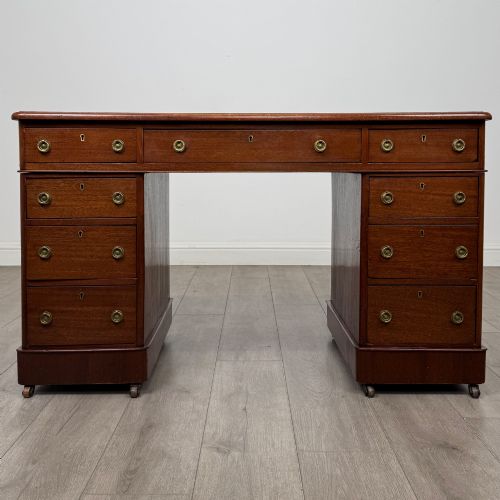
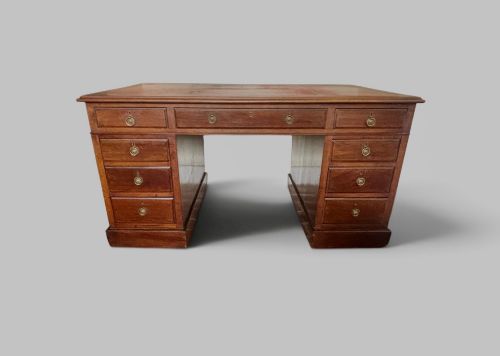
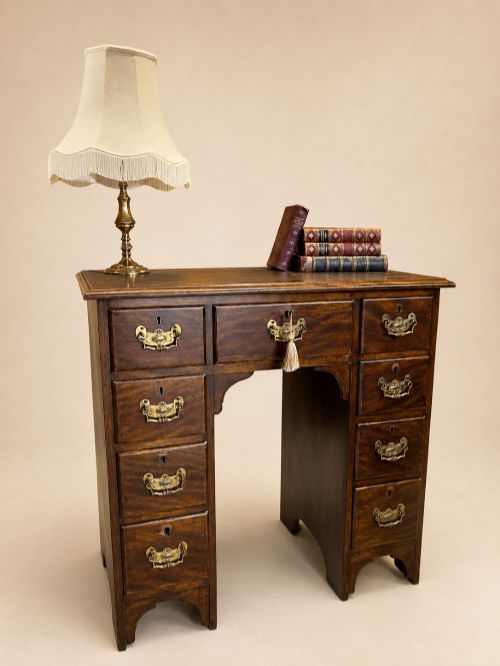
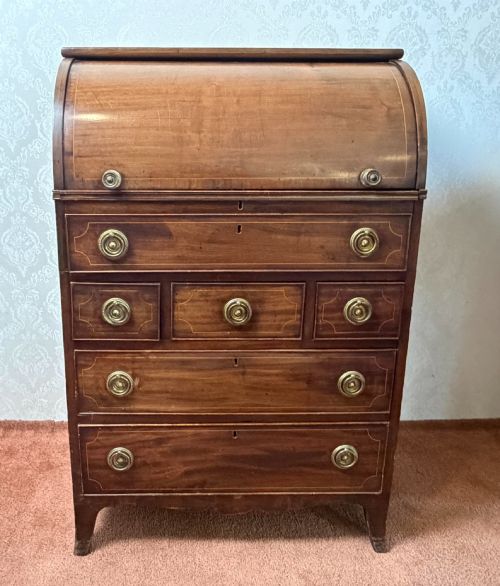
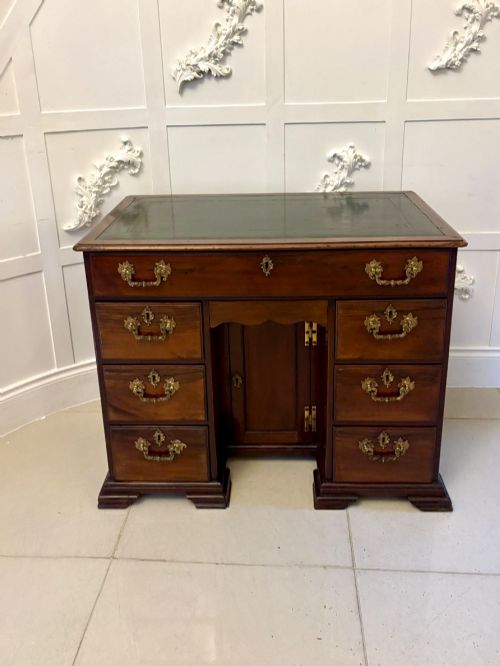
A traditional mahogany writing table encompasses freestanding library desks, kneehole forms and pedestal partners pieces designed for domestic or professional studies. These items date primarily from the eighteenth and nineteenth centuries, spanning Georgian, Victorian and Edwardian periods.
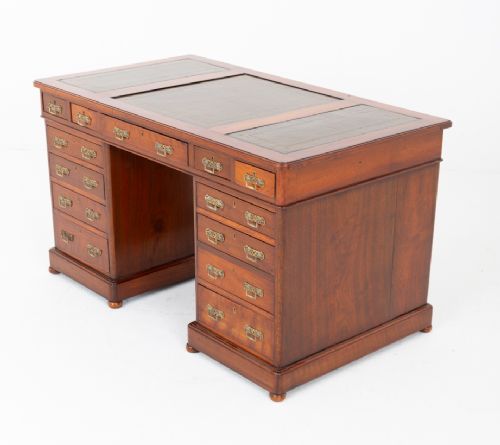
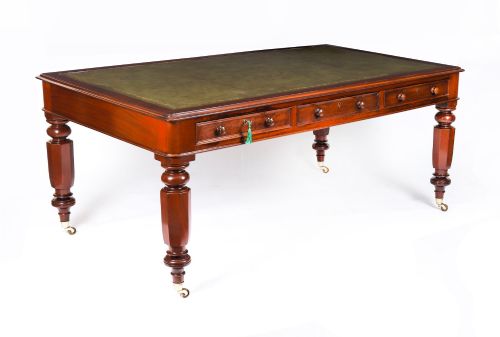
The most common examples on this page are Victorian pedestal desks and nineteenth century writing tables fitted with multiple drawers. Buyers will also encounter Edwardian variations alongside earlier eighteenth century George III pieces.
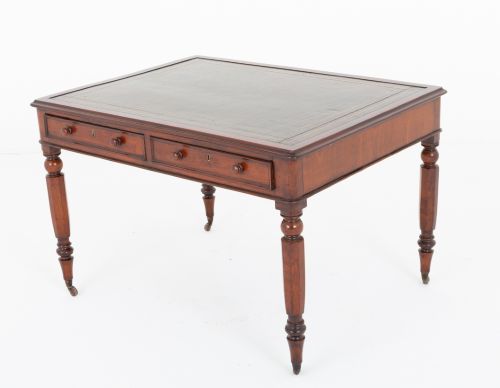
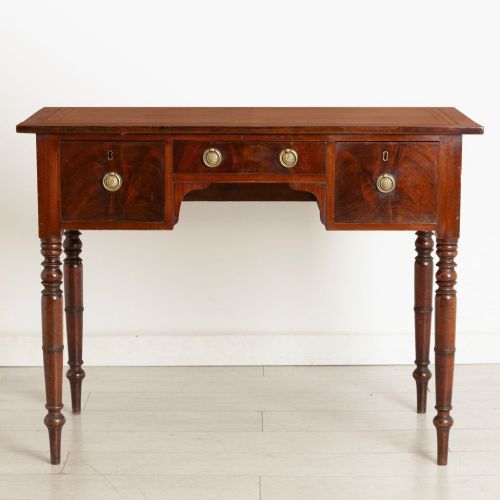
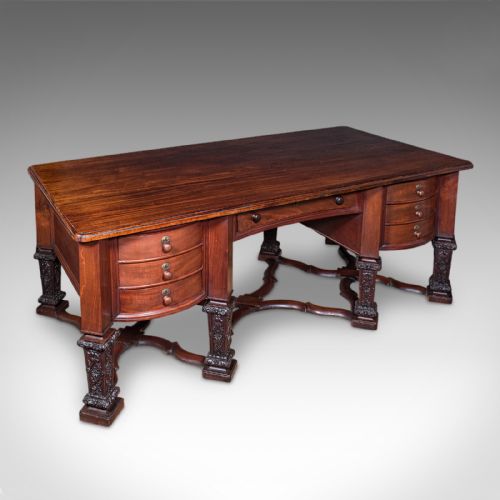
Forms range from compact side tables with drop flaps to large partners tables intended for shared use from opposite sides. Timber construction is frequently paired with inset leather writing surfaces and brass hardware.
How these desks were constructed
Makers utilised solid mahogany and mahogany veneers over secondary timbers such as oak, shaping structural components with traditional joinery. Surfaces were polished to enhance the natural grain of the wood, while writing areas were frequently inset with tooled leather.
Metal fittings including brass handles, castors and key escutcheons were incorporated into pedestal and drawer designs. Decorative elements sometimes include satinwood inlay, ceramic details and canvas linings within internal compartments.
Traditional Mahogany Writing Table Retail Price Guide 2026
Typical asking prices for traditional mahogany writing table among the pieces listed under this phrase on Sellingantiques today, from the lower quarter to the upper quarter. They describe what is for sale here now, not the wider market.
Materials recorded across the inventory include mahogany, oak, satinwood inlay, brass, ceramic and leather.
What separates the finest examples
Quality rests in the selection of timber figures, the precision of drawer dovetailing and the integrity of original hardware. Superior pieces display well matched mahogany grains across expansive top surfaces and drawer fronts.
The sophistication of internal carcase construction and the retention of period leather tops distinguish workshop production from standard commercial output. Proportion and structural balance determine the visual success of each form.
Trollope and Sons·Gillows
The Traditional Mahogany Writing Table Glossary
- Partners desk
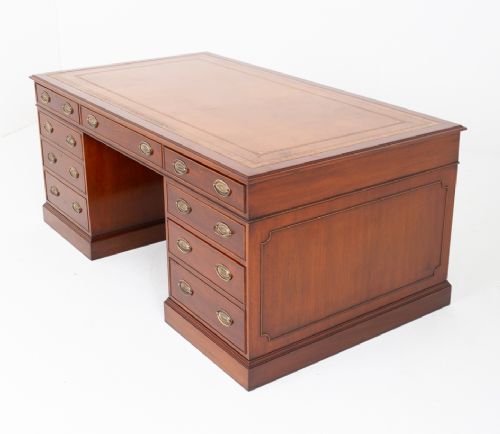
- A large double sided pedestal desk designed for two people to work opposite one another, featuring drawers on both faces.
- Kneehole desk
- A compact pedestal desk with a central recess for the user's legs, flanked by banks of smaller drawers.
- Tambour
- A sliding door or shutter constructed from narrow vertical strips of wood glued to a canvas backing, allowing it to curve around corners.
- Dovetail
- A traditional interlocking joint used in drawer construction, prized for its tensile strength and resistance to being pulled apart.
- Pedestal desk
- A heavy freestanding desk supported by two banks of drawers or cupboards that rest directly on the floor.
Traditional Mahogany Writing Table: Frequently Asked Questions
How do I care for a leather desk top?
Leather surfaces require occasional treatment with specialist wax or leather balm to prevent drying and cracking over time. Avoid placing hot mugs or damp items directly onto the leather.
Keep the timber surround nourished with a quality beeswax, applied sparingly and buffed with a soft cloth to maintain the lustre of the mahogany.
What is the difference between a writing table and a pedestal desk?
A writing table typically stands on four legs, sometimes with one or two shallow drawers beneath the top. It offers an open, lighter silhouette suited to occasional writing or drawing.
A pedestal desk is a much heavier piece built around two banks of drawers that support the top, providing substantial enclosed storage for papers and stationery.
How can I tell a Georgian desk from a Victorian one?
Georgian desks generally exhibit cleaner, restrained lines from the eighteenth century, often utilising premium Cuban mahogany and subtle stringing or inlay. Proportions tend to be elegant and lighter in scale.
Victorian pieces from the nineteenth century are typically larger and heavier, with deeper drawer configurations and occasionally more exuberant carving or robust structural framing.
Will a partners desk fit in a modern home?
Partners desks are exceptionally deep because they house drawers on both sides, so they require substantial floor space to allow room for chairs all round. They work best positioned in the centre of a spacious study rather than pushed against a wall.