

Edwardian Twin Pedestal Desk
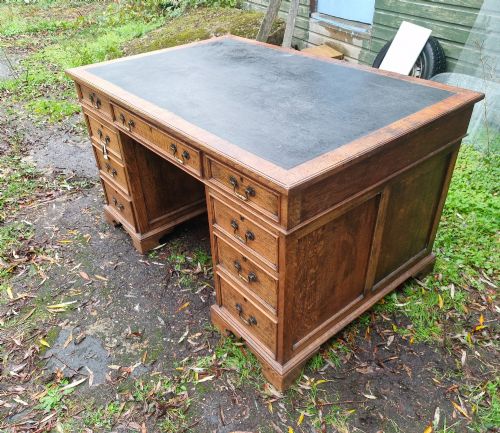
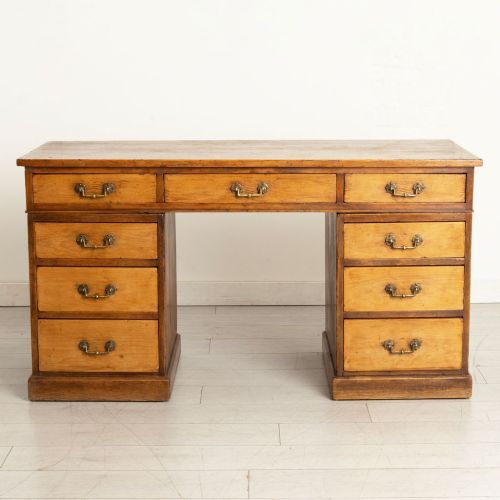
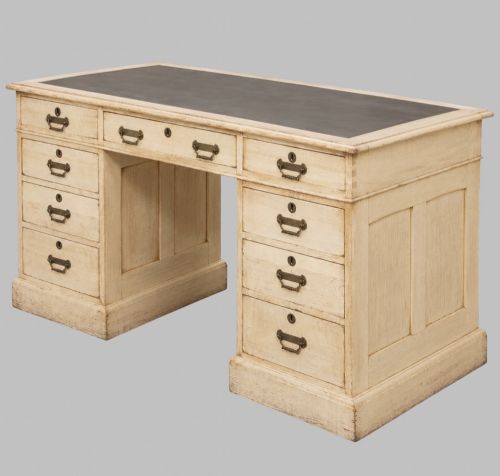
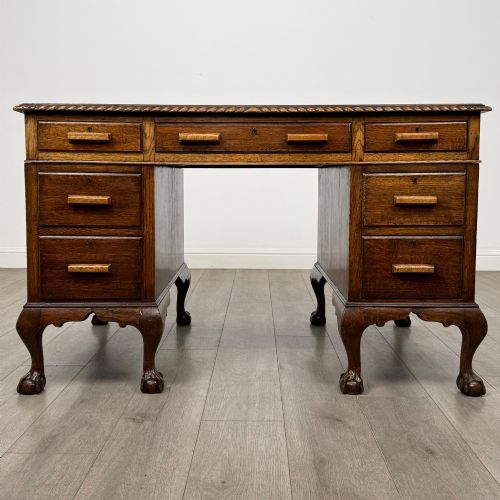
When you search for an edwardian twin pedestal desk, you seek a substantial workspace built with two supporting banks of drawers beneath a wide writing surface.
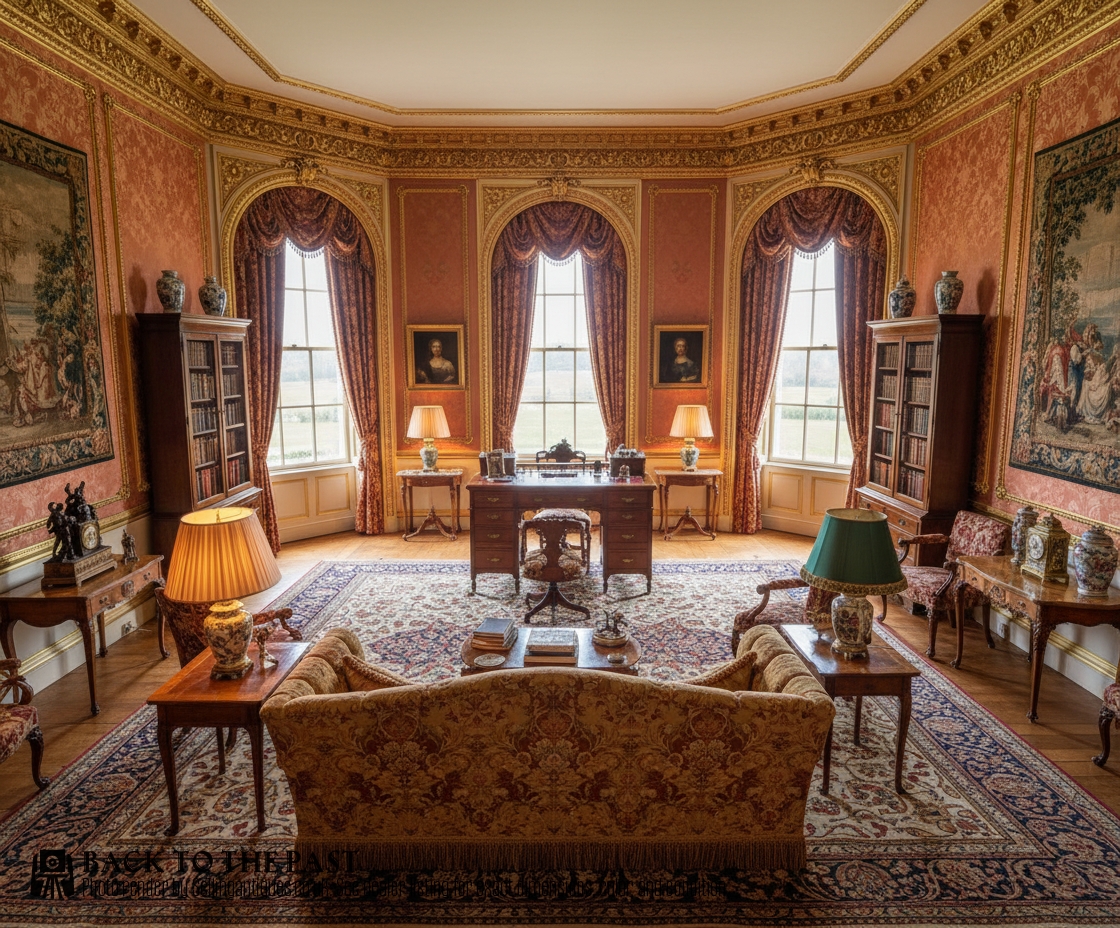
Edwardian Twin Pedestal Desk
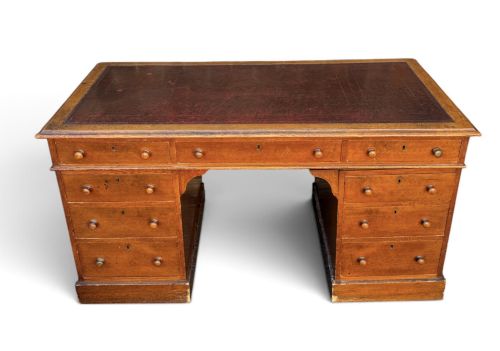
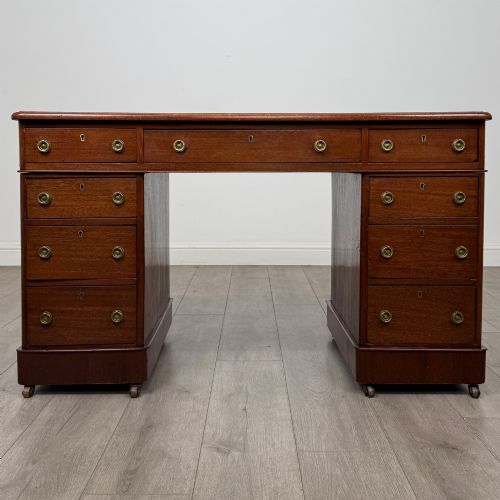
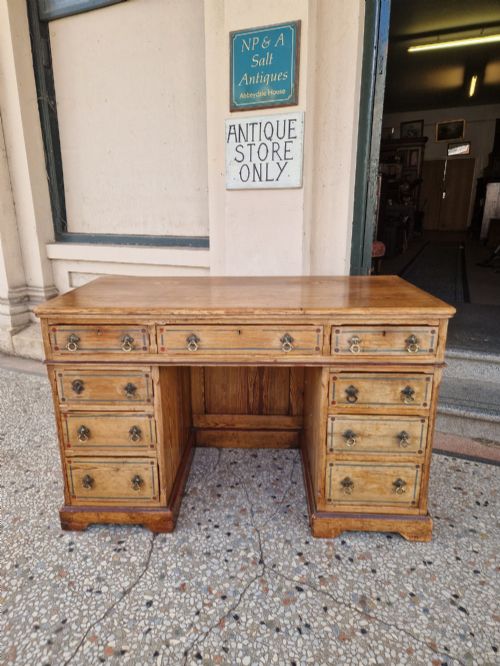
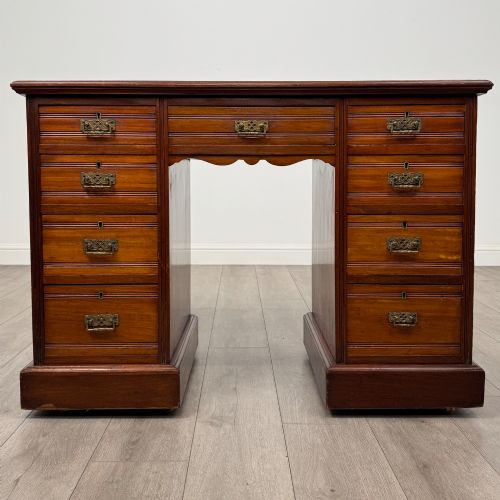
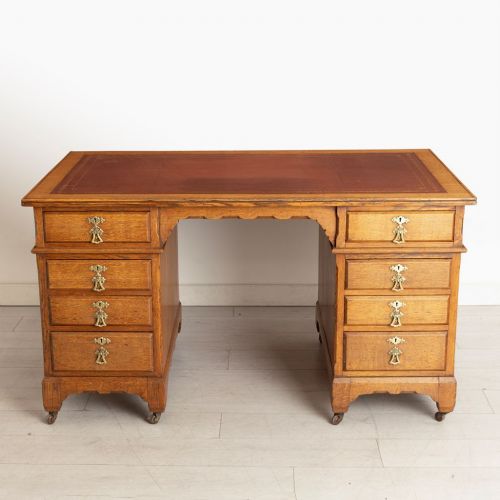
An edwardian twin pedestal desk typically comprises a central writing section flanked by two separate vertical banks of drawers, forming a stable three-part construction designed for heavy daily use. The form emerged strongly in the period around 1900, carrying forward earlier Victorian proportions while adopting lighter Edwardian aesthetics.
Mahogany remains the dominant wood found across these pieces, frequently accompanied by oak, walnut, and satinwood inlay. Many examples feature inset leather writing surfaces bordered with gilt tooling, alongside brass drawer pulls and handles that complete the formal aesthetic of a study or office.
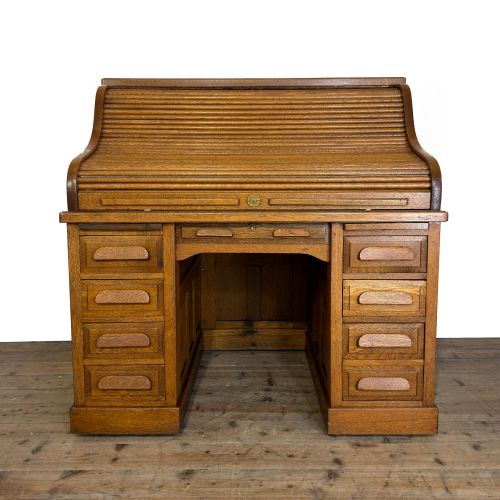
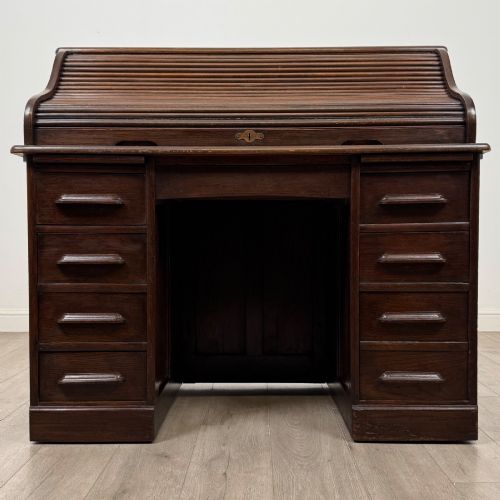
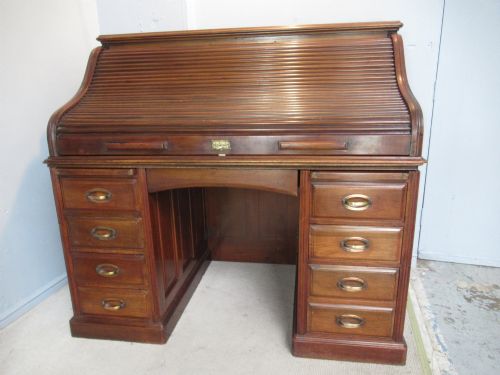
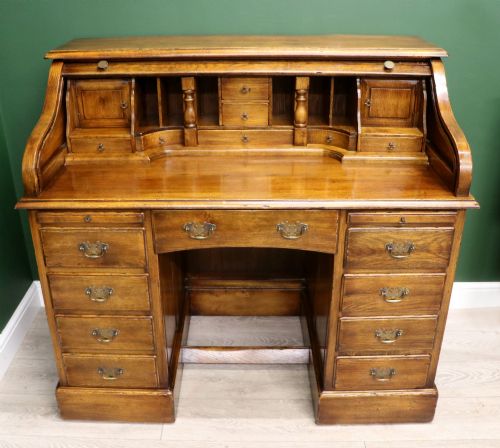
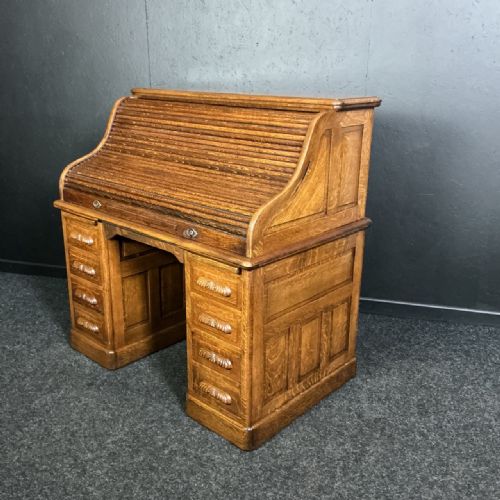
Variations within the category include tambour or roll-top versions that conceal the writing surface, as well as partner desks designed with drawers on both sides for simultaneous use by two people.
How They Were Made
Cabinet makers constructed the framework of solid hardwoods like mahogany and oak, applying finely figured veneers such as flame mahogany, burr walnut, and satinwood to the drawer fronts and primary surfaces. Joints relied on traditional dovetailing for the drawers to ensure long-term durability under frequent opening and closing.
Writing surfaces incorporated vegetable-tanned leather glued directly to the wooden top, finished with blind or gilt tooling around the perimeter. Hardware such as brass swan-neck handles, drop rings, and keyhole escutcheons were cast and fitted by hand into the drawer faces.
Edwardian Twin Pedestal Desk Retail Price Guide 2026
Typical asking prices for edwardian twin pedestal desk among the pieces listed under this phrase on Sellingantiques today, from the lower quarter to the upper quarter. They describe what is for sale here now, not the wider market.
The archive records multiple partner desks built with dual-sided drawers designed for simultaneous use by two people.
What Varies in Quality
The choice and execution of timber set examples apart, ranging from plain utility oak to highly decorative flame mahogany and cross-banded walnut veneers matched symmetrically across the desk front. Superior pieces display thoughtful grain selection where the patterns flow continuously across adjacent drawer banks.
Construction details distinguish workshop tiers, visible in the thickness of the solid wood drawer linings, the fineness of the dovetail joints, and whether the back of the desk is fully panelled for freestanding placement in a room rather than pushed against a wall.
Maple and Co
The Edwardian Twin Pedestal Desk Glossary
- Twin pedestal
- A desk design comprising two separate drawer columns that support the main writing slab above. This format provides balanced storage and stability.
- Partner's desk
- A large configuration featuring drawers and cupboards on both opposing sides, allowing two people to sit and work opposite each other.
- Tambour top
- A flexible slatted wooden shutter that slides in tracks to cover the upper pigeonholes and writing surface. It operates via a continuous roll mechanism.
- Cross-banding
- A decorative border of veneer laid around the perimeter of a drawer front or top with the grain running perpendicular to the central panel. This technique frames the primary wood figure.
- Escutcheon
- A protective metal plate surrounding a keyhole, usually made of brass to match the drawer pulls. It prevents the surrounding wood from wearing down through repeated use of the key.
Edwardian Twin Pedestal Desk: Frequently Asked Questions
What is a twin pedestal desk?
A twin pedestal desk is a heavy piece of furniture featuring a central writing top supported by two distinct vertical columns of drawers. This layout creates an efficient workspace with ample storage flanking the sitter's legs.
Most examples separate into three manageable sections for transport, consisting of the two drawer pedestals and the top slab. They served as primary administrative desks in studies, libraries, and offices.
How do I care for the leather top?
The leather writing surface benefits from occasional cleaning with a slightly damp cloth followed by a neutral leather cream to keep the material supple. Avoid placing hot cups directly on the leather to prevent staining.
Protecting the gold tooling from excessive moisture and abrasive cleaners ensures the decorative borders remain intact. A quality paste wax applied gently around the leather edge preserves the surrounding wood.
Were these desks made for offices?
These pieces were produced for professional studies, domestic libraries, and corporate offices where a commanding presence was required. Their sturdy construction suited clerks and professionals managing daily paperwork.
While many stayed in domestic homes, larger partner versions equipped multiple users in busy commercial environments. Their freestanding capability allowed them to sit prominently in the middle of a room.
How do I distinguish Edwardian from Victorian desks?
Edwardian desks tend to exhibit slightly lighter proportions and brighter timber selections, such as pale oak and lighter mahogany figures. They frequently incorporate delicate satinwood inlay and refined stringing.
Victorian counterparts generally display heavier, darker timber tones with deeper mouldings and more robust structural mass. However, transition pieces made around 1900 share traits from both eras.