


Antique Kingwood Nightstand
An antique kingwood nightstand brings French cabinet-making traditions into the bedroom through figured veneers, marble tops and gilt mounts.
Antique Kingwood Nightstand
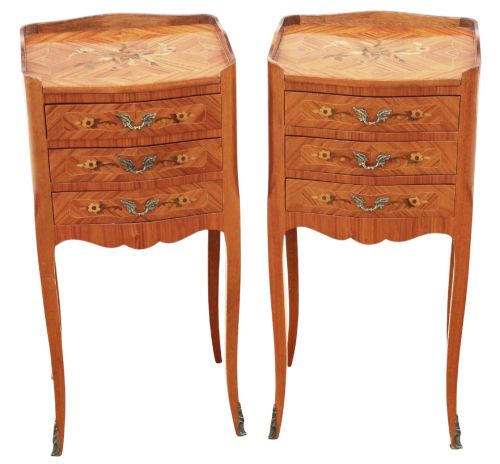
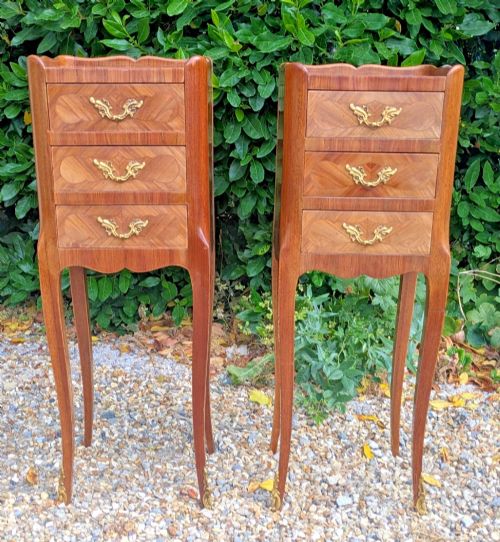
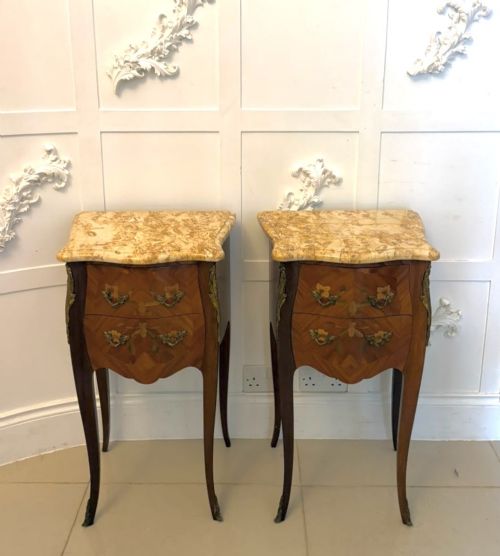
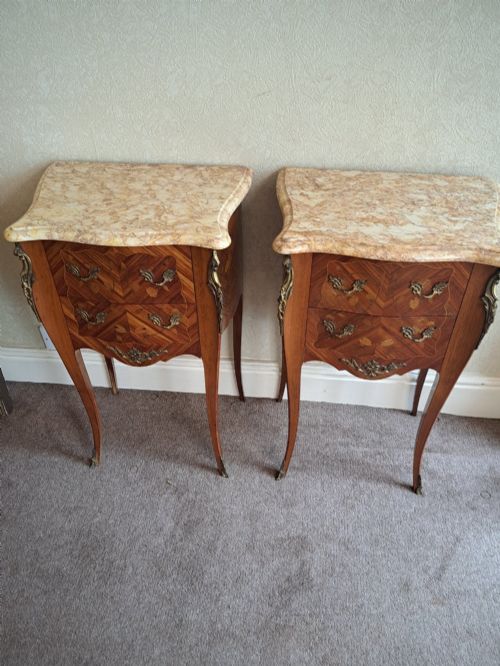
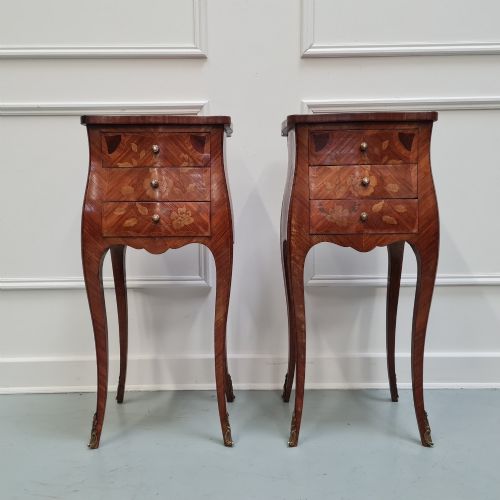
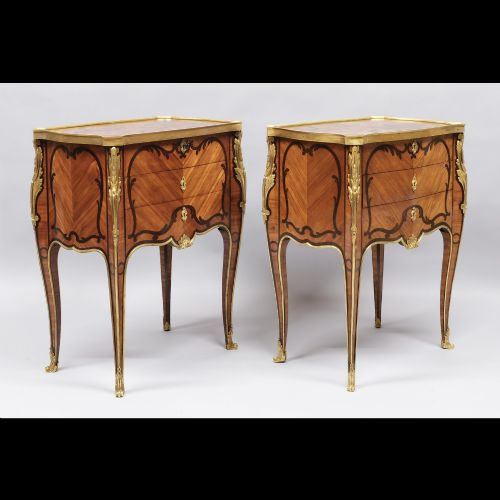
An antique kingwood nightstand takes the form of bedside cabinets, commodes, lamp tables and pot cupboards created primarily in French stylistic traditions. The pieces appearing here span from the Victorian era and the late nineteenth century through to the interwar decades of the 1920s and 1930s. Buyers most commonly encounter matched pairs or single examples designed in Louis XV and Louis XVI revivals, featuring compact proportions suited to bedside placement.
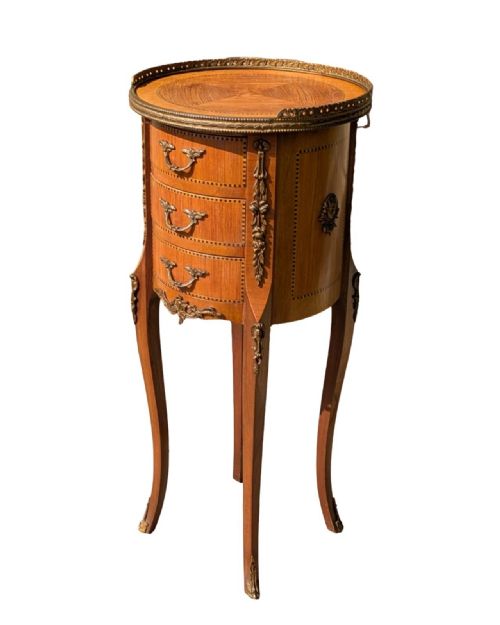
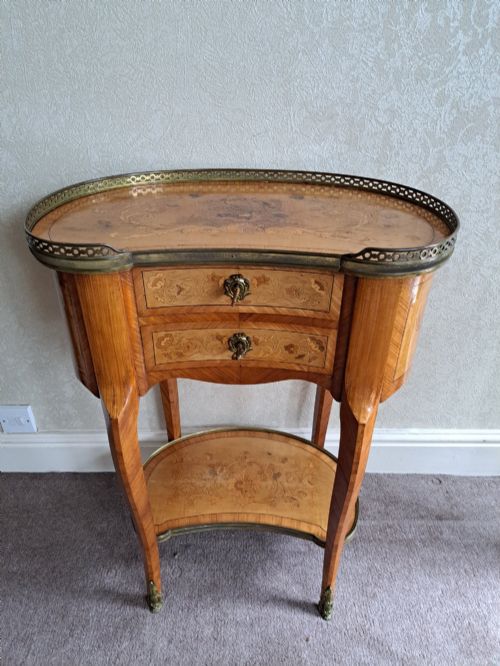
The functional forms vary from marble-topped cupboards with shelved interiors to open lamp tables and drawer chests. Many adopt serpentine or bombe outlines that echo eighteenth-century models reinterpreted by later workshops. Alongside dedicated bedside pieces, related occasional tables and side cabinets appear within the selection, all unified by their use of exotic timber veneers.
How they were made
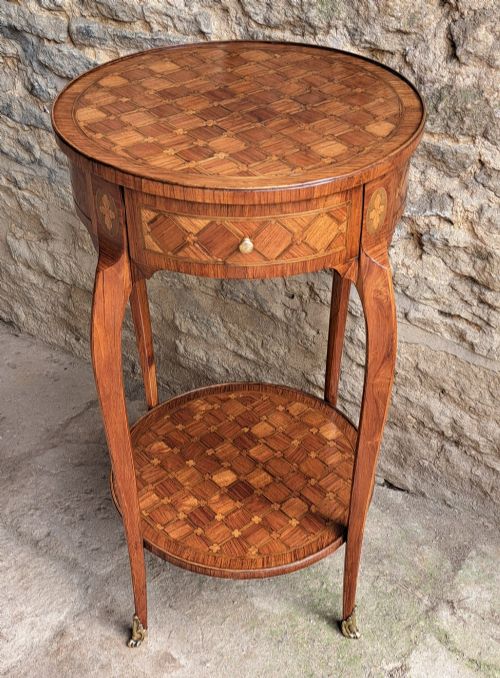
Cabinet-makers constructed these pieces using dense carcases of secondary timber overlaid with finely cut kingwood veneers, frequently arranged in intricate parquetry or floral marquetry patterns. Walnut and rosewood also feature alongside satinwood details within the decorative surface schemes. This veneering technique allowed makers to exploit the rich grain patterns and warm purple-brown tones characteristic of kingwood.
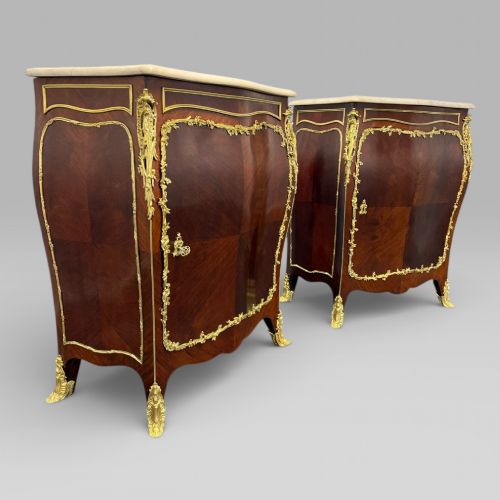
Marble tops, usually shaped to follow the contours of the wooden carcase, provide a durable functional surface for bedside use. Cast ormolu and gilt bronze mounts, handles and sabots decorate the corners, legs and aprons, secured with small brass fixings. These cast metal ornaments accentuate the fluid lines associated with French rococo and neoclassical revival styles.
The listings encompass items spanning from the Victorian period through the Edwardian era and into the interwar years of the 1930s.
What varies in quality
The standard of an antique kingwood nightstand rests upon the precision of the marquetry and the crispness of the bronze ormolu mounts. Finer examples display meticulous matching of veneer grains across curved drawer fronts and sides, whereas simpler versions rely on straightforward geometric parquetry. The weight, detail and chiselling of the cast metal mounts further separate standard production pieces from higher-tier studio work.
Structural harmony also dictates quality, particularly in how well marble slabs fit the wooden upper rims and how smoothly drawers and cupboard doors operate. Pieces associated with recorded makers or workshops typically exhibit superior timber selection and more elaborate floral inlay work. The overall proportion and balance of the piece determine its success within a room setting.
E. Kahn·Sormani·Francois Linke·Druce and Co
The Antique Kingwood Nightstand Glossary
- Kingwood
- A dense, richly grained exotic timber with violet and dark brown streaks, prized for French veneer work. It is employed extensively across nineteenth and early twentieth-century bedside cabinets.
- Ormolu
- Gilded bronze used for decorative mounts, handles and feet on fine furniture. The technique involves applying a gold amalgam to cast bronze before firing.
- Marquetry
- The art of applying thin decorative veneers of different woods to form pictorial or geometric patterns. On these tables, floral motifs and trellis designs appear frequently.
- Bombe
- A swelling, outward-curved contour found on the sides and fronts of certain cabinets and commodes. This undulating shape requires advanced woodworking skill to veneer accurately.
- Parquetry
- Geometric wood-mosaic work used for flooring and furniture surfaces. Triangular and diamond shapes create repeating patterns across tabletop panels.
Antique Kingwood Nightstand: Frequently Asked Questions
What is the difference between a chevet and a commode?
A chevet generally refers to a small bedside table or cabinet designed specifically for nighttime storage beside a bed. A commode is traditionally a larger chest of drawers, though smaller versions often serve similar bedside roles in French interiors.
Both forms utilise matching kingwood veneers and marble surfaces, but their scale and internal storage arrangements differ according to their original domestic purpose.
How do I identify Louis XV style furniture?
Louis XV style pieces are defined by asymmetrical curves, cabriole legs and flowing floral or rococo ornamentation. Ormolu mounts on these tables typically accent the shoulders and feet with organic, scrolling leaf motifs.
Straight lines are largely avoided in favour of serpentine fronts and rounded corners that soften the overall silhouette of the cabinet.
Are marble tops original to these tables?
Most marble tops on these nineteenth and early twentieth-century bedside tables were fitted during primary manufacture to provide a practical, stain-resistant surface. They are cut specifically to follow the exact serpentine or kidney contours of the wooden carcase.
Slight variations in edge profiling and marble coloration reflect the specific geological source utilised by the workshop at the time of construction.
How should I care for kingwood veneer?
Kingwood veneer requires stable indoor humidity and protection from direct sunlight to prevent the timber from fading and the underlying glue from drying out. Dusting with a dry, soft cloth is sufficient for routine maintenance.
Avoid placing damp items directly onto the polished wood surface, relying instead on the fitted marble top for functional placement of lamps and glasses.