
Antique Kingwood Bureau
When you examine an antique kingwood bureau, you enter a world of refined writing furniture shaped by French taste and Victorian patronage.
Antique Kingwood Bureau
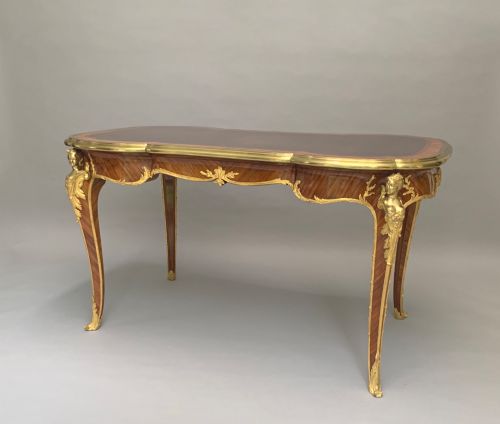
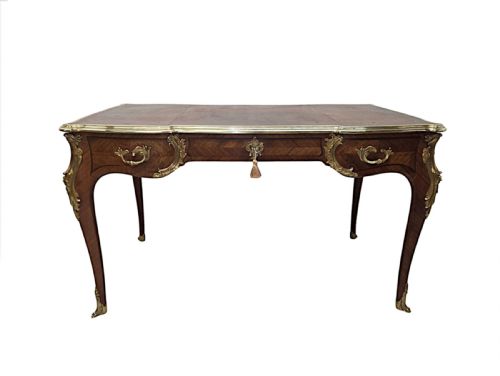
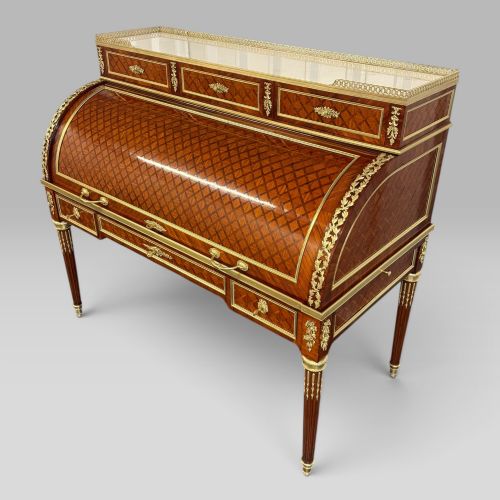
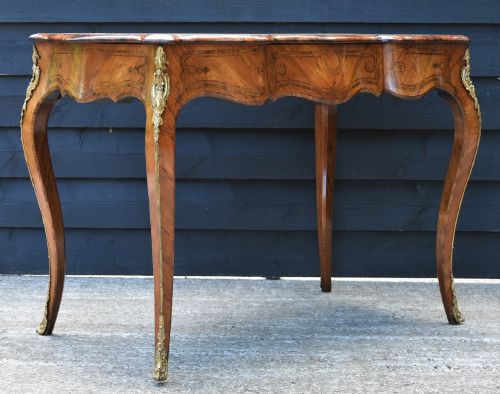
An antique kingwood bureau encompasses sophisticated writing desks, cylinder desks, and freestanding bureau plat tables designed for formal reception rooms and private chambers. These forms originate predominantly from nineteenth-century revivals of Louis XV and Louis XVI styles, echoing earlier royal cabinet-making traditions.
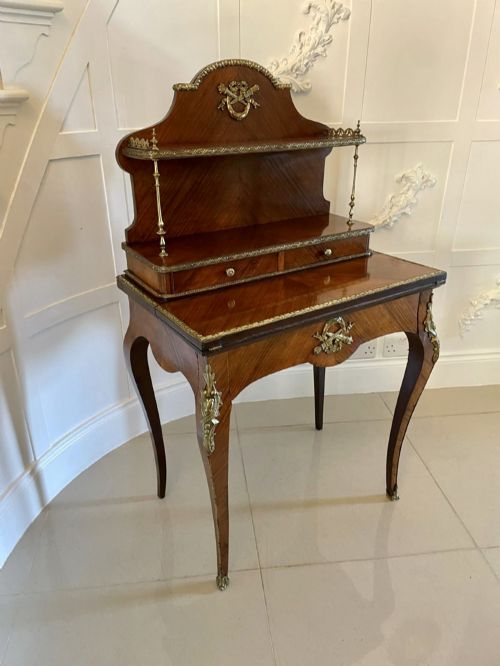
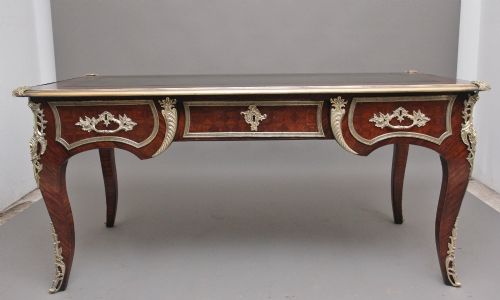
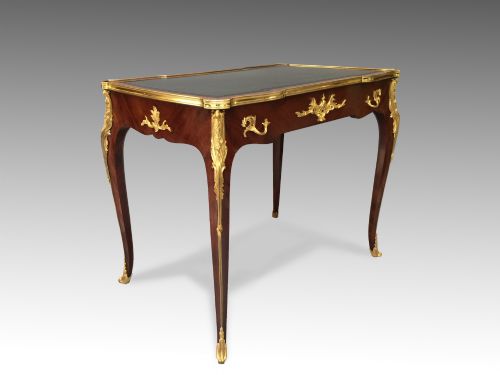
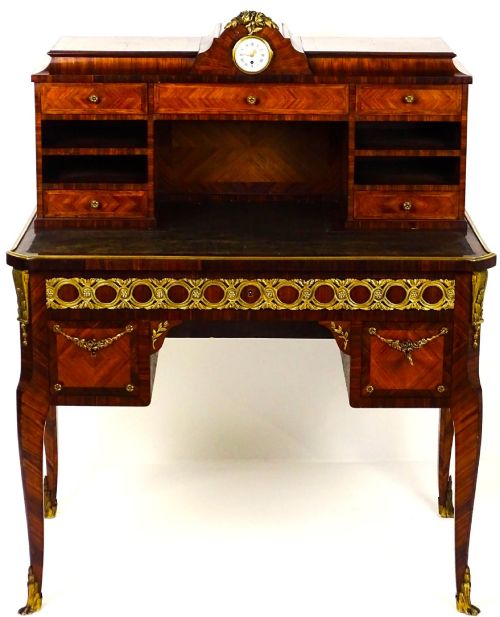
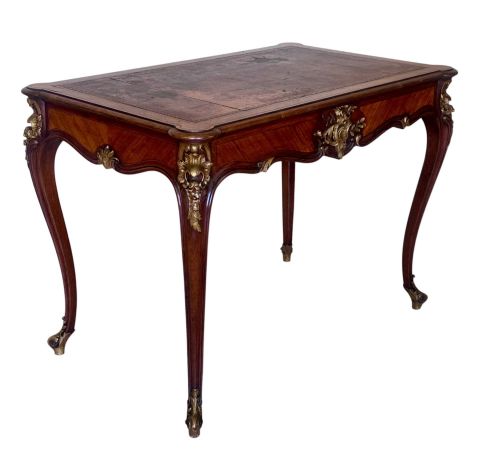
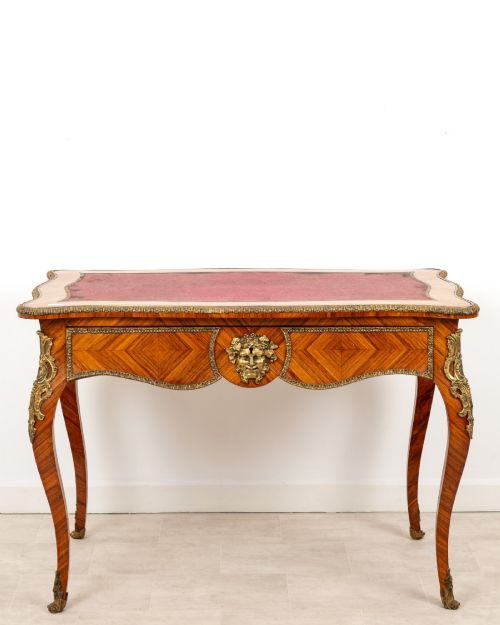
The most common examples encountered on this page are nineteenth-century French bureau plat desks and bonheur du jour cabinets. Makers of this period adapted eighteenth-century proportions to suit Victorian interiors, incorporating elaborate mounts and contrasting veneers.
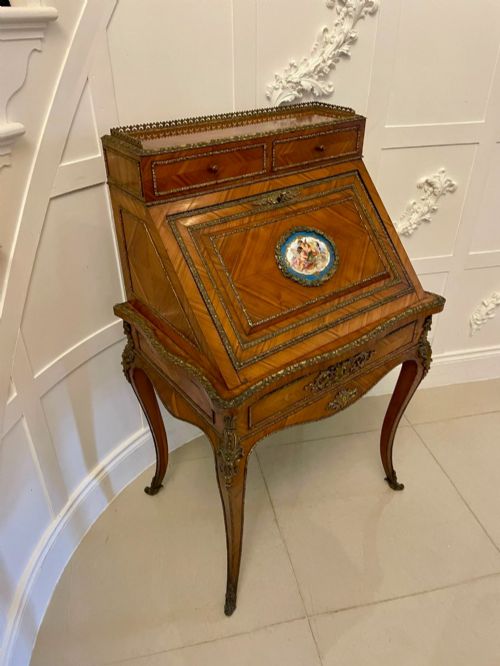
Pieces span from compact writing cabinets with porcelain plaques to larger partners desks intended for central placement in a study. The overarching characteristic remains the use of exotic timber combined with gilt bronze hardware.
How they were made
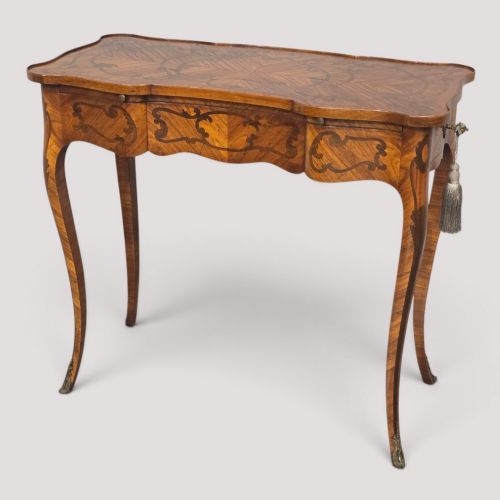
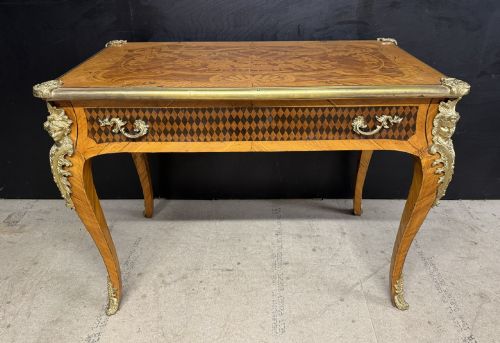
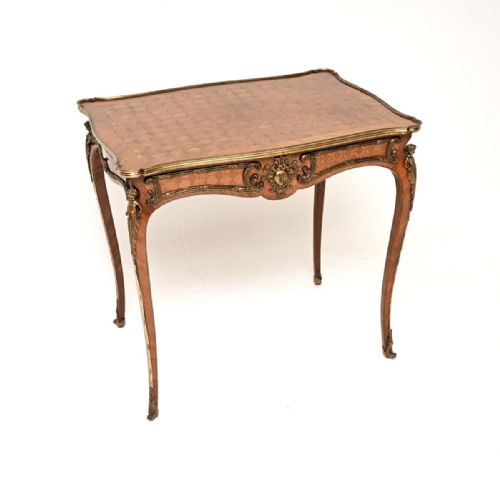
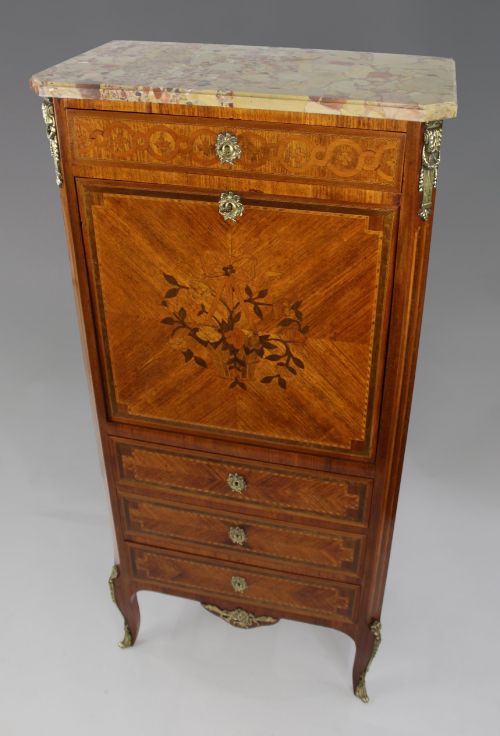
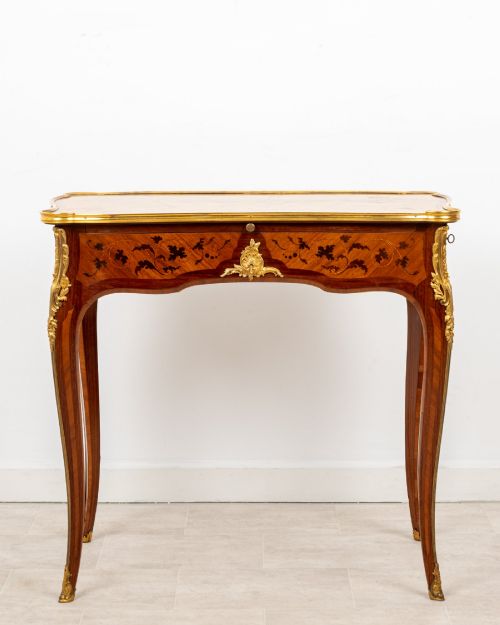
Cabinet-makers applied finely cut kingwood, rosewood, and tulipwood veneers over robust carcases using intricate marquetry and parquetry patterns. Geometric arrangements and floral motifs were sliced and fitted by hand to create visually striking table tops and fall fronts.
Gilded bronze ormolu mounts were cast, chased, and secured to corners, legs, and aprons to accentuate the curved serpentine outlines of the woodwork. Leather writing surfaces, often gold-tooled, were inset into the timber frames of desks and tables.
Internal compartments incorporated small drawers and pigeonholes constructed from secondary timbers, whilst structural stability relied on traditional dovetail joints and brass hardware.
Several ladies writing desks come equipped with hidden compartments cunningly tucked behind porcelain plaques.
What varies in quality
The degree of artistic execution in the ormolu mounts separates standard production from exceptional works by noted makers. Finely chased bronze hardware displays crisp detailing and deep relief, whereas lesser examples appear flat and repetitive.
The precision and complexity of the veneer work dictate the upper tier of craftsmanship. Multi-coloured floral marquetry requires immense skill to execute without gaps, compared to straightforward geometric parquetry.
The integration of supplemental materials, such as Sevres porcelain plaques or original marble tops, elevates the stature of a piece. Structural integrity, retention of original surfaces, and signed maker stamps further distinguish masterwork production.
Francois Linke·Edwards and Roberts·Paul Sormani·CH Jeanselme and Co·Durand
The Antique Kingwood Bureau Glossary
- Kingwood
- A dense, heavily figured exotic timber with dark violet-brown and golden striping used extensively for high-end decorative veneering. It belongs to the Dalbergia genus and was prized by eighteenth and nineteenth-century cabinet-makers.
- Bureau Plat
- A freestanding writing table fitted with one or more drawers in the frieze, designed to be viewed from all sides. These tables typically feature leather writing inserts and elaborate ormolu mounts.
- Bonheur Du Jour
- A light ladies writing desk featuring a small cabinet or superstructure with shelves and drawers mounted on top of the writing surface. This form gained popularity during the mid-nineteenth-century French revivals.
- Ormolu
- Gilt bronze hardware cast and applied to furniture corners, legs, and aprons for decorative accent. The technique involves applying a mercury and gold amalgam to bronze before firing.
- Marquetry
- The art of applying decorative pieces of veneer to a structure to form intricate pictorial designs or floral patterns. Craftsmen utilised various exotic timbers to achieve contrasting natural colours.
Antique Kingwood Bureau: Frequently Asked Questions
What is a kingwood bureau?
A kingwood bureau is a decorative writing desk or cabinet veneered in dense, striped tropical timber and frequently embellished with gilt bronze mounts. These pieces emerged primarily as nineteenth-century interpretations of earlier French court furniture.
They served as functional writing surfaces and status symbols in formal reception rooms. The category includes drop-front desks, flat tables, and multi-tier cabinets.
How do I date an antique bureau?
Dating relies on examining the stylistic revival period, construction methods, and secondary woods used inside drawers. Most examples on this page date from the nineteenth century, reflecting Louis XV and Louis XVI revivals.
Maker stamps, brass screw types, and the composition of the ormolu mounts provide further chronological clues. Comparative analysis with signed pieces helps narrow the decade of production.
How were these desks used originally?
Owners used these desks for personal correspondence, managing household accounts, and reading private letters. Bonheur du jour cabinets were specifically designed for ladies to write notes in the morning.
Freestanding bureau plat tables allowed individuals to write away from walls in the centre of a room. Internal compartments secured stationery, inkwells, and valuables behind lockable panels.
How do I care for kingwood veneer?
Maintain a stable room environment away from direct sunlight and strong heat sources to prevent timber shrinkage and veneer splitting. Dust gently with a dry, soft cloth and avoid chemical polishes.
Condition the wood periodically using traditional wax suitable for antique furniture. Protect leather writing inserts from moisture and sharp objects during daily use.