






Rosewood Vanity Desk
A rosewood vanity desk brings together rich timber and refined compartments for grooming or correspondence.
Rosewood Vanity Desk
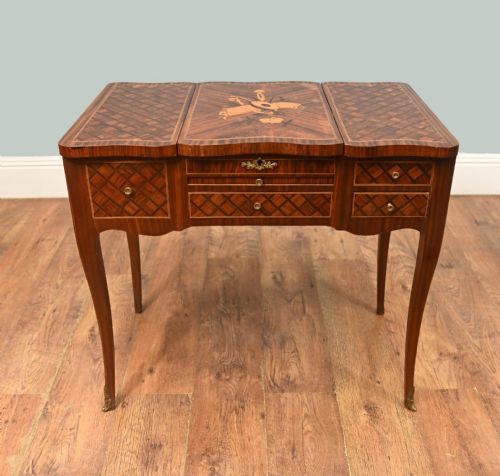
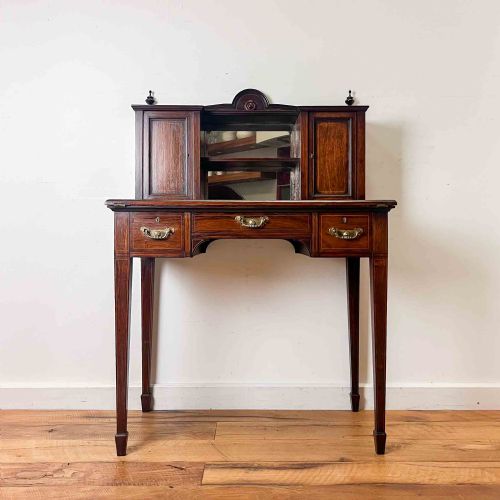
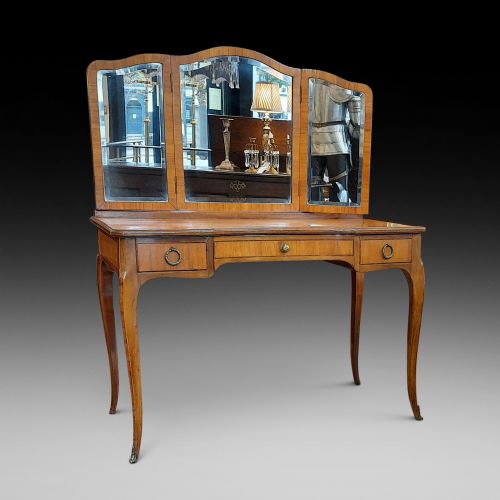
When you search for a rosewood vanity desk, you encounter sophisticated writing and grooming furniture created during the nineteenth and early twentieth centuries. These pieces often take the form of bonheur du jour desks, poudreuses, and work tables designed with specialised compartments.
The versions most commonly met on this page span the Victorian and Edwardian eras, alongside French REVIVAL interpretations. They combine the functions of a dressing table and a writing desk into a single compact form.
How they were made
Cabinet makers utilised dense rosewood and kingwood veneers, frequently enhanced with intricate inlay work and crossbanding. Frames incorporated structural secondary timbers to support the folding lids and pull-out writing surfaces.
Metalwork details such as brass mounts and ormolu accents were cast and applied to frame the contours of French styles. Interiors often integrated fitted mirror glass and leather writing inserts to complete the design.
Materials recorded across the selection include rosewood, kingwood, walnut, brass, ormolu, leather, and mirror glass.
What varies in quality
The standard of timber selection and veneer matching defines the visual depth of the piece. Superior examples display continuous grain alignment across drawers and lids.
The precision of the brass or ormolu mounts and the complexity of the inlaid motifs indicate the skill of the workshop. Maker attribution, such as the output associated with Edwards and Roberts, elevates the standing of a desk.
Edwards and Roberts
The Rosewood Vanity Desk Glossary
- Bonheur du jour
- A light ladies' writing desk featuring a small cabinet or set of pigeonholes on top. This form gained popularity in France during the eighteenth century and saw revivals through the nineteenth century.
- Poudreuse
- A French dressing table equipped with folding top sections that conceal a mirror and compartments for cosmetics. They date predominantly from the eighteenth century onwards.
- Crossbanding
- A decorative border of veneer laid around the perimeter of a tabletop or drawer front with the grain running perpendicular to the centre. This technique frames the primary timber.
- Ormolu
- Gilded bronze mounts applied to furniture for decoration. The technique involves applying a mercury and gold amalgam to cast bronze.
Rosewood Vanity Desk: Frequently Asked Questions
What is a rosewood vanity desk?
A rosewood vanity desk is a dual-purpose piece of antique furniture designed for grooming and light correspondence. It typically incorporates compartments, mirrors, and a dedicated writing surface.
These items date largely from the nineteenth century, including Victorian and Edwardian interpretations as well as French revival pieces.
How were these desks used historically?
Owners used these tables for morning grooming routines, applying cosmetics, and writing letters. The integrated compartments stored writing implements, stationery, and personal grooming items.
The folding tops and hidden mirrors allowed the furniture to transform quickly from a vanity into a clean writing surface.
Where do these pieces originate?
The examples on this page reflect both English cabinet making and French workshop traditions. Many pieces adopt Louis XV and Louis XVI revival styles influenced by French design.
English firms like Edwards and Roberts also produced refined ladies' desks utilising rosewood and marquetry.
How do I care for rosewood furniture?
Maintain rosewood by keeping the timber away from direct sunlight and sudden temperature shifts. Dust the surfaces gently with a dry cloth and avoid harsh chemical polishes.
Leather writing inserts benefit from occasional specialised conditioning to prevent the material from drying out over time.