


Antique Kidney Side Table
An antique kidney side table curves smoothly to fit a chairside or corner, offering a polished surface and useful tier in mahogany, walnut or rosewood.
Antique Kidney Side Table
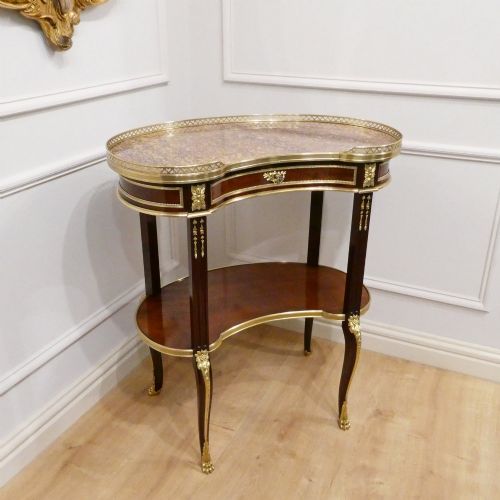
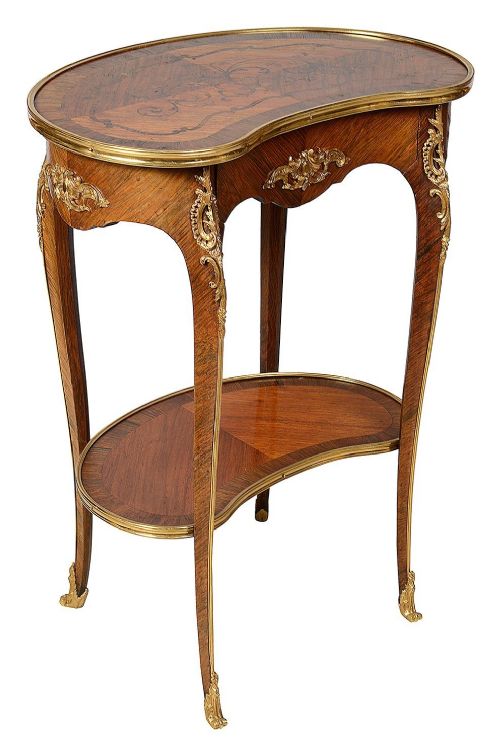
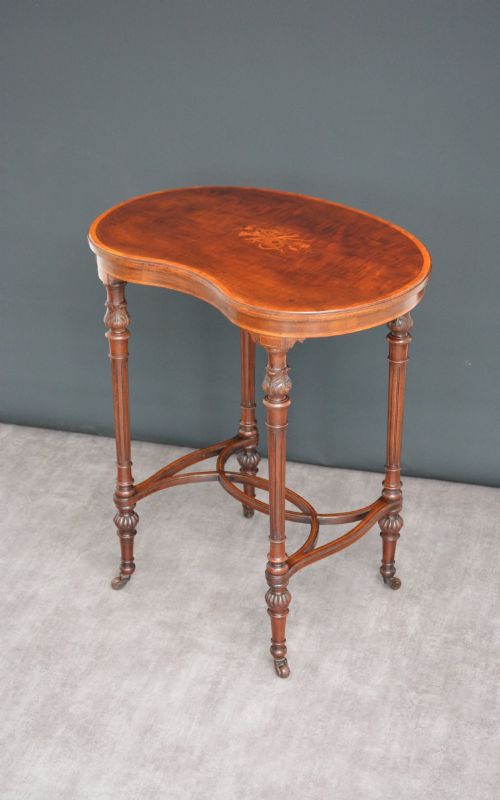
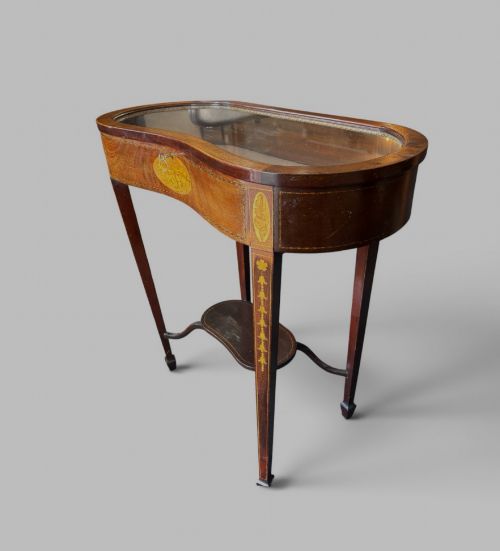
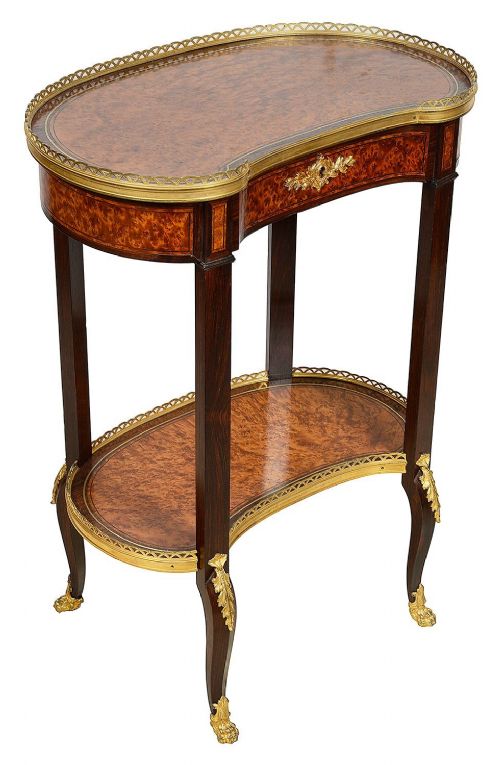
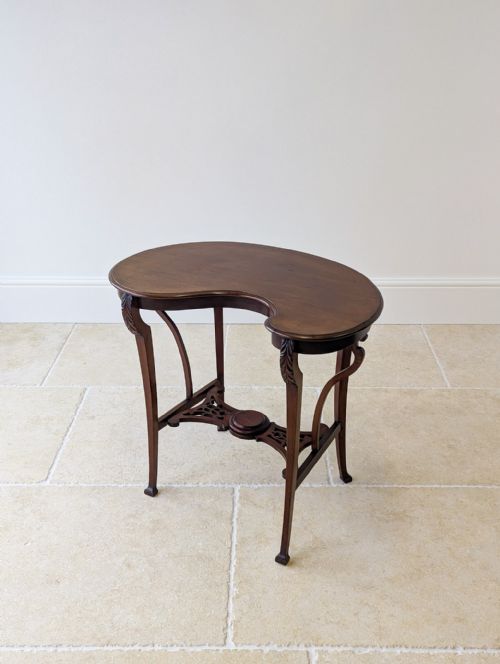
The antique kidney side table is defined by its characteristic indented crescent top, which draws the user inward while saving floor space. Most examples you will encounter date from the Victorian and Edwardian eras, or follow French Louis XV and Louis XVI revival designs from the nineteenth century.
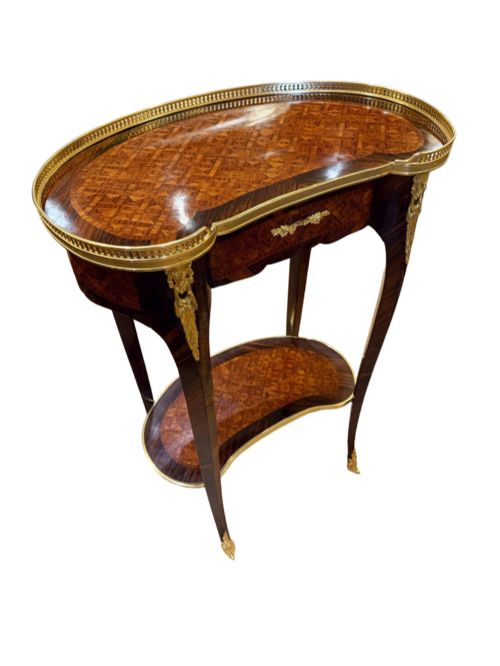
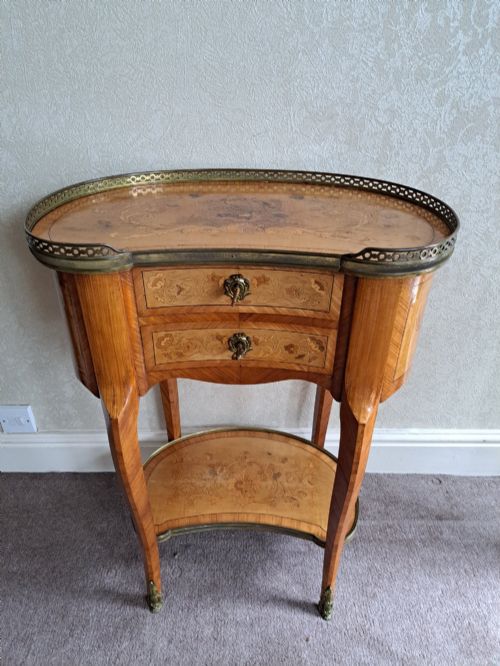
Makers fashioned these pieces primarily as occasional tables, writing desks, lamp tables and bedside units. They frequently feature delicate inlaid veneers, parquetry or marquetry alongside single drawers or lower tiers supported by slender legs.
The form suits smaller sitting rooms and bedrooms where standard rectangular tables feel too heavy. The concave curve allows the piece to sit snugly beside armchairs or against panelled walls.
Materials and Construction
Cabinet makers relied on stable foundational timbers like mahogany and walnut, applying decorative veneers of satinwood, kingwood, burr walnut and rosewood to the curved top. Marquetry and parquetry designs were carefully cut and fitted by hand into the surface grain.
Brass mounts, galleries and ormolu details frequently accent the French and revival pieces, following Louis styles. Marble tops also appear on continental pieces, adding weight and a cool stone surface to the kidney outline.
Ebonised Aesthetic Movement tables come equipped with velvet tasseled tops.
Judging Quality and Execution
Quality rests upon the precision of the curved veneer work and the crispness of the inlaid motifs. Superior pieces integrate the sweeping curve seamlessly into the structural frame without awkward joins or lifting Edges.
The choice of secondary woods and the refinement of leg turnings or ormolu mounts separate standard production from exhibition pieces. Drawer linings and dovetails reveal the underlying standard of cabinet work.
Maison Millet·Tehan·F. Linke
The Antique Kidney Side Table Glossary
- Marquetry
- Decorative patterns formed by fitting together small pieces of tinted wood veneer into a design. It covers tabletops with floral or geometric scenes.
- Parquetry
- Geometric wood inlay arranged in regular patterns like cubes or herringbone. This technique creates rhythmic surface textures on the curved top.
- Ormolu
- Gilded bronze mounts applied to furniture edges and legs. It provides metallic contrast against dark mahogany and walnut.
- Gallery
- A raised pierced metal or wooden rail running around the edge of a tabletop. It keeps items from sliding off the curved surface.
- Tier
- An additional lower shelf supported between the legs. It offers extra display space beneath the main kidney top.
Antique Kidney Side Table: Frequently Asked Questions
What rooms suit an antique kidney side table?
These tables work well beside armchairs, in small hallways or as bedside surfaces where their curved profile prevents bumped shins.
Their compact footprint allows them to occupy awkward corners that standard rectangular furniture leaves empty.
How were antique kidney tables used originally?
Victorians and Edwardians deployed them as ladies writing desks, lamp stands and occasional display surfaces for small ornaments.
The concave front brought the user closer to the writing surface or drawer while keeping necessities within reach.
How do I spot a French revival piece?
French revival examples often incorporate extensive ormolu mounts, marble tops and detailed floral marquetry recalling Louis XV and Louis XVI designs.
English Edwardian versions tend to rely on subtle satinwood stringing and mahogany or rosewood crossbanding.
Are marble top kidney tables heavy?
Marble top variants carry considerable weight in the upper section due to the shaped stone slab fitted into the frame.
This stone insert provided a durable surface for lamps and drinks without risking heat or liquid rings on the wood.