



Pair Rosewood End Tables
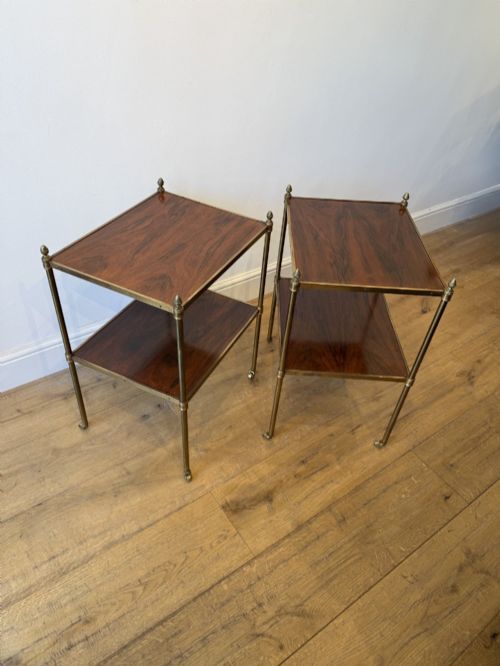
These pair rosewood end tables bring rich grain and compact warmth to a room, offering surface space without crowding the floor.
Pair Rosewood End Tables
When you search for pair rosewood end tables, you encounter compact matching surfaces suited for flanking seating or beds. The selection spans Victorian, late nineteenth century, and early twentieth century origins.
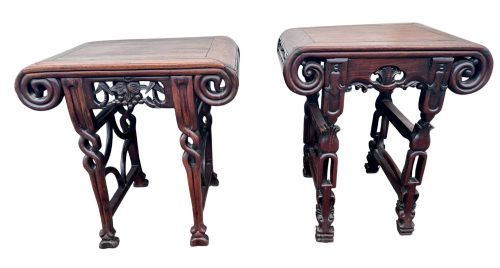
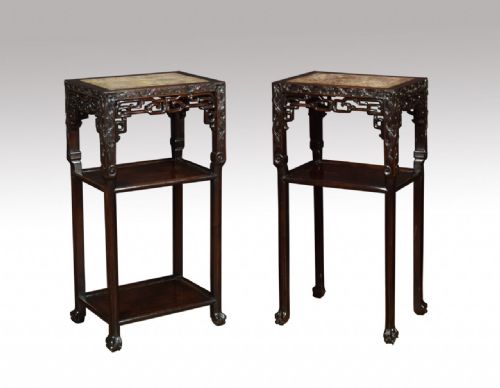
Forms include side tables, bedside tables, plant stands, two tier etageres, and stools. Alongside British and French interpretations, Chinese Qing Dynasty carved hardwood and rosewood stands feature prominently.
Many examples incorporate decorative elements like inset rouge marble tops, porcelain panels, and intricate marquetry. These matched sets provide functional symmetry for a room layout.
How they were made
Makers utilised dense timbers such as rosewood, hardwood, kingwood, and walnut for structural integrity and rich natural colour. Secondary woods and framing often support intricate marquetry and veneer work.
Surface decoration frequently involves satinwood, wood inlay, and brass details. Chinese Qing Dynasty examples display traditional carving techniques on huali and rosewood, while European pieces employ French Louis XVI style marquetry.
The listings feature pieces spanning the Victorian period through the early twentieth century, utilising rosewood, hardwood, marble, and brass.
What varies in quality
Quality rests in the crispness of the carving, the precision of the wood inlay, and the matching of the timber grain across both pieces. Superior examples maintain structural stability without relying on heavy restoration.
The integration of inset materials, such as rouge marble tops or porcelain panels, dictates the refinement of the piece. Finer items exhibit seamless joins and balanced proportions that elevate the design.
Mallett
The Pair Rosewood End Tables Glossary
- Marquetry
- Decorative veneer applied to furniture in patterns using different woods. This technique creates detailed floral or geometric pictures across the table top.
- Kingwood
- A dense, richly figured tropical timber prized for fine cabinet making. It often appears in contrasting banding alongside rosewood and satinwood.
- Etagere
- A set of open shelves for displaying small objects. These tiered pieces provide vertical storage within a compact footprint.
- Huali
- A traditional Chinese hardwood valued for its durable density and decorative grain. It forms the structure of carved Qing Dynasty stands.
- Satinwood
- A luminous timber with a golden sheen used for contrasting inlay work. It highlights borders and central motifs on marquetry tables.
Pair Rosewood End Tables: Frequently Asked Questions
Where should I place these tables?
These matching pieces work effectively beside a sofa, bed, or armchair where dual surfaces create symmetry. Their compact proportions also suit narrow hallways or corners needing a plant stand.
The matched nature of the pair allows them to anchor a room layout when positioned on either side of a fireplace or window.
How do I care for rosewood surfaces?
Protect the wood from direct sunlight and excessive heat fluctuations to prevent the grain from drying out. Dust regularly with a soft, dry cloth and avoid silicone based polishes.
Waxing occasionally helps maintain the natural lustre of the timber without building up a heavy film.
What is the difference between French and Chinese styles?
French revival pieces often feature curved cabriole legs, gilt bronze mounts, and floral satinwood marquetry. They reflect the ornate tastes of eighteenth century European courts.
Chinese Qing Dynasty stands showcase structured joinery, carved hardwood frames, and inset elements like rouge marble or porcelain panels. These designs emphasise natural wood grain and traditional craftsmanship.
Are these tables sturdy enough for daily use?
Solid hardwood construction ensures these tables handle everyday placement of lamps, books, and cups. The dense nature of rosewood provides durable structural support across the decades.
Heavier items like marble inserts require care during movement, but the underlying frames remain robust for domestic interiors.