


Antique Jockey Print
An antique jockey print captures the speed and tradition of the turf through paper, ink, and frame.
Antique Jockey Print
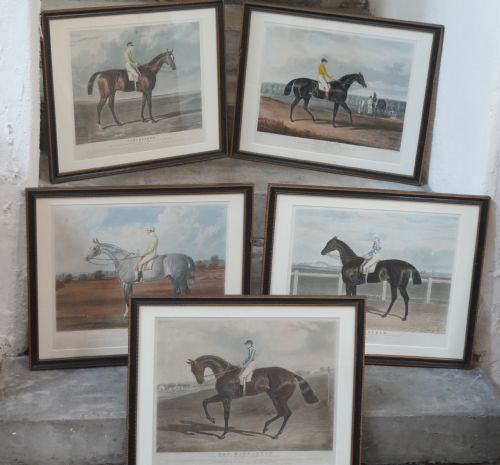
An antique jockey print records the history of horse racing through visual art spanning the Georgian, Victorian, and Edwardian eras. These works capture famous racehorses and riders using techniques that range from early engravings to chromolithographs and aquatints.
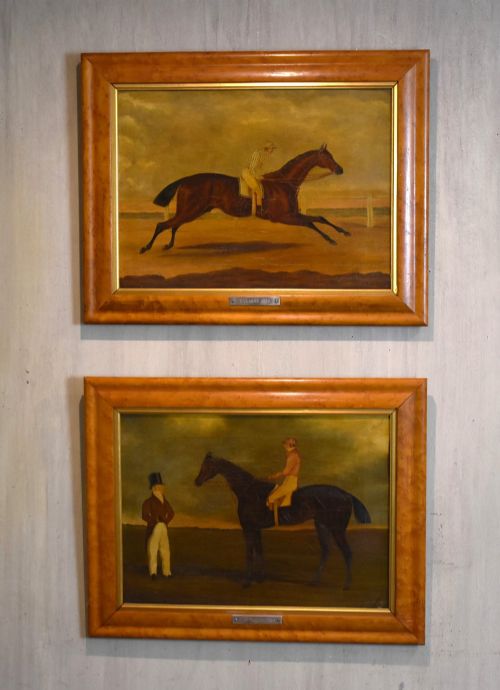
Buyers encounter framed prints and wall art alongside related items like oil paintings and upholstered armchairs featuring racing themes. The pieces frequently document specific historical runners and notable riders from British turf history.
How they were made
These works rely on paper supports combined with ink, often finished with gilt accents and housed within wood frames, sometimes featuring birds eye maple or timber construction. Printmakers utilised engraving, aquatint, and chromolithography to produce detailed sporting scenes.
Artists and publishers applied hand-colouring or printing inks directly to paper to bring out the distinctive racing silks and equine anatomy. Many surviving examples retain their period timber framing under glass protection.
Even armchairs join the race, upholstered entirely in horse racing themes.
What varies in quality
The distinction between ordinary and superior pieces rests on the precision of the draughtsmanship and the clarity of the printed impression. Works associated with known sporting artists or reputable publishers demonstrate sharper detail in the figures of the horse and rider.
Framing materials and overall preservation also dictate the standing of a piece, with original timber frames and clean paper surfaces commanding more attention. The historical significance of the depicted racehorse or rider further elevates the status of the artwork.
John Frederick Herring Snr·Alfred Wheeler·John Atkinson·Isaac Cullin
The Antique Jockey Print Glossary
- Aquatint
- A printmaking technique that produces tonal effects similar to watercolour washes. It allows for subtle gradations of shade across the background and horse's coat.
- Chromolithography
- A planographic colour printing process used to produce multi-coloured images. This method creates rich hues suitable for depicting vibrant racing silks.
- Engraving
- A method of cutting design lines into a metal plate to hold ink for printing. The resulting impressions display sharp and precise outlines.
- Gilt
- A gold leaf or gold-coloured application used on frames. It adds a decorative metallic border to the artwork.
- Birds Eye Maple
- A figured timber variety showing distinctive small knots resembling bird eyes. It appears in period framing materials.
Antique Jockey Print: Frequently Asked Questions
How do I date an antique jockey print?
Dating relies on the printing technique, the paper type, and any accompanying inscriptions or publication dates. Georgian and Victorian examples often display distinct plate marks and typography characteristic of their era.
Framing styles and materials such as timber or birds eye maple can also provide clues to the age of the piece.
What is the difference between an engraving and a chromolithograph?
An engraving is created by cutting lines into a plate to produce fine, linear details in monochrome or hand-coloured formats. Chromolithography uses multiple stones or plates to apply various colours directly during printing.
Engravings generally offer sharper line work, whereas chromolithographs provide broader expanses of colour.
How should I display a framed print at home?
These works require placement away from direct sunlight to prevent the fading of ink and paper. Maintaining stable indoor humidity protects both the paper support and the wooden frame.
Glass fronts help shield the surface from dust and environmental moisture.
Are all jockey prints hand coloured?
Not all pieces feature hand-colouring, as many rely entirely on the printed ink or the multi-plate chromolithographic process. Some 19th-century works received delicate watercolours applied by hand after printing.
Close inspection under magnification reveals whether the colour sits as a wash over lines or forms part of the printed matrix.