
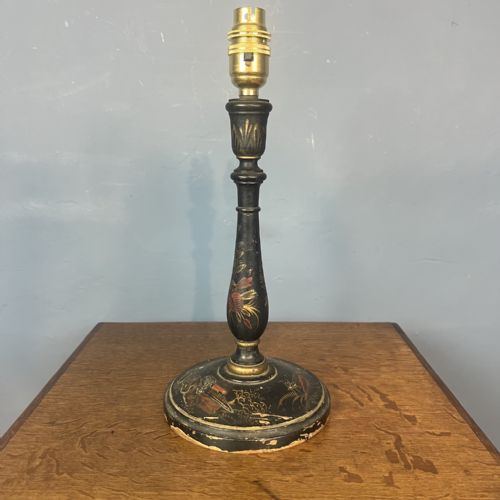
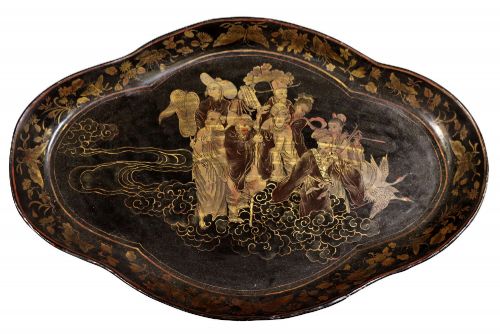
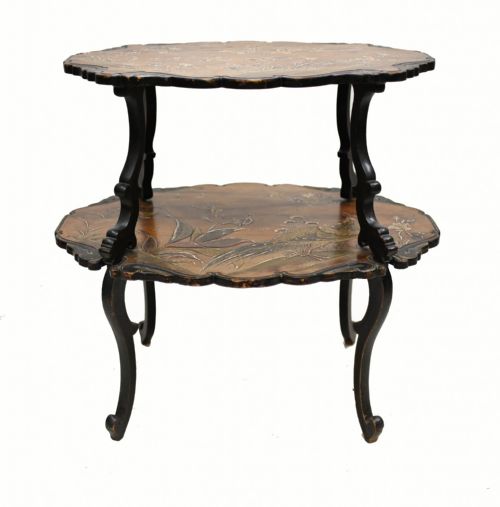


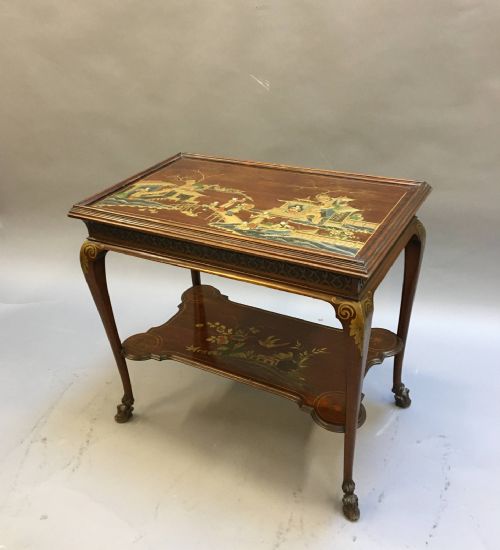

Antique Japanned Table
An antique japanned table brings rich orientalist narrative and deep black lacquer surfaces into a room.
Antique Japanned Table
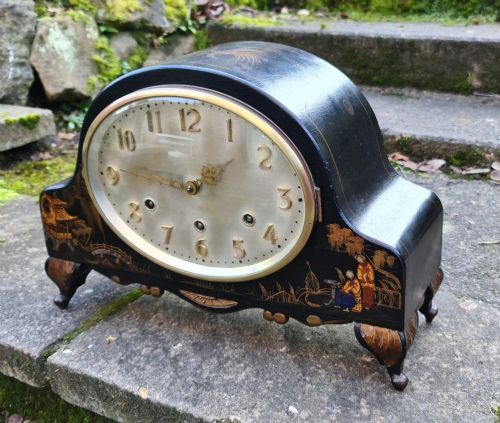
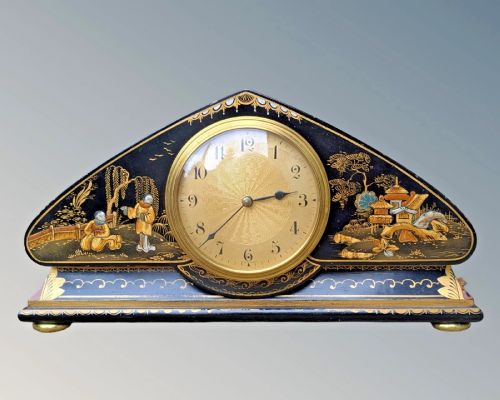
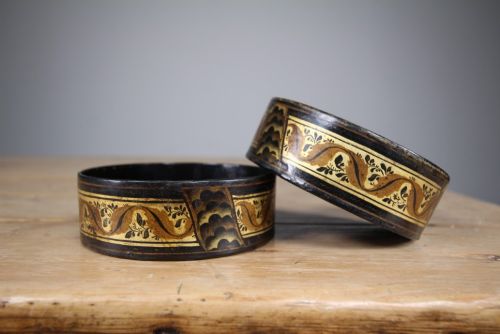
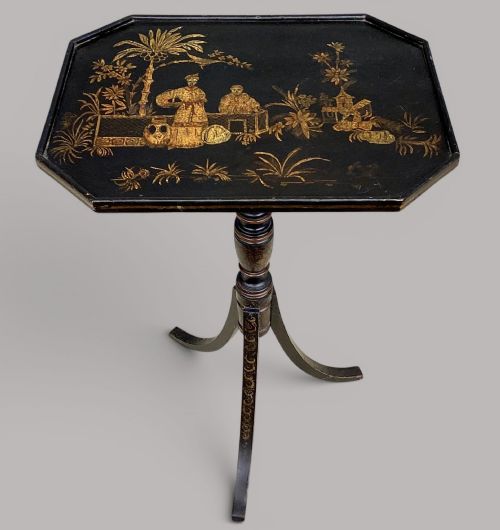
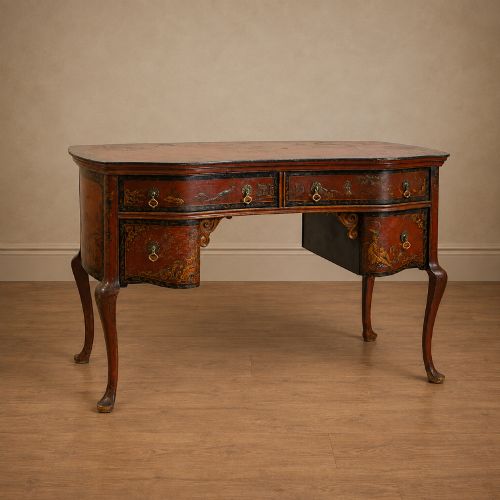
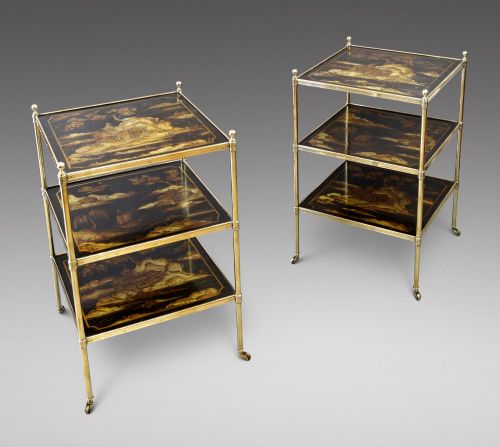
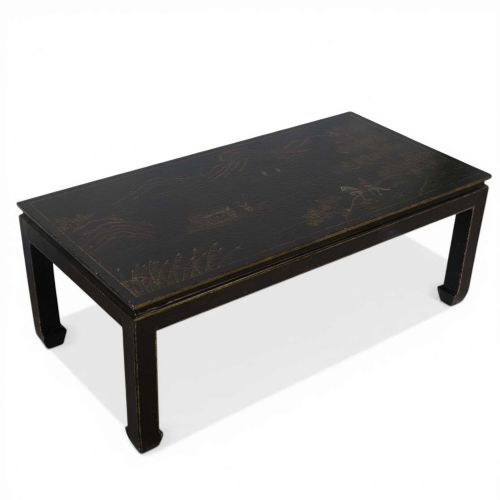
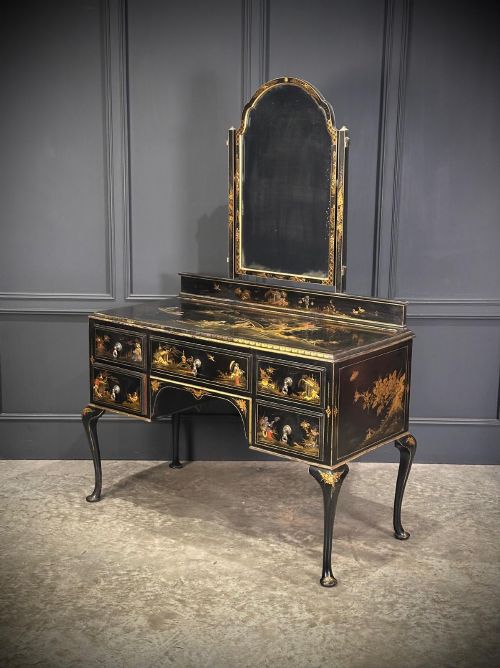
An antique japanned table comprises occasional pieces, coffee tables, and side tables finished in simulated oriental lacquer work. These surfaces display decorative painted scenes rendered in gold leaf and vibrant pigments over dark grounds.
The selection here spans from the Regency period through the Victorian era and into the early twentieth century. Occasional tables and side tables dominate the offerings, alongside nesting tables and tray tables.
Cabinetmakers and decorators adopted Asian aesthetic principles to create functional furniture for European interiors. The results combine structural forms of the period with decorative schemes inspired by Chinese and Japanese design.
How they were made
Artisans built the structural carcases from wood, papier-mache, and bamboo. Wood frames received multiple coats of lacquer to build a deep, reflective ground.
Decoration relied on gold leaf and hand-painted scenes applied over the dark surface. Brass hardware and fittings appeared on select forms to complement the metallic highlights of the lacquer work.
Some Victorian makers ingeniously converted humble bamboo stems into exotic side tables just to satisfy the relentless national craze for all things Japanese.
What varies in quality
The depth and execution of the painted scenes separate standard production from superior work. Skilled hands produced intricate landscape details and figures with clear definition, whereas lesser pieces show rushed brushwork and flat motifs.
The integrity of the lacquered surface dictates the character of the piece. Fine examples retain their original ground and metallic leaf with minimal craquelure, while compromised surfaces reveal heavy restoration or extensive flaking.
Waring and Gillow·Jennens and Bettridge·Henry Clay
The Antique Japanned Table Glossary
- Japanning
- European imitation of East Asian lacquerwork developed during the seventeenth and eighteenth centuries. Craftsmen used layered varnishes and heat treatments to achieve a hard, glossy finish.
- Chinoiserie
- European interpretation of Chinese and East Asian artistic traditions. This style manifested in whimsical architectural motifs, figurative scenes, and exotic flora painted onto furniture.
- Papier-mache
- Composite material formed from paper pulp mixed with glue and resin, pressed into moulds and dried. It provided a smooth, stable base for lacquering and gilt decoration.
- Aesthetic Movement
- Late nineteenth-century design ethos prioritising visual beauty over narrative function. Pieces from this movement often incorporate bamboo frames and Japanese-inspired black finishes.
- Gilt
- Application of gold leaf or powdered gold onto a prepared surface. It provided the luminous highlights characteristic of japanned decoration.
Antique Japanned Table: Frequently Asked Questions
How do I clean an antique japanned table?
Dust the surface gently with a soft, dry cloth to prevent scratching the lacquer. Avoid modern liquid polishes, water, and chemical cleaners which can lift the delicate gold leaf and varnish.
Consult a professional restorer if the finish requires deeper attention. Maintaining a stable indoor environment protects the lacquer from humidity and temperature fluctuations.
Are these tables suitable for everyday use?
Occasional tables and side tables function well for holding lamps and decorative objects in low-traffic areas. Use coasters and protective pads to shield the antique lacquer from moisture and heat.
Avoid placing these items in direct sunlight to prevent the dark ground and gold leaf from fading over time.
How do I tell Regency japanned furniture apart from Victorian pieces?
Regency pieces often display neoclassical proportions combined with Chinoiserie motifs, reflecting a lighter and more restrained aesthetic. Eighteenth-century influences and bamboo elements also appear more frequently in earlier English interpretations.
Victorian examples tend towards heavier construction, incorporating papier-mache trays, bamboo frames, and denser hand-painted scenes. The Aesthetic Movement introduced dark ebonised finishes and tiger bamboo supports during the late nineteenth century.
What is the difference between lacquer and japanning?
True Asian lacquer utilises the processed sap of the toxic lac tree native to East Asia, building hard and durable coats. European japanning substituted resin-based varnishes and shellac to simulate the desired glossy black finish without authentic sap.
Both techniques create smooth, dark surfaces designed to receive gold leaf and painted orientalist scenes.