


Faux Bamboo Occasional Table
A faux bamboo occasional table brings a lightness and exotic flair to a room, drawing on centuries of ingenious imitation.
Faux Bamboo Occasional Table
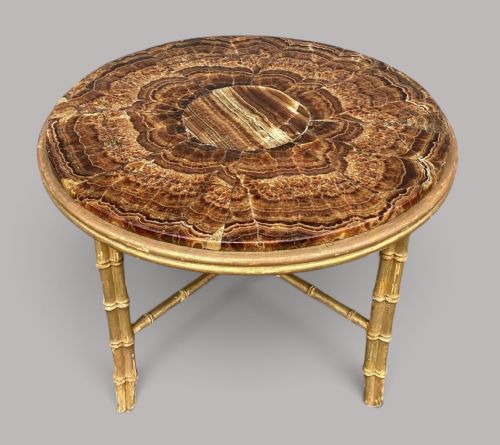
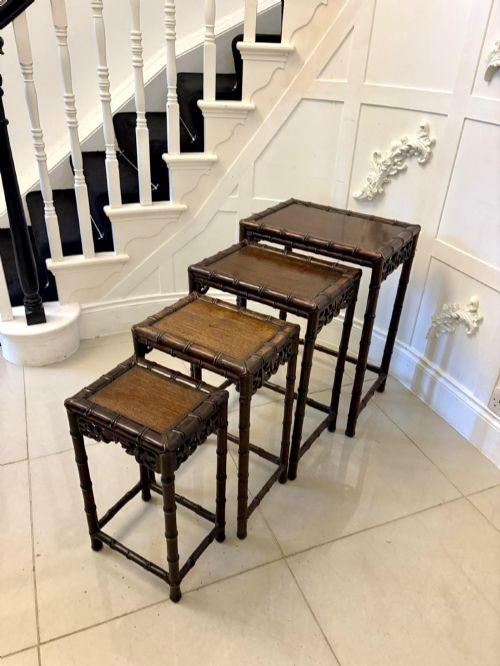
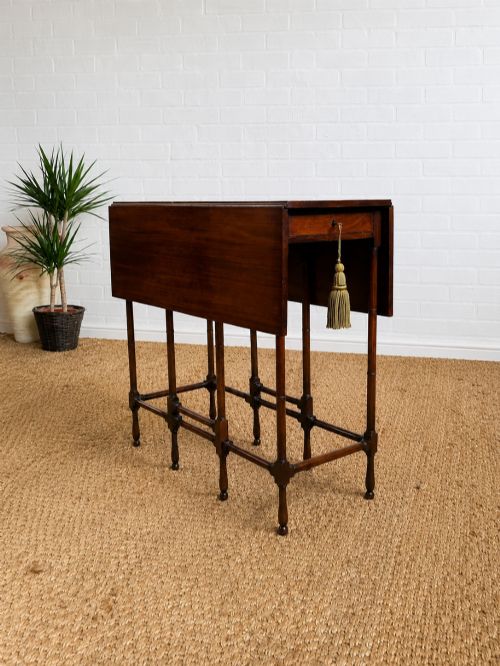
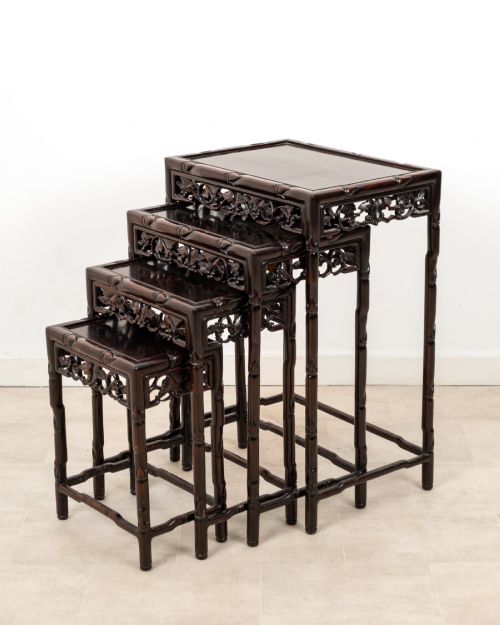
When searching for a faux bamboo occasional table, buyers encounter a versatile piece of furniture designed for flexible placement around the home. These items typically manifest as side tables, nests of four tables, folding tray tables, or small étagères intended for specific domestic tasks rather than heavy dining.
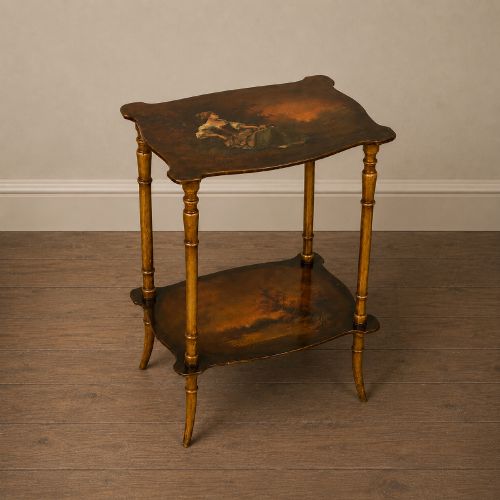
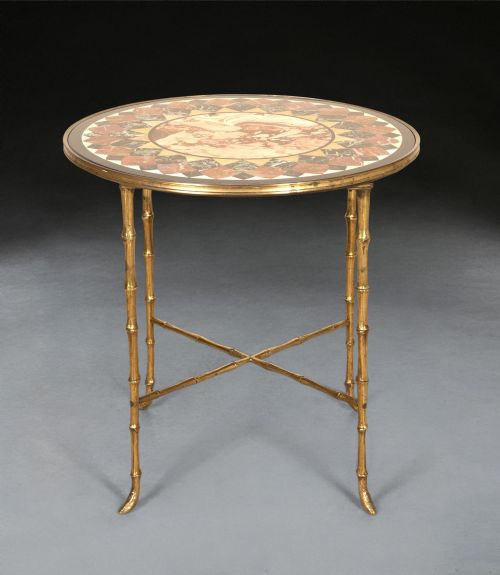
The versions most frequently met on this page span the nineteenth century into the Edwardian period, often incorporating stylistic influences such as Chinoiserie, Regency, or French design. Makers utilised various forms, including rectangular tray tables on folding bases, circular occasional tables, and tiered structures suited to display or everyday utility.
Origins vary between British workshops, Continental makers, and Chinese export pieces created for Western markets. Buyers find both solid hardwood constructions carved to resemble jointed bamboo and wooden frames shaped and painted to imitate the natural cane.
How they were made
The construction relies heavily on native and imported timbers, including mahogany, solid hardwood, and general wood and timber for turned frames. Artisans shaped these materials using lathe work and hand carving to replicate the characteristic nodes and rings of real bamboo.
Surfaces often feature decorative treatments such as lacquer, japanning, floral painting, or original ochre paint. Certain examples incorporate gilt-brass bases, brass fittings, or papier-mâché trays mounted on supportive stands.
Folding mechanisms and drop-leaf designs required precise joinery to ensure stability in portable or multi-tiered items like nesting tables and quartetto sets.
What varies in quality
Quality rests significantly on the fidelity of the carved or turned simulation and the integrity of the painted or lacquered surface. Pieces displaying crisp, deeply articulated bamboo nodes and well-preserved original paint or gilt leaf demonstrate a higher grade of craftsmanship.
The choice of core material dictates the structural longevity of the piece, with dense hardwoods and solid mahogany outperforming lighter timbers. Furthermore, the complexity of the form - such as a graduated nest of four tables or a finely painted Chinoiserie top - separates standard utility items from finer decorative works.
John Taylor Edinburgh
The Faux Bamboo Occasional Table Glossary
- Faux bamboo
- Furniture turned, carved, or painted to imitate natural bamboo cane. This technique gained popularity during the Regency and Victorian eras through influences like the Brighton Pavilion.
- Étagère
- A small open shelving unit or tiered side table used for displaying ornaments or holding small items. These structures often feature two or more levels supported by slender columns.
- Japanning
- A European imitation of East Asian lacquerwork involving layered varnishes and metallic dust. The finish was heated to cure, producing a hard, glossy surface often decorated with oriental scenes.
- Quartetto
- A matched set of four graduating tables designed to slide neatly beneath one another. They became popular in the nineteenth century for serving tea or playing games.
- Chinoiserie
- European artistic style reflecting Chinese motifs and techniques, particularly popular in furniture and decorative arts. It combines asymmetrical designs with painted landscapes and figures.
Faux Bamboo Occasional Table: Frequently Asked Questions
What is a faux bamboo occasional table?
A faux bamboo occasional table is a small, movable piece of furniture constructed or decorated to mimic natural bamboo. These tables were designed for flexible use in sitting rooms and parlours.
Craftsmen turned wood on a lathe or carved hardwood to replicate the distinctive nodes of bamboo cane. They often finished these tables with paint, lacquer, or gilding to enhance the exotic aesthetic.
How were these small tables used?
These tables served multiple domestic purposes, including holding tea sets, displaying decorative objects, or supporting books and writing materials. Nests of tables allowed extra surfaces to be pulled out when guests visited.
Folding and tray table variants offered portable convenience for different rooms within a Victorian or Edwardian household. Their lightweight construction made them easy to reposition as daily needs shifted.
How do I live with a faux bamboo table?
Living with these pieces involves placing them where their decorative painted or carved surfaces can be appreciated without enduring heavy daily wear. They function well beside armchairs or as bedside surfaces.
Care should be taken to keep them away from direct sunlight and excessive moisture to protect nineteenth-century paintwork, lacquer, and gilt-brass elements.
How can I tell the period?
Dating relies on material selection, paint techniques, and structural design markers associated with specific eras like the Regency, Victorian, or Edwardian periods. Early nineteenth-century examples often feature ochre paint or papier-mâché.
Later pieces from the Edwardian era or around 1900 frequently draw on Chinese export traditions and solid hardwoods. Examining the turnings and assembly methods helps clarify the manufacturing decade.