


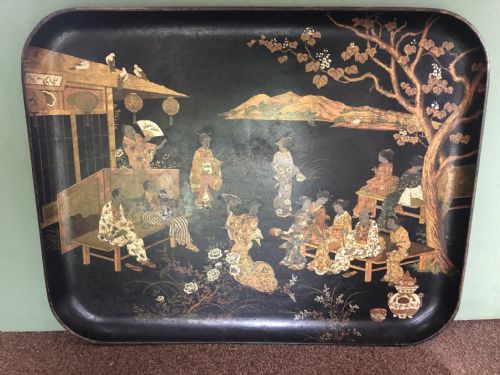


Antique Japanned Platter
An antique japanned platter brings dark lacquer, painted Chinoiserie scenes and gilded borders straight to the table from the Georgian and Victorian eras.
Antique Japanned Platter
An antique japanned platter is a serving tray, decorative dish or decorative tray finished in imitation of Asian lacquerwork. These pieces date from the eighteenth, nineteenth and Regency periods, originating from English, French and Japanese workshops.
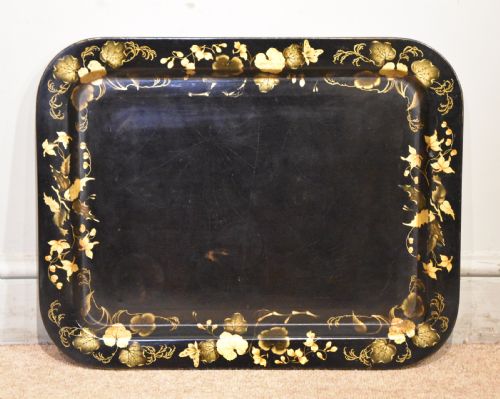
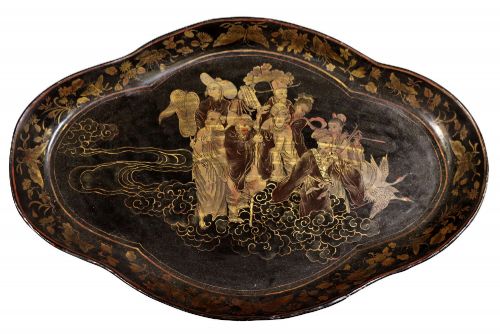
The most common examples on this page are papier-mâché and toleware trays, often shaped as ovals or kidney forms. They display Chinoiserie motifs, hunting scenes or gilded borders executed in paint and gold leaf.
Buyers will also encounter porcelain dishes and lacquered wooden trays alongside the papier-mâché pieces. These items served both practical dining functions and decorative display in period interiors.
Materials and construction methods
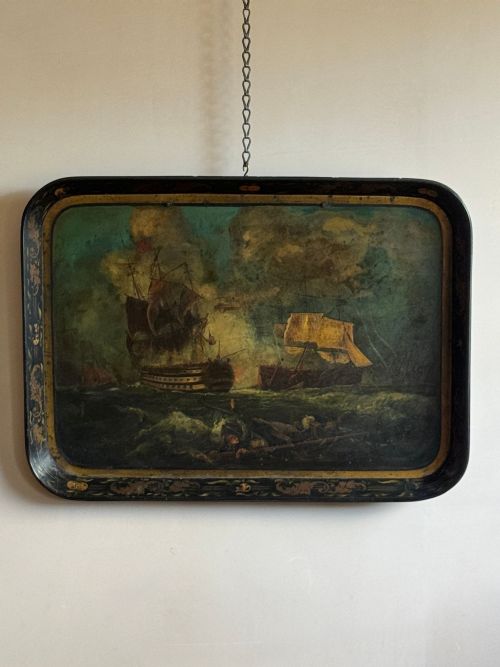
Papier-mâché serves as the primary base for many of these platters, built from layered paper pulp pressed and baked into sturdy forms. Toleware provides a metal alternative, using painted and japanned sheet iron.
Craftsmen applied multiple coats of dark lacquer to achieve a glossy surface, then decorated the panels using paint, gold leaf and occasional mother-of-pearl inlay. Skilled hands painted intricate Chinoiserie landscapes, figures and floral borders directly onto the dark ground.
One platter depicts Esther accusing Haman, turning tea time into a dramatic biblical courtroom.
Assessing quality and craftsmanship
Superior platters display exceptional depth in the lacquer finish, combined with finely detailed hand-painted artwork rather than rudimentary decoration. The precision of the gilded borders and the complexity of figural scenes elevate the standing of a piece.
Structural integrity in the papier-mâché or metal base dictates longevity, alongside the preservation of the original surface finish. Maker attribution to notable workshops also influences the desirability of an antique japanned platter.
Jennens and Bettridge·Clay·H. Meeson
The Antique Japanned Platter Glossary
- Japannnig
- European imitation of traditional East Asian lacquerwork, created by applying layers of varnish and heat-treating the surface. It produced a hard, dark, glossy finish popular on furniture and serving trays.
- Papier-mâché
- A composite material made from paper pulp or layers of paper pasted together, mixed with glue and pressed into moulds. It dried into a rigid, durable material ideal for lightweight serving trays.
- Toleware
- Painted or lacquered sheet metal household objects, primarily produced in tin-plate or iron. The metal was japanned and decorated with pigments and gilding.
- Gilt
- Application of gold leaf or gold powder onto a surface to provide decorative highlights. It contrasts sharply against the dark lacquer ground of these platters.
Antique Japanned Platter: Frequently Asked Questions
How were these platters originally used?
These pieces functioned primarily as serving trays for tea, wine or food in affluent households during the Georgian and Victorian eras. Their decorative surfaces also made them suitable for display on side tables when not in active use.
Servants carried them between rooms, whilst owners admired the painted Chinoiserie and gilded details in drawing rooms. Their sturdy papier-mâché or metal construction handled daily dining duties with ease.
How do I distinguish Regency pieces from Victorian examples?
Regency platters often feature classical restraint in their gilded borders and geometric or understated Chinoiserie motifs. They date from the early nineteenth century and typically employ simple oval or rectangular formats.
Victorian pieces frequently embrace busier compositions, incorporating mother-of-pearl inlay, romantic scenes and shaped outlines like the kidney form. Maker marks from established firms help secure precise dating for nineteenth-century items.
What is the difference between japanned ware and true Japanese export pieces?
Japanned ware refers to European creations made in imitation of Asian lacquerwork using local materials like papier-mâché or metal. These pieces reflect Western interpretations of Eastern aesthetics.
True Japanese export items originated in workshops in Japan, utilising native wooden cores, natural urushi sap lacquer and traditional crafting techniques. They reached Western markets through international trade during the Edo and Meiji periods.