
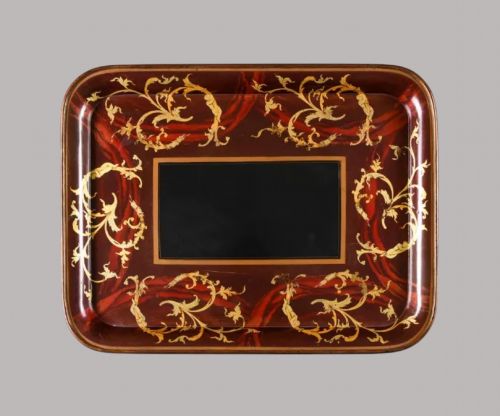
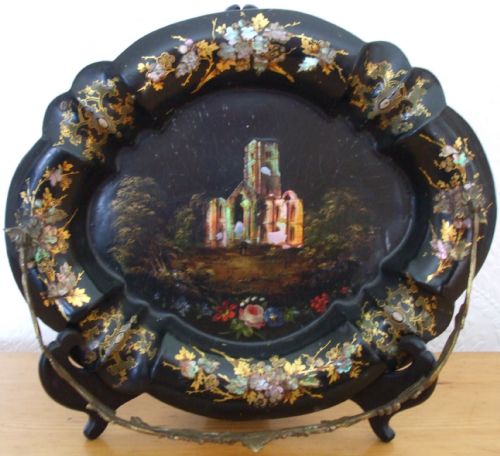
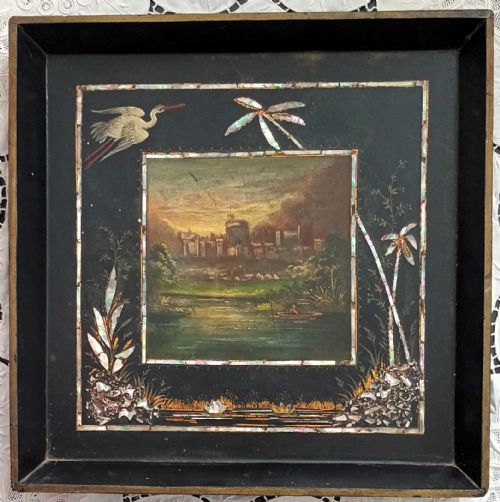
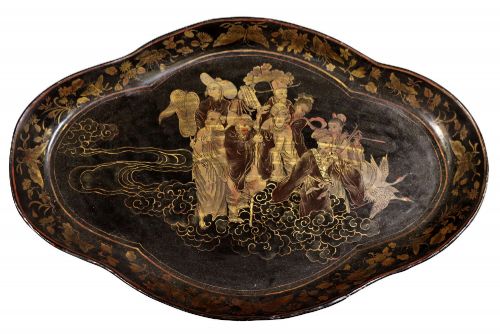
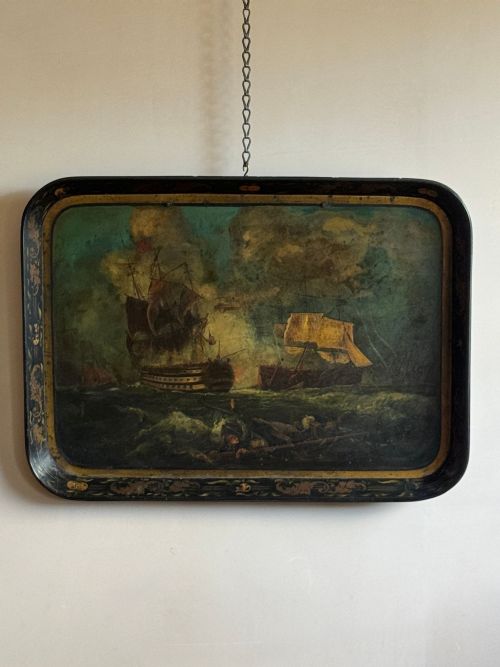
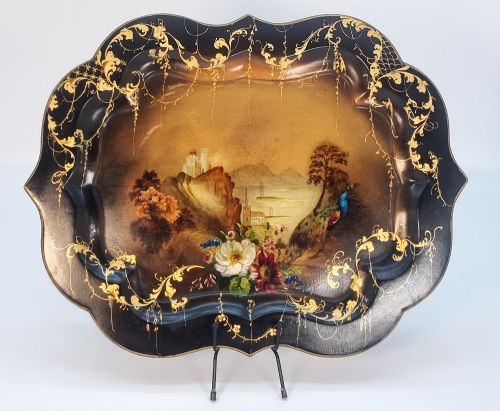


English Papier Mache Tray
An english papier mache tray brings brilliant lacquerwork and hand-painted detail into a room, offering both practical service and striking wall or table display.
English Papier Mache Tray
When you search for an english papier mache tray, you enter a field spanning the Regency, Georgian, and Victorian eras, including pieces dated around 1800 up to circa 1870. The selection here ranges from serving trays and butlers trays on stands to card baskets, crumb trays, and tray tables.
You are most likely to encounter Victorian ebonised pieces alongside earlier Regency examples. Many feature specific motifs such as Windsor Castle, Westminster Abbey, landscapes, hunting scenes, floral designs, or Chinoiserie ornamentation.
Materials and Construction
These pieces rely on papier-mache formed from layered paper pulp treated and pressed into rigid shapes, then finished with durable lacquer. Artisans often mounted them on wood for structural strength, particularly on larger serving trays and folding tables.
Decoration involved hand painting augmented by gold leaf and inlaid mother-of-pearl. Brass fittings appear on related items like boxes and baskets, while ebonised surfaces provide a dark, polished ground for colourful floral and landscape painting.
Current listings and past archives feature pieces spanning the Georgian, Regency, and Victorian periods, incorporating materials such as lacquer, gold leaf, and mother-of-pearl.
Judging the Workmanship
Quality rests primarily in the execution of the hand painting and the complexity of the surface ornamentation. Finer examples display meticulous brushwork in landscape scenes or intricate Chinoiserie detailing, whereas simpler pieces rely on repeating patterns.
The preservation of the original lacquer, gold leaf, and mother-of-pearl inlay dictates distinction. Pieces retaining their unusual original decoration or signed work by notable makers command greater attention than heavily restored surfaces.
Jennens & Bettridge
The English Papier Mache Tray Glossary
- Papier-mâché
- A composite material made from paper pulp mixed with glue or resin, pressed into moulds and baked until rigid. It forms the lightweight yet sturdy foundation for these trays.
- Japanned
- A European imitation of East Asian lacquerwork, created by applying successive coats of dark varnish and curing them. This finish protects the paper base and provides a glossy black background.
- Chinoiserie
- A European artistic style reflecting Chinese motifs and landscapes. It appears frequently on Victorian and Regency trays in gold paint against ebonised surfaces.
- Ebonised
- Wood or papier-mâché stained or painted black to imitate ebony. This dark finish highlights contrasting gold leaf and mother-of-pearl inlay.
English Papier Mache Tray: Frequently Asked Questions
How do I clean an english papier mache tray?
Dust gently with a soft, dry cloth to protect the delicate lacquer surface. Avoid all water, liquid cleaners, and modern polishes which can cloud the historic finish.
Keep the tray away from direct sunlight and excessive heat to prevent the papier-mache foundation from warping or cracking over time.
Can I use these trays for serving drinks?
While many were originally made as butlers serving trays or drinks trays, modern use requires caution. Condensation from glasses and weight can damage nineteenth-century lacquer and hand-painted details.
Displaying them on stands, tables, or walls is safer for preserving the paint, gold leaf, and mother-of-pearl inlay.
How do I tell Regency from Victorian pieces?
Regency trays often feature neoclassical lines or crisp Chinoiserie dating from around 1800 to the 1830s. They tend to have lighter frames or simpler geometric borders.
Victorian pieces, particularly those from the 1850s to 1870, frequently utilise heavy ebonisation, intricate floral arrangements, and rich mother-of-pearl inlay.
What is a tray table?
A tray table combines a detachable papier-mache tray top with a folding or fixed wooden stand. This form allowed servants to bring drinks into a drawing room and set the tray down securely.
Many examples date to the nineteenth century and function today as decorative coffee tables or side tables.