






Antique Floral Lacquered Tray
An antique floral lacquered tray brings hand-painted colour and practical history into daily use.
Antique Floral Lacquered Tray
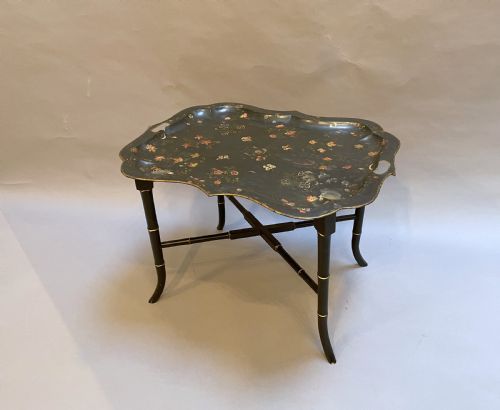
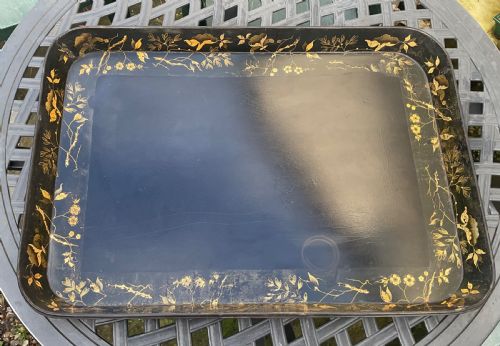
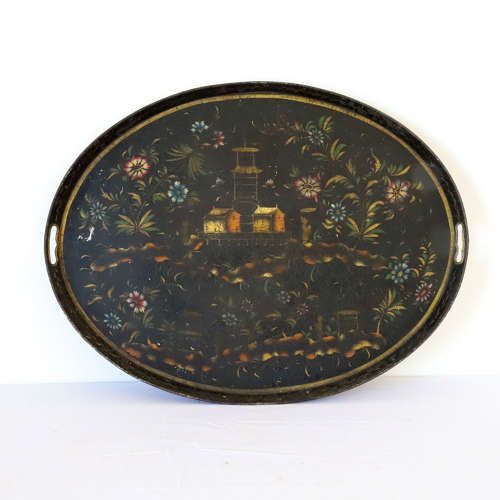
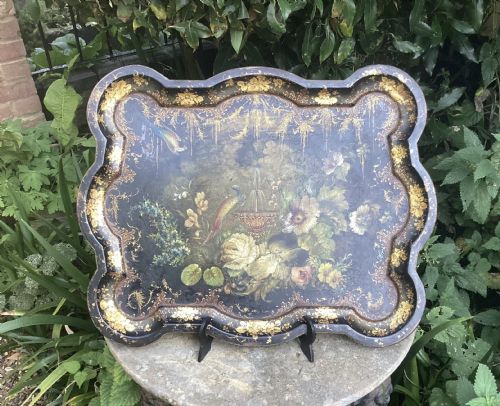
When you search for an antique floral lacquered tray, you encounter serving trays, tray tables, and desk accessories created across the Georgian, Regency, and Victorian periods. The most common forms on this page are oval and octagonal papier-mâché or toleware vessels featuring painted floral decoration.
Makers shaped these surfaces in black ebonised finishes, scarlet, green, and dark grounds, often mounting the larger pieces on later wooden or iron stands to function as side tables. Chinoiserie motifs and gilt embellishments frequently accompany the floral subjects across 19th-century examples.
Materials and construction
Craftsmen built the foundations using layered papier-mâché or metal toleware, applying multiple coats of lacquer to achieve a durable and smooth surface. Painters then added floral details using oil paints, gold leaf, and occasionally mother-of-pearl inlay.
The finish relied on meticulous drying and polishing between coats of lacquer to protect the painted scenes underneath from daily wear and moisture.
Several trays spent generations as desk organisers or inkstands before finding new life repurposed atop iron stands as cocktail tables.
Judging quality and craftsmanship
Quality rests in the precision of the hand-painted floral details, the depth of the lacquer finish, and the preservation of the original gilt or mother-of-pearl highlights. Superior examples maintain crisp brushwork and minimal cracking across the papier-mâché ground.
Structural integrity also separates standard items from finer pieces, particularly where trays meet later stands or retain their original untouched surfaces without heavy restoration.
The Antique Floral Lacquered Tray Glossary
- Papier-mâché
- A composite material made from paper pulp or reinforced sheets mixed with glue and pressed into moulds before drying hard. This provided a lightweight yet robust base for lacquer and paint.
- Toleware
- Painted or lacquered sheet metal items, usually iron or steel, produced for domestic use. These pieces often mimic the dark grounds and floral decoration found on papier-mâché.
- Chinoiserie
- European artistic style reflecting Chinese and East Asian motifs. It appears on these pieces through stylised landscapes, pavilions, and floral arrangements rendered in gold and colour.
- Gilt
- A thin layer of gold leaf or powder applied to decorate the surface. It accentuates the borders and highlights specific elements within the floral designs.
Antique Floral Lacquered Tray: Frequently Asked Questions
What periods do these trays come from?
The pieces span from the Georgian and Regency eras through the Victorian period up to the early twentieth century. Most examples originate from the nineteenth century.
Craftsmen across these decades utilised papier-mâché and metal toleware, applying distinct decorative styles such as Chinoiserie and floral painting.
Were these trays used for serving drinks?
Many large papier-mâché trays served as butlers' trays for carrying beverages or food. Their durable lacquered surfaces resisted minor spills.
Over time, owners often placed these trays onto bespoke wooden or iron stands to convert them into permanent side tables or drinks tables.
How do I care for an antique lacquered tray?
Keep the surface away from direct sunlight, excessive heat, and moisture to protect the underlying lacquer and paint. Dust gently with a dry, soft cloth.
Avoid using modern chemical cleaners, polish, or abrasive pads, which can permanently damage the delicate gold leaf and painted floral details.
What is the difference between papier-mâché and toleware?
Papier-mâché utilises compressed paper pulp or layered paper sheets treated to form a rigid, lightweight board. Toleware consists of painted or lacquered sheet metal.
Both materials received dark grounds and similar floral or gilt decoration, though metal toleware offers a heavier metallic structure.