




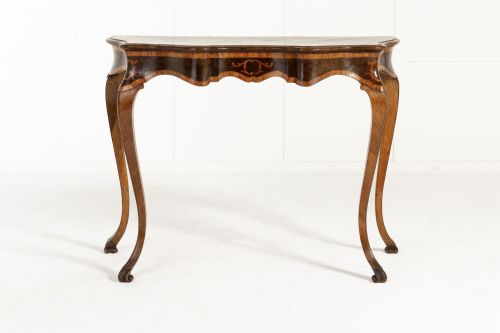
Antique Italian Entry Table
An antique italian entry table brings architectural drama and rich Italian craftsmanship straight to your hallway.
Antique Italian Entry Table
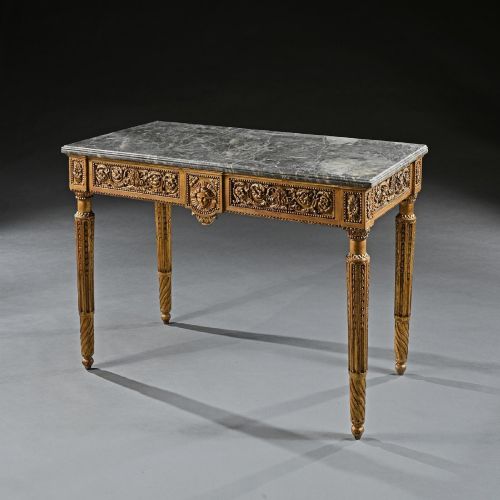
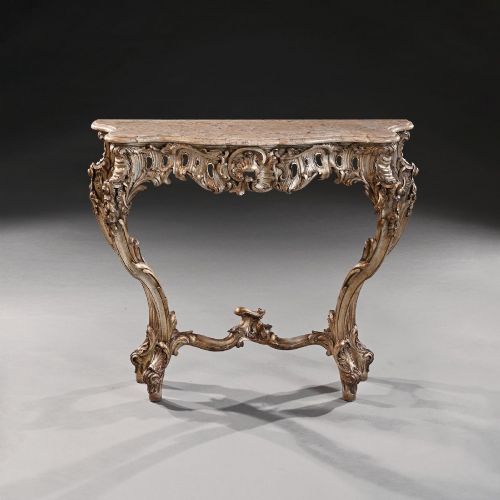
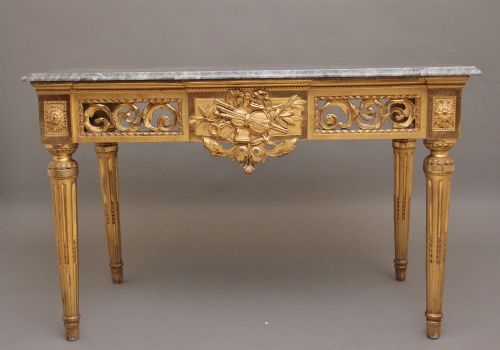
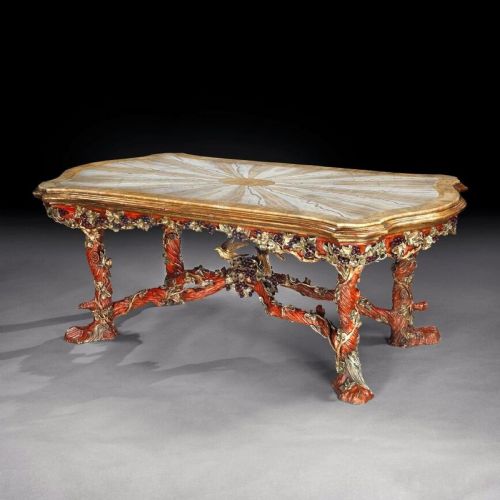
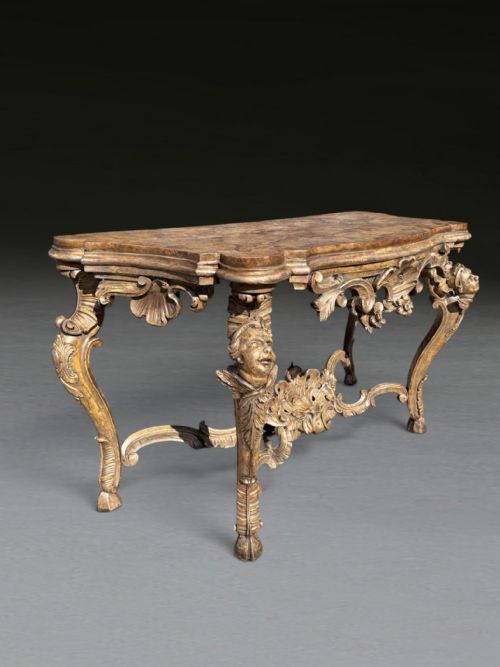
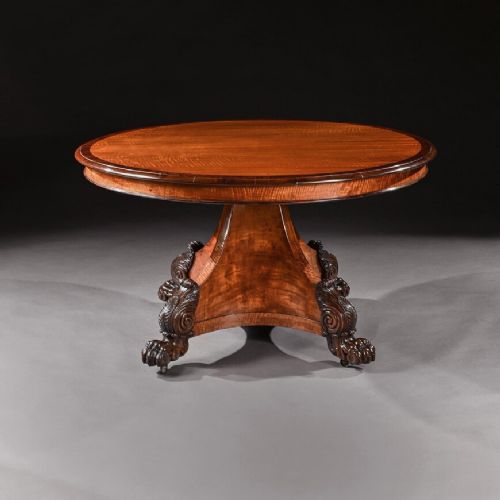
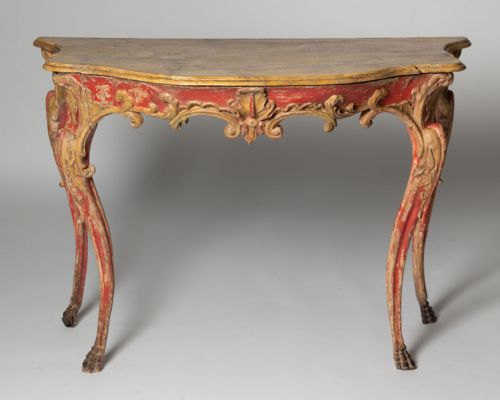
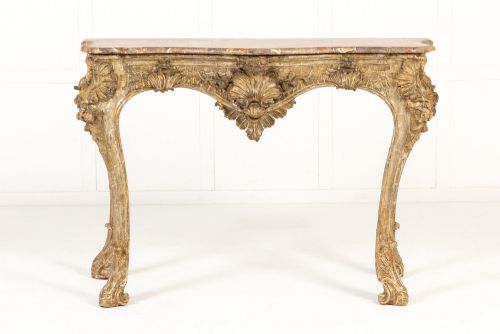
When you search for an antique italian entry table, you encounter grand console tables and occasional centre tables originating from various historic periods. These statement pieces are designed to anchor a hallway or reception space, frequently featuring shaped marble tops.
The selection ranges from eighteenth century Baroque and Neoclassical examples to later nineteenth century revivals. Console tables predominate, usually fashioned to sit flush against a wall beneath a mirror or painting.
Materials and construction
Carved wood forms the structural core of these pieces, heavily reliant on walnut, satinwood, and rosewood. Artisans shaped these timbers into serpentine and straight profiles before applying elaborate surface treatments.
Giltwood, gesso, and gold leaf provide the luminous finishes characteristic of Italian workshops. Marble tops, including purple and faux porphyry varieties, complete the construction, secured to heavily carved bases.
Carved putto figures and maiden heads peer out from beneath heavy marble slabs, guarding household entryways with stern or cherubic expressions.
Determining quality in Italian tables
Depth and precision of the wood carving distinguish higher tier pieces, particularly around complex motifs like putti, rams, and maiden heads. Crisp detailing in the gesso and gilt work separates master workshops from routine production.
The selection and weight of the marble top dictate the overall substance of the table. Integrated faux porphyry finishes and intricate inlay work indicate greater ambition in the original design.
Peters of Genoa
The Antique Italian Entry Table Glossary
- Console table
- A table designed to stand against a wall, typically secured with brackets or resting on prominent front legs.
- Giltwood
- Timber treated with gold leaf or gold paint applied over a prepared gesso surface.
- Serpentine
- A distinct undulating curved line forming the front or sides of a table top and frame.
- Faux porphyry
- A decorative painted finish designed to imitate the rich purple-red igneous rock used in antiquity.
- Putto
- A figure of a small chubby infant, frequently carved in relief on the aprons of Baroque and Rococo tables.
Antique Italian Entry Table: Frequently Asked Questions
Where should I place an entry table?
These tables suit grand hallways, entrance foyers, and narrow reception spaces where a statement surface is required.
Because most console formats sit flat against a wall, they occupy minimal floor space while providing a prominent display area.
How do I care for a marble top?
Marble requires careful cleaning with neutral soaps and soft cloths to avoid dulling the polished surface. Acidic liquids can etch the stone, so coasters should be used.
The stone top lifts off many historic bases, making relocation and maintenance manageable.
Are these tables sturdy enough for daily use?
Historic Italian tables are solid furniture built from dense hardwoods like walnut, though their decorative carved elements require gentle treatment.
Console variants often benefit from partial wall attachment for absolute stability, particularly when supporting heavy marble tops.
What defines the Neoclassical style?
Neoclassical pieces draw inspiration from classical antiquity, featuring restrained symmetry, architectural lines, and balanced proportions.
This aesthetic contrasts with the exuberant curves and asymmetrical flourishes of earlier Baroque and Rococo designs.