


Antique Iron Fireback
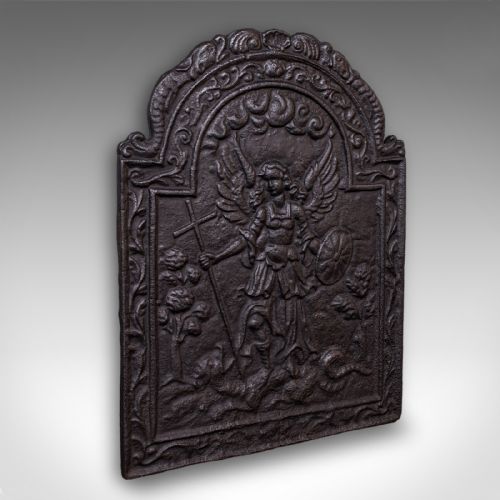
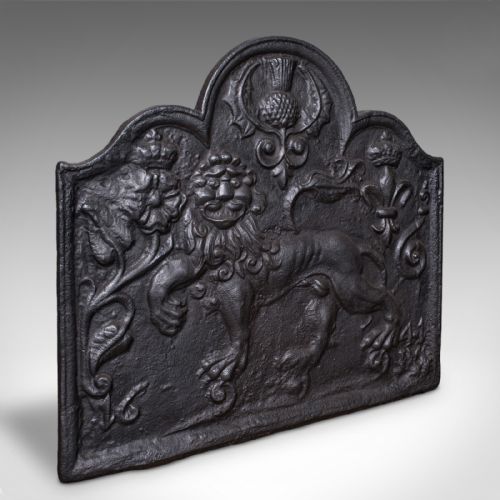
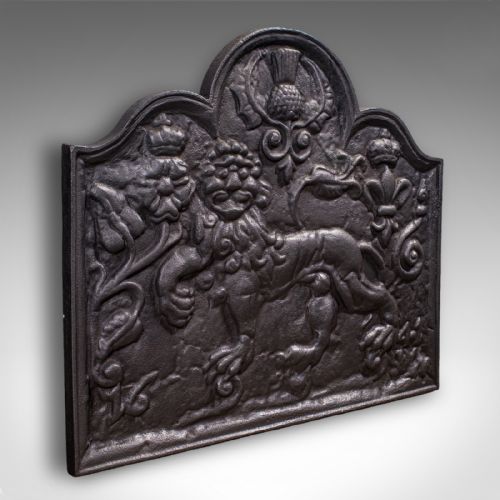
An antique iron fireback anchors an open hearth, throwing heat back into the room while protecting the masonry behind the flames.
Antique Iron Fireback
When you search for an antique iron fireback, you encounter heavy hearth furniture designed to absorb and radiate heat within an open fireplace. The pieces recorded here span centuries, ranging from seventeenth-century originals to nineteenth-century revivals.
The majority of what you meet on this page belongs to the Victorian era, often styled as English fireplace reflectors with decorative relief mouldings. Alongside standalone plates, the listings include complete fire baskets, grates and register grates incorporating cast iron work.
The decorative vocabulary draws heavily from historical revivals, showing Neoclassical, Carolean, Tudor and French Baroque motifs. You also find specific pictorial subjects such as the Tree of Life, heraldic coats of arms, and figures on horseback.
Materials and construction
These pieces rely primarily on cast iron, poured into open sand or clay moulds to create substantial plates with deep relief decoration. Wrought iron and brass appear alongside the main castings in grates, fenders and fire baskets.
The weight of the metal is central to their purpose, allowing the heavy iron to withstand intense hearth temperatures and store thermal energy. Surface finishes range from natural dark cast iron to occasional bronzed treatments.
Among the historical motifs, a sturdy seventeenth-century cast iron plate depicts a horse and rider charging through the hearth.
Distinctions in quality
Quality rests upon the crispness of the cast relief and the depth of the iron plate. Finer examples display sharp, well-defined pictorial details, such as heraldic emblems or figural scenes, rather than soft or blurred casting marks.
The integrity of the piece is also defined by the thickness and weight of the metal. Substantial plates demonstrate greater substance, while accompanying ironwork like andirons or grates shows robust forging and stable construction.
The Antique Iron Fireback Glossary
- Fireback
- A heavy metal plate placed at the back of an open fireplace to protect the wall and reflect heat into the room.
- Fire basket
- An open metal basket holding solid fuel, often fitted with an integral back plate or used alongside a separate fireback.
- Register grate
- A fireplace insert featuring an adjustable flap or damper to control the draught up the chimney.
- Carolean revival
- A nineteenth-century decorative style inspired by the late seventeenth-century reign of Charles II.
- Andirons
- Horizontal bars or supports raised on legs, placed in a hearth to support logs.
Antique Iron Fireback: Frequently Asked Questions
How do I install an antique fireback?
A fireback simply stands upright against the rear brickwork of an open hearth, often supported by the hearth floor or feet at the base.
Larger and heavier pieces remain stable under their own weight, though dedicated fireback feet or andirons can be positioned in front to hold them securely.
Can I use these firebacks with a real fire?
Most of these pieces were cast specifically to endure the heat of coal or wood fires in open hearths.
Cast iron absorbs and radiates thermal energy effectively, making period firebacks practical for active fireplaces as well as decorative installations.
How do I date an iron fireback?
Dating relies on stylistic clues within the relief moulding, such as heraldic motifs, neoclassical symmetry, or characteristic Victorian revival designs.
Earlier seventeenth-century and eighteenth-century examples tend to feature simpler, bolder iconography, while nineteenth-century pieces often display crisper, highly detailed historical revivals.
What is a fireplace reflector?
A fireplace reflector is an alternative term for a heavy metal fireback designed to bounce radiant heat back into the living space.
By capturing warmth that would otherwise escape into the masonry, it increases the overall heating efficiency of an open hearth.