


Fireplace Iron Plate
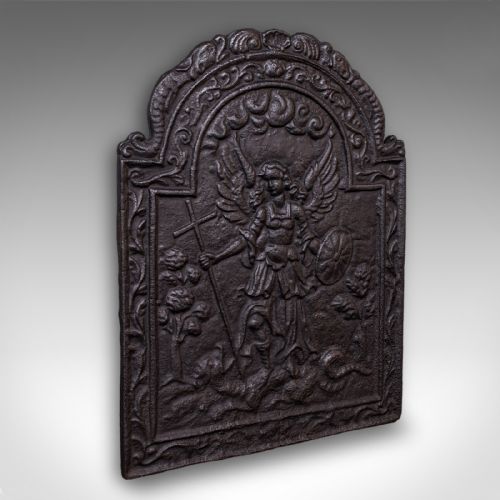
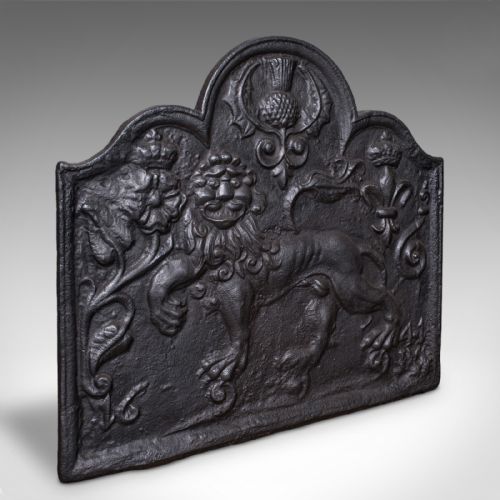
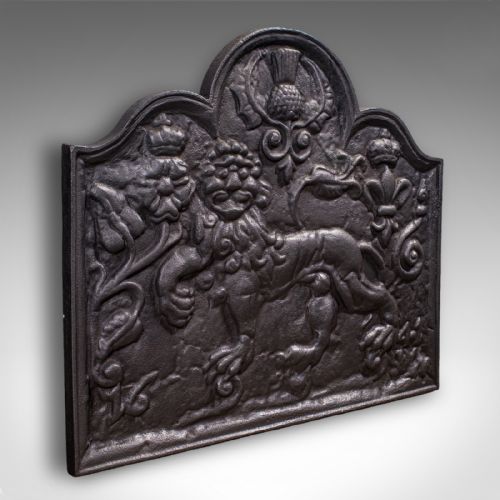
These fireplace iron plate examples, also known as firebacks, bring historic weight and enduring warmth to any hearth.
Fireplace Iron Plate
When you search for a fireplace iron plate, you are looking at heavy iron slabs designed to sit at the back of a hearth. These plates protect the masonry from intense heat and radiate warmth back into the room. The selection spans distinct periods including the seventeenth century, Georgian era, and Victorian period.
You will most commonly encounter Victorian examples on this page, often styled as fireplace reflectors or featuring decorative relief work. English and French origins appear frequently alongside various revival styles like Carolean and Neoclassical. Forms range from small panels to very large plates with architectural or heraldic motifs.
The objects serve a practical domestic function while displaying centuries of decorative ironwork. Whether plain or heavily ornamented with figures like a horse and rider, each piece anchors the fireplace with substance.
What varies in quality
The depth and clarity of the cast relief separate standard examples from superior pieces. Crisp detailing in pictorial elements, such as armour, eagles, or horses and riders, points to a finer original mould and more careful foundry work.
Weight and thickness also determine the character of the plate. Heavier, substantial castings offer greater thermal mass and durability, reflecting a more robust construction standard.
Listings draw from the Victorian period, the seventeenth century, and the Georgian era, exclusively using cast iron as the material.
The Fireplace Iron Plate Glossary
- Fireback
- A heavy iron plate placed at the back of an open hearth to protect the wall and reflect heat into the room. They often feature moulded decoration or heraldic devices.
- Carolean Revival
- A nineteenth-century stylistic movement reviving the decorative arts of the reign of Charles II. It brings ornate, sculptural elements to ironwork.
- Neoclassical Revival
- A style drawing inspiration from classical antiquity, featuring symmetrical motifs, urns, and architectural framing.
- Relief
- Sculptural projection from a flat background, which in these iron plates creates pictorial scenes and decorative patterns.
Fireplace Iron Plate: Frequently Asked Questions
What is a fireplace iron plate used for?
These plates protect the back brickwork of an open fireplace from degradation caused by continuous high temperatures. By absorbing the heat, they also radiate warmth outward into the living space.
Historically, they served both a utilitarian purpose and a decorative role, acting as the visual centrepiece of the hearth.
How do I date a cast iron fireback?
Dating relies on stylistic clues, such as the presence of Gothic, Baroque, or Neoclassical revival motifs typical of Victorian production. Earlier pieces from around seventeen hundred often show simpler, bolder relief work and distinct casting textures.
Examining the thickness, edge finish, and any visible maker or period indicators helps place the object within its correct century.
Are these plates suitable for modern fireplaces?
Most heavy cast iron plates function well in traditional open hearths, provided the dimensions match the fireplace opening. They add thermal efficiency while upgrading the aesthetic of the hearth.
Care must be taken to ensure proper placement and clearance against the back wall to prevent structural stress.
What subjects appear on these iron plates?
Common subjects include heraldry, trees of life, architectural arches, and figurative scenes like armour, eagles, or a horse and rider. These designs reflect the tastes of periods ranging from the seventeenth to the late nineteenth century.
Each motif was pressed into the sand mould before casting, creating a permanent picture in iron.