

Antique Iron Coffer
An antique iron coffer is a heavy storage chest built for security, offering robust construction and enduring utility.
Antique Iron Coffer
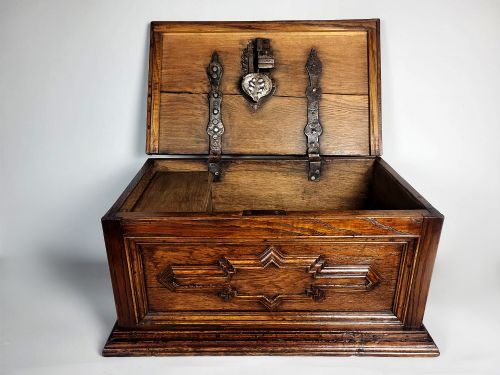
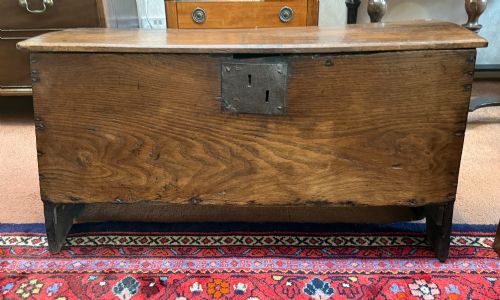
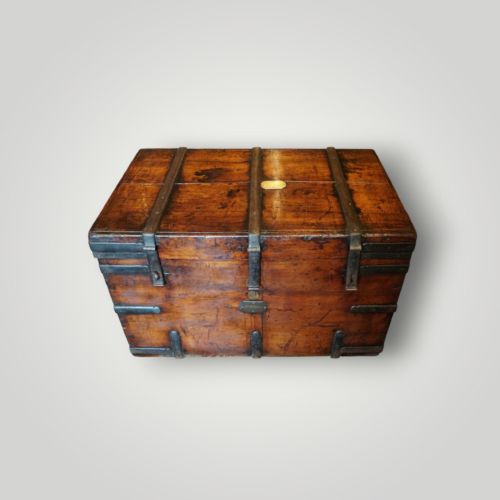
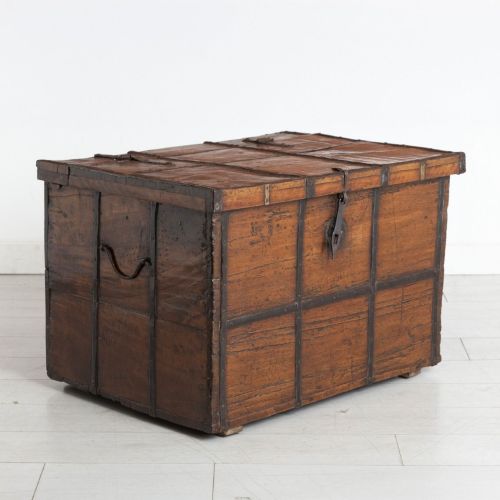
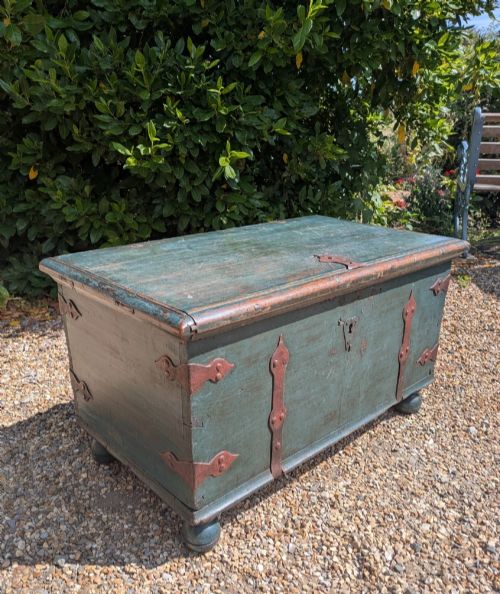
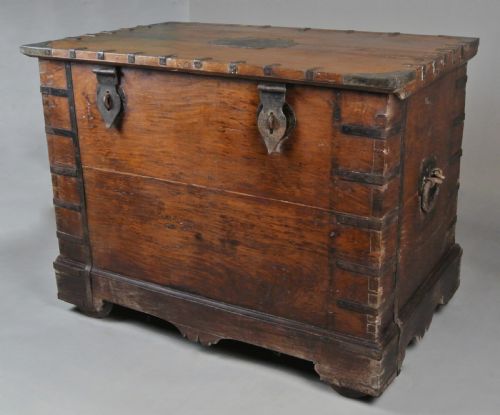
An antique iron coffer represents a secure storage vessel, often constructed from sturdy timbers like oak, pine or elm and heavily reinforced with iron strapwork. These pieces span multiple centuries, ranging from sixteenth-century strongboxes and Armada chests to nineteenth-century campaign trunks and dowry chests.
Buyers encountering this category will find a diverse selection of forms including dome-top trunks, sword chests, marriage chests and fitted strongboxes. The origins stretch across English, Flemish, Dutch, Swedish, Spanish and Asian traditions, each bringing distinct stylistic nuances to the fundamental form.
How they were made
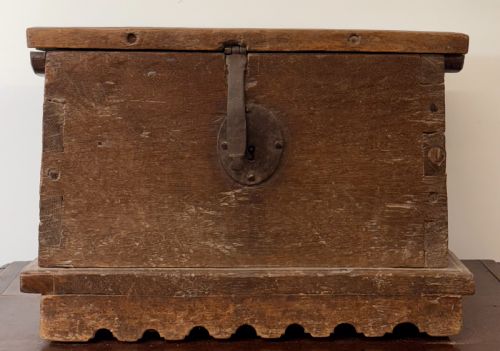
Makers utilised primary structural woods such as oak, pine, teak and elm, assembled using early joinery techniques and reinforced with hand-forged iron bands, brackets and strapwork. Complex steel locks and heavy hinges provided the necessary security for valuable possessions and documents.
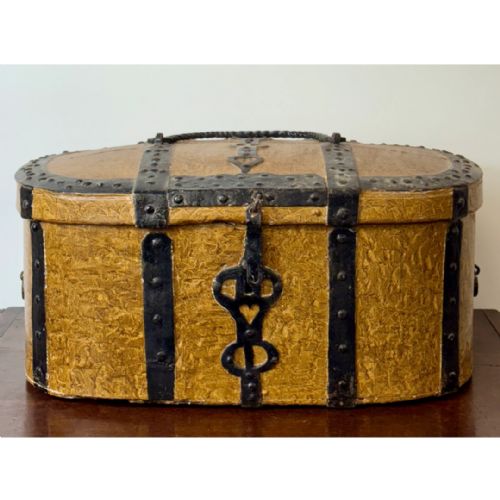
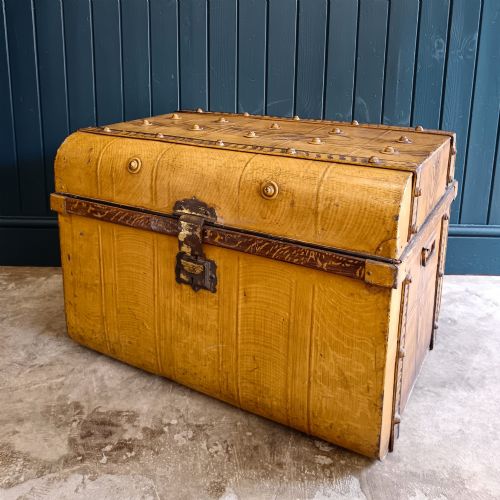
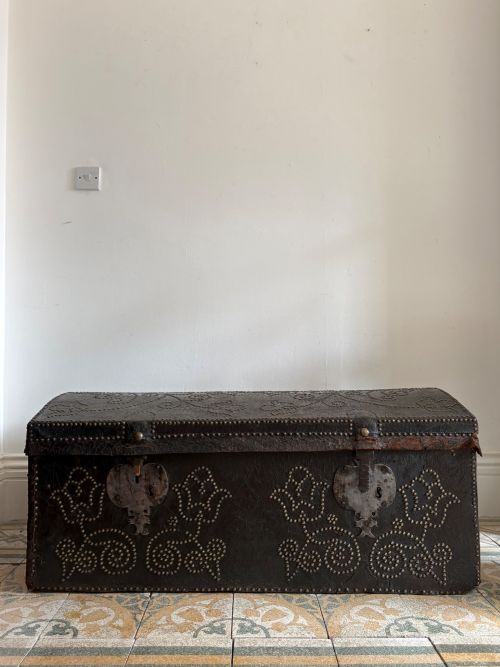
Surface treatments varied from natural timber finishes to original paint, leather studding and faux-wood painted metal. Blacksmiths shaped the iron components by hand, resulting in robust strapwork and operational mechanisms designed to withstand rigorous travel and daily use.
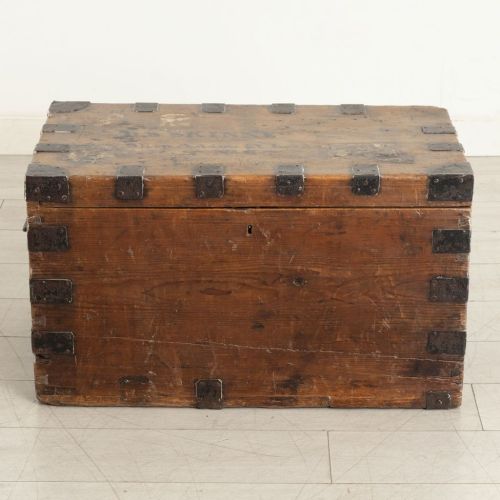
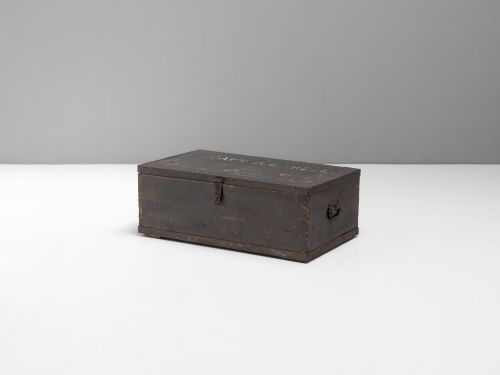
Certain nineteenth-century trunks carry the documented names of former military officers, Waterloo commissioners and travellers who sailed across the globe.
What varies in quality
The sophistication of the locking mechanism distinguishes exceptional examples from standard storage pieces, particularly complex internal steel locks with original keys. The integrity of the hand-forged ironwork and the survival of original surface paint or patinated wood further define the distinction between ordinary and superior pieces.
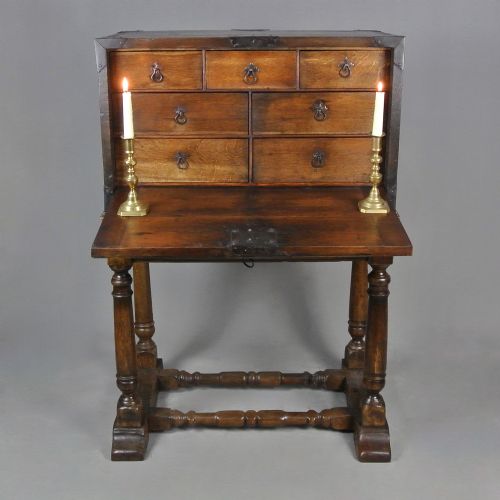
Proportional harmony and structural wholeness play a significant role, as chests retaining their original stands, handles and internal compartments command greater historical interest. The finesse of regional decoration, such as Swedish folk art motifs or Moorish style details, elevates the character of individual pieces.
TANNS DEFIANCE LONDON
The Antique Iron Coffer Glossary
- Armada chest
- A heavy iron-banded storage box traditionally fitted with a complex multi-bolt locking mechanism beneath the lid. These boxes were frequently utilised for storing coin or valuables during the seventeenth century.
- Strapwork
- Decorative or reinforcing bands of iron fastened across the exterior of wooden chests. This technique provided both structural rigidity and resistance against forced entry.
- Strongbox
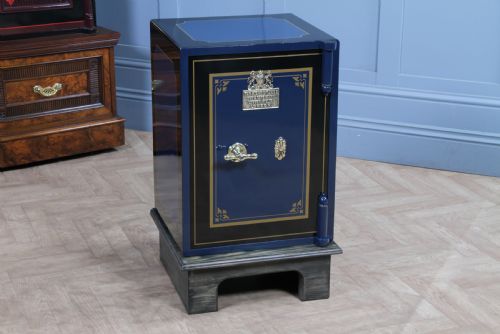
- A compact, secure container built primarily for transporting or storing currency and documents. They typically feature heavy iron plating or robust internal locking systems.
- Dowry chest
- A large storage trunk created to hold household linens, garments and possessions accumulated for a marriage. Examples appear across various regional traditions including Scandinavian and Rajasthan origins.
- Campaign trunk
- A portable storage chest designed for military officers or travellers on active service. These pieces often incorporate reinforced corners, drop handles and robust construction to endure harsh transit.
Antique Iron Coffer: Frequently Asked Questions
What were antique iron coffers used for?
These heavy chests served primarily to safeguard valuables, important documents, money and precious textiles against theft or fire. Their robust construction made them suitable for domestic security as well as transport during travel.
Over time, specific forms evolved for specialised contents, ranging from military campaign gear and marriage dowries to weapons such as swords and ceremonial items.
How do I tell an earlier coffer from a later one?
Examining the construction methods, timber species and locking mechanisms provides the clearest indication of age. Sixteenth and seventeenth-century examples typically feature hand-cleaved oak boards, joined with primitive pegging and fitted with intricate internal steel locks.
Later nineteenth-century pieces often utilise machine-sawn pine, teak or metal bodies with simpler fastening systems, reflecting industrial manufacturing shifts and changing domestic requirements.
Can I use an iron coffer as a coffee table?
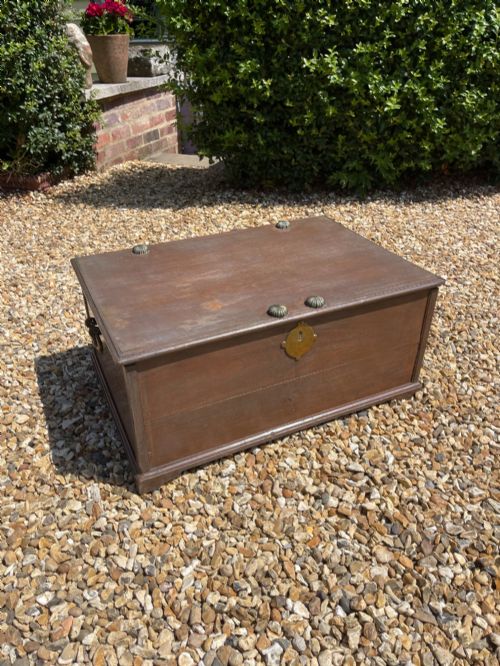
The sturdy flat lids of many antique chests and trunks make them suitable for alternative domestic functions, including use as living room tables. Their internal capacity simultaneously provides concealed storage for blankets and household items.
Care should be taken to protect original surface finishes, such as historic paint or aged timber patination, from moisture and heavy daily wear.
What is the difference between a coffer and a trunk?
A coffer traditionally refers to a heavy wooden chest, often reinforced with iron, built for the secure storage of valuables in a fixed location. Trunks generally imply a container designed with portability in mind, featuring carry handles for travel.
In historical listings, the terms frequently overlap due to shared construction traits like iron strapwork and hinged lids.