


Antique Iron Cane Holder
An antique iron cane holder brings utilitarian metalwork into the hallway, combining sturdy weight with ornamental moulding to organise walking sticks and umbrellas.
Antique Iron Cane Holder
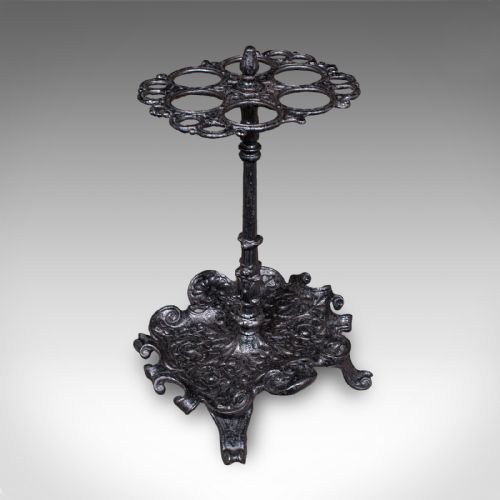
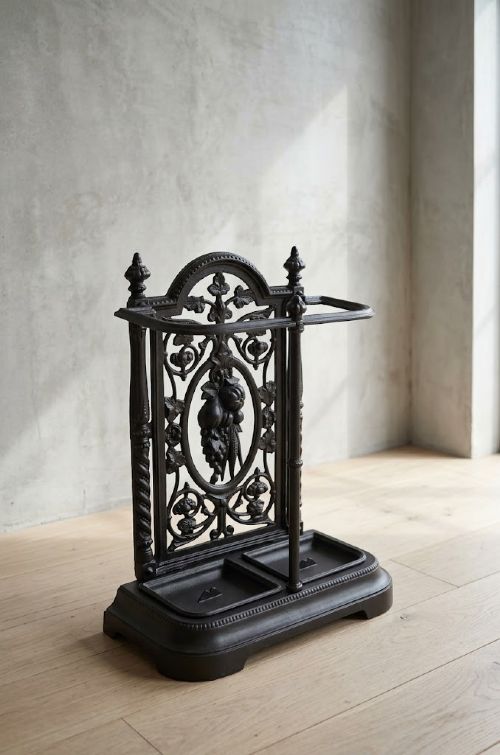
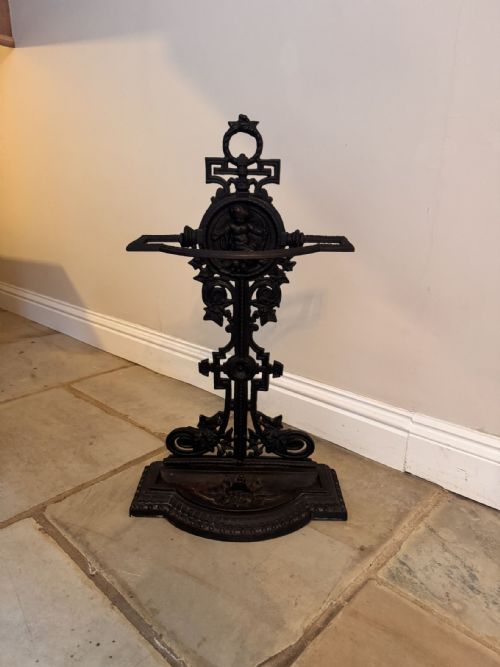
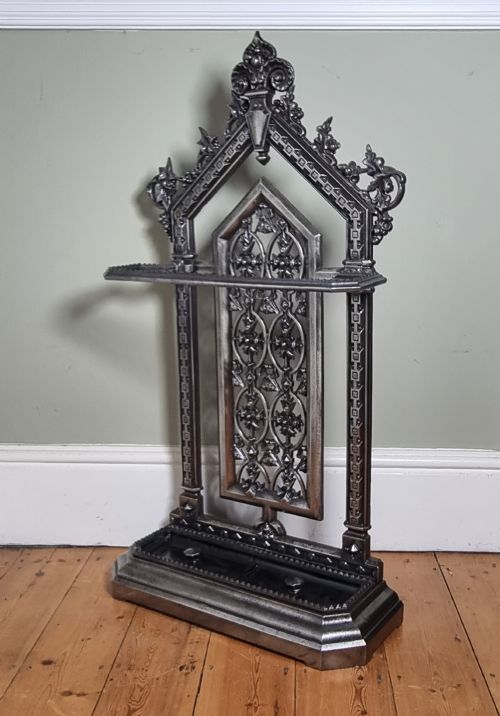
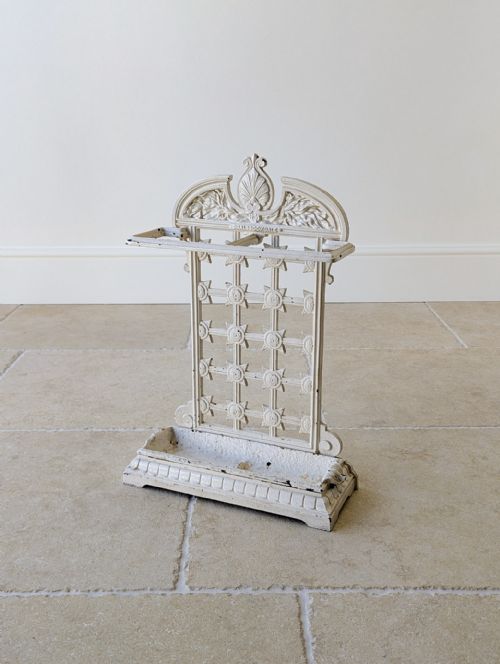
When you search for an antique iron cane holder, you encounter heavy hallway furniture designed to corral walking sticks, umbrellas and parasols. These pieces originate predominantly from the Victorian and Edwardian periods, stretching from the late nineteenth century into the early decades of the twentieth.
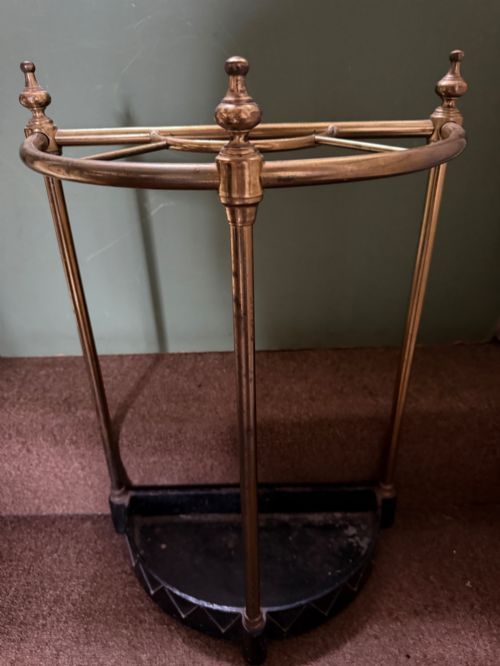
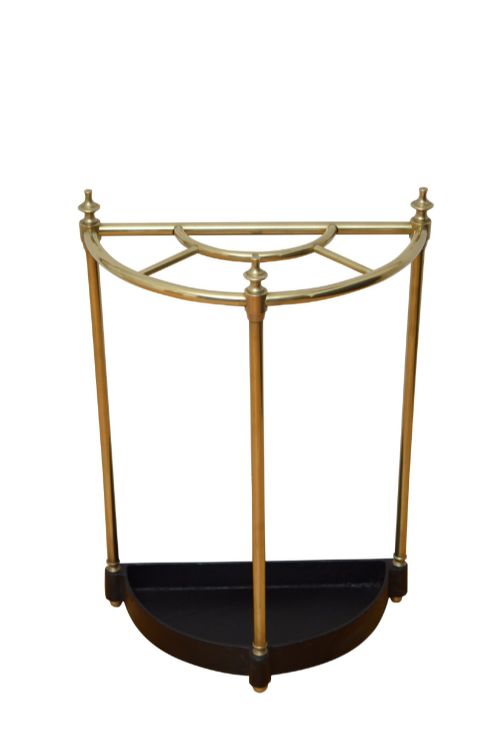
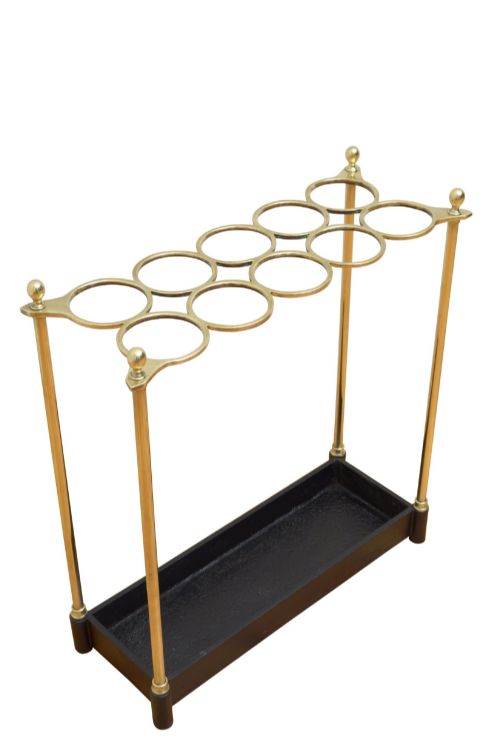
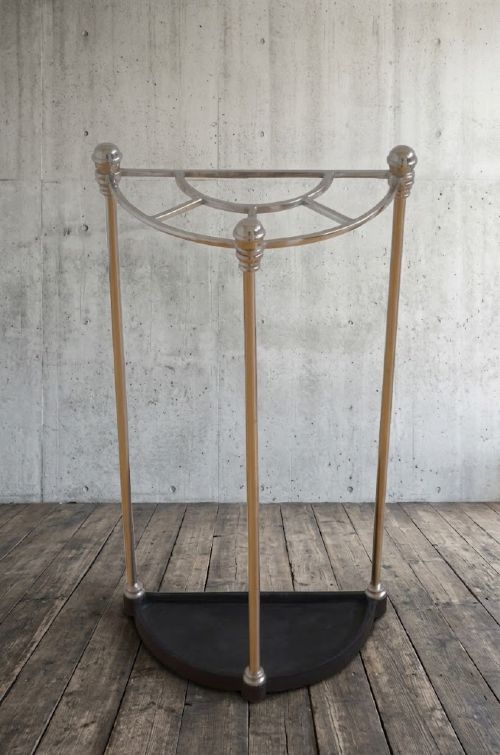
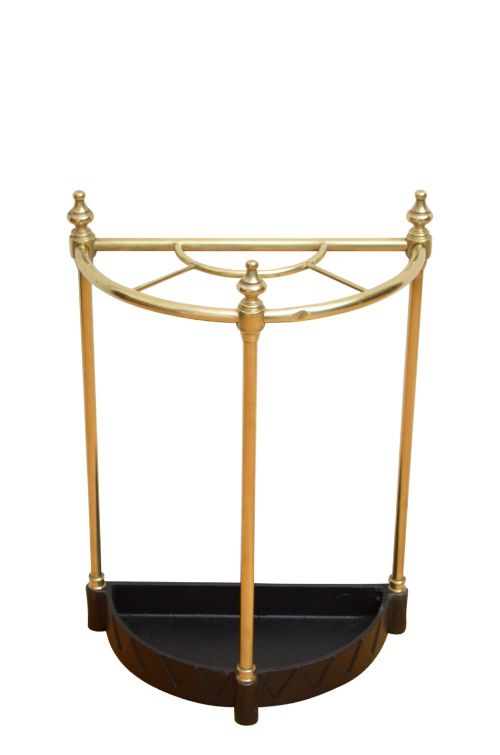
The dominant forms on this page include substantial cast iron examples alongside half-moon or demi-lune brass and iron combinations. Makers utilised robust metals to withstand the daily moisture and weight of wet walking gear brought in from outside.
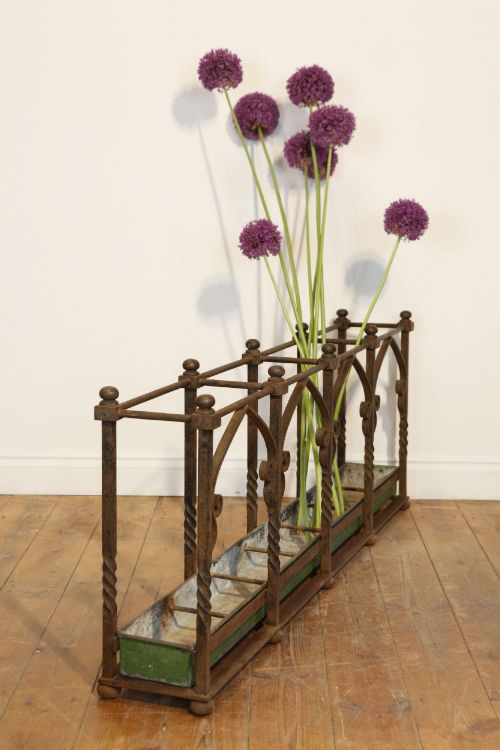
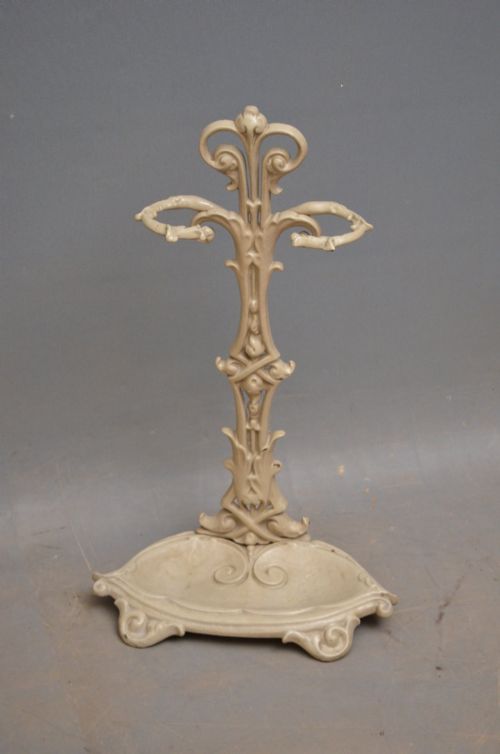
Stylistic influences span from strict Victorian and Gothic designs through to Aesthetic Movement motifs, Art Nouveau curves and later Art Deco geometries. You will find items shaped as faux bois bamboo, alongside figurative designs depicting sporting figures or gundogs.
Materials and Construction
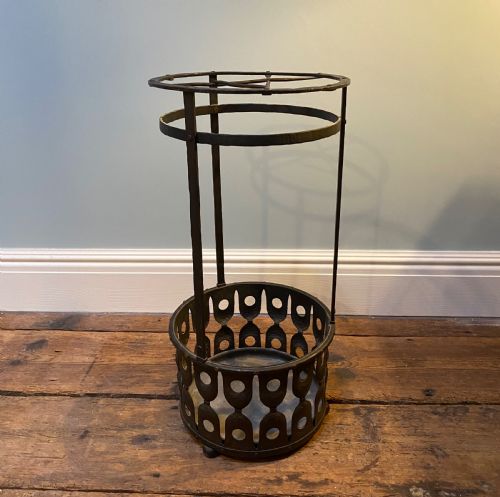
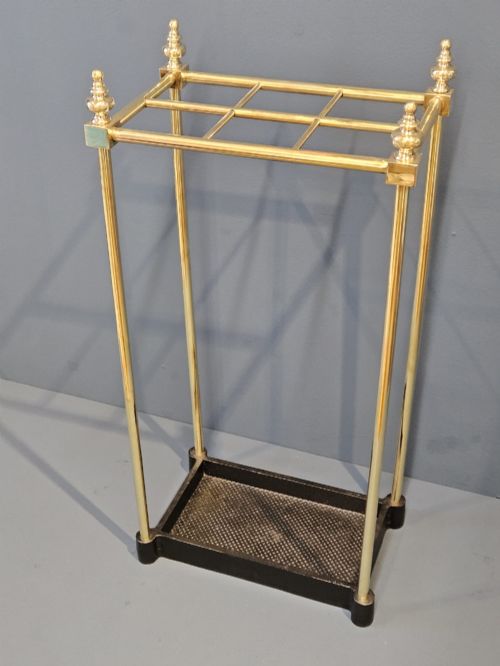
Foundry work relied heavily on cast iron poured into intricate sand moulds to achieve pierced panels, decorative scrollwork and relief patterns. Manufacturers combined this heavy metal base with brass rails, tubular metal frames and nickel plating to introduce contrasting metallic tones.
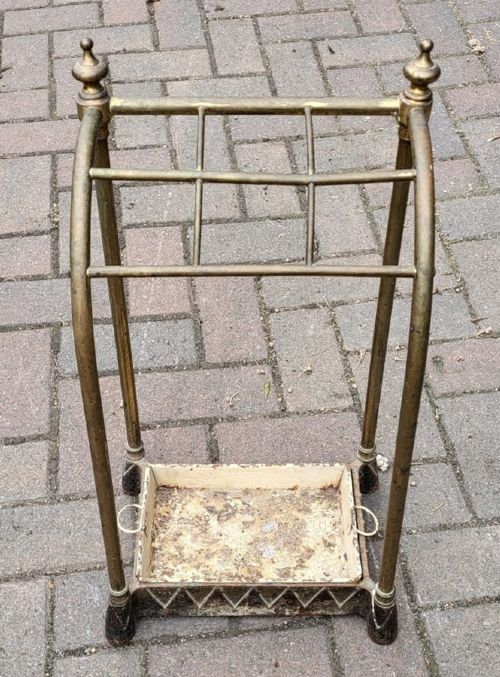
Many items incorporate integrated drip trays made from iron, enamel or brass to catch rainwater, sometimes fitted with a dog-tooth pattern or divided sections. Oak panels, painted surfaces and applied finishes further completed the construction of these utilitarian hall furnishings.
Antique Iron Cane Holder Retail Price Guide 2026
Typical asking prices for iron cane holder among the pieces listed under this phrase on Sellingantiques today, from the lower quarter to the upper quarter. They describe what is for sale here now, not the wider market.
Some Victorian hallway stands doubled as boot scrapers and fire iron tidies, multitasking harder than any modern piece of furniture.
Design Complexity and Foundry Execution
Quality separates simple utility pieces from ambitious foundry commissions through the crispness of the casting and the ambition of the design. Sharply defined relief work and complex pierced patterns indicate superior pattern-making compared to soft, blurred surface details.
The reputation of the foundry and the engagement of known designers elevate certain examples above standard commercial output. Pieces featuring structural variety, such as multiple internal divisions or combined brass and iron elements, demonstrate greater manufacturing effort.
Coalbrookdale·Thomas Jeckyll·Falkirk Ironworks·A. Kenrick & Sons
The Antique Iron Cane Holder Glossary
- Demi-Lune
- Half-moon shape designed to sit flat against a hallway wall. This configuration maximises floor space in narrow corridors.
- Faux Bois
- Imitation of wood grain rendered in metal. Found on Art Nouveau castings shaped to resemble natural bamboo or branches.
- Drip Tray
- Removable base pan positioned beneath the stick racks to catch water. These were constructed from iron, brass, or coated with white enamel.
- Finial
- Decorative ornamental termination fixed to the top of upright posts or rails. These take the form of balls, scrolls, or cast finials.
- Aesthetic Movement
- Design philosophy of the late nineteenth century favouring stylised natural motifs and Japanese-inspired geometry. It produced refined, linear metalwork.
Antique Iron Cane Holder: Frequently Asked Questions
How do I clean an iron stick stand?
Dust the metal surfaces regularly with a soft dry cloth to prevent grime accumulation in the recessed cast details.
Avoid harsh chemical solvents that might strip historical paint or original protective finishes from the iron or brass.
Were these made only for walking sticks?
These versatile stands were manufactured to hold long umbrellas, parasols, and walking canes simultaneously.
Some specialised variants were also adapted to store fire irons alongside hearth accessories in larger reception rooms.
How do I identify a Victorian cast iron stand?
Victorian examples frequently display heavy iron casting, sometimes marked with registration diamond stamps or specific foundry names.
Stylistic cues include Gothic Revival motifs, Aesthetic Movement linear patterns, or heavy Victorian scrollwork.