




Ornate Umbrella Rack
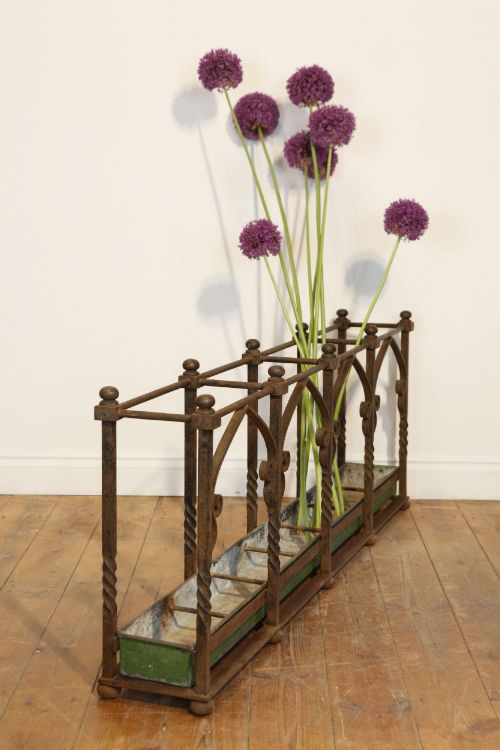
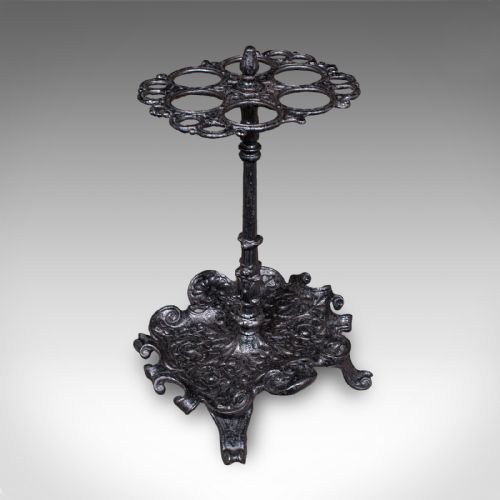
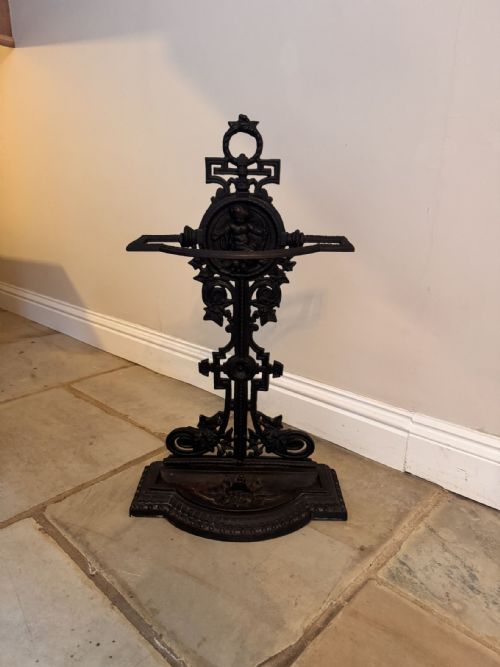
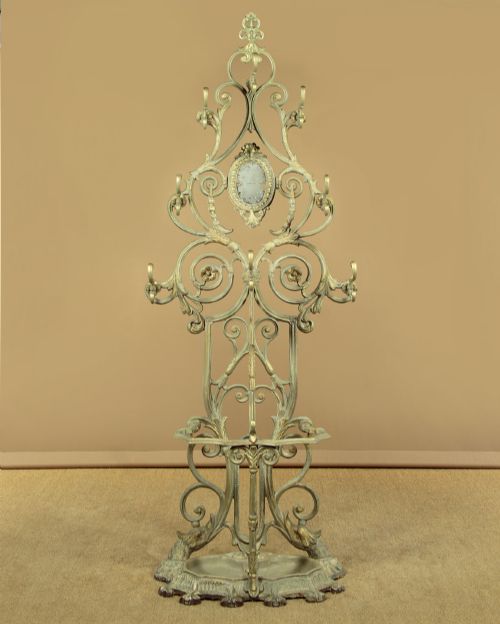
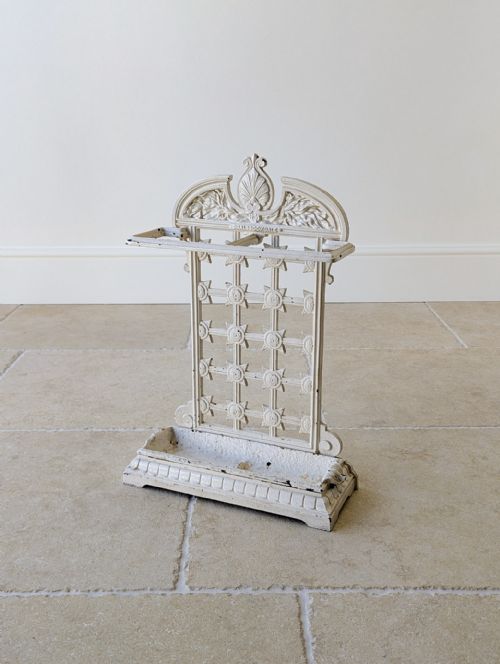
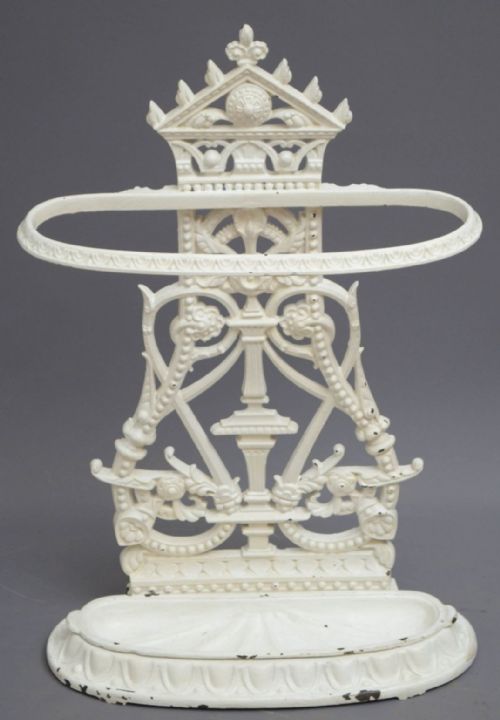
An ornate umbrella rack brings heavy cast iron and carved oak into the hallway to hold wet sticks.
Ornate Umbrella Rack
When you search for an ornate umbrella rack, you encounter heavy hall furniture designed to catch the dripping water from walking sticks and wet weather gear. The examples found here date principally from the Victorian and Edwardian periods, stretching back through the nineteenth century to around eighteen seventy.
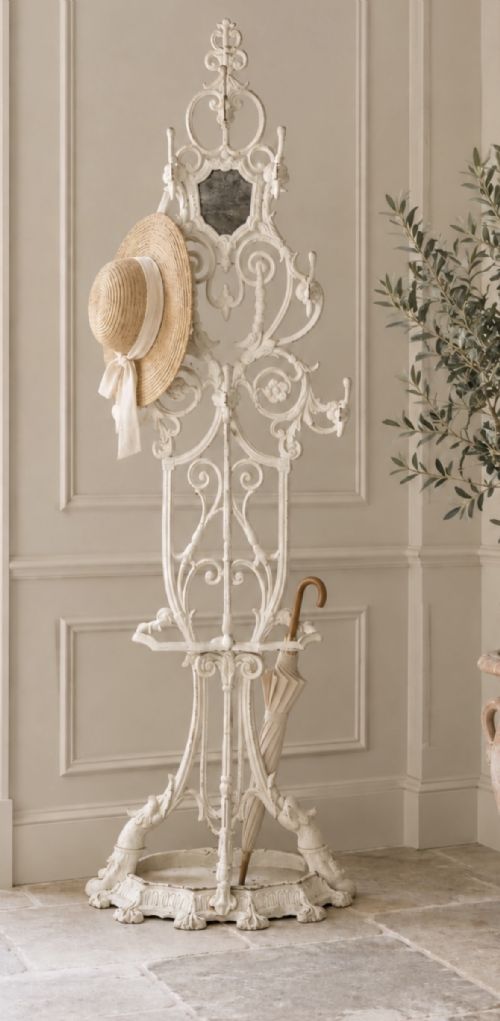
The core forms include dedicated umbrella stands, stick stands, and larger hall stands that combine coat hooks, mirrors, and umbrella loops in a single piece. Most pieces rely on substantial cast iron construction, though carved oak and brass elements also appear across the selection.
Stylistically, these pieces draw heavily on Victorian tastes, ranging from straightforward Victorian designs to Gothic revivals and Rococo Revival curves. English and French origins predominate, with several pieces bearing direct links to the Coalbrookdale foundry style.
How they were made
Makers utilised sand casting to produce the intricate openwork panels and heavy frames characteristic of Victorian cast iron umbrella stands. This technique allowed for deep relief moulding, creating botanical scrolls, gothic arches, and ornate drip trays without needing hand carving on the metal.
Where timber enters the construction, particularly in the larger carved oak hall stands, traditional joinery and hand carving shape the uprights and backing panels. Brass hooks and fittings are secured to these wooden and iron frames to handle the daily weight of coats and hats.
Painted finishes, most notably black, were applied to protect the cast iron from rust while highlighting the raised decorative details against the light of a nineteenth-century hallway.
Ornate Umbrella Rack Retail Price Guide 2026
Typical asking prices for ornate umbrella rack among the pieces listed under this phrase on Sellingantiques today, from the lower quarter to the upper quarter. They describe what is for sale here now, not the wider market.
Many a nineteenth-century caller stood waiting in the hall while their wet umbrella dripped safely into an iron basin.
What varies in quality
The crispness of the casting marks the primary difference between standard production and the finest work. Foundry pieces from makers like Coalbrookdale show sharp relief in the scrollwork and lettering, whereas later or generic copies lose definition in the mould.
Structural ambition sets the simple umbrella loop apart from the multi-functional hall stand that incorporates coat hooks and umbrella wells into a unified composition. The integrity of the original drip tray at the base also determines the completeness of a surviving piece.
Coalbrookdale
The Ornate Umbrella Rack Glossary
- Cast iron
- A strong, rigid alloy poured into moulds to create heavy furniture frames with intricate decorative patterns. It forms the backbone of the majority of Victorian umbrella stands.
- Hall stand
- A large piece of entrance furniture combining coat hooks, a mirror, and an umbrella or stick stand in one unit. These items dominated the Victorian hallway.
- Drip tray
- The removable metal or ceramic dish placed at the base of a stick stand to catch water from wet umbrellas. It protects the hallway floor from moisture.
- Rococo Revival
- A nineteenth-century design style marked by elaborate, asymmetrical scrolls, shell motifs, and natural curves. It appears on several ornate cast iron stands.
- Coalbrookdale
- A famous English ironfoundry known for producing high-quality decorative cast ironwork during the Victorian era. Many later stands are made in this distinct style.
Ornate Umbrella Rack: Frequently Asked Questions
What is an ornate umbrella rack?
An ornate umbrella rack is a functional piece of entrance furniture, usually made of cast iron or carved oak, designed to hold walking sticks and wet umbrellas in the hallway.
These pieces range from compact umbrella loops to large hall stands incorporating coat hooks and mirrors, predominantly dating from the Victorian and Edwardian eras.
How do I clean cast iron?
Cleaning cast iron requires a soft brush to remove dust from the intricate relief work without damaging the painted or patinated surface.
Moisture should be avoided or dried immediately to prevent rust from forming in the recessed decorative details.
Are these stands waterproof?
Most stands include a metal drip tray at the bottom designed to catch water running off wet umbrellas.
Over the decades, some original trays have been lost or replaced, so checking the base configuration helps understand the piece's completeness.
How do I date a hall stand?
Dating relies on stylistic clues such as Victorian Gothic revival motifs, Rococo curves, or the specific registration marks found on iron components.
Materials also help, as heavy cast iron frames are more common in the nineteenth century while Edwardian pieces often show lighter proportions.