
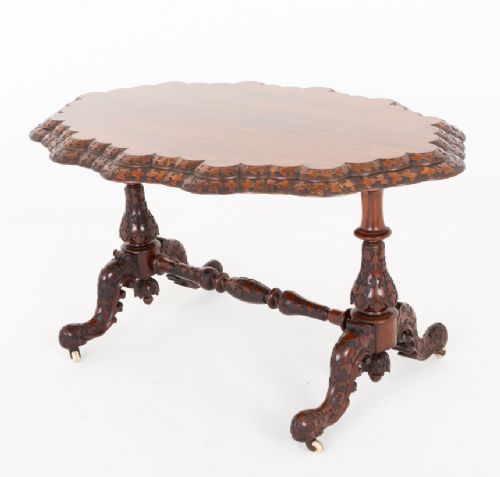
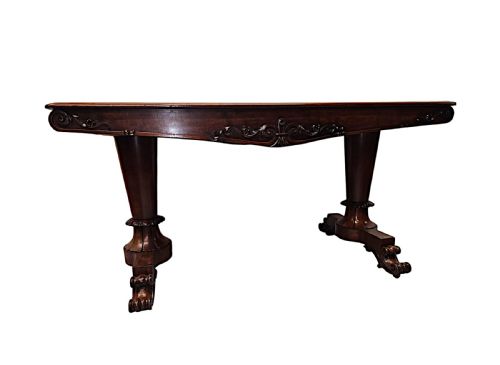


Antique Irish Sofa
These antique irish sofa selections bring substantial timber frames and deep upholstery into a room, offering both historical weight and grounded seating.
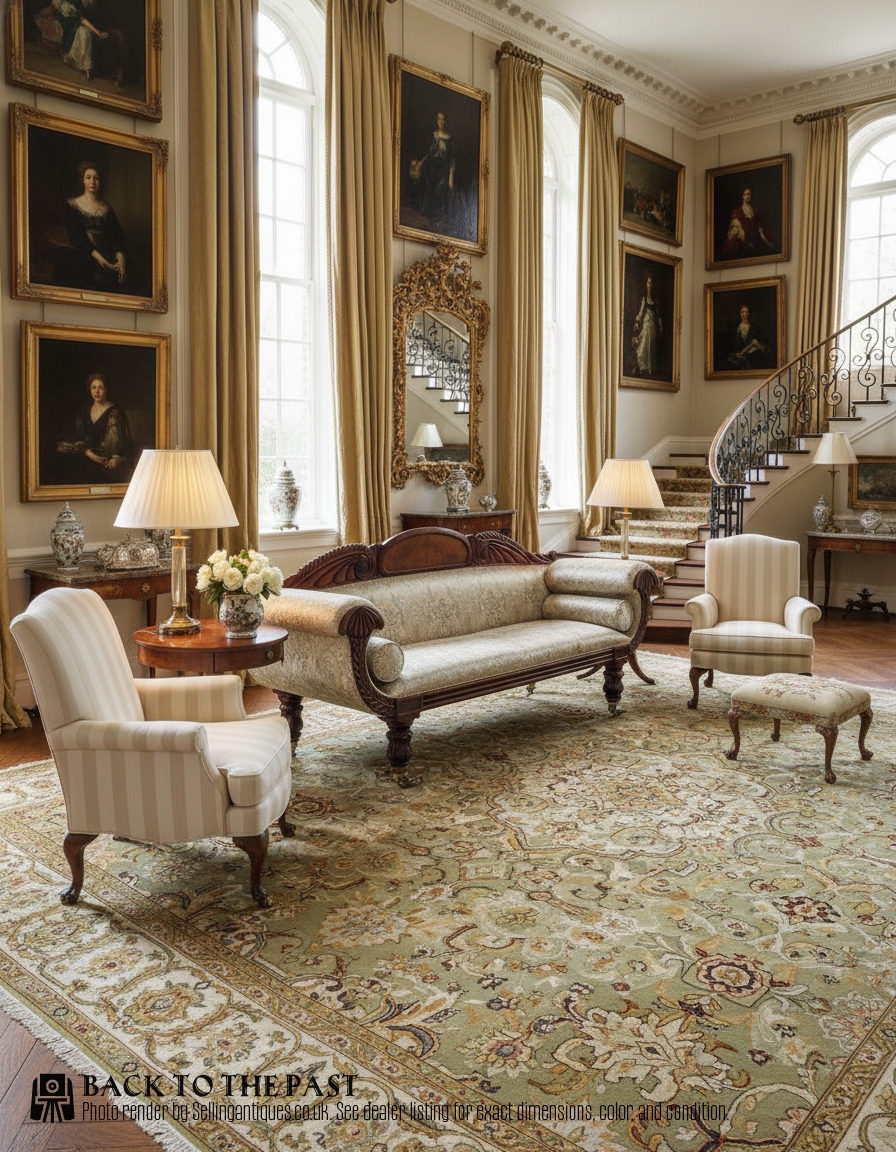
Antique Irish Sofa
An antique irish sofa is a substantial seating form encountered in periods such as the Georgian, Regency, and William IV eras. The examples seen here include double ended sofas and two seater settees alongside large carved mahogany pieces from the nineteenth century.
Makers working in Dublin shaped these forms through distinct regional interpretations of broader British styles. Buyers will regularly meet designs reflecting the Rococo Revival or the heavier proportions characteristic of Irish workshops from the nineteenth century.
Materials and construction
Makers constructed these frames from dense timbers including mahogany and rosewood, often enriching the surfaces with carved detail. These durable hardwoods provided the structural integrity necessary for large seating forms and heavy centre tables.
Upholstery and fabric completed the seating surfaces, supported beneath by materials such as hessian. Brass accents frequently appeared on related library tables and seating furniture from the same Dublin workshops.
Cabinet makers occasionally hid their maker stamps in the most awkward places beneath the frame, ensuring future inspectors needed a flashlight.
Assessing quality in irish seating
Quality rests upon the depth of the timber carving and the crispness of the applied ornament. Pieces attributed to documented Dublin firms display a sharper execution in their woodwork than standard provincial examples.
The integrity of the original timber frame and the balance of the proportions dictate the visual success of the piece. Well executed joinery ensures the heavy mahogany or rosewood supports the weight of the structure without distortion.
Williams and Gibton·Butlers of Dublin·Gillingtons of Dublin
The Antique Irish Sofa Glossary
- Double ended sofa
- A seating form featuring scrolled or raised ends of equal height at both sides. This symmetrical design allows a person to recline comfortably from either direction.
- Mahogany
- A heavy, durable tropical hardwood favoured by cabinet makers for its rich colour and ability to hold crisp carved detail. It forms the primary structure of many nineteenth century pieces.
- Rococo Revival
- A nineteenth century design style incorporating exuberant C-scrolls, shell motifs, and naturalistic plant forms. This ornament appears heavily on mid century seating and centre tables.
- Settee
- A medium sized upholstered seat designed for two or more people with a back and arms. It offers a lighter alternative to the largest library forms.
Antique Irish Sofa: Frequently Asked Questions
What periods do these sofas date from?
The available pieces span the Georgian, Regency, and William IV periods through to the late nineteenth century. Most examples date from the 1800s.
Irish cabinet makers working during these decades adapted prevailing British tastes into distinct regional forms using dense native or imported hardwoods.
How do I identify Dublin made furniture?
Makers in Dublin often stamped their timber frames or left distinct stylistic signatures in the carving. Attribution relies on these documented workshop practices.
Historical records link specific chair and sofa proportions to prominent nineteenth century Dublin cabinet making firms.
What woods were used for these frames?
Makers relied primarily on mahogany and rosewood for their durability and dark grain. Burr walnut also appears on related centre tables from the period.
These dense timbers allowed craftsmen to execute deep relief carvings that remained stable over centuries of use.
How do I care for antique upholstery?
Upholstered surfaces require regular gentle cleaning to protect the underlying fabric and hessian foundations. Direct sunlight should be avoided to prevent fading.
Professional conservation helps preserve the historical integrity of the interior stuffing and the outer textile covering.