
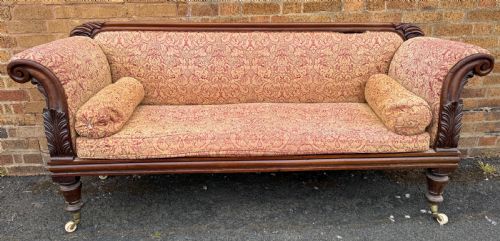


Vintage Damask Settee
A vintage damask settee brings rich texture and enduring period character to a room, offering a comfortable seat wrapped in patterned silk or wool.
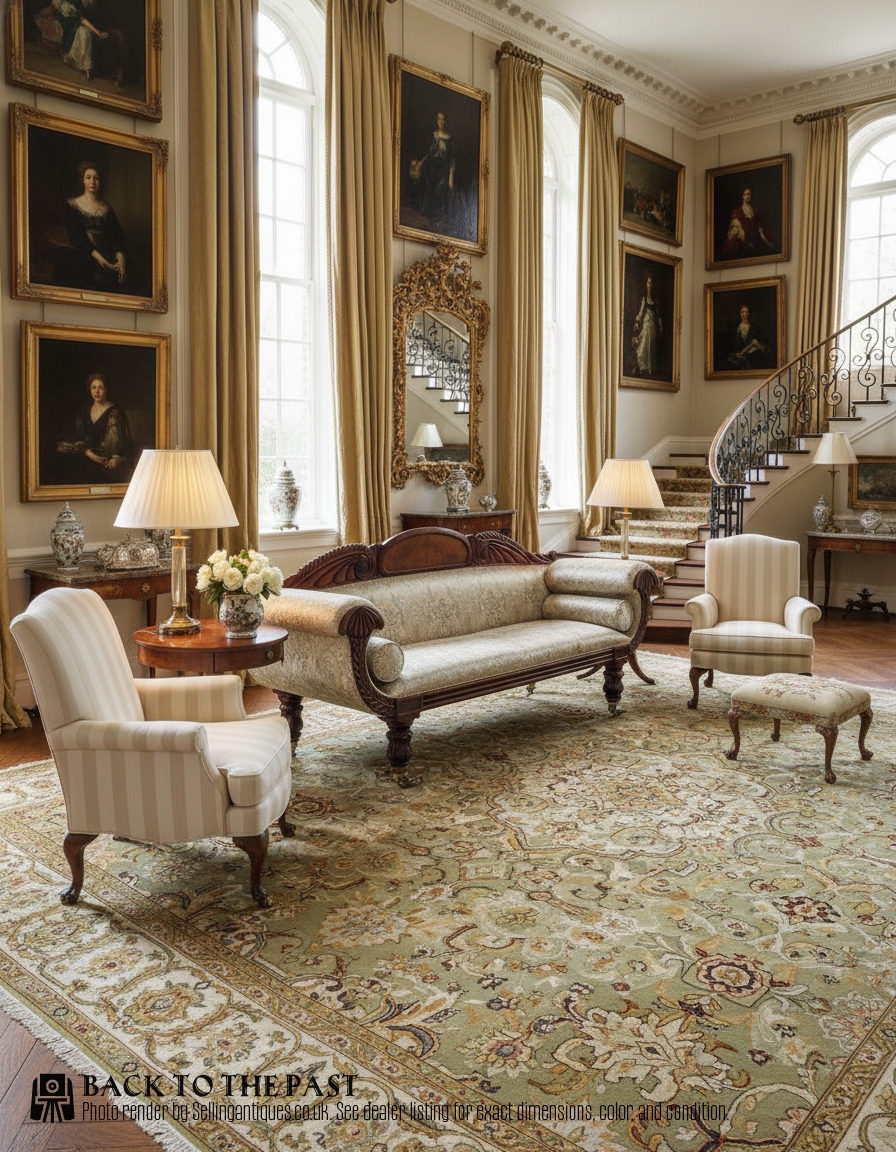
Vintage Damask Settee
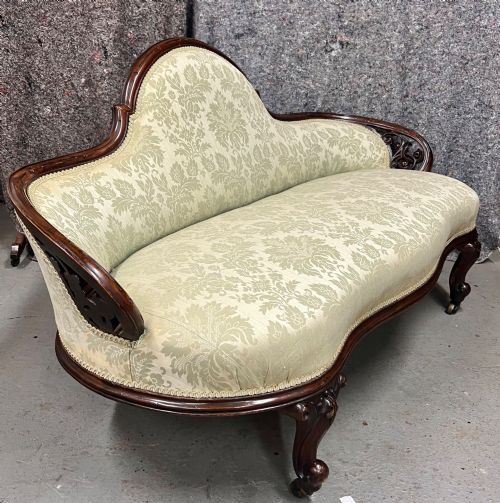
When searching for a vintage damask settee, buyers encounter a diverse selection of upholstered seating spanning the nineteenth and twentieth centuries. These pieces function as both practical seating and decorative centerpieces within a room.
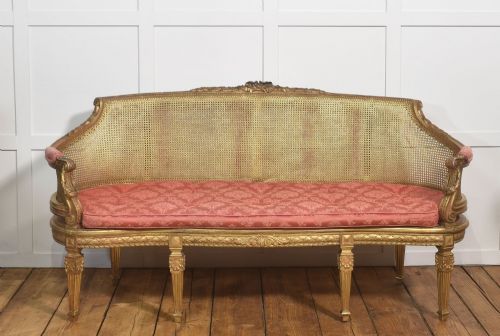
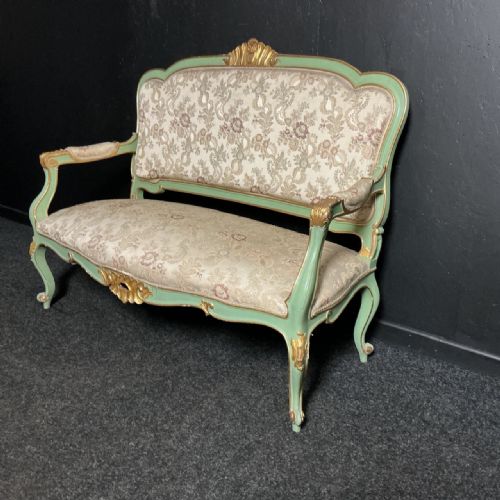
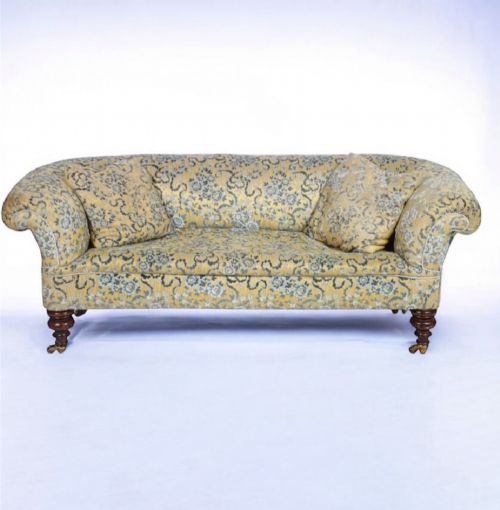
The most frequent examples appearing on this page belong to the Victorian and Edwardian periods, alongside continental styles such as Louis XV and Louis XVI. Forms range from compact two-seater settees and camel back sofas to grand Chesterfield designs and matching salon suites.
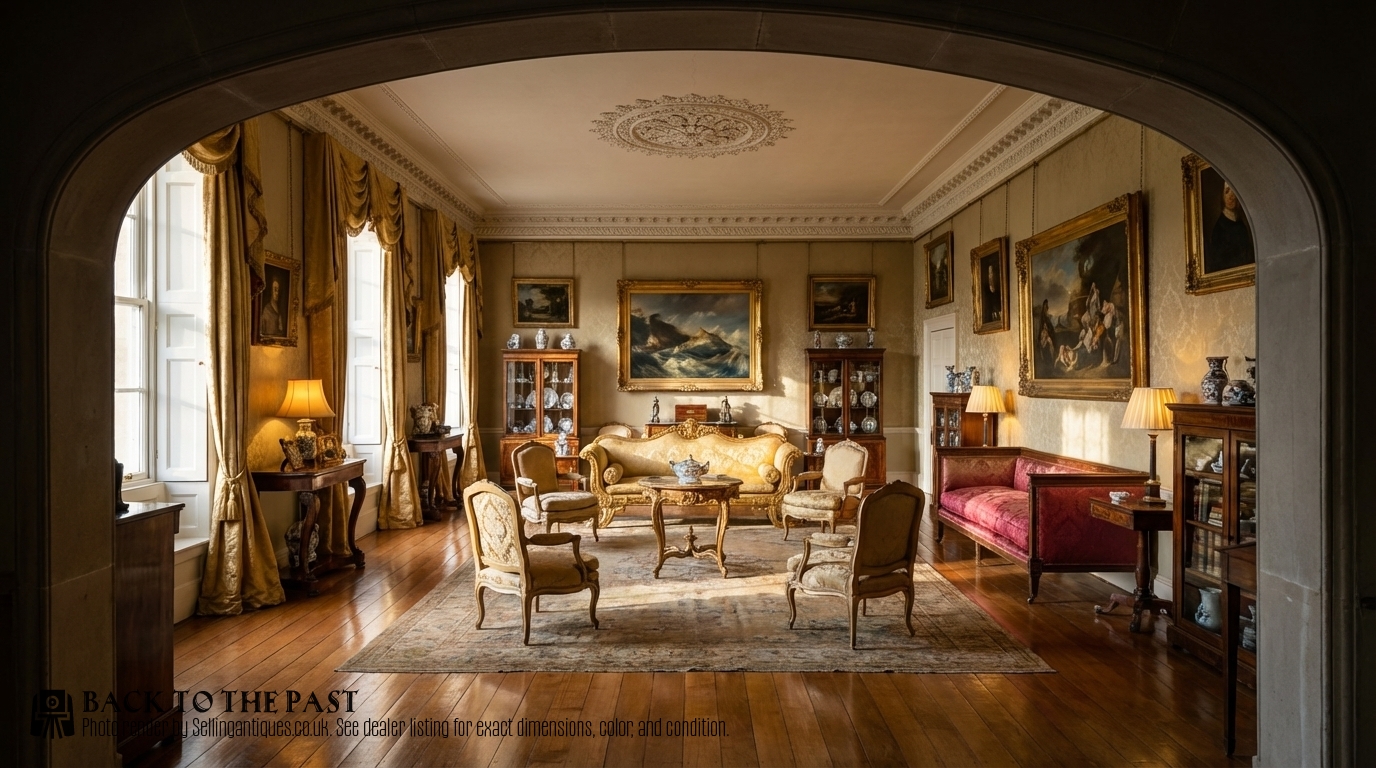
Many of these settees combine traditional upholstery with exposed wooden frames, utilising materials like mahogany, walnut, and giltwood. Whether styled for an English country house or a formal drawing room, each piece reflects the prevailing aesthetic of its era.
Materials and Construction
The structural framework of these settees relies primarily on hardwoods such as mahogany and walnut, chosen for their durability and grain. Giltwood and painted finishes appear on continental models, while brass elements sometimes accent the legs and fittings.
Upholstery defines the character of the piece, with damask fabric providing the traditional patterned surface. Supporting frames incorporate carved woodwork, show frames, and turned legs, reflecting specific historical revival styles.
Several settees hide their joinery behind miles of damask, while others boldly bare their carved walnut legs to the world.
Assessing Quality and Craftsmanship
Quality in a vintage damask settee rests upon the integrity of the underlying woodwork and the precision of the carving. Heavier frames constructed from solid mahogany or walnut generally indicate superior initial manufacture compared to lighter alternatives.
The refinement of the upholstery work and the execution of details such as show frames or turned legs further distinguish finer examples. Pieces retaining their original period frames and integrated design schemes often demonstrate higher levels of workshop skill.
Howard and Sons
The Vintage Damask Settee Glossary
- Damask
- A reversible figured fabric with patterns formed by weaving, traditionally produced in silk, wool, or cotton. It provides the distinctive textured surface seen on many period settees.
- Chesterfield
- A large upholstered sofa characterised by rolled arms of the same height as the back, traditionally featuring deep buttoning. This form remains a staple of nineteenth-century seating.
- Knole Sofa
- A historic sofa style featuring adjustable or hinged sides that can be tied upright or lowered. Edwardian interpretations of this form appear frequently in country house settings.
- Giltwood
- Timber treated with a thin layer of gold leaf or gold paint applied to the surface. It is commonly found on decorative French frames from the nineteenth and early twentieth centuries.
- Show Frame
- A wooden structural framework left exposed around the upholstered portions of a chair or settee. This technique highlights the carved mahogany or walnut beneath the fabric.
Vintage Damask Settee: Frequently Asked Questions
What is a damask settee?
A damask settee is an upholstered two-seater or multi-seat sofa covered in patterned damask fabric. These pieces span various historical periods and incorporate exposed wooden frames.
They serve as both functional seating and decorative furniture, often reflecting Victorian, Edwardian, or continental design influences.
How do I date a vintage settee?
Dating a settee involves examining the timber species, framing techniques, and stylistic motifs present in the woodwork. Victorian pieces often display heavy walnut or mahogany frames, while Edwardian examples can be lighter in proportion.
Design characteristics such as turned legs, carved scroll ends, and specific revival styles help narrow down the manufacturing period.
Where should I place a settee?
Settees work well in drawing rooms, large bedrooms, or hallways where they provide secondary seating without overwhelming the floor space. Their decorative wooden frames and patterned fabrics make them suitable as standalone focal points.
Matching suites can also anchor a formal reception room when paired with armchairs from the same period.
Are these settees comfortable for daily use?
Most vintage settees offer firm support typical of period upholstery techniques, utilising traditional springing and padding methods. The depth and height of the seat vary significantly between styles like Chesterfields and salon settees.
Buyers intending daily use often consider the seat depth and back angle to ensure suitability for modern living.