
Antique Interior Scene Art
Antique interior scene art captures domestic spaces and bustling workshops through oil and watercolour, bringing historic room settings into present-day homes.
Antique Interior Scene Art
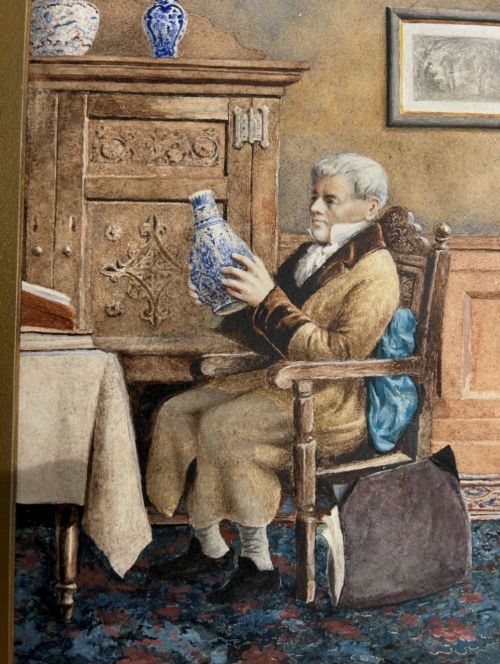
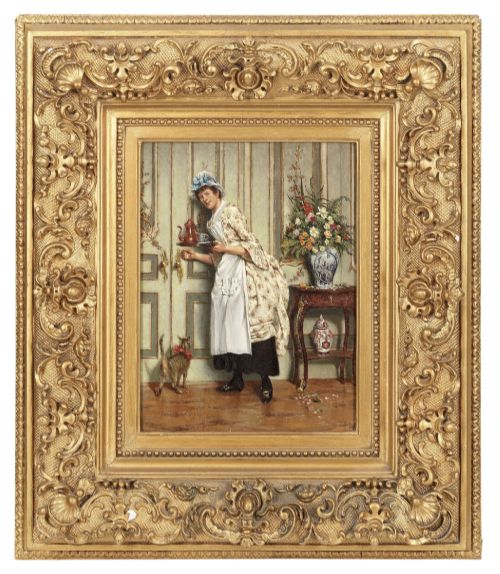
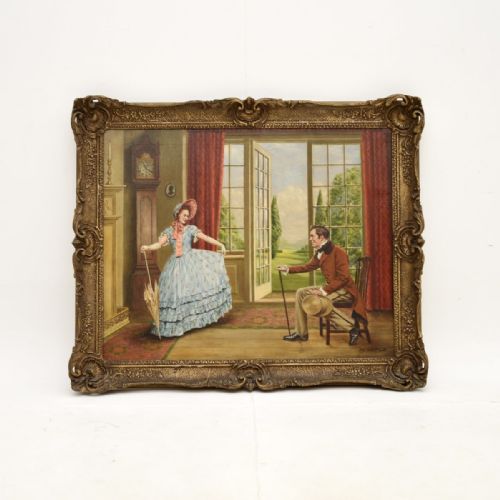
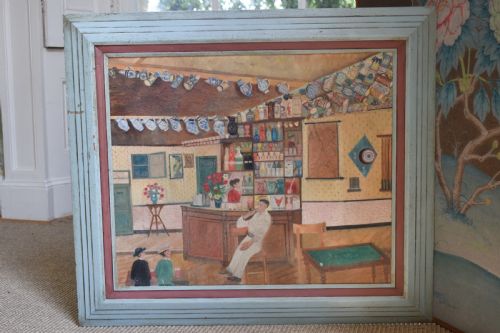
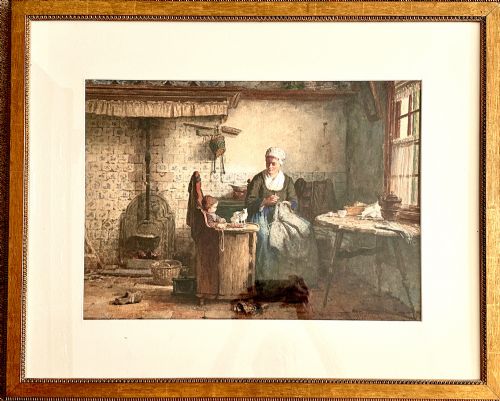
Antique interior scene art depicts figures within domestic rooms, country houses, cottages, taverns, and workshops across various centuries. These works offer a glimpse into past daily life, capturing moments such as tea time, fireside gatherings, and quiet reading by a window.
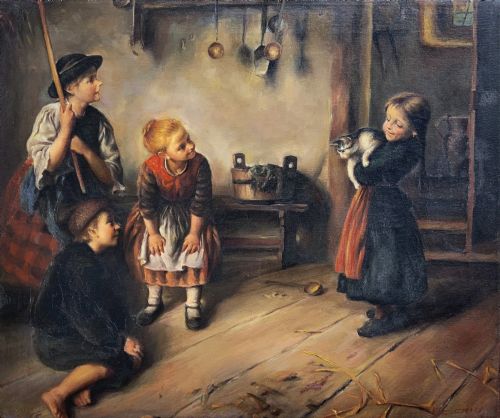
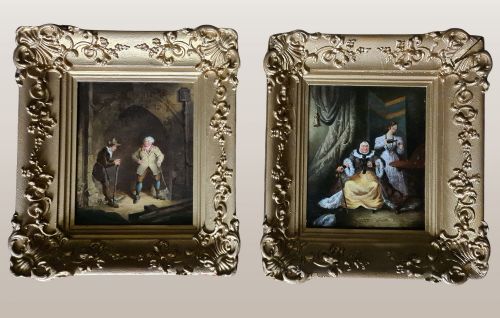
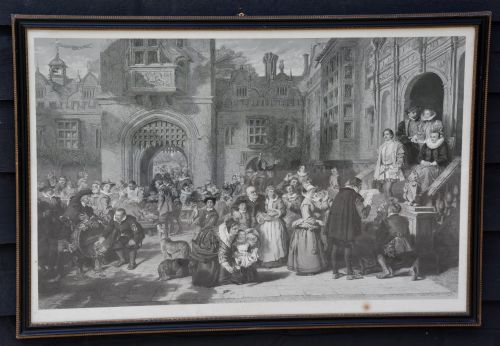
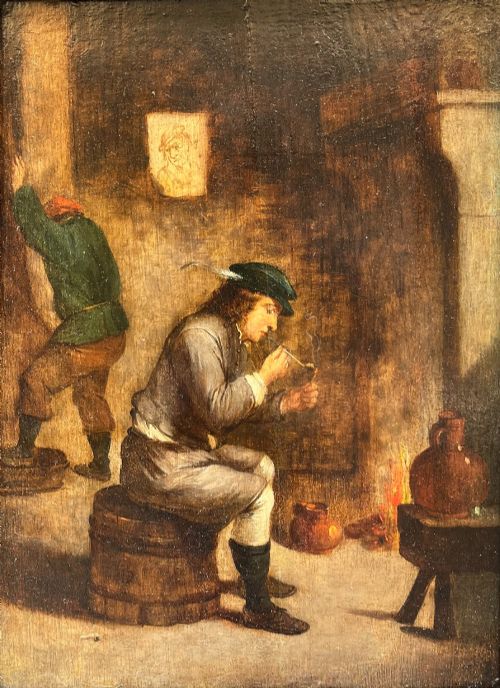
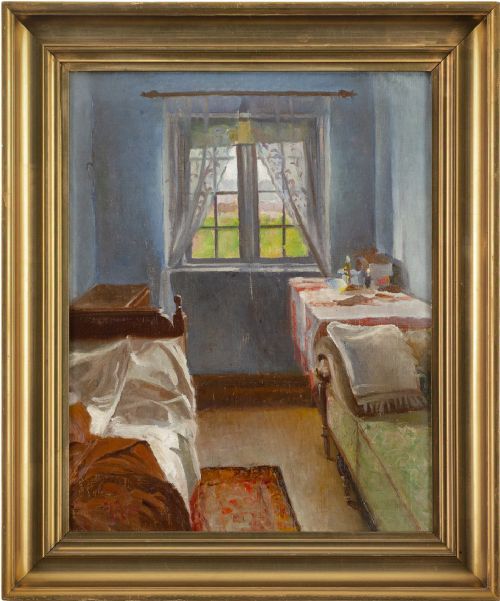
The selections most frequently encountered include nineteenth-century oil paintings on canvas and panel, alongside watercolours and etchings from the Victorian era up to the mid-twentieth century. Subjects range from detailed genre paintings of families and children to Dutch-inspired tavern scenes and sunlit domestic chambers.
Canvas, panel, and pigment
Artists painted primarily with oil or watercolour, applying pigment to stretched canvas, paper, wood panels, or tin. Many works retain their original frames, which incorporate materials such as giltwood, gold leaf, and gesso.
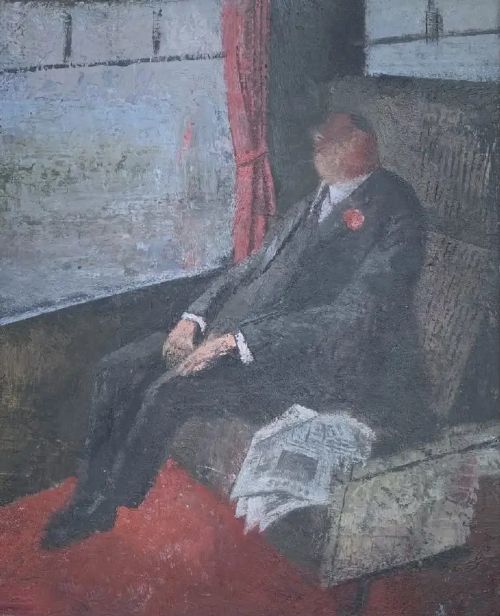
Techniques span academic realism, chiaroscuro lighting effects, and looser intimist brushwork. The support materials dictate the preservation quality, with oil on canvas and oak or tin panels offering different textures and ageing characteristics.
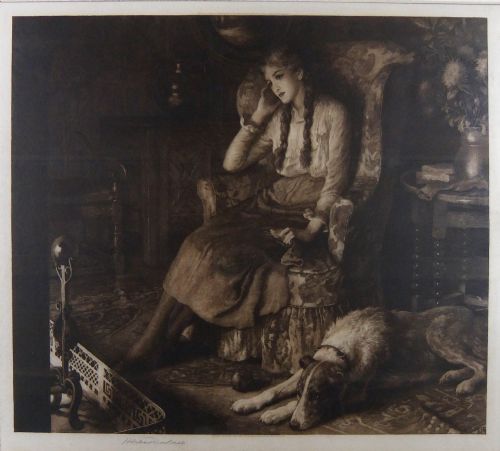
Several canvases record domestic birds and pets, including young ladies feeding pigeons indoors and dogs keeping watch by the hearth.
Brushwork, subject depth, and preservation
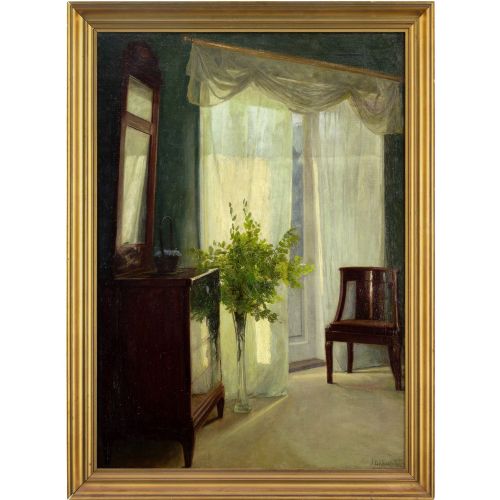
Quality rests upon the skill of the brushwork, the expressiveness of the figures, and the handling of light within the room. Masterly depictions convey texture in fabrics and subtle play of window light, whereas lesser pieces rely on stiff poses and formulaic compositions.
Original condition also defines the upper tier of the range, favouring works with minimal overpainting and stable surfaces housed within period frames.
Henry Stacy Marks·Stephen Samuel Lewin·Henry Silkstone Hopwood·Alfred Lyndon Grace·John Lübschitz·Herbert Dicksee·Max Kaltenmoser·David Teniers·Harry Kluge·Hendrik Valkenberg·Bernard De Hoog·Renato Moretti·Jacob Akkersdijk·James Hayllar·Harry Brooker·George Kilburne·Alexander Rosell·Benjamin Eugene Fichel·Gabriel Puig Roda·Haynes King·James Kyd·Robert Eadie·Robert Alexander Hillingford·George Smith·Edwin Hughes
The Antique Interior Scene Art Glossary
- Genre painting
- A style of art depicting scenes from everyday life, ordinary people, and domestic interiors rather than grand historical or mythological subjects.
- Chiaroscuro
- An artistic technique employing strong contrasts between light and dark to give a three-dimensional volume to figures and interior spaces.
- Gesso
- A plaster-like mixture applied to wood or canvas as a base for painting or moulded to create decorative relief on antique frames.
- Etchings
- Printmaking impressions produced by drawing through an acid-resistant ground applied to a metal plate, which is then etched in acid and printed.
- Giltwood
- Wood that has been treated with a thin layer of gold leaf or gold paint, frequently used for traditional picture frames.
Antique Interior Scene Art: Frequently Asked Questions
What periods do these interior scenes cover?
The available selection spans from seventeenth-century works through eighteenth-century panels and nineteenth-century Victorian pieces, extending into early and mid-twentieth-century examples.
Most items date from the nineteenth century, reflecting the popularity of genre painting and domestic realism during that period.
Are these works original or reproductions?
The inventory consists of original hand-painted works, including oils on canvas, wood, and tin panels, alongside original watercolours, etchings, and period engravings.
Signatures, artist attributions, and period framing indicate that these are authentic historic pieces rather than modern mass-produced copies.
How should I hang and light an interior painting?
These artworks suit traditional living rooms, studies, and hallways where their domestic subject matter complements household furnishings.
Protect them from direct sunlight by using indirect ambient lighting or specialised picture lights to preserve the oil and watercolour pigments.
What subjects appear most often in these artworks?
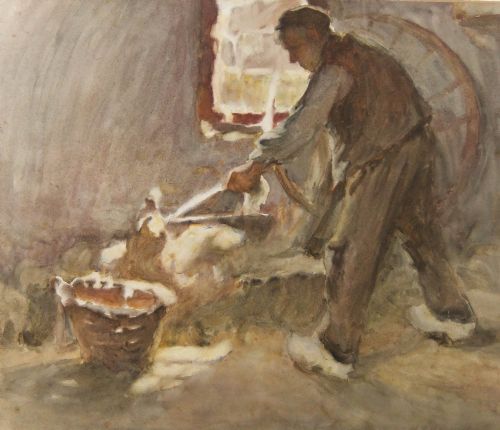
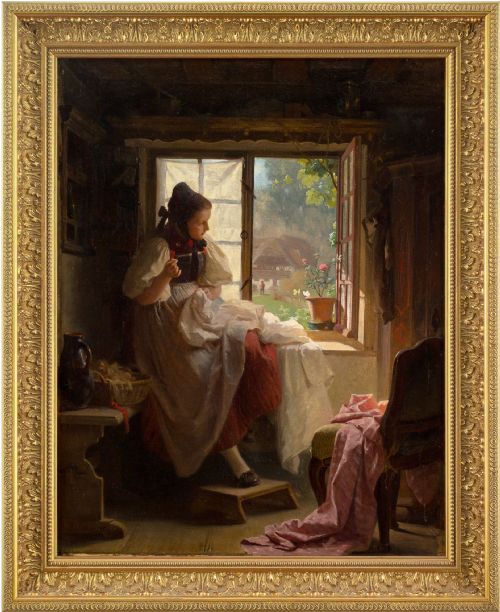
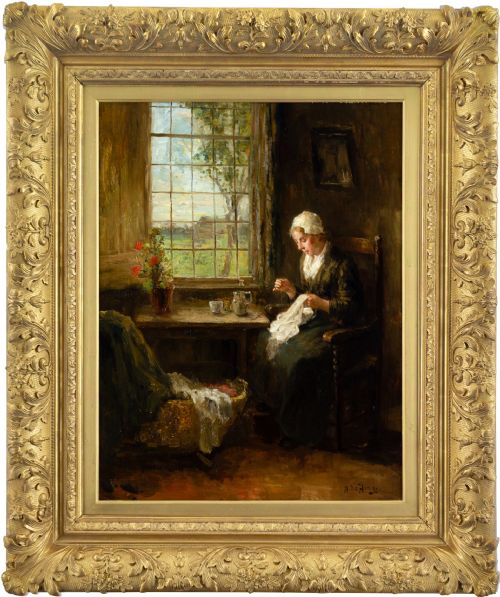
Common subjects include families gathered around dining tables, women sewing near windows, children playing in cottages, and blacksmiths at work.
Artisans also recorded quiet reading hours, tavern scenes with musketeers, and sunlit hallways within historic homes.