




Traditional English House Artwork
Traditional english house artwork captures domestic architecture, rural estates and pastoral scenes through oil paintings and watercolours spanning the eighteenth to the twentieth centuries.
Traditional English House Artwork
Traditional english house artwork brings together centuries of British domestic life, capturing grand country houses, rural cottages and stately interiors on canvas and paper. These pieces range from detailed architectural studies and quiet garden scenes to lively genre paintings set within historic rooms.
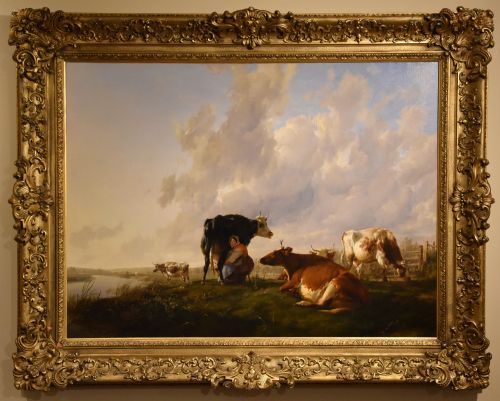
Buyers encounter oil paintings on canvas, board and panel alongside delicate watercolours and hand-coloured engravings. The selection spans the nineteenth century up to the early decades of the twentieth century, reflecting shifting tastes in pastoral and domestic subject matter.
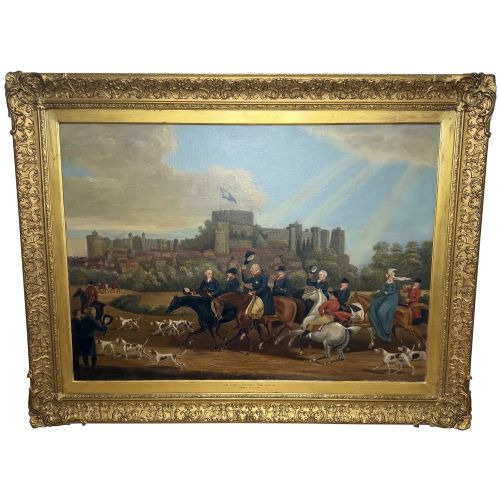
Many works incorporate local landscapes, farmyards and sporting pursuits framing the domestic dwelling. The overarching focus remains on the English property, whether depicted as an imposing rural seat or a modest village home.
Materials and Techniques
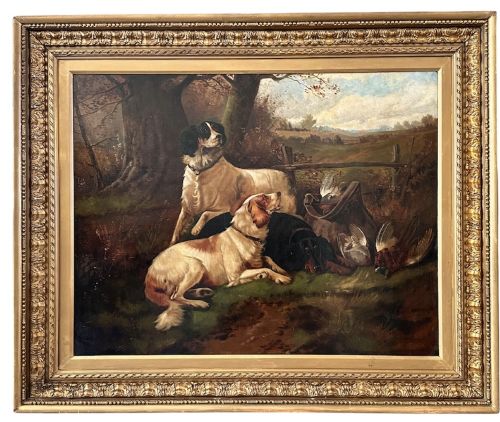
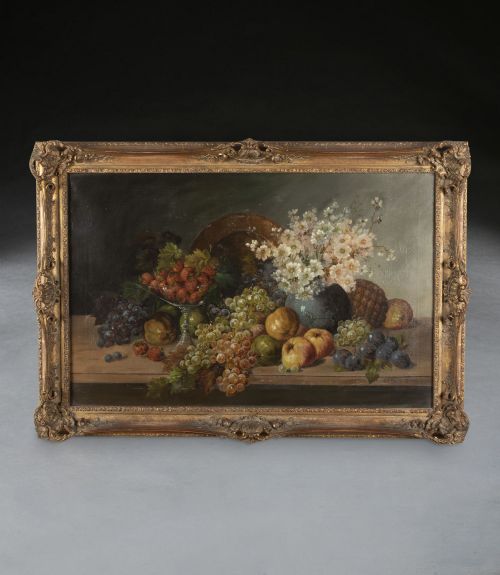
Oil on canvas forms the predominant medium for these works, allowing artists to build rich textures and deep colour tones across large surfaces. Painters also utilised wood panels and paper boards for smaller interior scenes and architectural studies.
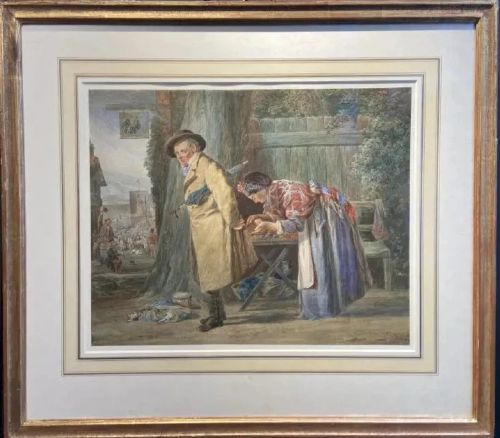
Watercolour and ink on paper appear frequently in depictions of village houses and country gardens, capturing lighter atmospheric effects. Original framing often involves giltwood and gold leaf mouldings that complement the palette of the period.
Listings feature oil on canvas, wood, paper and giltwood spanning the eighteenth to twentieth centuries.
Quality Variations
Quality rests upon the artist's command of perspective, light and naturalistic detail within the architectural and landscape elements. Stronger examples display confident brushwork and a balanced composition that anchors the house securely within its setting.
The sophistication of the surface preservation dictates much of the visual impact, particularly in oil paintings where craquelure and pigment stability matter. Superior framing and intact original supports also distinguish the finer items in this group.
Thomas Sidney Cooper·Joseph H Barnes·John Arthur Lomax·Charles Haigh Wood·Colin Graeme Roe
The Traditional English House Artwork Glossary
- Oil on Canvas
- Pigment mixed with drying oil applied to a woven fabric stretched across a wooden frame. This method allows for subtle blending and rich tonal depth.
- Watercolour
- A paint consisting of soluble pigment suspended in a water-based solution, typically applied to paper. It yields translucent washes well suited to architectural studies.
- Giltwood
- Wood carved and coated with a thin layer of gold leaf or metallic powder. It provides ornamental framing for nineteenth-century canvases.
- Genre Painting
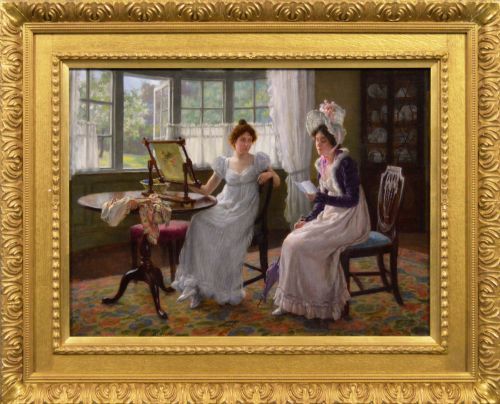
- Artwork depicting scenes from everyday life, including domestic interiors and rural cottage activities. These works focus on human narratives within recognizable settings.
- Lithograph
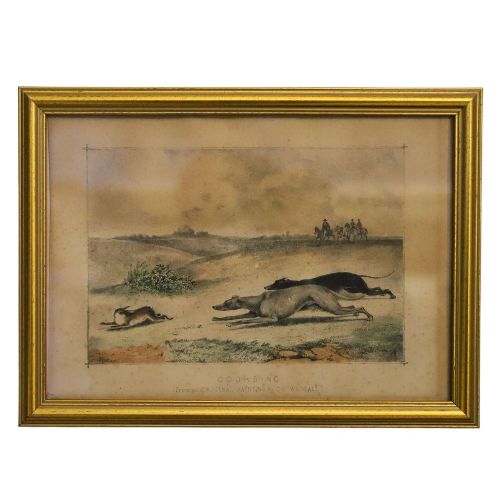
- A print produced from a flat stone or metal plate treated to retain ink in designated areas. It was commonly used for reproductive prints of rural sports and houses.
Traditional English House Artwork: Frequently Asked Questions
What periods do these artworks cover?
The collection spans work from the early eighteenth century through to the 1940s, with a strong concentration of nineteenth-century Victorian pieces.
Items range from Georgian topographical views to early twentieth-century pastoral watercolours and interior studies.
How should I hang oil paintings?
Hang these canvases away from direct sunlight and damp conditions to protect both the paint layer and the wood stretching frames.
Ensure wall fixings match the weight of the giltwood or wooden frames to secure the artwork safely.
Are watercolours framed under glass?
Watercolours and works on paper require protective glass to shield the delicate pigments from atmospheric moisture and dust.
Keep these pieces in rooms with stable humidity to prevent the paper from warping over time.
What subjects appear besides houses?
Many house artworks incorporate surrounding elements such as walled gardens, farmyards, sporting dogs and horses.
Other compositions feature local villagers, domestic interiors and nearby rural landscapes completing the historical setting.