



Regency Scene Painting
A regency scene painting captures figures and landscapes in oil or watercolour from the early nineteenth century.
Regency Scene Painting
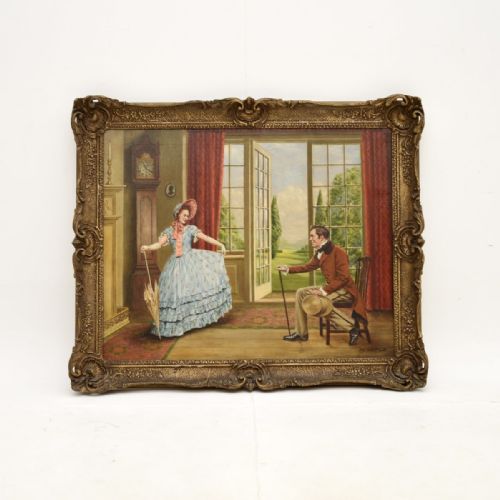
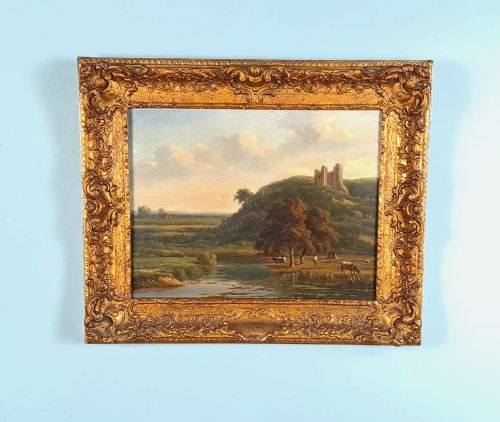
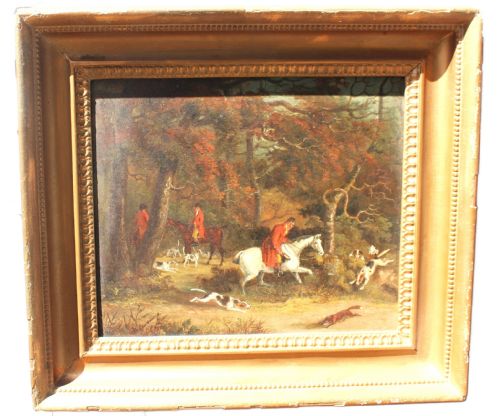
A regency scene painting comprises works on canvas, wood panel and paper depicting architectural interiors, coastal views and sporting subjects. These pieces span the Georgian, Regency and Victorian periods, often emerging from British pastoral and naive traditions.
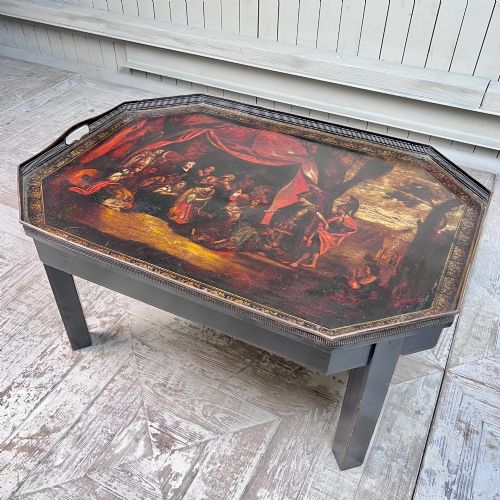
Buyers encounter oil paintings and watercolours alongside decorated objects such as toleware trays, porcelain mugs and papier-mâché boxes bearing painted vignettes. The variety extends from intimate domestic interiors to expansive flatland landscapes and military combat scenes.
The aesthetic bridges neoclassical composition and English genre painting, reflecting the visual culture of the early 1800s. Works range from accomplished oils by named artists to naive watercolours by unknown hands.
How They Were Made
Artists painted primarily with oil on canvas or wood panel, or applied watercolour and ink onto prepared paper surfaces. Canvasses were stretched over wooden frames, whilst panels provided a rigid ground for detailed brushwork.
Decorative items incorporated materials such as papier-mâché, tole and porcelain, finished with painted pigments and protective varnishes. Gilt and gesso often ornamented the frames and moulded surfaces that house these artworks.
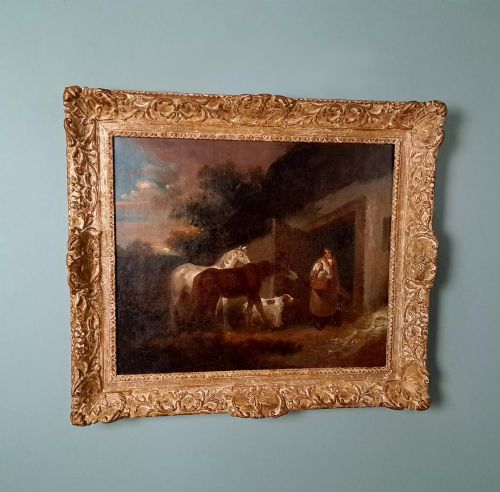
Dogs make frequent appearances in these scenes, sharing domestic warmth and field sports with their human companions.
What Varies in Quality
Execution of detail and handling of perspective separate standard works from superior examples. Masterly brushwork in figures and animals reveals the distinct capability of the painter.
The survival of original surface coatings, unaltered pigments and period frames contributes significantly to the integrity of each piece. Works demonstrating clear provenance or attribution to recognised schools hold distinct visual and historical weight.
William Joseph Shayer Senior·Alfred Lyndon Grace·T C Hofland·George Kilburne·Rolinda Sharples·William Collins·Samuel John Egbert Jones·Dean Wolstenholme·Jennens and Bettridge
The Regency Scene Painting Glossary
- Tole
- Painted or enamelled sheet metal used for trays and decorative objects. It provides a smooth dark ground for detailed painted scenes.
- Chrystoleum
- A Victorian method of applying a coloured print to convex glass and oiling it to make the paper translucent. The back is then hand-painted in oils or watercolours.
- Naive Art
- Artwork created by artists without formal academic training. It typically displays a charming disregard for conventional perspective and proportion.
- Penwork
- The technique of applying fine ink lines to decorated boxes and furniture surfaces. It often precedes or combines with painted washes.
- Watercolour
- A paint consisting of water-soluble pigments applied to paper. It yields translucent washes that capture light effectively.
Regency Scene Painting: Frequently Asked Questions
What subjects appear in these paintings?
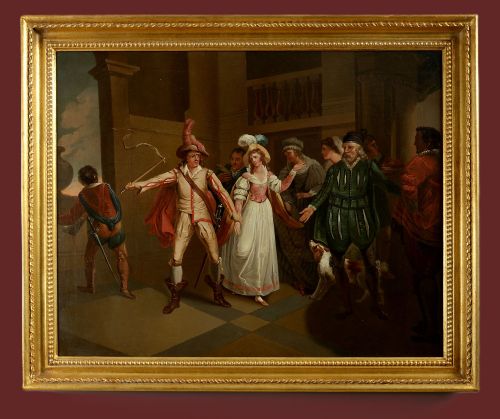
These works depict architectural interiors, coastal landscapes, hunting pursuits, military engagements and classical narratives. Figures range from rural sportsmen to ladies in domestic settings.
Scenes often reflect British pastoral life and topographical views from the early nineteenth century.
How do I hang a watercolour safely?
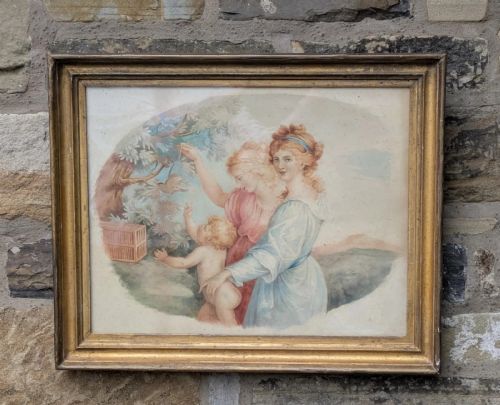
Watercolours require protection from direct sunlight to prevent the pigments and paper from fading over time. Glazing with conservation glass helps shield the delicate washes.
Keep them away from damp walls and fluctuating temperatures to preserve the paper and mounting materials.
Are these works always on canvas?
Artists used multiple supports including stretched canvas, wooden panels and thick paper sheets. Decorative pieces also feature painted surfaces on papier-mâché, metal trays and porcelain.
Each material dictates the specific handling and preservation requirements for the object.
How can I tell a Regency piece from a Victorian one?
Stylistic cues such as costume, framing and palette help distinguish between periods. Regency works lean towards neoclassical restraint and specific British pastoral tones.
Victorian pieces often introduce richer, denser pigments and more sentimental domestic narratives.