

Antique Inlaid Glass Credenza
An antique inlaid glass credenza brings nineteenth-century drawing-room presence and disciplined timberwork into a modern interior.
Antique Inlaid Glass Credenza
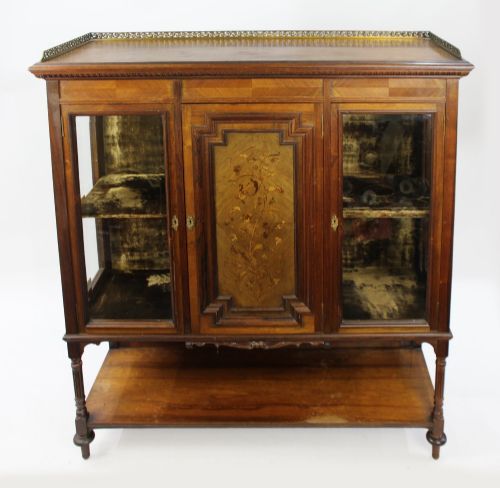
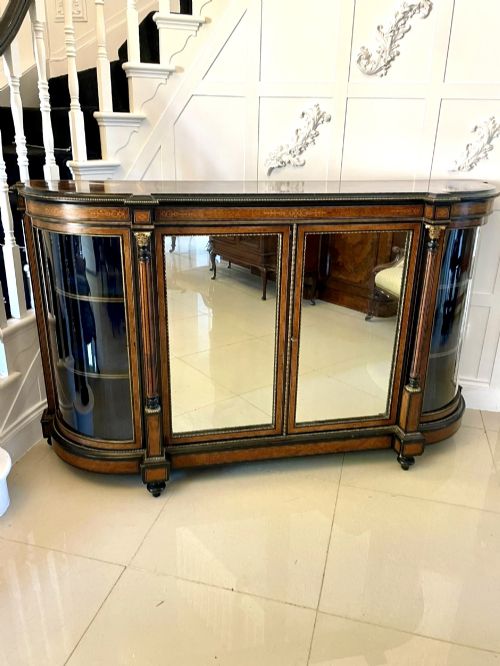
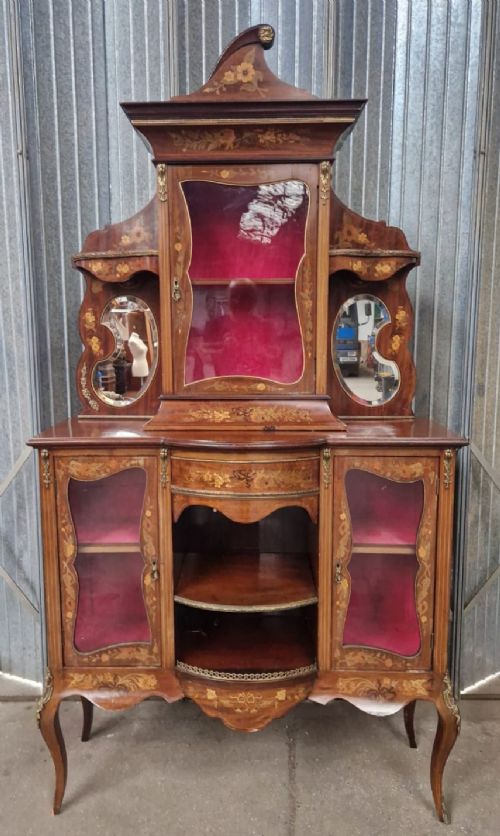
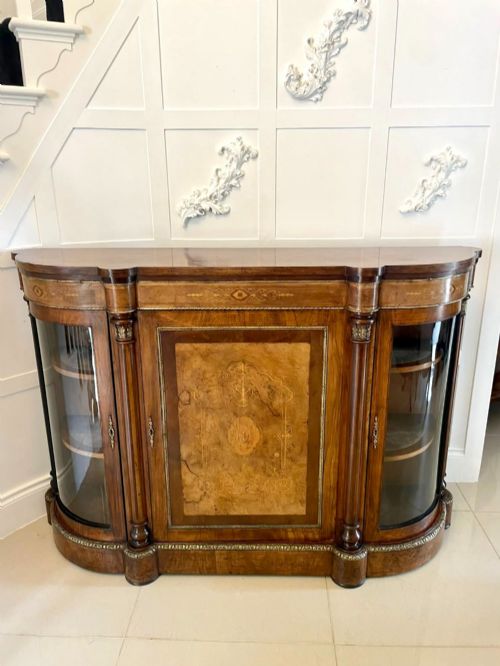
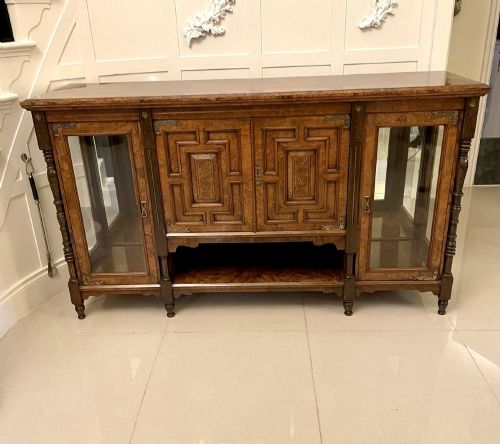
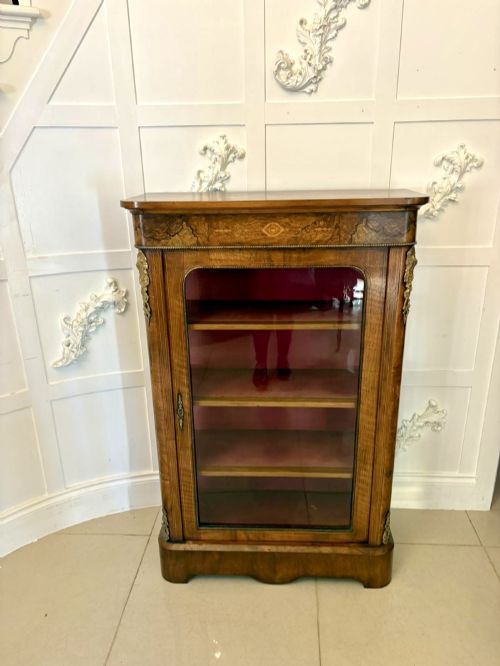
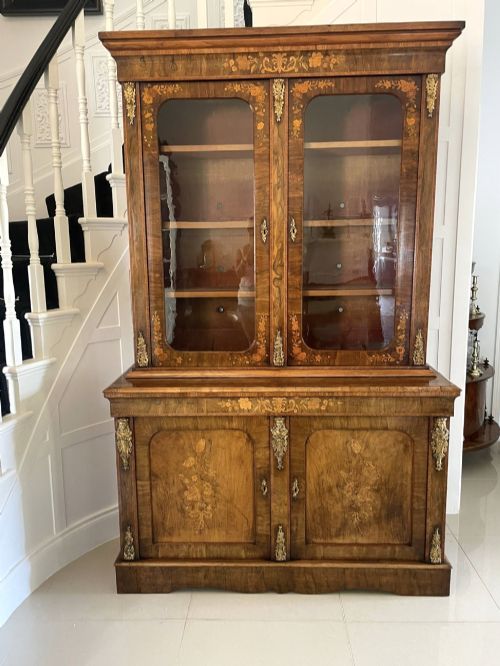
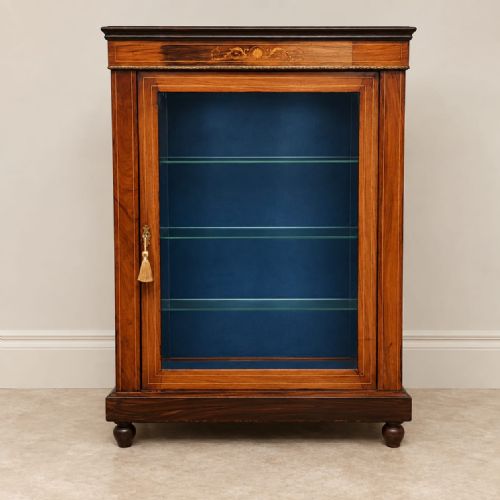
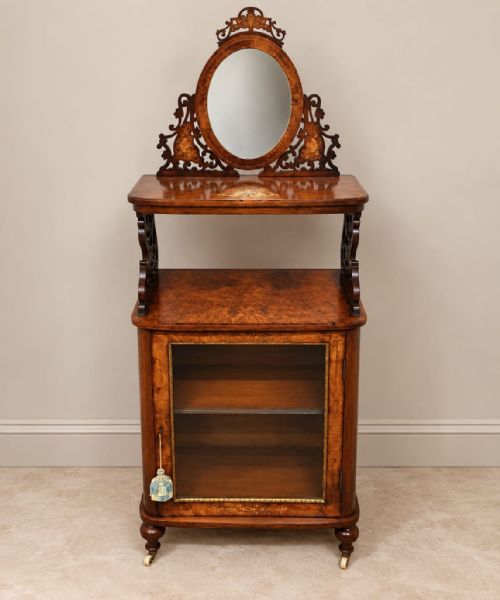
The search phrase antique inlaid glass credenza encompasses low display cabinets, pier units and multi-door sideboards originating primarily in the Victorian period. These pieces serve as principal furnishing elements designed to combine surface display with glazed storage for valued objects.
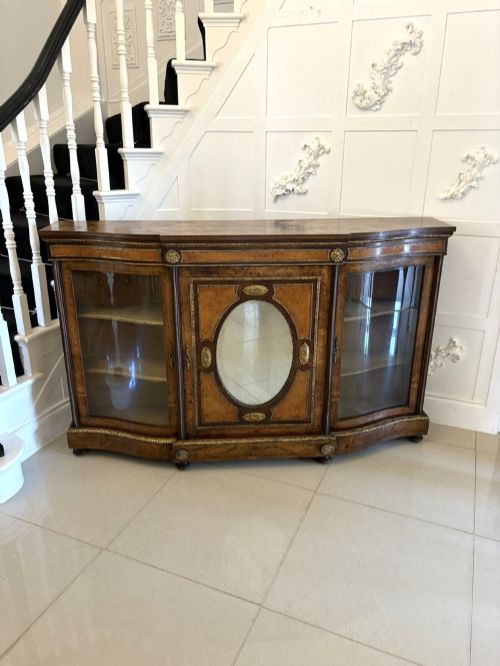
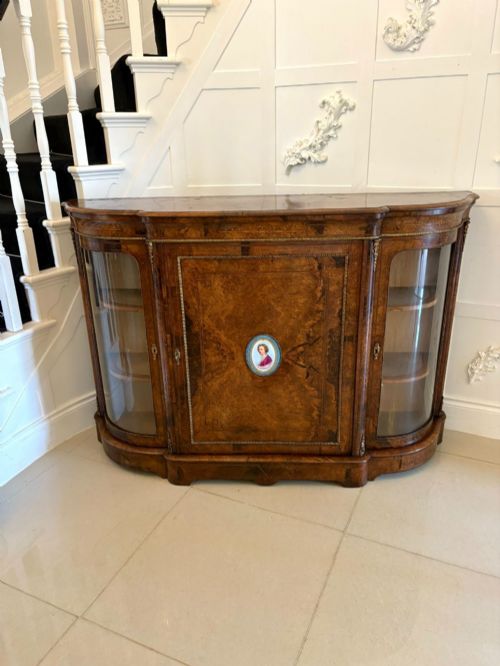
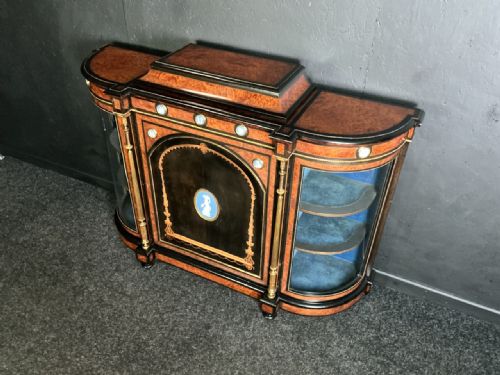
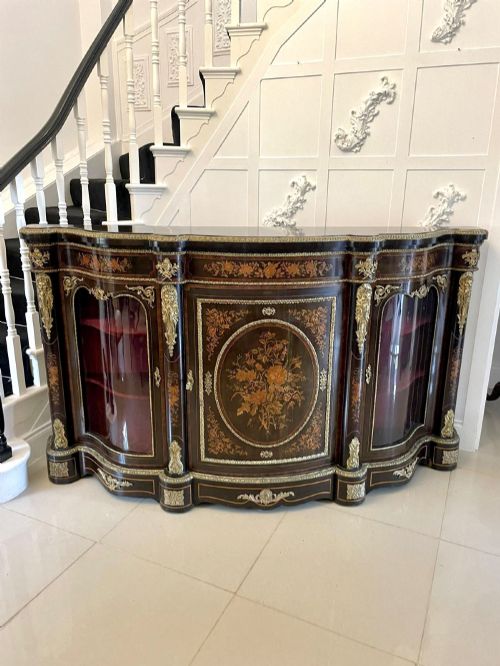
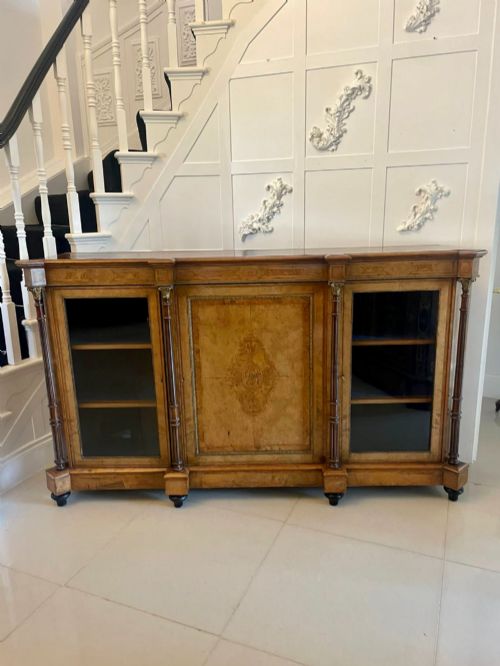
Victorian examples in burr walnut dominate the selection, frequently paired with glazed side doors and central curved compartments. Makers combined these carcases with marquetry panels, satinwood stringing and contrasting boxwood inlay.
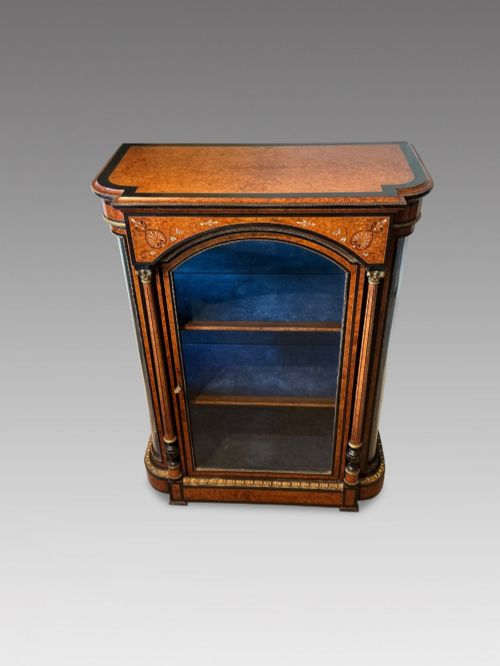
Forms extend beyond standard credenzas to include side cabinets and breakfront bookcases originating from the Georgian era through to Edwardian Sheraton Revival revivals. Each iteration retains the characteristic low profile and glazed display function central to the form.
Materials and construction
Construction relies on timber foundations of walnut, mahogany, and rosewood, frequently faced with burr walnut veneers selected for figured grain patterns. Ebonised finishes and amboyna woods appear alongside inlaid boxwood and floral marquetry.
Ormolu mounts, gilt-bronze accents and brass framing highlight the structural contours of serpentine and breakfront carcases. Glass panels enclose the central or side display sections, secured within timber frames.
One recorded maker worked in satinwood while French artisans cast ormolu mounts for serpentine walnut cabinets.
Evaluating craftsmanship and detail
Quality rests in the precision of the marquetry, the uniformity of the timber figuring, and the integration of ormolu mounts. The complexity of the serpentine shaping and the depth of the cabinetwork distinguish finer examples from standard production.
The choice of secondary timbers, the crispness of the boxwood inlay, and the retention of original glazed doors and brass hardware define the grade of the finished piece.
Maison Gagneau·James Hicks
The Antique Inlaid Glass Credenza Glossary
- Marquetry
- Decorative veneer work forming pictorial or geometric patterns using various coloured woods. Craftsmen applied this technique extensively on Victorian walnut carcases.
- Ormolu
- Gilded bronze mounts applied to furniture for decorative enrichment. These mounts accentuate the architectural lines of nineteenth-century credenzas.
- Burr Walnut
- Timber taken from the warted growths of walnut trees, prized for swirling grain patterns. It forms the primary veneer surface on many period credenzas.
- Pier Cabinet
- A narrow display cabinet designed to stand against the wall space between windows. These pieces share the glass-fronted display characteristics of larger credenzas.
Antique Inlaid Glass Credenza: Frequently Asked Questions
What rooms suit an antique inlaid glass credenza?
These low cabinets fit living rooms, dining spaces and wide hallways where wall space accommodates a horizontal footprint.
The glazed sections provide enclosed display for ceramics and glass while the top surface holds lamps or decorative objects.
How do I distinguish a Victorian credenza from an Edwardian one?
Victorian examples rely heavily on burr walnut, heavy ormolu mounts and dense floral marquetry.
Edwardian pieces, particularly those in the Sheraton Revival style, utilise lighter satinwood timbers and more restrained linear stringing.
Were these cabinets used for dining rooms?
Victorian households positioned credenzas primarily in drawing rooms and reception rooms rather than dining spaces.
Their primary function involved displaying ornamental porcelain and hosting lamps rather than serving food.
What timber types appear most frequently?
Walnut and burr walnut dominate the selection, accompanied by mahogany, rosewood and ebonised finishes.
Inlay work incorporates boxwood and satinwood to create contrast against the darker carcase woods.