
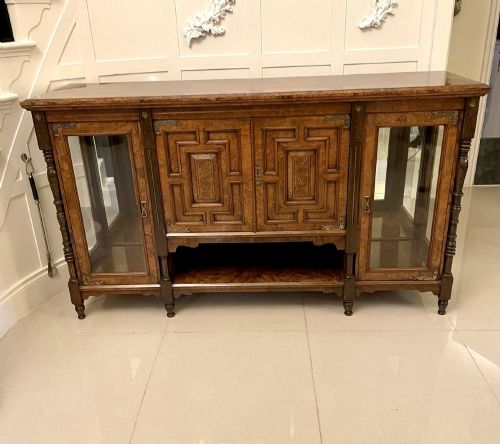
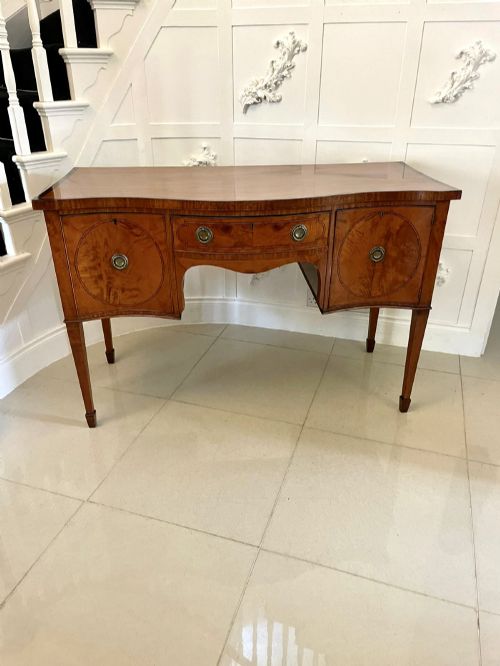
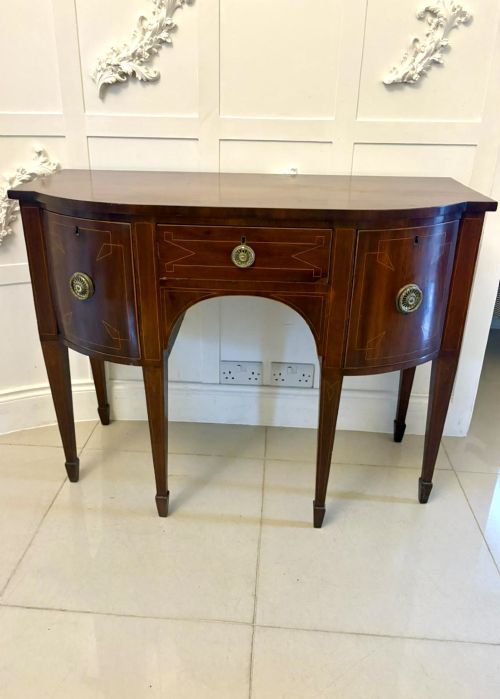
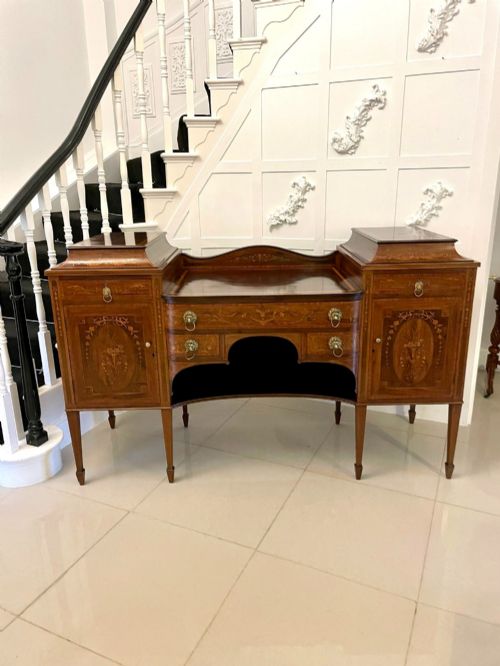
Antique Inlaid Dining Buffet
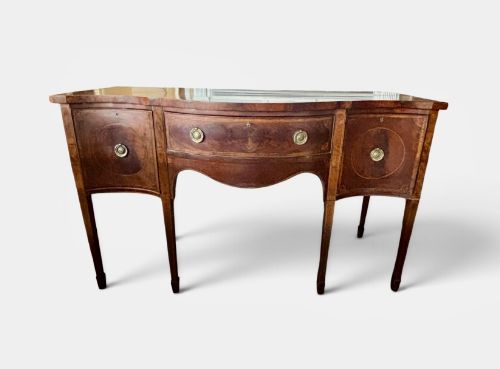
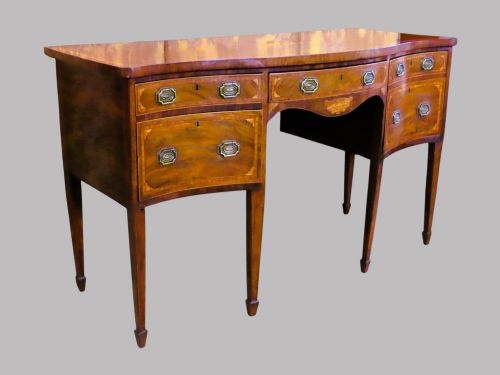
An antique inlaid dining buffet brings monumental timber and delicate decorative contrast into a dining room.
Antique Inlaid Dining Buffet
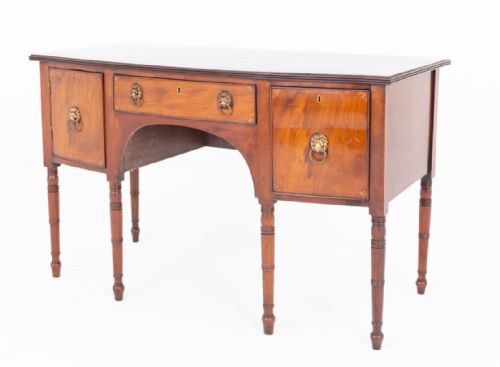
When you search for an antique inlaid dining buffet, you are looking at substantial case furniture designed to store dining silver and linens while serving food. The pieces you meet most often on this page take the form of sideboards, credenzas and serving tables originating from the Georgian, Regency and Victorian periods.
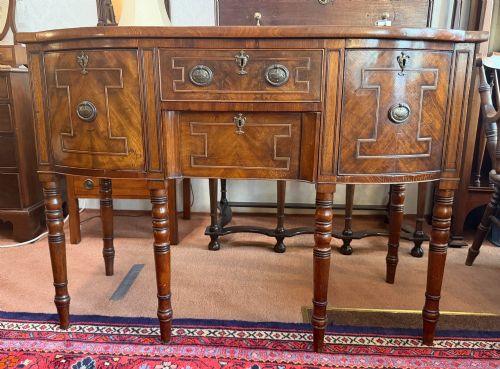
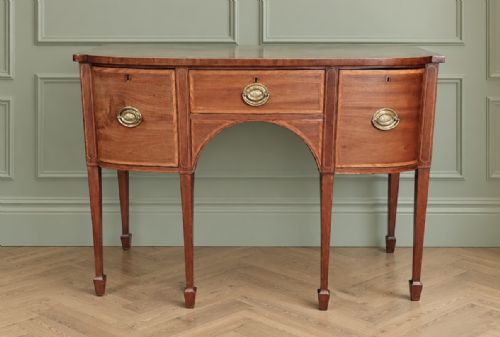
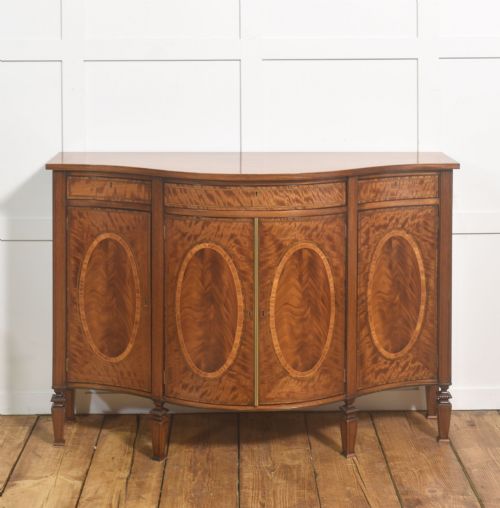
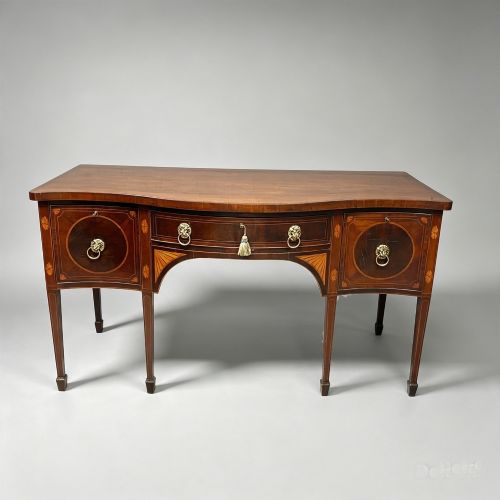
The selection ranges from George III mahogany serpentine designs to Edwardian satinwood pieces and later Sheraton Revival interpretations. Alongside standard straight fronts, you will encounter bow-fronted and breakfront silhouettes intended to create presence in a formal dining space.
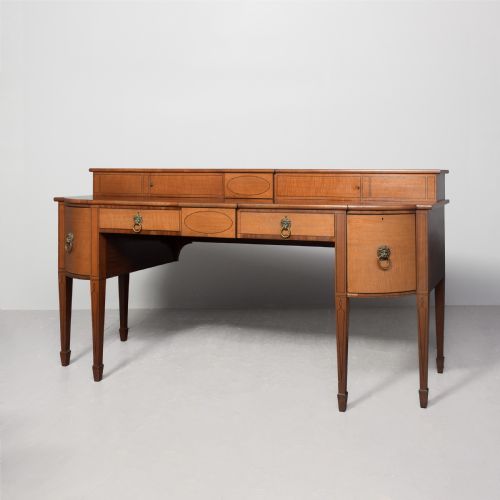
Makers and workshops constructed these items primarily for elite dining rooms, utilising ample proportions alongside smaller scaled formats like stage-back sideboards and pedestal variations. The inclusion of subtle stringing, crossbanding or pictorial marquetry marks them out from plain utility furniture.
Materials and construction methods
Cabinet makers built the primary carcases of these buffets using dense hardwoods such as mahogany and burr walnut, frequently selecting flame veneers to create dramatic grain patterns across the front drawers and doors. Timber preparation required careful seasoning to prevent warping across wide serpentine and bow-front surfaces.
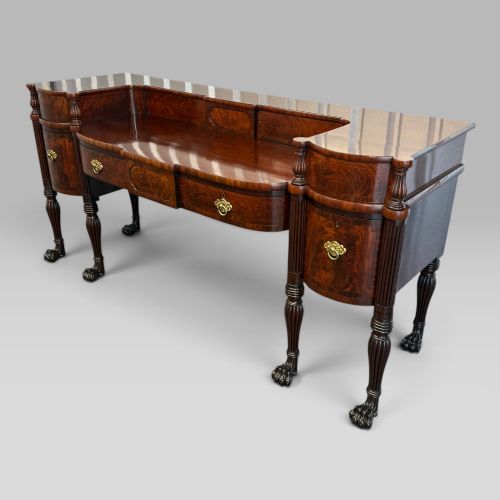
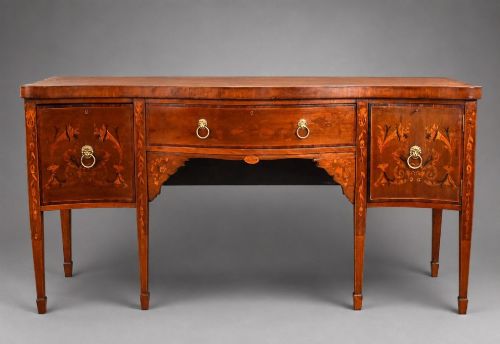
Contrasting timbers like satinwood, boxwood and ebony supplied the material for fine stringing, banding and geometric or floral marquetry motifs set flush into the primary surface. Brass handles, escutcheons and occasionally lion paw feet provided functional and decorative accents to the lower sections.
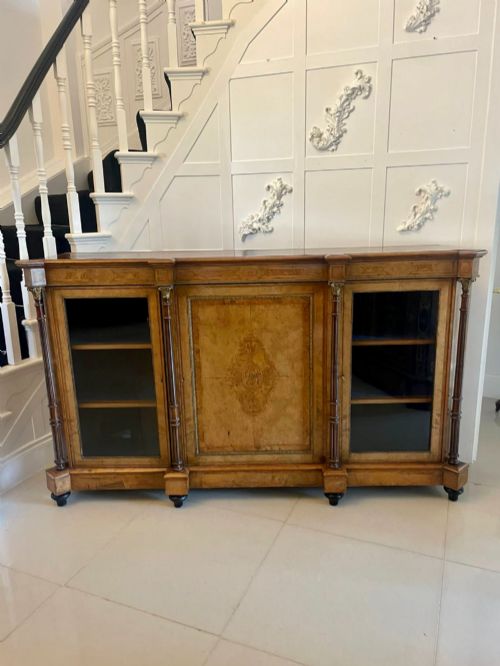
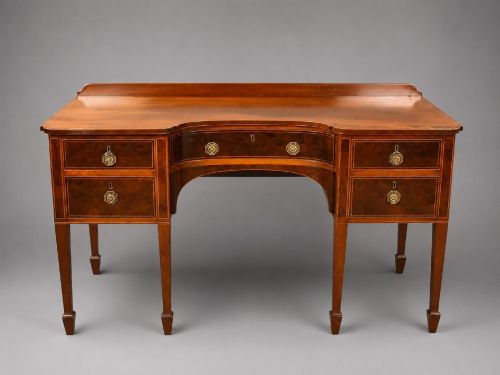
Forms span simple bow-front sideboards, stage-back servers and elaborate Victorian credenzas fitted with glass doors and marquetry panels.
Distinctions in construction and design
The division between standard workshop production and superior output rests in the choice of timber figure and the precision of the cabinetwork. Pieces utilising highly figured flame mahogany or intricate satinwood marquetry require advanced skill to execute without lifting or gapping along the curves.
Structural integrity also separates the range, visible in the careful matching of grain across drawer fronts and the stability of serpentine or breakfront profiles. Secondary timbers used inside drawers and backboards further indicate the workshop standard behind the piece.
Hewetsons London
The Antique Inlaid Dining Buffet Glossary
- Serpentine
- A front contour that curves outward in the centre and inward towards the sides. This shape demands precise woodworking to ensure the drawers operate smoothly within the undulating frame.
- Crossbanding
- A narrow strip of veneer laid around the border of a drawer front or tabletop with the grain running perpendicular to the centre panel. This technique frames the primary timber and adds visual contrast.
- Marquetry
- Formed by fitting together small pieces of different coloured wood veneers to create pictorial or geometric designs. It differs from inlay by covering the entire surface rather than resting inside routed channels.
- Stringing
- Thin lines of contrasting timber inlaid into shallow grooves across a drawer or tabletop. It creates delicate geometric borders that define the structural panels.
- Pedestal sideboard
- A form featuring two independent pedestals flanking a central serving table or recess. These large Georgian configurations often house storage cupboards or plate warmers within the pedestals.
Antique Inlaid Dining Buffet: Frequently Asked Questions
How do I style a buffet in a modern dining room?
Pair the rich timber tones and inlaid details with clean walls and simple tableware to let the historic craftsmanship stand out. Position the buffet against a primary dining room wall where it can serve its original function as a surface for serving dishes.
Ensure adequate clearance around bow-front or serpentine profiles so the curved drawers can open fully. The deep surfaces also provide a practical platform for lamps, trays and glassware during dinner parties.
What is the difference between a sideboard and a credenza?
Sideboards typically feature a configuration of drawers and cupboards raised on legs, designed specifically for dining room service. Credenzas historically sat lower to the ground on enclosed bases, though the terms overlap frequently in Victorian furniture.
Review the internal compartments and surface heights to determine which form suits your dining space. Both types offer substantial enclosed storage for linens and dining accessories.
How do I care for antique mahogany and satinwood?
Protect the polished surfaces from direct sunlight and excessive heat fluctuations to prevent the delicate veneers and boxwood stringing from drying out. Apply a quality beeswax periodically and buff gently with a soft cloth to maintain the timber lustre.
Avoid placing wet glasses or uninsulated serving dishes directly onto the wood. Use coasters and mats to preserve the historic finish against moisture rings.
How do I tell a Georgian buffet from a Victorian revival piece?
Examine the secondary timbers inside the drawers and the construction methods used for the internal framing. Georgian pieces often display hand-cut dovetails and native oak or pine linings, whereas later revival items from the Victorian and Edwardian eras show machine assistance.
Look closely at the style of inlay and the sharpness of the carving. Revival pieces frequently combine Sheraton vocabulary with heavier Victorian proportions or distinctively brighter satinwood contrasts.