
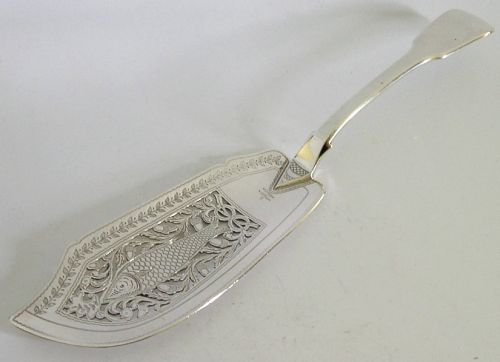
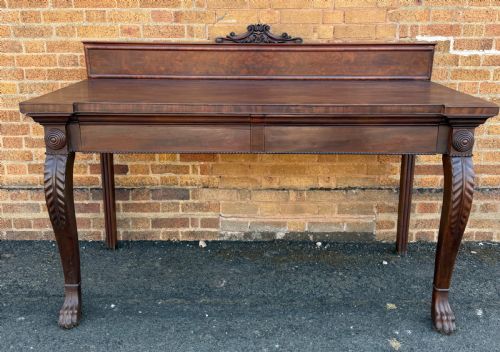
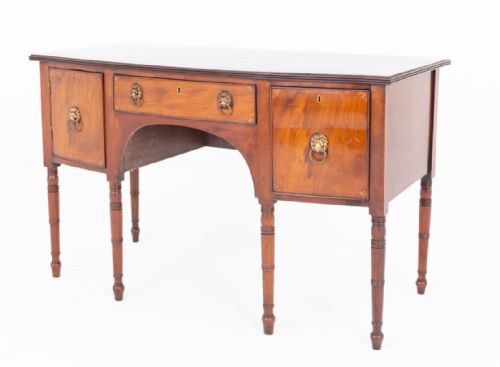


Regency Period Dining Server
These pieces of furniture built for dining rooms are regency period dining servers that anchor a room with functional elegance and rich timber grain.
Regency Period Dining Server
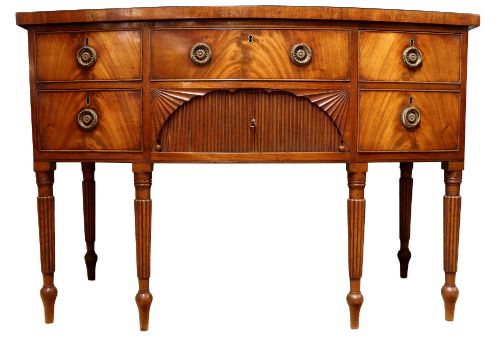
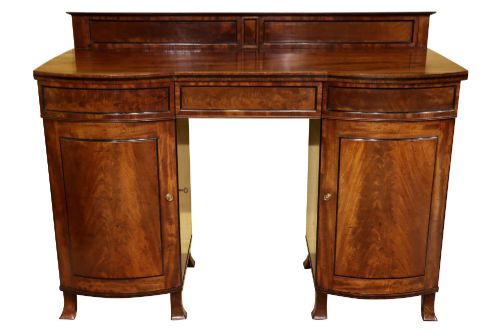
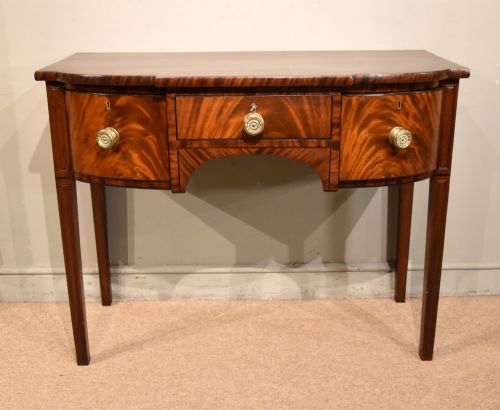
A regency period dining server brings formal presence to the dining room through substantial proportion and refined cabinet work. When searching for a regency period dining server, buyers most frequently encounter bow fronted sideboards, pedestal sideboards, and serving tables in solid and veneered timber.
The selection ranges from simple bow front sideboards to grand pedestal formats and low chiffoniers with brass galleries. Makers also produced serving tables and buffets designed specifically for formal dining organisation.
Originating primarily within the Regency, George IV, and William IV eras, these items reflect the architectural tastes of the early nineteenth century. Occasional examples bear the distinct characteristics of Irish design workshops.
Assessing craftsmanship and proportion
Quality rests upon the selection of timber veneers and the precision of the cabinet joinery. Pieces featuring symmetrical flame mahogany and crisp brass inlay stand apart from simpler iterations.
Proportion and scale dictate the visual weight of the server within a room. Strong architectural lines and undisturbed surface patination distinguish the finest examples from standard production.
Some servers include specialised compartments designed to keep wine bottles cool during long nineteenth-century banquets.
Gillows·Mack Williams And Gibton
The Regency Period Dining Server Glossary
- Sideboard
- A large dining room furniture piece equipped with drawers and cupboards for storing tableware. They evolved significantly during the Georgian and Regency periods into architectural centerpieces.
- Flame mahogany
- A highly figured wood veneer cut from the branch junction of the mahogany tree. It creates a distinctive, swirling flame-like pattern across large surfaces.
- Chiffonier
- A compact sideboard or cabinet featuring shelves or a raised gallery. They appeared frequently in Regency interiors for serving and display.
- Pedestal sideboard
- A sideboard style where central drawer sections are flanked by distinct pedestal cupboards. These heavy pieces often feature carved details or brass mounts.
- Boxwood
- A dense, pale wood used for contrasting stringing and geometric inlay. Craftsmen set it into dark mahogany surfaces to define panels and borders.
Regency Period Dining Server: Frequently Asked Questions
What is a regency period dining server used for?
These servers provide essential surface area for plating food and storing dining accessories during meals.
Cupboards and drawers built into the frame keep linen, cutlery, and serving dishes close at hand.
How do you identify a regency dining server?
Look for architectural proportions, classical motifs, and characteristic timber choices like flame mahogany and rosewood.
Details such as brass inlay, bow fronts, and pedestal bases typically point toward the early nineteenth century.
Where were these servers placed?
They stood against the main dining room wall to support formal dining service.
Larger pedestal and twin pedestal formats required substantial space to display their full design.
What woods appear on these servers?
Mahogany and flame mahogany dominate the exteriors, often enhanced by rosewood and satinwood veneers.
Internal framing typically utilises oak, while boxwood and brass provide decorative contrast.