


Antique Inlaid Console Cabinet
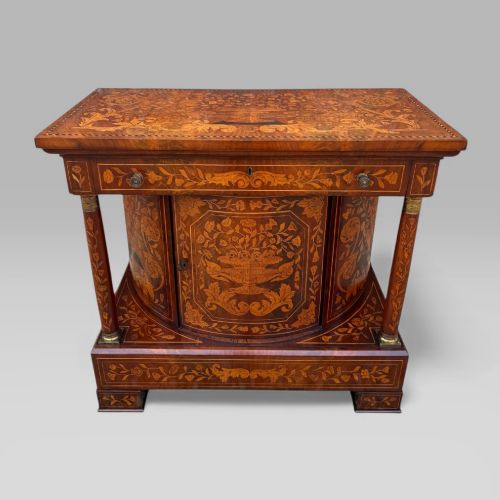
An antique inlaid console cabinet brings refined timber and intricate marquetry together, offering a surface for display alongside concealed storage for formal rooms.
Antique Inlaid Console Cabinet
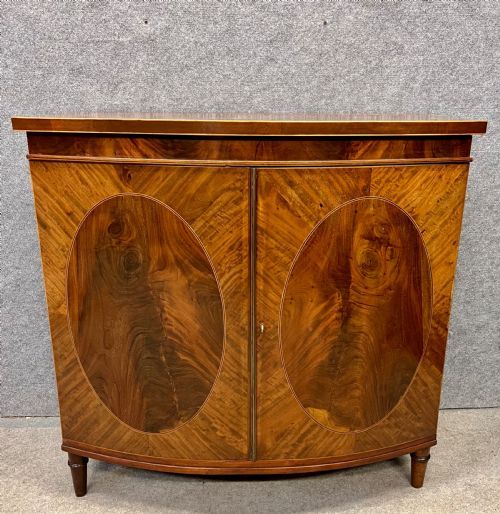
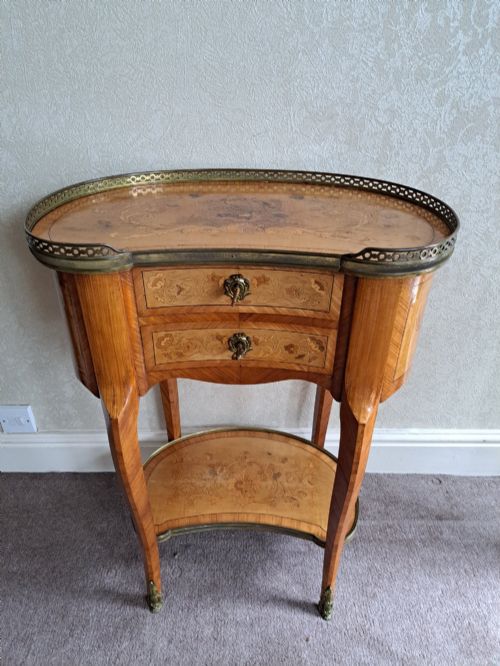
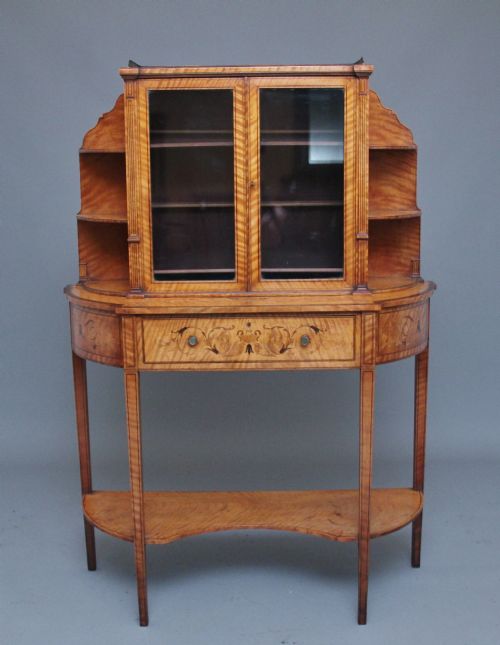
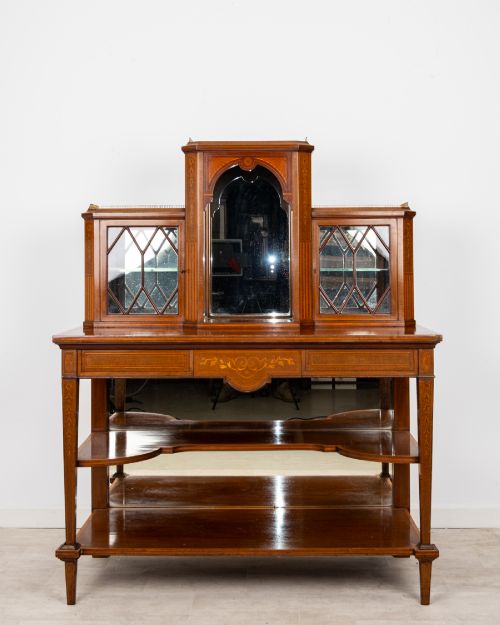
When you search for an antique inlaid console cabinet, you are looking at sophisticated wall-anchored or semi-circular furniture designed to sit neatly against a drawing room or hallway perimeter. These pieces combine the supportive function of a table with the enclosed practicality of a small cupboard, often following classic architectural proportions.
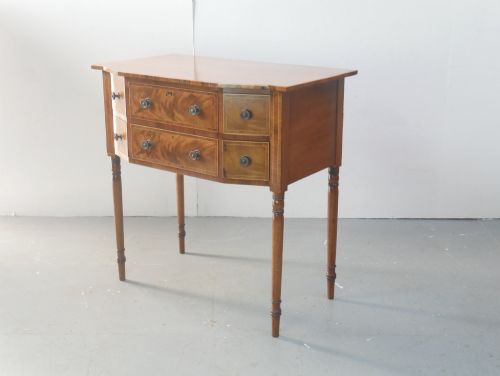
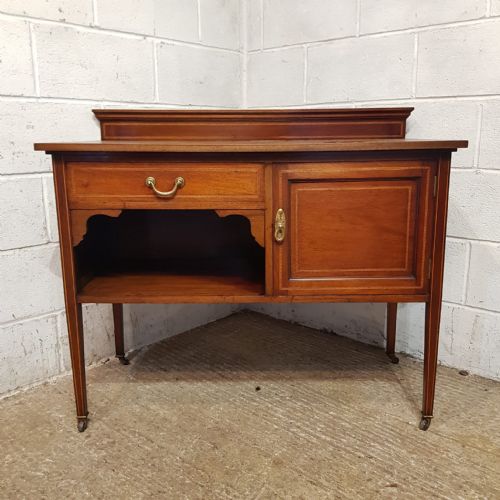
The versions you meet most frequently on this page date from the Edwardian era and the nineteenth century, drawing heavily on eighteenth-century Sheraton and Louis XVI design vocabularies. They appear in forms such as demi-lune commodes, bow-front side cabinets, and architectural wall tables featuring delicate parquetry and contrasting wood details.
Makers fashioned these cabinets to catch the eye in reception spaces, balancing decorative marquetry panels with functional internal shelving. The profile typically curves outward in a half-circle or sweeps across a gentle bow front, designed to soften the rigid angles of a traditional interior.
Assessing craftsmanship and execution
Quality rests in the crispness of the marquetry cutting and the seamless integration of contrasting timbers across curved surfaces. Finer examples show meticulous attention to grain direction, ensuring that satinwood and mahogany veneers catch the light evenly without buckling or lifting.
The sophistication of the internal joinery and the weight of the applied brass mounts separate standard production from exhibition pieces. Superior cabinets maintain structural stability within their curved demi-lune frames, keeping doors aligned smoothly against tambour tracks or rebated door stops.
Several items double as games and drinks tables, proving that ancestors enjoyed a quiet tipple while plotting board moves.
Pietro Ferrario
The Antique Inlaid Console Cabinet Glossary
- Demi-lune
- A half-moon shape used frequently for console tables and small cabinets designed to stand flush against a wall. This profile became particularly popular during the Sheraton and Louis XVI revivals.
- Marquetry
- The art of applying pieces of veneer to a structural structure to form decorative patterns and pictorial scenes. Craftsmen utilise diverse coloured woods to achieve tonal depth.
- Parquetry
- A geometric mosaic of wood pieces used for covering floors or furniture surfaces. It creates repeating patterns like cubes or herringbone across table tops.
- Satinwood
- A luminous hardwood prized for its golden sheen and smooth texture, frequently employed as a primary veneer in fine eighteenth and nineteenth-century pieces.
- Stringing
- Thin strips of contrasting wood inlaid into channels cut into the surface of a cabinet. It serves to outline panels, drawers, and tabletops with delicate precision.
Antique Inlaid Console Cabinet: Frequently Asked Questions
Where should I place an antique inlaid console cabinet?
These cabinets work best in entrance halls, formal living rooms, or dining spaces where their decorative fronts remain visible. Because many feature a flat back designed to sit against a wall, they occupy minimal floor space while offering surface area for lamps and objects.
Their curved demi-lune and bow-front shapes help soften long corridors or square rooms by introducing organic, sweeping lines to the interior layout.
How do I distinguish Edwardian revival pieces from 18th-century originals?
Examination of the secondary woods, such as pine or oak used inside drawer linings, often reveals the manufacturing period. Edwardian and later revival pieces typically display machine-sawn timber elements and brighter, more uniform satinwood veneers.
Eighteenth-century examples tend to show hand-cut joinery marks and deeper patination acquired through centuries of wax polishing. The style vocabulary of the inlay work also reflects the tastes of the specific revival decades.
What is the difference between a console table and a console cabinet?
A console table provides an open framework with legs supporting a surface top, designed primarily for display against a wall. A console cabinet incorporates enclosed storage space behind doors, combining table utility with a small cupboard.
Both share the flat rear edge necessary for wall placement, but the cabinet variant offers concealed shelving for glassware, papers, or small collections.
How should I care for antique wood inlay?
Keep inlaid furniture away from direct sunlight and heat sources to prevent the delicate veneer from drying out and lifting. Regular application of a traditional beeswax polish maintains the moisture and shine of the satinwood and mahogany surfaces.
Avoid using modern liquid sprays containing silicone, as they can penetrate hairline cracks in the old varnish and damage the underlying timber glues.