



Curved Wooden Side Cabinet
A curved wooden side cabinet brings warmth and fluid line to a room, offering clever storage that fits snugly against a wall.
Curved Wooden Side Cabinet
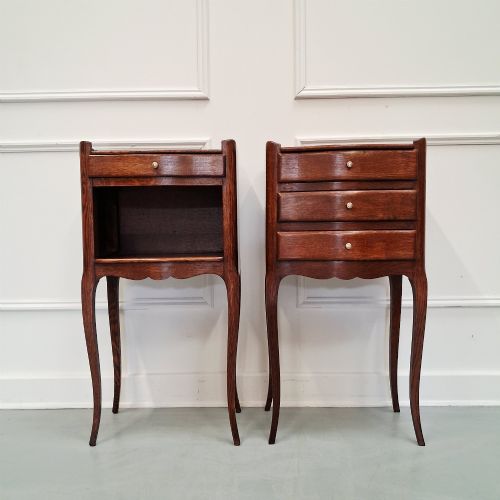
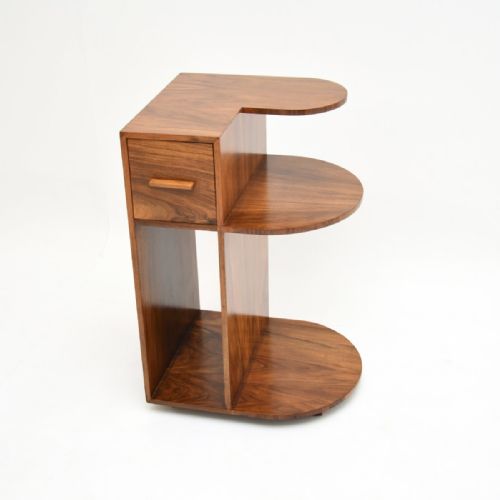
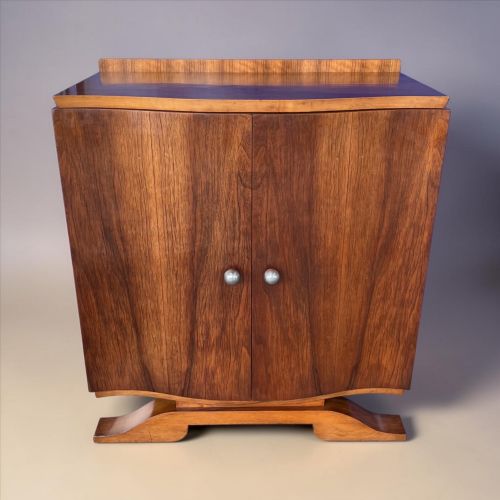
A curved wooden side cabinet combines practical enclosed storage with a sweeping silhouette, taking the form of credenzas, commodes, and tambour front cupboards. These pieces soften the geometry of a room, hugging corners or flat walls with equal grace.
The pieces on this page span several centuries, drawing on Victorian, Art Deco, Regency, and Georgian Revival aesthetics. Buyers most frequently meet walnut and mahogany structures, often finished with marquetry inlay or marble tops.
Makers shaped these items to serve as focal points in reception rooms and hallways, where their curved doors and polished surfaces caught the light. They function today much as they did originally, holding books, linens, or glassware while anchoring a scheme.
How they were made
Cabinetmakers constructed these pieces using solid timbers like mahogany and walnut, frequently applying burr veneers and fine satinwood stringing to create rich surface pattern. Bending wood to a radius required steaming and specialised framing to ensure the curves held firm over decades.
Mounts in ormolu, gilt bronze, and brass added structural accent and decorative weight, while marble tops provided a durable, cool surface for display. Inlays of marquetry and pietra dura required immense patience, setting contrasting woods and stones flush into the primary timber.
Curved Wooden Side Cabinet Retail Price Guide 2026
Typical asking prices for curved wooden side cabinet among the pieces listed under this phrase on Sellingantiques today, from the lower quarter to the upper quarter. They describe what is for sale here now, not the wider market.
Listings span the eighteenth, nineteenth, and twentieth centuries, featuring walnut, mahogany, amboyna, and satinwood.
What varies in quality
The distinction between standard and exceptional pieces lies in the selection of veneer and the precision of the joinery along the radius. Figured grain that matches seamlessly across curved doors indicates a maker of high skill.
Fine craftsmanship shows in the weight and channelling of the bronze mounts, the tightness of the marquetry, and the smooth action of tambour slats or hinged doors. Lesser examples rely on printed grain or thick, clumsy brasswork that lacks crisp detail.
The Curved Wooden Side Cabinet Glossary
- Credenza
- A grand display cabinet, often featuring curved glass doors and gilt bronze mounts, designed for formal reception rooms. They frequently incorporate inlaid walnut and generous surface space.
- Demi-lune
- A half-moon shape characteristic of side tables and commodes built to sit flat against a wall. This profile maximises floor space while offering a sweeping front.
- Marquetry
- The art of forming decorative patterns by fitting thin slices of various coloured woods and other materials into a veneer ground. It creates intricate pictorial or geometric designs across cabinet doors.
- Pietra dura
- An inlay technique using cut and fitted polished coloured stones to create images or geometric motifs. It appears on high-status furniture surfaces alongside bronze mounts.
- Tambour
- A flexible sliding door made of narrow vertical strips of wood glued to canvas, allowing access to curved compartments. This ingenious technique enables smooth operation around tight radiuses.
Curved Wooden Side Cabinet: Frequently Asked Questions
Where should I place a curved wooden side cabinet?
These pieces excel in hallways, living rooms, and dining spaces where a sharp corner needs softening. Their curved profile allows them to project slightly into a room without blocking walkways.
They pair well with mirrors or paintings hung above, acting as a natural anchor for a decorative vignette.
How do I care for walnut and mahogany surfaces?
Protect the wood from direct sunlight and sudden humidity changes to prevent veneer lifting. Dust regularly with a soft, dry cloth and feed the timber with quality wax periodically.
Avoid placing damp items directly onto antique polish to prevent water rings and staining.
What is the difference between a credenza and a side cabinet?
A credenza typically denotes a lower, highly decorative Victorian or continental piece featuring central doors flanked by curved display cabinets. Side cabinets encompass a broader category of smaller storage furniture.
Both serve similar practical functions but carry different proportions and decorative weight.
How can I tell a Victorian piece from an Art Deco one?
Victorian examples lean towards dark walnut, elaborate marquetry, and gilt bronze mounts, often reflecting historic revival styles. Art Deco pieces embrace streamlined figured walnut veneers with minimal ornament.
The structural lines of Art Deco items emphasise geometric purity rather than historical pastiche.