
Antique Indian Wooden Table
An antique indian wooden table brings rich carved detail and dense tropical timbers straight into a room.

Antique Indian Wooden Table
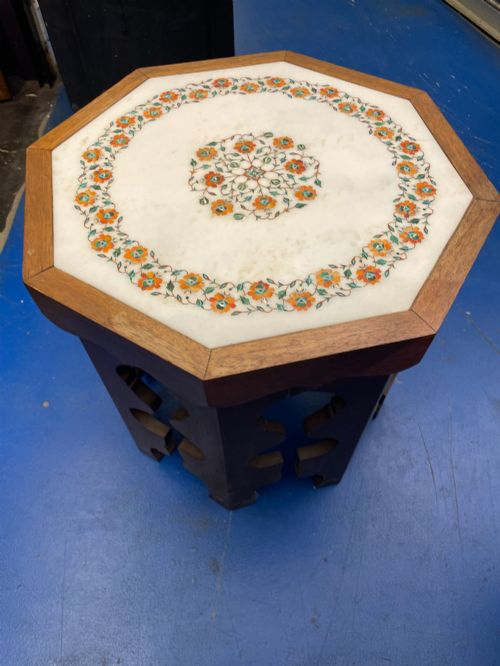
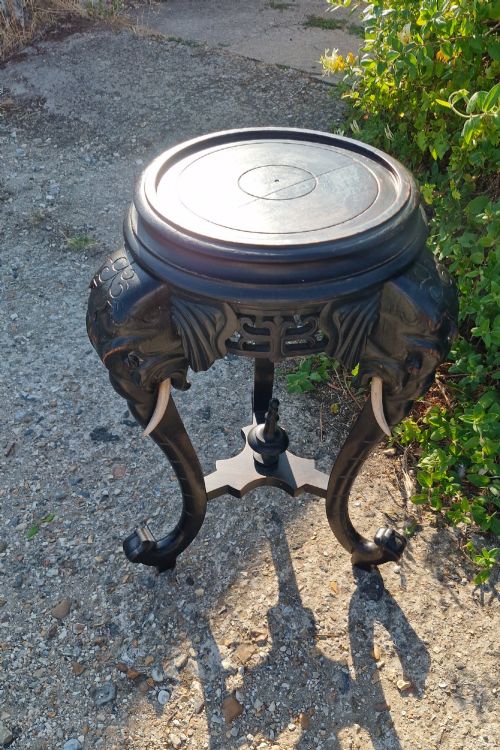
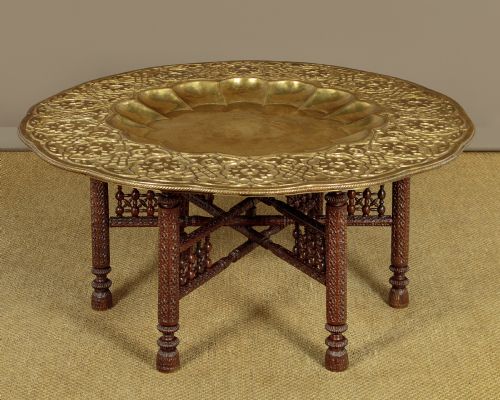
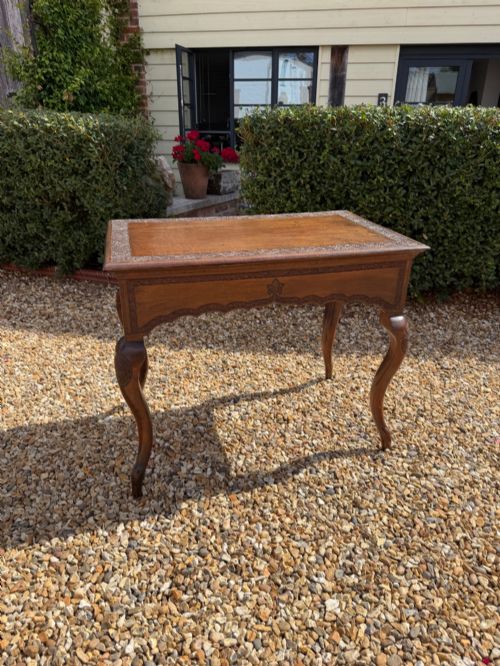
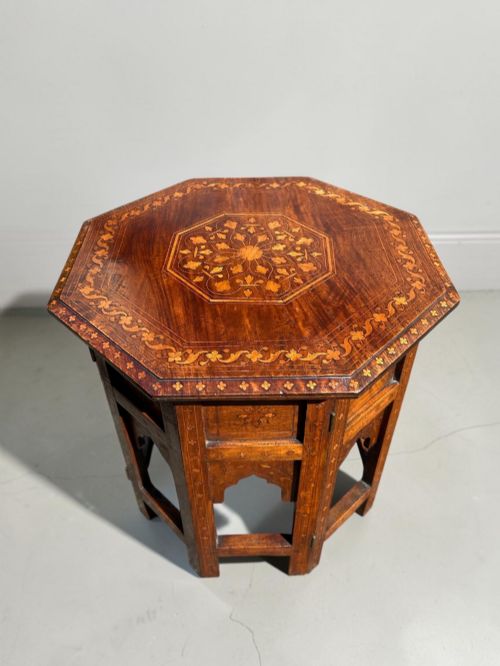
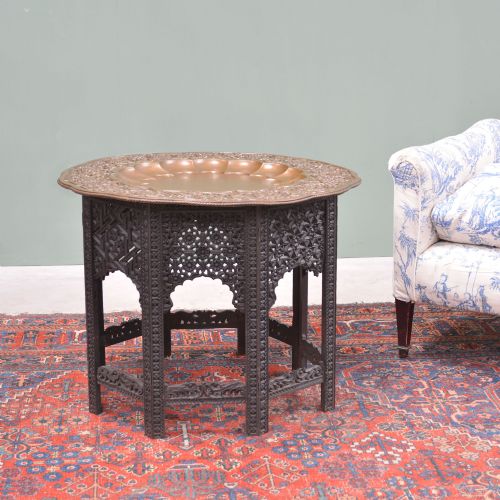
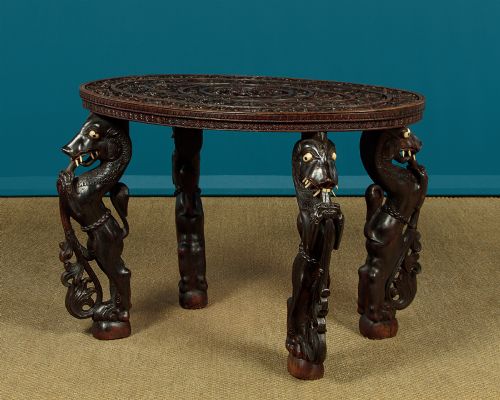
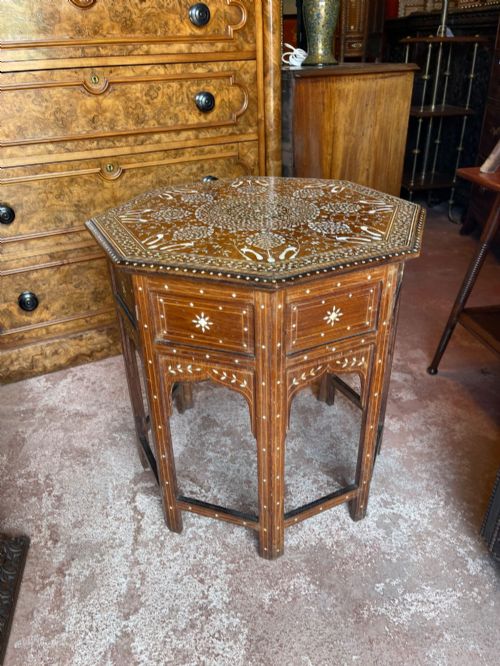
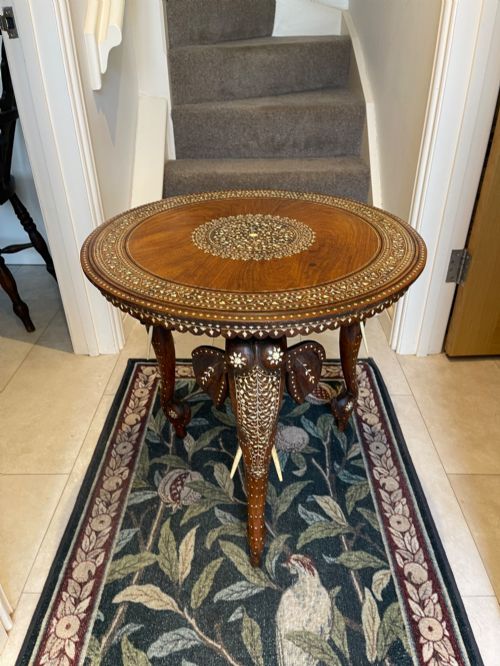
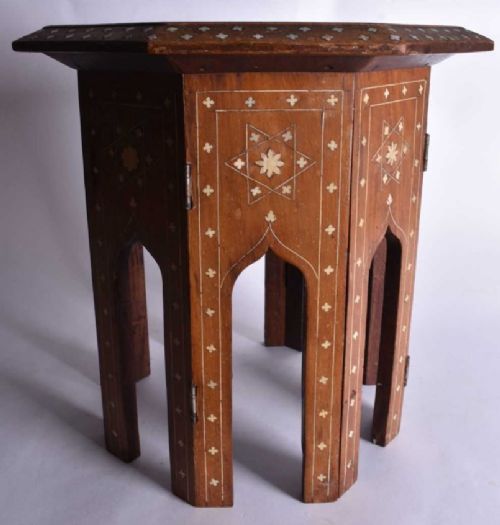
The octagonal form, often featuring a folding base, stands out as one of the most common shapes encountered in this selection. Alongside these, buyers will frequently find side tables, tray top tables and more specialised forms such as elephant tables.
Materials span dense tropical hardwoods like teak, rosewood and padauk, often embellished with contrasting details. Pieces originate from distinct regional centres of production, each bringing its own characteristic vocabulary of carving and inlay.
How they were made
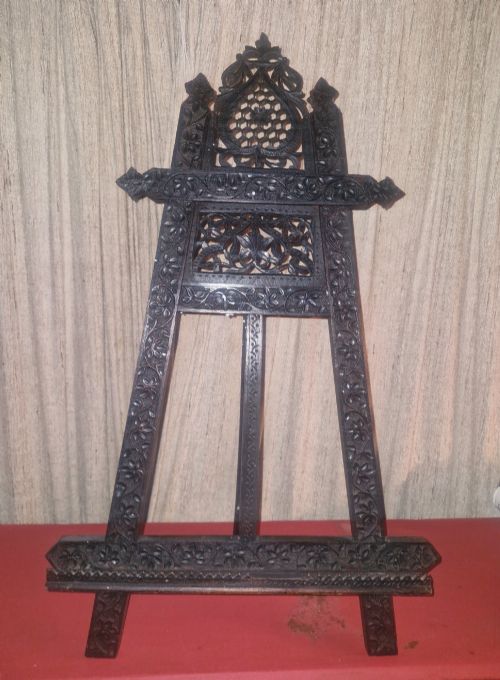
Maker workshops utilised robust timbers such as teak, rosewood and hardwood as the primary structural vehicle for these tables. Artisans shaped these dense woods using traditional hand-carving techniques to achieve deep relief work and intricate geometric patterns.
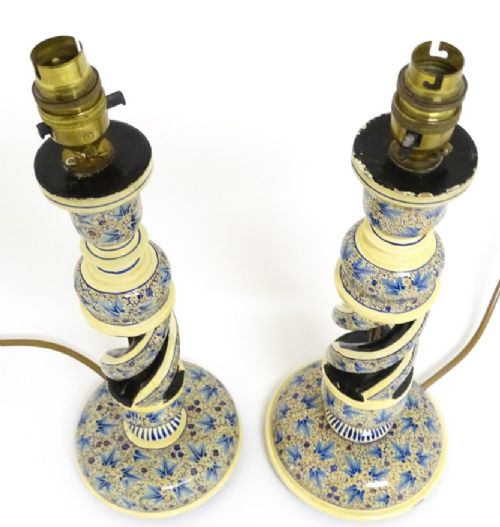
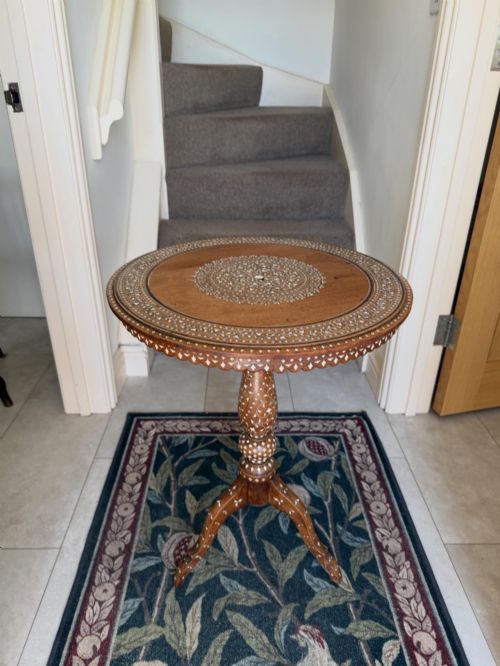
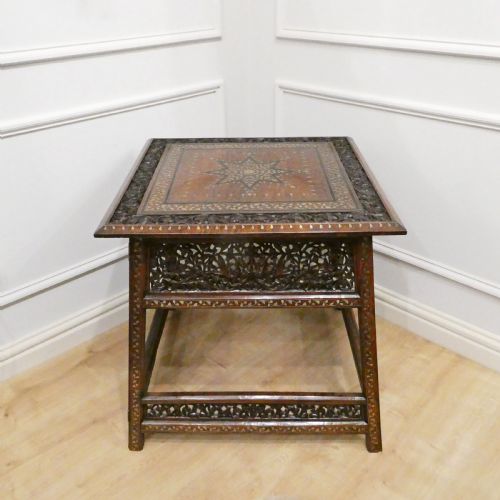
Surface enrichment relied heavily on contrasting materials set directly into the wood. Brass wire, bone and mother-of-pearl formed elaborate inlaid motifs, while Kashmiri items employed painted lacquer surfaces to add vibrant colour.
Painted wooden tusks occasionally peer out from beneath nineteenth-century tabletop surfaces.
What varies in quality
Quality rests in the crispness and depth of the carved ornament across the wooden surface. Superior examples display sharply defined patterns where the chisel work remains clean and deep rather than shallow or indistinct.
The precision of the inlay work further separates standard items from finer pieces. In better examples, brass, bone or mother-of-pearl sits flush and tight within the timber channels without crude gaps or excessive filler.
The Antique Indian Wooden Table Glossary
- Hoshiarpur
- A city in Punjab known for producing intricate wooden furniture featuring dense geometric carving and micro-mosaic inlay. Pieces from this centre often utilise teak or shisham wood.
- Octagonal top
- A geometric eight-sided table surface commonly found on folding occasional and pedestal tables from this tradition. This shape allowed artisans maximum space for symmetrical surface inlay.
- Tray top
- A removable wooden tray that sits upon a folding or fixed wooden stand. This form facilitated easy service and storage in colonial households.
- Anglo-Indian
- A designation for decorative arts and furniture produced during the British Raj, combining British furniture forms with traditional Indian craftsmanship. These pieces merge functional European shapes with dense indigenous carving.
- Padauk
- A heavy, durable tropical hardwood with a reddish hue used frequently in nineteenth-century colonial furniture. It provides a stable base for intricate carving and deep polish.
Antique Indian Wooden Table: Frequently Asked Questions
How do I care for an inlaid wooden table?
Maintain the timber and inlay by applying a minimal amount of microcrystalline wax rather than liquid polish, which can loosen small pieces of bone or brass.
Keep the item away from direct heat sources and strong sunlight to prevent the dense hardwoods from splitting and the historic adhesives from drying out.
Are octagonal tables stable on carpets?
Many traditional octagonal tables utilise folding bases that rely on precise interlocking wooden panels for support. Placing them on uneven flooring or thick carpets can sometimes affect their overall balance.
Ensure the folding mechanism sits squarely on a firm surface to prevent unnecessary strain on the wooden hinges and joints.
How do I distinguish regional styles?
Regional identification relies on observing the specific combination of timber, carving style and inlay materials used by the workshop. Hoshiarpur pieces generally show dense micro-mosaic brass and wood inlay on octagonal folding frames.
Kashmiri items often substitute heavy carving for painted lacquer decoration on walnut or lighter woods, while Burmese works tend to display deep figural relief carving in padauk.