


Antique Indian Trinket Box
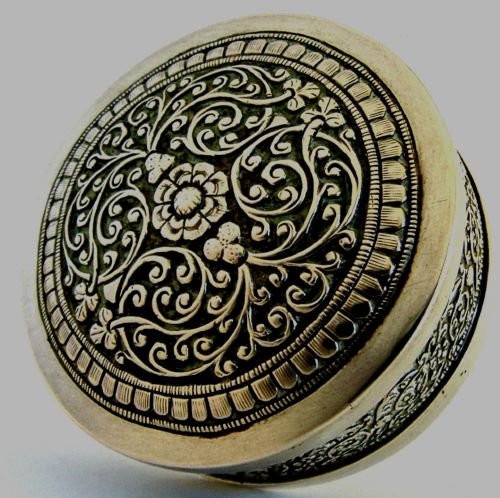
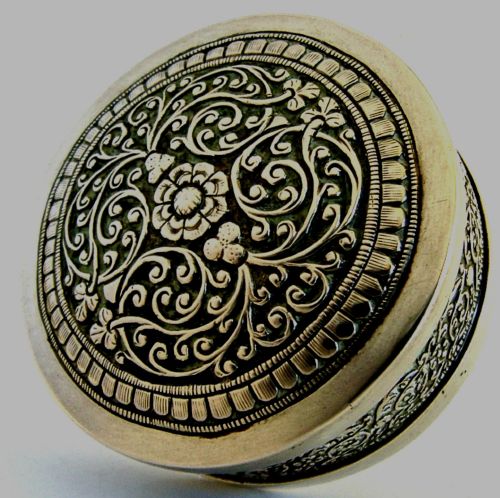
An antique indian trinket box holds small treasures while bringing intricate regional craftsmanship and rich materials into a room.
Antique Indian Trinket Box
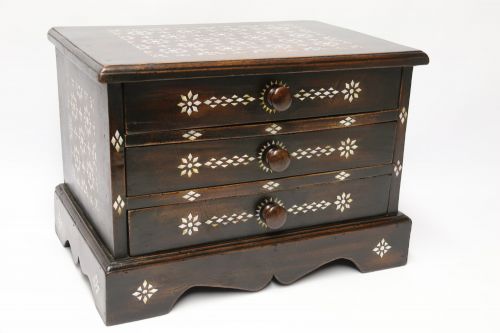
An antique indian trinket box brings together diverse regional workshops and British colonial influences spanning the nineteenth and twentieth centuries. These vessels served practical purposes for holding jewellery, spices, tea or cards while displaying exceptional decorative skill.
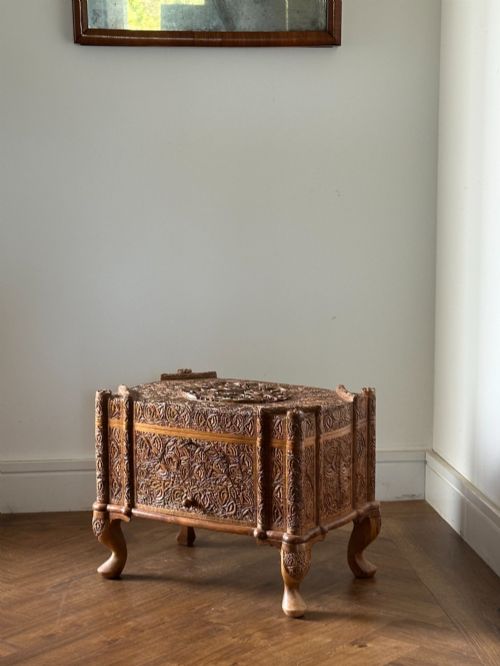
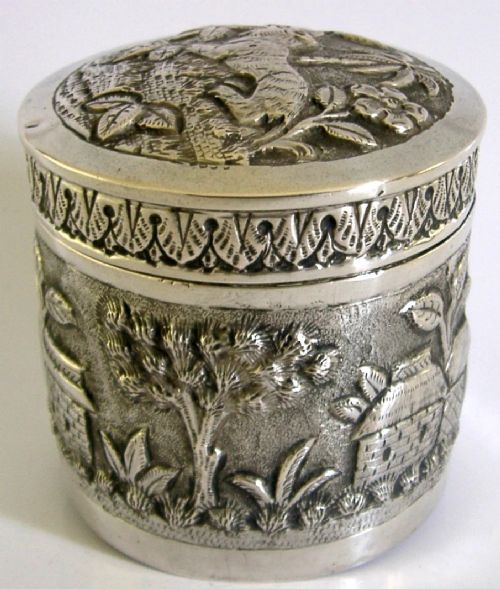
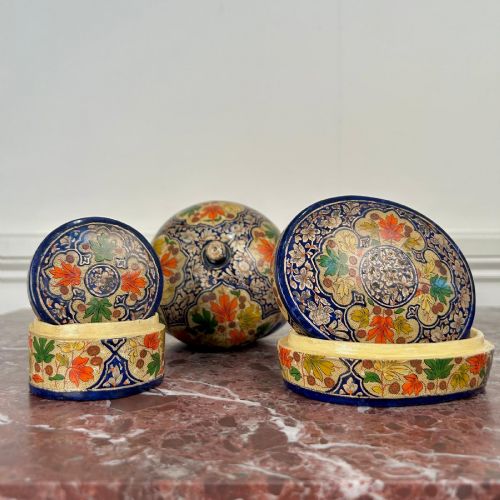
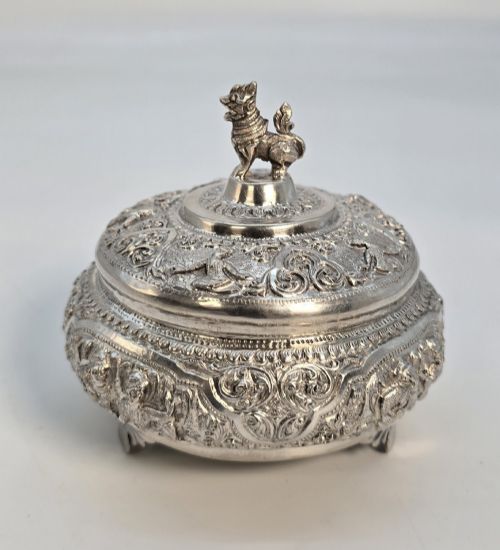
The pieces appearing most frequently range from solid silver containers with repoussé village scenes to carved wooden caskets and mosaic workboxes. Collectors encounter objects originating from distinct traditions, including Anglo-Indian, Kashmiri and Ceylonese craftsmanship.
Materials and construction methods
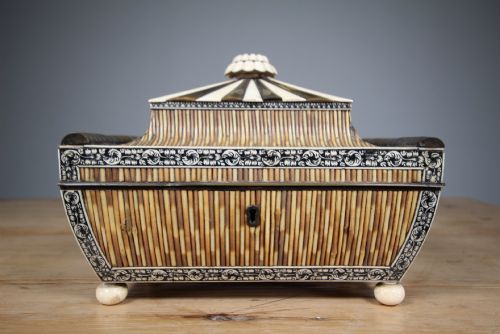
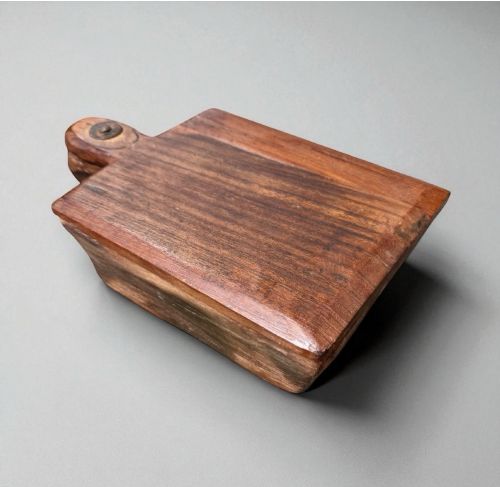
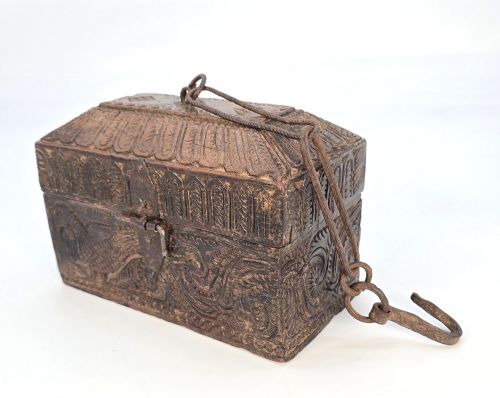
Artisans utilised dense timbers such as sandalwood, teak, ebony and coromandel, often carving them deeply with floral motifs or geometric patterns. Porcupine quill work and intricate Sadeli mosaic detailing appear across many wooden examples.
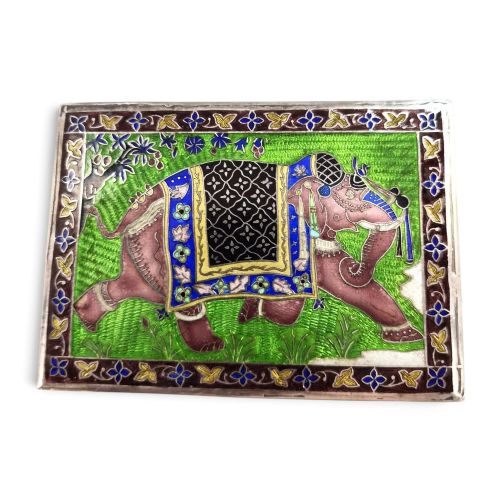
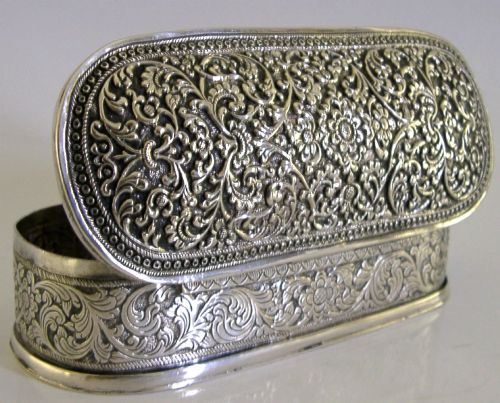
Silverwork relies on repoussé and chasing techniques to create raised figural designs, village scenes and animal motifs on lids and sides. Enamel accents and bone inlay occasionally complement the primary metal or wood bodies.
Distinctions in standard and execution
The hierarchy of quality rests upon the depth and crispness of the carving, the precision of micromosaic Sadeli work, and the weight of the silver. Superior pieces maintain tight joints, intact inlays and clear, detailed surface relief without distortion.
Lesser examples display shallower carving, simpler geometric layouts, or replacement elements that disrupt the integrity of the original design.
The Antique Indian Trinket Box Glossary
- Sadeli mosaic
- A complex form of micro-mosaic woodwork utilising horn, bone, ivory and various woods arranged into geometric bands.
- Repoussé
- A metalworking technique where the artisan hammers the design from the reverse side to form a raised relief on the front.
- Anglo-Indian
- A style describing objects made in India during the British colonial period, combining local materials with European forms.
- Sarcophagus
- A box shape featuring a domed or sloping lid resting on a rectangular base, popular during the Regency and Victorian eras.
- Pandan
- A traditional container utilised for holding betel leaf and associated spices for chewing.
Antique Indian Trinket Box: Frequently Asked Questions
How do I clean silver boxes?
Use a soft brush and mild soap to remove dust from crevices without disturbing the repoussé details.
Avoid harsh chemical dips that strip the natural patina accumulated over the decades.
What is porcupine quill work?
Craftsmen from Ceylon applied natural quills in geometric patterns across wooden box exteriors.
Bone or ivory spacers usually separate the individual quills to form striking contrast.
Where were these boxes used?
Wealthy households utilised them in dressing rooms, parlours and offices to secure rings, pins and small documents.
British officers and merchants stationed abroad frequently brought them home as keepsakes.
How do I date an antique wooden box?
Examine the timber species, interior linings, hinge types and construction marks beneath the base.
Stylistic cues such as Regency sarcophagus shapes or Edwardian turn-of-the-century motifs assist in placement.